Beyond the Witness: A Buddhist Response to Vedantic Apologetics
In recent philosophical discussions, defenders of Advaita Vedanta often argue that behind the changing stream of experience there must…
Beyond the Witness: A Buddhist Response to Vedantic Apologetics

In recent philosophical discussions, defenders of Advaita Vedanta often argue that behind the changing stream of experience there must exist an unchanging Witness — the Atman. They contend that without such a ground, knowledge collapses, continuity becomes unintelligible, and subjectivity remains unexplained. While these arguments are sophisticated and historically influential, both Buddhist philosophy and modern cognitive science offer powerful reasons to question their conclusions.
The Reification of the “Ground”
A central Vedantic claim is that the sense of “I am” is not merely another perception but the ground in which all perceptions arise. However, from a Buddhist standpoint, this move risks turning a functional feature of cognition into a metaphysical absolute.
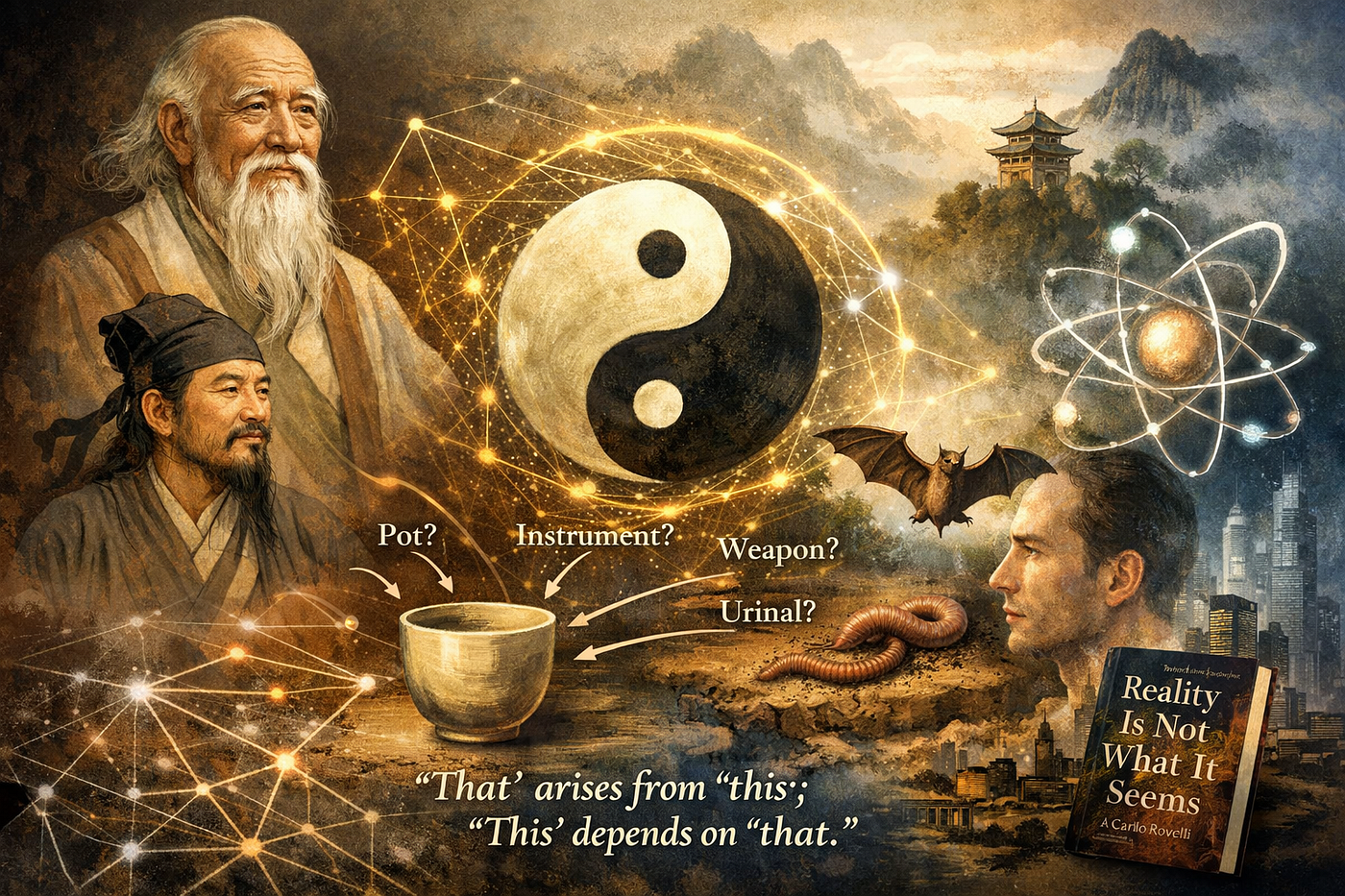
Everything we perceive is already shaped by mental formation and conceptual designation. Consider a simple object such as a cup. We call it a “cup” because of how we use it. The same object can function as a paperweight, a weapon, a musical instrument, or a decorative artifact. Its identity is not inherent; it is context-dependent. This insight — the emptiness of fixed essence — applies equally to the subject. The idea of a “ground of perception” is itself a conceptual abstraction rather than an ultimate discovery.
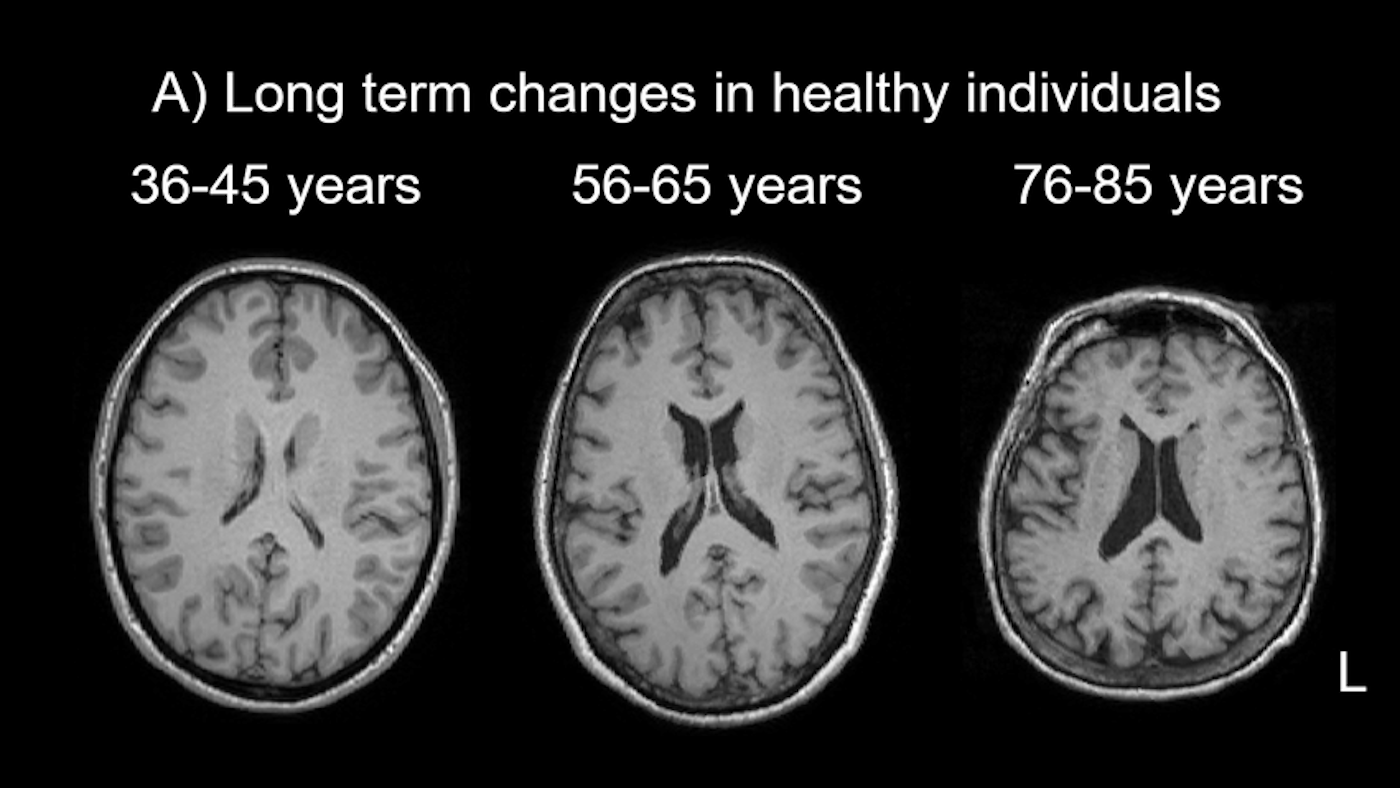
Biologically speaking, perception arises from nervous systems shaped by evolution. These systems did not develop to reveal metaphysical truths but to enhance survival. The sense of subjectivity may therefore reflect an adaptive interface rather than evidence of an eternal observer.
Infinite Regress and the Appeal to Self-Luminosity
Vedantic thinkers often argue that awareness must be “self-luminous” in order to avoid an infinite regress of observers observing observers. Yet this solution risks special pleading. It exempts consciousness from the explanatory demands applied elsewhere in philosophical reasoning.
Buddhist philosophy offers a different approach. Instead of positing an ultimate knower, it examines the relational dynamics among knower, knowing, and known. These distinctions arise interdependently as functional aspects of experience. There is no need to terminate regress by introducing an unconditioned metaphysical substance.
Modern neuroscience provides parallel insights. Complex systems are capable of recursive monitoring and self-representation through layered processing. Reflexivity can emerge from dynamic organization without requiring an eternal light of awareness shining behind mental events.
Change, Reference Frames, and Relational Knowing
Another common argument holds that change can only be detected against an unchanging background. While it is true that motion requires reference points, this does not imply the existence of an absolute standpoint.
Einstein’s theory of relativity demonstrated that observation is always frame-dependent. Change can be registered through comparisons among processes rather than through appeal to a fixed cosmic observer. Buddhist philosophy similarly emphasizes relational understanding. Phenomena are known in contrast and mutual conditioning: identity relative to difference, continuity relative to variation.
If awareness were truly outside time and change, it is difficult to see how it could recognize temporal succession at all. Recognition presupposes differentiation and memory — both dynamic processes.
Rethinking the “Hard Problem” of Consciousness
Vedantic apologetics often invoke the Hard Problem of consciousness to argue that subjective experience cannot be explained by physical processes. Yet this framework may inherit a dualistic assumption: that there exists an inner theater where sensations are presented to a hidden observer.
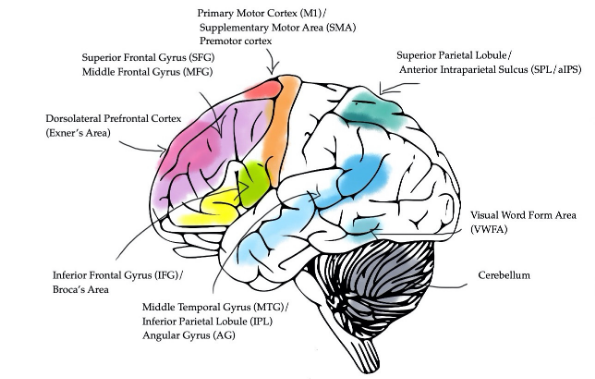
Buddhist analysis and contemporary cognitive science both challenge this picture. Experience can be understood as distributed processing rather than a performance for a metaphysical spectator. The brain constructs self-models and narratives that help organisms navigate complex environments. These models generate the impression of a unified subject, but this impression may function as a control interface rather than as evidence of an irreducible essence.
Algorithmic systems provide a useful analogy. Artificial intelligence can integrate signals, maintain conversational continuity, and represent aspects of its own operation without requiring a “little person” inside the machine. Complexity alone can produce forms of functional subjectivity.
Being, Narrative, and Useful Fictions
Finally, Vedantic arguments often frame the issue as one of “being versus narrative,” suggesting that a story must have a real listener. Buddhism responds by questioning whether such a listener is necessary.
The classical Chariot Simile illustrates how entities we regard as real are often designations based on coordinated parts and functions. A chariot has no intrinsic essence apart from its components. Likewise, the self can be understood as an emergent construct.
Many aspects of social life operate in this way. A corporation has no single enduring physical core, yet it functions as a legal and economic agent. It can be taxed or sued even as its personnel and assets change. Such structures are conventionally real but ultimately empty — what might be called useful fictions.
Nāgārjuna’s doctrine of the Two Truths helps clarify this perspective. At the conventional level, investigation, identity, and responsibility all function. At the ultimate level, they lack inherent existence. Emptiness does not negate practical reality; it cautions against turning functional patterns into metaphysical absolutes.
Conclusion: Process Without Substrate
Advaita Vedanta seeks stability behind flux — an eternal Witness grounding experience. Buddhism offers a more radical vision: the flux itself is sufficient. Experience unfolds through dynamic relations among physical, cognitive, and social processes. What appears to be an unchanging observer may instead be the mind’s most refined abstraction — a powerful conceptual tool, but not an ultimate principle.
In an age increasingly informed by neuroscience, evolutionary theory, and systems thinking, the Buddhist emphasis on dependent origination and non-essentialism may provide a more parsimonious account of mind and world. Rather than locating truth in a metaphysical ground, it invites us to understand reality as an evolving network of conditions — intelligible without recourse to an eternal self.
메타데이터
- post_id
- 274f1f2f388f
- slug
- beyond-the-witness-a-buddhist-response-to-vedantic-apologetics-274f1f2f388f
- url
- https://medium.com/@kleong54/beyond-the-witness-a-buddhist-response-to-vedantic-apologetics-274f1f2f388f
- canonical_url
- https://medium.com/@kleong54/beyond-the-witness-a-buddhist-response-to-vedantic-apologetics-274f1f2f388f
- author_url
- https://medium.com/@kleong54
- status
- ok
- fetched_at
- 2026-07-12 00:58:22