Using Machine Learning to Predict User Friction Before It Happens
User friction represents a critical determinant of product usability, directly influencing user satisfaction, engagement, and conversion…
Using Machine Learning to Predict User Friction Before It Happens
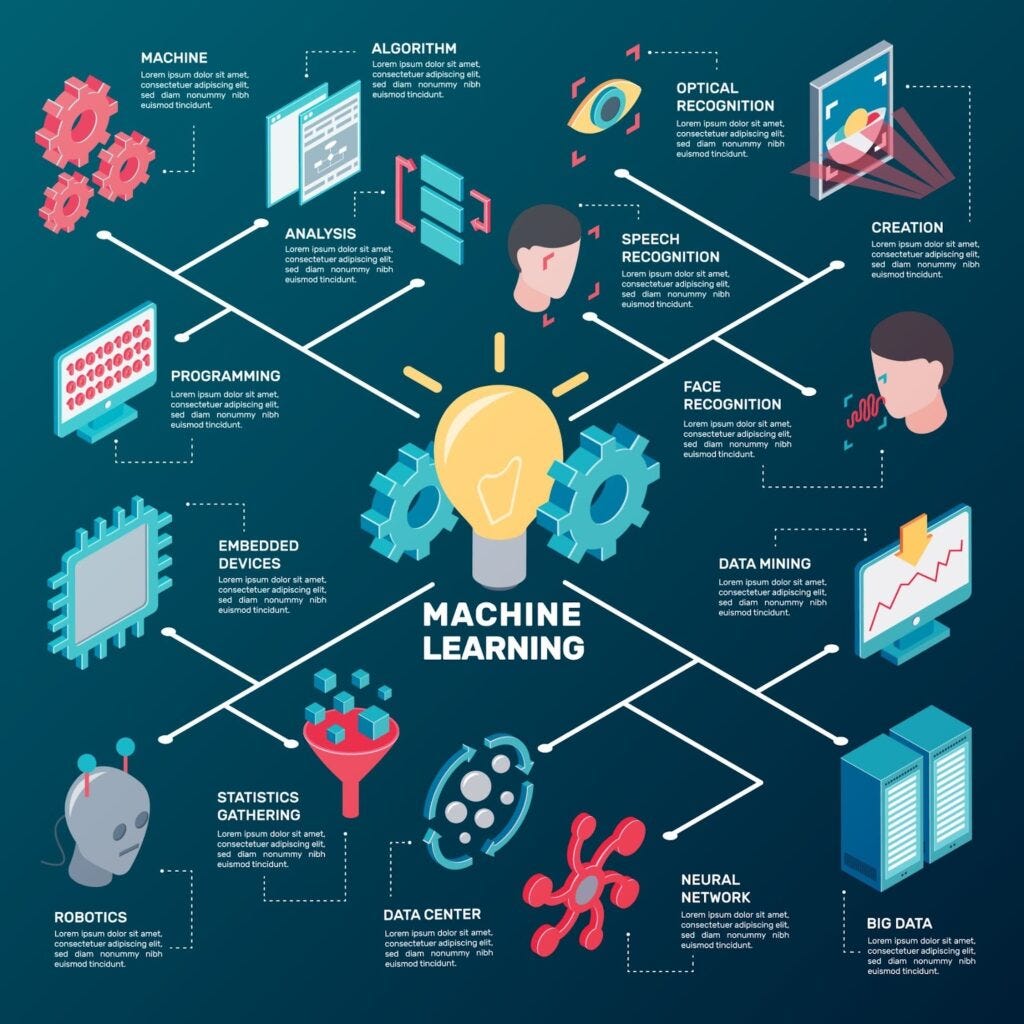
User friction represents a critical determinant of product usability, directly influencing user satisfaction, engagement, and conversion. Traditionally, friction has been identified through retrospective techniques such as usability testing, heuristic evaluations, and analytics-driven feedback loops. However, the advent of machine learning (ML) in the design domain introduces a paradigm shift — enabling designers to predict and mitigate friction before it occurs. This paper explores how ML models can be integrated into the UX workflow to anticipate user pain points, enhance interaction design, and foster data-driven decision-making.
1. Introduction
In contemporary design ecosystems, the convergence of user experience design (UX) and artificial intelligence (AI) is redefining the boundaries of human–computer interaction. Machine learning, a subfield of AI, leverages algorithmic learning from behavioral datasets to identify complex patterns that may elude human intuition. Within usability testing, ML introduces predictive intelligence capable of identifying potential friction areas — thus reducing the reliance on post-hoc analysis.
As a practitioner with over a decade in design, I have observed a clear transition: from reactive usability testing to predictive, data-augmented design strategy. This transition not only accelerates iteration cycles but also ensures a more anticipatory and adaptive user experience.
2. Understanding User Friction
User friction refers to any cognitive, emotional, or behavioral resistance encountered during task execution within a digital product. Common causes include:
- Cognitive Overload due to poor information architecture.
- Interaction Mismatch where UI affordances fail to align with user expectations.
- Delayed Feedback leading to user uncertainty and task abandonment.
Traditional usability testing identifies friction through observational data — click-tracking, heatmaps, or session replays. However, such insights emerge after user exposure. The integration of ML enables designers to analyze predictive behavioral signals, reducing friction at the design conception stage itself.
3. Machine Learning Framework for Friction Prediction
ML-based friction prediction operates through the following stages:
3.1 Data Collection
High-quality datasets are foundational. These typically include:
- Clickstream Data: Sequential logs of user interactions, navigation depth, and dwell time.
- Task Completion Rates: Quantitative success metrics extracted from A/B or prototype testing.
- Interaction Heatmaps: Spatial distribution of cursor activity and eye-tracking data.
- User Demographics and Segmentation: Behavioral differences across personas and experience levels.
3.2 Model Training and Feature Engineering
Supervised or unsupervised learning algorithms — such as Random Forests, Support Vector Machines (SVM), or Neural Networks — are trained to recognize friction indicators. Feature engineering may involve metrics like time-to-first-click, error frequency, or navigation loop depth.
3.3 Predictive Analysis and Visualization
Once trained, ML models produce predictive heatmaps or risk probability matrices, highlighting UI zones with high friction likelihood. These insights are then synthesized into design dashboards, allowing designers to visualize and interpret friction probabilities at both component and flow levels.
4. Integrating Predictive ML into UX Workflows
For design practitioners, the key lies in embedding ML insights into existing UX research pipelines. A structured integration can follow these stages:
- Pre-Testing Simulation: Running ML models on interactive prototypes to simulate user navigation and predict friction.
- Design Iteration Loops: Using predictive insights to refine visual hierarchy, information density, and interaction patterns.
- Personalization Models: Employing ML to adapt UI states dynamically based on user behavior clusters.
- Continuous Post-Deployment Monitoring: Feeding real-time analytics back into the model for ongoing optimization.
This approach transforms usability testing from an evaluative to a diagnostic and preventive discipline.
5. Benefits and Implications
5.1 Enhanced Design Efficiency
Predictive friction mapping shortens design–test–iterate cycles, enabling faster deployment of user-validated solutions.
5.2 Evidence-Based Decision Making
Design hypotheses are validated through data modeling, minimizing subjective biases and assumption-driven design choices.
5.3 Improved User Retention
Reducing early-stage friction correlates strongly with improved task completion rates, satisfaction scores, and long-term loyalty.
6. Limitations and Ethical Considerations
While promising, ML-driven usability testing presents notable challenges:
- Data Integrity: Inaccurate or biased datasets can lead to misleading predictions.
- Explainability: Complex ML outputs may lack interpretability for non-technical stakeholders.
- Ethical Use of Behavioral Data: Designers must ensure compliance with GDPR and maintain transparency regarding data use.
7. Conclusion
Machine learning represents a transformative addition to the UX research toolkit. By enabling proactive identification of user friction, it empowers designers to craft experiences that are both intuitive and anticipatory. The synthesis of predictive analytics with human-centered design offers a new standard — one where design decisions are guided by intelligence, empathy, and foresight.
As the UX discipline evolves, the collaboration between machine intelligence and human creativity will define the next generation of seamless, adaptive digital experiences.
메타데이터
- post_id
- 277a0dedfe50
- slug
- using-machine-learning-to-predict-user-friction-before-it-happens-277a0dedfe50
- url
- https://medium.com/@rsanika/using-machine-learning-to-predict-user-friction-before-it-happens-277a0dedfe50
- canonical_url
- https://medium.com/@rsanika/using-machine-learning-to-predict-user-friction-before-it-happens-277a0dedfe50
- author_url
- https://medium.com/@rsanika
- status
- ok
- fetched_at
- 2026-06-21 07:44:09




