Why Christianity is The Biggest Con in History
One night in college, a friend’s girlfriend and I stayed up late trying to convince one of their suitemates that God did indeed exist and…
Why Christianity is The Biggest Con in History

One night in college, a friend’s girlfriend and I stayed up late trying to convince one of their suitemates that God did indeed exist and that Jesus was indeed the answer.
“You can just feel it,” we pleaded with our spiritually-helpless debating partner. “I can feel God’s love.”
“Believe me, I want to,” he shot back, “I just have never had that experience. Besides, how do you know that feeling is God?”
“We just know it in our hearts,” we said.
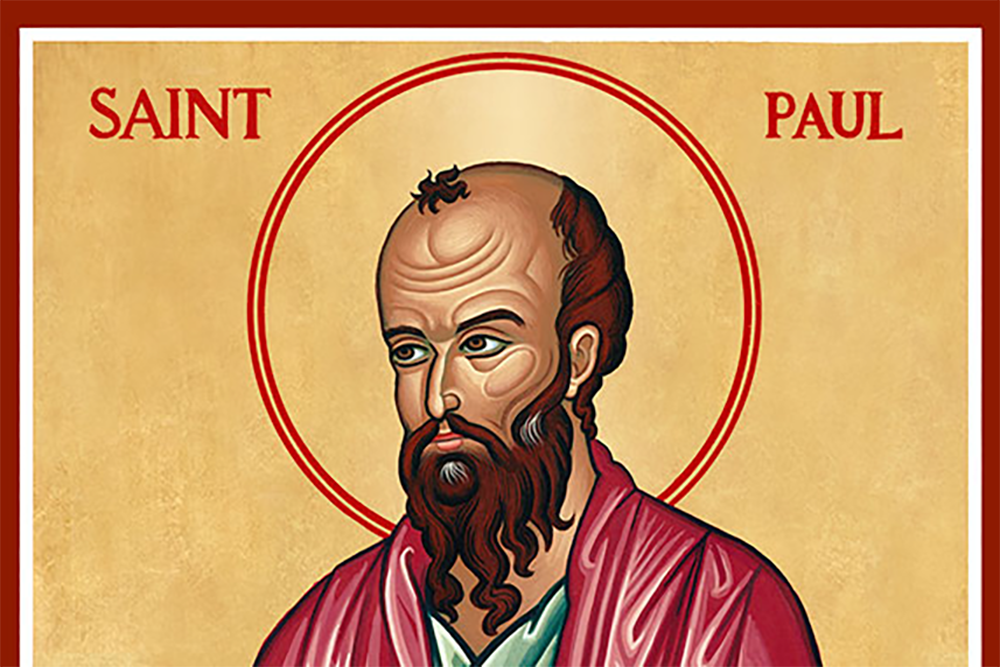
Needless to say, the night ended without a conversion — this poor soul was not yet on the road to Damascus. “But when God wants to, God will reach him,” we assured ourselves, more certain than ever that the feeling we had was proof of the divine.
What we were doing, I would realize later, was making a grave error about faith — one that opens the door to a whole host of others, and makes Christianity the biggest con in history.
Feeling Faith
Looking back, what my friend Linh and I were arguing for that night (over twenty years ago now (1)) was half-correct. We were right in saying the feeling we experienced was real. Humans can and do feel moments of connection to an “other,” at peace or in harmony with something bigger than ourselves.
In fact, it’s a relatively common neurological experience that’s well-documented by scientists. During a religious or spiritual experience, the brain releases a surge of dopamine, serotonin, and oxytocin, producing joy and an intense sense of union. These are the same chemicals that get released while eating sugar, having sex, or smoking meth (albeit in vastly different quantities). (2)
Also, when people pray or meditate, the brain’s parietal lobes, which are responsible for processing temporal and spatial orientation, settle down. As that lobe quiets down, the boundary between self and not-self softens or vanishes. (3)
Mystics across every tradition describe this as “union with the divine.” Neuroscientists describe it as parietal deactivation. Both descriptions are accurate: they’re describing the same event from different angles.
A Meaning Making Machine
But — while the feeling we experienced that night was real, the meaning we gave to it was entirely our own. Humans are hardwired to make meaning and tell stories about what’s happening around us — and what’s happening in us. (4)
That’s because from an evolutionary standpoint, your brain has one job: keep you alive. To do that, it can’t process every new piece of information it receives — there’s just too much incoming information. So it had to become a pattern recognition engine. (5)
Imagine our ancestors on the savanna in Africa 80,000 years ago — about 70,000 years before anybody wrote anything down. When they heard the grass rustling, they had a choice to make. Are you going to wait and gather all the information to see if it’s a lion getting ready to eat you — or are you going to make a snap decision and run like hell?
The brain evolved to do the latter. A false positive is cheap — you just run and then realize there was nothing to run from. A false negative, however, is a fatal mistake. So humans are biologically primed to jump to a conclusion based on incomplete data, everything we previously know.
Imagine if you previously saw your cavemate dawdle — standing around asking ‘what was that sound?’ — only to get devoured by a pride of lions, that would be a powerful motivator to bolt every time you heard a rustle. It’s a split-second decision your brain makes without giving it much thought.
That decision is based on signals your body sends your brain. Research increasingly suggests that feelings come first — our bodies (brains, heart, hormones) register something before we consciously know or process what it is. (6) Then the brain does what it always does: it goes looking for an explanation. Scientists call this cognitive appraisal.
For example, if your heart is racing and your palms are sweaty, your cognitive appraisal determines whether you label that physical state as “terrifying anxiety” (because you are about to give a public speech) or “exhilarating excitement” (because you are on a roller coaster). Essentially, your brain’s storytelling feature dictates your reality. (7)
The explanation your brain lands on depends almost entirely on what it’s already been taught to expect — what you’ve already experienced in life and what you’ve been told about those situations. If you’ve been told your whole life that Jesus is a feeling, when your parietal lobes settle down and the boundary between self and everything else quietly dissolves — your brain is going to reach for the explanation it already has… wait for it… Jesus!
Meanwhile, if you grew up outside the Christian West — or had hippie parents — you might ascribe that feeling to transcendence or nature or the universe.
To be clear — I have absolutely no problem with people believing that feeling is God, or the divine, or the universe, or whatever name fits. But where everything goes wrong — not just personally, but for society more broadly — is when the meaning your brain gives that feeling goes unquestioned and is used as proof. Because the moment that happens, the feeling is no longer yours.
Faith as a Feeling
Most of us in the Christian West have been primed since childhood to equate the feeling of otherness with God and/or a mystical Jesus. Church on Sunday morning — from the building to the music to the incense to the lighting — is designed to elicit feelings of awe, and connect them to whatever the church needs you to believe.
This is true of both old and new school churches. In New York City, I would go to Sunday service at St. Anne and the Holy Trinity in Brooklyn Heights. The massive, gothic cathedral was meant — like so many “high church” buildings — to make you feel small next to the divine.
This couldn’t be farther from the little United Methodist Church I grew up going to in north central West Virginia. The austere, mid-70’s wood paneling and red-cushioned pews did the opposite — signaling the divine was all around us, common and plain like us. But when the pianist started playing “In the Garden” or “You’ll Never Walk Alone,” our propensity to self-comfort became forever linked to the Methodist idea of Jesus.
And then there’s the modern Evangelical experience, which is more like a rock concert every Sunday morning. Dark, almost warehouse-like halls, all centered on a big band and video screens at the front with state-of-the-art lighting and fog machines. (8) The idea is transcendence, 21st century style. (A favorite tweet of mine is an exvangelical saying they loved going to church as a teenager, but realized after going to a One Direction concert that they just loved live music).
All of these experiences are designed, in their own way, to trigger that sense of otherness: the dopamine, the serotonin, the oxytocin, the quieting of the parietal lobes. And then, in that opened and receptive state, the church steps in and connects the dots for you — telling you what the feeling means, handing you the explanation before you’ve ever had a chance to find one yourself.
And it’s worth pointing out that the programming of this type of thinking doesn’t require a religious upbringing. The interpretive framework gets transmitted whether you went to church or not — through your parents’ language, their reaction to a sunset or a death or a moment of unexpected beauty, and the idioms baked into the culture itself. (9)
You don’t need to be baptized to reach for “thank God” when something goes right. Sociologists call this Cultural Christianity — the persistence of religious meaning-making frameworks long after formal belief or church attendance has faded. The building can be empty for generations and the explanation is still in the water supply.
The process is the point
All of this — the architecture, the music, the ritual, the community, the feeling itself — is a system. And every system exists to produce an outcome.
The outcome here has a name. The Italian philosopher Antonio Gramsci, writing from a fascist prison cell in the 1930s, called it hegemony — the process by which a ruling class maintains power not through constant violence or overt coercion, but by making its worldview feel like common sense. They want our submission — our acceptance of the way things are — to feel like the natural order of things. (10)
And as Gramsci noted about the Roman Catholic flavor of Christianity, the church didn’t invent this process — but it perfected it. (11)
Think about what this system actually delivers. You have a genuine neurological experience — real, profound, and boundary-dissolving. But before you’ve had a moment to sit with it, to wonder what it means, to let it be yours, the institution is there with the explanation — already prepared.
The feeling is God. God is this, and this is God’s church. Not only is the feeling itself the reward — there’s also an eternal one waiting, just beyond the horizon of death. But that reward will only be granted with your tithe, your obedience, your vote, your conformity, your sexuality, your children.
This chain of custody moves fast, and by the time you’re old enough to question any link in it, the neural pathway is so deep it feels like your own voice telling you not to. That’s not an accident — it’s the design.
Gramsci’s insight was that the most effective power is the kind you can’t see — the kind that doesn’t feel like power at all, but like truth. When the peasant in the pew genuinely believes that God ordained the social order, that suffering in this life will be rewarded in the next, that questioning the authority of the church is questioning the authority of God himself — no army is required. The peasant polices himself, and the system rolls on.
This is what makes using the feeling as proof so consequential — and so dangerous. It’s not just a philosophical error. It’s the open door the institution has always walked through. The moment you point to your inner experience and say “this is evidence,” you have invited someone else to tell you what it’s evidence of. And that someone has always had interests that have very little to do with your liberation.
And here’s what makes it especially hard to see clearly: most of the people inside the system are not cynics. Your pastor probably genuinely loves you. Your Sunday school teacher probably genuinely wanted to give you something beautiful to hold onto. The worship leader probably feels every note. Nobody had to sit in a room and plan this out — nobody needed to.
The system doesn’t require bad actors to produce bad outcomes — it just requires people who were themselves formed by the system, passing on what was passed to them, generation after generation, each one certain they’re giving a gift.
That’s not a conspiracy. It’s something much harder to disrupt than a conspiracy, because there’s no villain to expose and no single moment where it went wrong. It’s just the water — and most of us have been swimming in it our whole lives.
When I say con, I don’t mean a mustache-twirling villain in a back room. I mean something far more insidious — a system so effective it doesn’t need one.
Jesus or the Church?
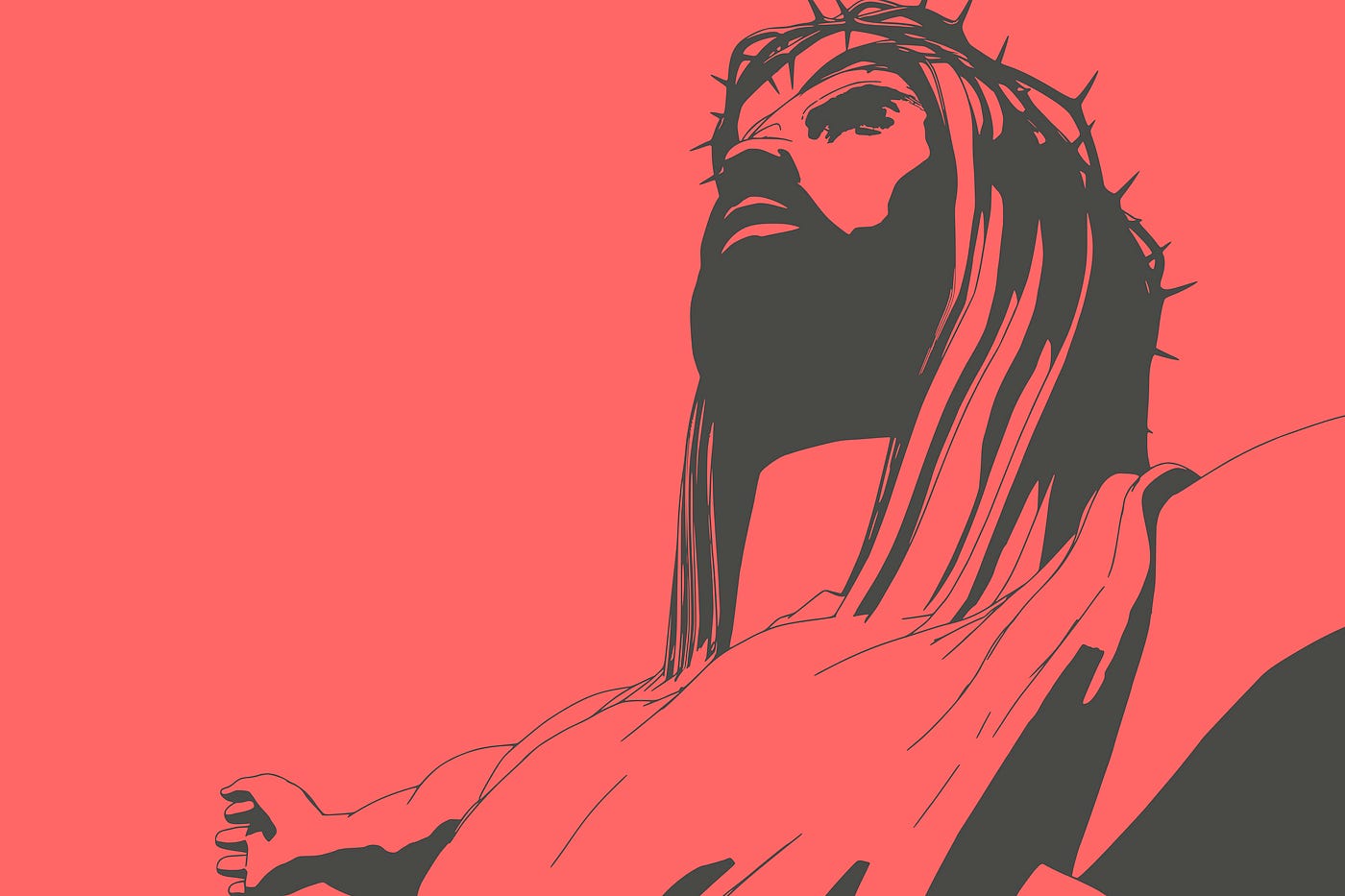
The ultimate irony here is that this is exactly what Jesus came to interrupt. The historical Jesus — the Jesus we can piece together through actual history, not simply what’s written about him in the Bible — preached a message of liberation.
A Jewish day laborer born into Roman-occupied Palestine 2,000 years ago, he came of age under a brutal military occupation that extracted taxes from people who were already starving, that crucified dissidents by the thousands along the roadside as a warning, that had reduced the vast majority of his people to landless tenants working soil their families had farmed for generations. He was not born into a stable as a sweet metaphor. He was born into a specific political and economic nightmare — and he knew it.
His message was not “accept your suffering and wait for heaven.” That message came later, and it came from people with an interest in your patience. His message was that the present order was finished — that the kingdom of God was arriving, and that it looked nothing like the kingdom of Caesar.
In this coming world, the poor would be lifted up, the hungry would be fed, and the powerful would be pulled from their thrones. Despite what Christianity says, these weren’t metaphors. They were promises — and to the people in power, they were threats — which is why the state killed him.
Which means the con isn’t just that the institution hijacked your feeling. It’s that it hijacked his movement — and turned the most revolutionary message in human history into the most effective tool of the ruling class the world has ever seen.
The man who told the rich to sell everything and give it to the poor became the mascot of prosperity gospel. The man who said the last shall be first and the first shall be last became the divine endorsement of every hierarchy he spent his life dismantling. The man who was executed by the state as a political criminal became the logo on the police chaplain’s business card.
That’s the con. Not that God doesn’t exist, not that the feeling isn’t real, but that the feeling was ours — and so was the movement — and both of them got taken.
My friend’s suitemate — the one we couldn’t convert that night in the dorms twenty years ago — asked exactly the right question. We just didn’t have the honesty or the tools to answer it at the time. “How do you know that feeling is God?” We didn’t. We couldn’t. We’d been handed the explanation so early and so thoroughly that it never occurred to us that it was an explanation at all. It just felt like the truth.
And that’s exactly how it was designed to feel. The question was never whether you believe in God. It’s whether you’re actually following Jesus — or following an institution that buried him.
Sign up for my weekly e-mail
If you liked this story, considering signing up for my weekly newsletter that separates the Jesus from Christianity: https://bit.ly/jesusmovementemail
FOOTNOTES:
- Whenever I think about my age I think of Roxy Hart, “I’m older than I ever intended to be!” It’s perfectly understandable.
- For more on the neuroscience of religious experience — including the neurochemical surge of dopamine, serotonin, and oxytocin during spiritual states — see Andrew Newberg, Eugene D’Aquili, and Vince Rause, *Why God Won’t Go Away: Brain Science and the Biology of Belief* (New York: Ballantine Books, 2001).
- Ibid.
- For more on the human brain’s compulsion to make meaning and construct narrative from experience — including how this drive shapes everything from memory to belief — see Jonathan Gottschall, *The Storytelling Animal: How Stories Make Us Human* (New York: Houghton Mifflin Harcourt, 2012).
- For more on how the brain evolved as a prediction and pattern recognition engine — filtering reality in order to keep us alive rather than to perceive it accurately — see Daniel Kahneman, *Thinking, Fast and Slow (New York: Farrar, Straus and Giroux, 2011). For a deeper neuroscientific treatment of how the brain’s threat-detection systems shape perception and belief, see Joseph LeDoux, [The Emotional Brain: The Mysterious Underpinnings of Emotional Life](https://amzn.to/4sSmfs3)* (New York: Simon & Schuster, 1996).
- For more on how the body registers emotional states before the conscious mind catches up and the ongoing scientific debate about what that means, see Antonio Damasio, Descartes’ Error (New York: Penguin, 1994) and Lisa Feldman Barrett, How Emotions Are Made (New York: Houghton Mifflin Harcourt, 2017), which represents the current, more contested frontier of the field.
- This example draws on the classic two-factor theory of emotion developed by Stanley Schachter and Jerome Singer, who demonstrated that physiological arousal combined with cognitive interpretation produces emotional experience. See Stanley Schachter and Jerome Singer, “Cognitive, Social, and Physiological Determinants of Emotional State,” Psychological Review 69, no. 5 (1962): 379–399.
- There’s actually been research done on how the modern Evangelical service is like drug abuse. The sensory design — the music, the lighting, the fog machines, the communal energy — is not incidental. A 2016 University of Utah study published in Social Neuroscience found that powerful spiritual feelings were associated with activation in the nucleus accumbens — the brain’s reward center, the same region activated by drugs, gambling, and sex. Notably, nucleus accumbens activation preceded peak spiritual feelings by one to three seconds, suggesting the reward circuit is generating the experience, not merely responding to it. See Michael A. Ferguson et al., “Reward, Salience, and Attentional Networks are Activated by Religious Experience in Devout Mormons,” Social Neuroscience 12, no. 4 (2016).
- For more on the intergenerational transmission of religious meaning-making frameworks — including how spiritual orientations persist across generations even as formal church attendance declines — see Vern Bengtson, Norella Putney, and Susan Harris, Families and Faith: How Religion is Passed Down Across Generations (New York: Oxford University Press, 2013).
- For more on Gramsci’s theory of cultural hegemony and its application to religion, see Joseph V. Femia, *Gramsci’s Political Thought: Hegemony, Consciousness, and the Revolutionary Process* (Oxford: Clarendon Press, 1987).
- See Gramsci’s Selections from the Prison Notebooks, edited and translated by Quintin Hoare and Geoffrey Nowell Smith (New York: International Publishers, 1971), 258–265.
메타데이터
- post_id
- 278163ae33f8
- slug
- why-christianity-is-the-biggest-con-in-history-278163ae33f8
- url
- https://medium.com/@andrewspringer/why-christianity-is-the-biggest-con-in-history-278163ae33f8
- canonical_url
- https://medium.com/@andrewspringer/why-christianity-is-the-biggest-con-in-history-278163ae33f8
- author_url
- https://medium.com/@andrewspringer
- status
- ok
- fetched_at
- 2026-07-08 04:28:09