Estimation and Inference: A Comprehensive Guide
Content:
Estimation and Inference: A Comprehensive Guide
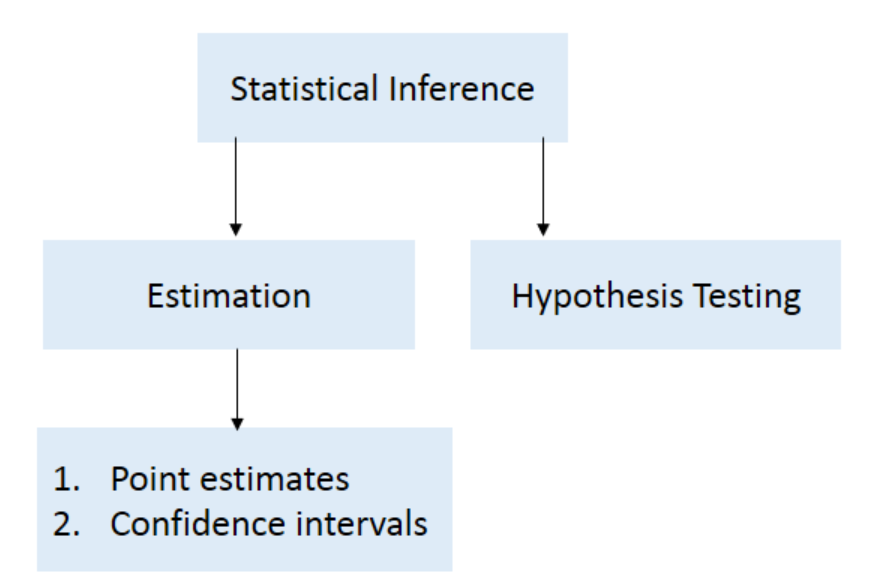
Source: Roi Polanitzer
Content:
· Introduction · Estimation vs. Inference · Parametric vs. Non-Parametric Modeling · Commonly Used Statistical Distributions · Frequentist vs. Bayesian Statistics · Conclusion
Introduction
This guide delves into essential statistical concepts foundational to machine learning and data-driven decision-making. These concepts encompass estimation, inference, parametric vs. non-parametric approaches, statistical distributions, and the contrasting philosophies of frequentist and Bayesian statistics. Let’s explore these topics in detail.
Estimation vs. Inference
Estimation involves deriving a parameter, such as the mean, from sample data. For example, the mean can be calculated by summing all column values and dividing by the number of entries. Estimation forms the basis of statistical inference, which seeks to understand the broader population distribution.
Statistical inference incorporates parameters like the standard error, calculated by analyzing the average deviation from the mean. This discipline aligns closely with machine learning, where sample data is used to infer population characteristics and underlying data-generating processes.
Machine learning models may prioritize prediction or delve deeper into understanding distribution parameters. For instance, customer churn prediction models estimate how likely a customer is to leave based on features like tenure, purchases, and demographics.
Parametric vs. Non-Parametric Modeling
Parametric models assume a finite number of parameters and specific data distributions, making them efficient but constrained. For example, linear regression predefines coefficients and assumes linear relationships.
In contrast, non-parametric models do not rely on predefined distributions, offering flexibility at the cost of requiring more data. An example is using histograms or cumulative distribution functions (CDFs) to infer distributions directly from sample data.
Commonly Used Statistical Distributions
- Uniform Distribution: Equal probability across a range, akin to rolling a die where each outcome has an equal chance.
- Normal (Gaussian) Distribution: Characterized by a bell curve, with most values clustering near the mean and fewer at the extremes. This distribution is underpinned by the central limit theorem, which states that averages of random samples form a normal distribution.
- Log-Normal Distribution: Data becomes normally distributed after a logarithmic transformation, common in financial data like income levels.
- Exponential Distribution: Models the time between events, with values clustering near the beginning and a long tail.
- Poisson Distribution: Describes the number of events in a fixed interval, with both mean and variance determined by the parameter λ.
Frequentist vs. Bayesian Statistics
Frequentist Statistics Frequentist approaches infer probabilities from repeated experiments. With enough data, they estimate parameters like the mean with high confidence, relying solely on observed data.
Bayesian Statistics Bayesian methods use prior knowledge to form initial parameter distributions, updating these as new data emerges. This approach yields posterior distributions, offering flexibility in incorporating pre-existing insights.
For example, queuing theory applications, such as estimating the number of servers required in a grocery store, benefit from both approaches. Frequentists rely on large sample sizes, while Bayesians incorporate prior expectations, updating them as more data arrives.
Conclusion
Understanding estimation and inference is crucial for both machine learning and statistical applications. While estimation focuses on single values like the mean, inference digs deeper into population distributions. Parametric models provide efficiency through constraints, whereas non-parametric models allow flexibility by relying on observed data. Statistical distributions guide us in real-world applications, and the choice between frequentist and Bayesian methods depends on the problem’s nature and available data.
The next step in this journey explores hypothesis testing under both frequentist and Bayesian frameworks.
메타데이터
- post_id
- 27860130c95f
- slug
- 171-27860130c95f
- url
- https://blog.gopenai.com/171-27860130c95f
- canonical_url
- https://blog.gopenai.com/171-27860130c95f
- author_url
- https://medium.com/@hminhhong
- status
- ok
- fetched_at
- 2026-06-09 15:37:30