The Industrial Accelerator Act vs. Europe’s De‑Industrialization
Explore the untold story of energy, trade, and policy shaping Europe’s economic future.
The Industrial Accelerator Act vs. Europe’s De‑Industrialization
Explore the untold story of energy, trade, and policy shaping Europe’s economic future.

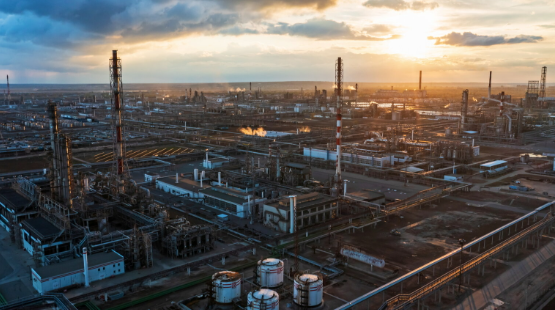
Image used from shutterstock
Introduction
I want to say something upfront that I don’t think enough people outside of Europe are paying close attention to. Europe has a manufacturing problem. And for the first time in a while, European policymakers are actually trying to do something serious about it not just talk about it in committee rooms and forget about it six months later.
Late last week, it was reported that the EU’s six biggest economies Germany, France, Italy, Spain, the Netherlands, and Poland had all provisionally signed up to something called the Industrial Accelerator Act, or IAA.
This is a piece of legislation proposed by the European Commission back in March, and its whole purpose is to reverse what many see as decades of Europe slowly hollowing out its own industrial base.
I’ve been following this story closely because I think it matters well beyond Europe’s borders. It touches on trade, energy, China, subsidies, green policy all the big themes that are shaping the global economy right now. So let’s dig into what’s actually going on, what this law is trying to do, and whether it has any real chance of working.
Has Europe Actually De-Industrialized?
Before we can talk about reversing something, we need to ask whether it actually happened in the first place.
The short answer is: yes, broadly speaking, it has.
World Bank data shows that manufacturing’s share of EU GDP dropped from around 20% in 1990 to roughly 14% today. Over roughly the same period, the percentage of European workers employed in manufacturing or industry fell from about 20% down to 14% as well. That’s a meaningful shift by any measure.
But here’s where it gets interesting, and I think this is a point that often gets lost in the headline numbers. This decline hasn’t hit every country the same way. Poland, for example, has actually held on to its manufacturing base pretty well both in terms of GDP contribution and jobs. On the other end of the scale, France and Spain have seen quite sharp drops on both fronts. So “Europe” isn’t one uniform story here. It’s a collection of very different national experiences.
There’s another important nuance worth mentioning. Manufacturing’s share of GDP shrinking doesn’t mean Europe is actually making less stuff. In fact, Europe’s manufacturing output measured by value added has grown by more than 60% since 1990. The reason the share looks smaller is that services have grown even faster, by around 90% over the same period. So manufacturing got bigger, just not as fast as everything else.
And then there’s the hybrid company angle. Most major European manufacturers today aren’t just selling products they’re selling services on top of those products. Michelin is a perfect example.
They used to make and sell tires. Now a growing portion of their revenue comes from maintenance contracts and data services. The line between “manufacturer” and “service company” is genuinely blurry in 2026.
Still, with all these caveats on the table, there is a wide consensus in Europe right now that something needs to change. The pandemic exposed how dependent Europe had become on imported goods.
Russia’s invasion of Ukraine made the problem impossible to ignore suddenly, energy dependency, supply chain fragility, and the risks of relying on outside powers for critical materials all came crashing into focus at once.
What Is the Industrial Accelerator Act?
The Industrial Accelerator Act was published in draft form by the European Commission in March, and its headline goal is straightforward: bring manufacturing’s share of EU GDP back up to 20%. To get there, it essentially does four things two of which are relatively uncontroversial, and two of which have kicked up a significant amount of debate.
The less contentious pieces involve speeding up permit approvals for individual industrial projects and encouraging member states to direct more resources toward specific designated strategic sectors. Both of these make intuitive sense. If it takes five years to get regulatory approval for a new factory, you’re going to lose investment to places where the process is faster. Nobody really argues against fixing that.
The controversial pieces, though, are a different story entirely.
The Conditions on Foreign Investment
The IAA puts significant conditions on foreign investment in certain strategic sectors specifically batteries, electric vehicles, solar energy, and critical raw materials.
And if you read the criteria carefully, it becomes pretty obvious who these rules are aimed at.
The conditions kick in when a foreign investor comes from a country that already accounts for more than 40% of global manufacturing capacity in the relevant sector. In practice, that means China which dominates in all four of those areas by a wide margin.
To get approval under the IAA, large investments would need to meet at least four of six specific criteria. The foreign investor can’t own more than 49% of the project. If it’s a joint venture with a European company, the same ownership cap applies. The investor has to essentially agree to share intellectual property with the EU.
At least half of all jobs created must go to European workers.
At least 1% of all revenue generated must be reinvested into research and development. And the investor has to publish a public justification for how the project benefits the European economy.
My honest reaction to this list? It’s a lot. These aren’t gentle guidelines they’re genuinely demanding conditions, and I can see why businesses looking at Europe as a potential destination for large-scale investment might look at this list and start considering other options.
Europe already has a well-documented investment gap. Adding layers of bureaucratic and ownership requirements on top of that doesn’t obviously help close it.
The counterargument, of course, is that strategic industries shouldn’t be handed over to foreign-controlled entities particularly ones with close ties to a government that the EU views as a systemic rival. That’s a legitimate concern. But there’s a real tension here between protecting strategic interests and actually attracting the capital needed to build those industries up in the first place.
The Made in EU Requirements
The second controversial piece is the “made in EU” requirements, and this one gets into some genuinely tricky territory around Europe’s green energy goals.
For a long time, European green policy has operated on a simple principle: subsidize clean energy regardless of where the equipment comes from, because the point is to get to net zero as fast as possible. Whether those solar panels were made in Germany or Guangzhou was supposed to be irrelevant what mattered was getting them installed and generating clean electricity.
The IAA changes this. Under the new rules, European governments would be required to direct at least some of their green subsidies toward systems made within the EU, or in countries that have an appropriate trade deal with Europe. So instead of always subsidizing the cheapest solar farm available which often means Chinese-made panels governments would sometimes have to subsidize European-made panels, even if they cost significantly more.
I understand the logic here. If you want a European solar industry to exist, you have to give it some room to compete against heavily subsidized Chinese imports. You can’t build a manufacturing base out of thin air without some degree of protection or preferential treatment in the early stages.
But the trade-offs are real and I think they deserve to be said plainly. More expensive panels mean more expensive energy installations.
More expensive installations mean slower deployment of renewables. Slower deployment of renewables means Europe’s net zero timeline stretches out further. And higher energy costs, paradoxically, make it harder for European industry to compete in the first place which is the opposite of what the IAA is trying to achieve.
There’s no clean answer here. It’s a genuine clash between two things Europe says it wants simultaneously: a stronger industrial base and faster decarbonization. You can have both, but probably not at the same pace, and the IAA makes that trade-off explicit whether it wants to or not.
Is the 20% Target Realistic?
Let me be straightforward about something here: I think the target of returning manufacturing to 20% of GDP is going to be very hard to hit, and not just because of the challenges I’ve already described.
The 20% figure is a relative share, not an absolute output number. That means even if European manufacturing grows strongly in absolute terms, if the service sector grows faster which it almost certainly will the share won’t move. You could double the size of Europe’s manufacturing sector and still miss the target if the rest of the economy is doing well. That’s a strange way to measure success.
A more sensible approach, in my view, would be to set absolute targets specific industries, specific capacity levels, specific domestic supply chain benchmarks rather than chasing a ratio that could go the wrong way for reasons that have nothing to do with manufacturing at all.
There’s also the sheer ambition of what’s being proposed without a proportionate level of new spending behind it. Reversing decades of structural economic shift without a serious injection of public investment is a big ask. The U.S. learned this the hard way with its own reindustrialization efforts even with the CHIPS Act and the Inflation Reduction Act committing hundreds of billions of dollars, it’s a slow and difficult process.
None of this means the IAA is a bad idea. I actually think the instinct behind it is right Europe does need to think more seriously about industrial resilience, strategic autonomy, and the risks of import dependency.
But acknowledging that a policy has real trade-offs isn’t the same as saying it shouldn’t exist. It just means going in with clear eyes about what it can and can’t deliver.
Conclusion
Look, I’ll be honest with you this is one of those policy stories where there’s no villain and no hero, just a genuinely difficult problem with no perfect solution. Europe let its industrial base slowly erode over decades, partly by choice and partly because global economic forces made it feel inevitable. Now it wants to reverse course, and it’s discovering just how hard that is.
The Industrial Accelerator Act is a serious attempt to grapple with something real. The concerns about supply chain vulnerability, import dependency, and strategic sectors being controlled by foreign powers are all legitimate.
But the tool being used to address those concerns comes with costs to green energy deployment, to foreign investment inflows, and potentially to the competitiveness of European industry itself if energy prices end up rising as a side effect.
What I keep coming back to is this: reindustrialization takes time, costs money, and requires hard choices. The EU is finally having that conversation at scale, which is more than it was doing a few years ago. Whether the IAA is the right vehicle, or whether it gets watered down through political compromise before it even takes full effect, is something we’ll be watching closely.
If you found this useful, pass it along to someone who’s following the European economy. And drop your thoughts in the comments I’d genuinely like to know whether you think Europe can pull this off, or whether this is another ambitious policy that ends up falling short of its goals.
메타데이터
- post_id
- 279a5657da7e
- slug
- the-industrial-accelerator-act-vs-europes-de-industrialization-279a5657da7e
- url
- https://medium.com/geopolitics-beyond/the-industrial-accelerator-act-vs-europes-de-industrialization-279a5657da7e
- canonical_url
- https://medium.com/geopolitics-beyond/the-industrial-accelerator-act-vs-europes-de-industrialization-279a5657da7e
- author_url
- https://medium.com/@quotesnjokes07
- status
- ok
- fetched_at
- 2026-06-14 11:28:49