The Japanese Concept of Yoyū: Hungry but Satisfied
A Reflection from Craig Mod’s Things Become Other Things
The Japanese Concept of Yoyū: Hungry but Satisfied
A Reflection from Craig Mod’s Things Become Other Things

Banana House. Can you feel the Yoyū? Photo by Kiwi Yamabushi. Story originally published on my Substack at Kiwiyamabushi.com.
I’ve been thinking about what Craig Mod calls *yoyu. Or rather, what Japanese people call yoyū*, a word Craig beautifully describes as:
a word that somehow means: the excess provided when surrounded by a generous abundance.
Craig is bang on the money.
Yoyū isn’t loud or obvious. It’s not in your face. It’s something you only begin to notice after living in Japan for a while, years, even. And even then, you’re not entirely sure you understand it.
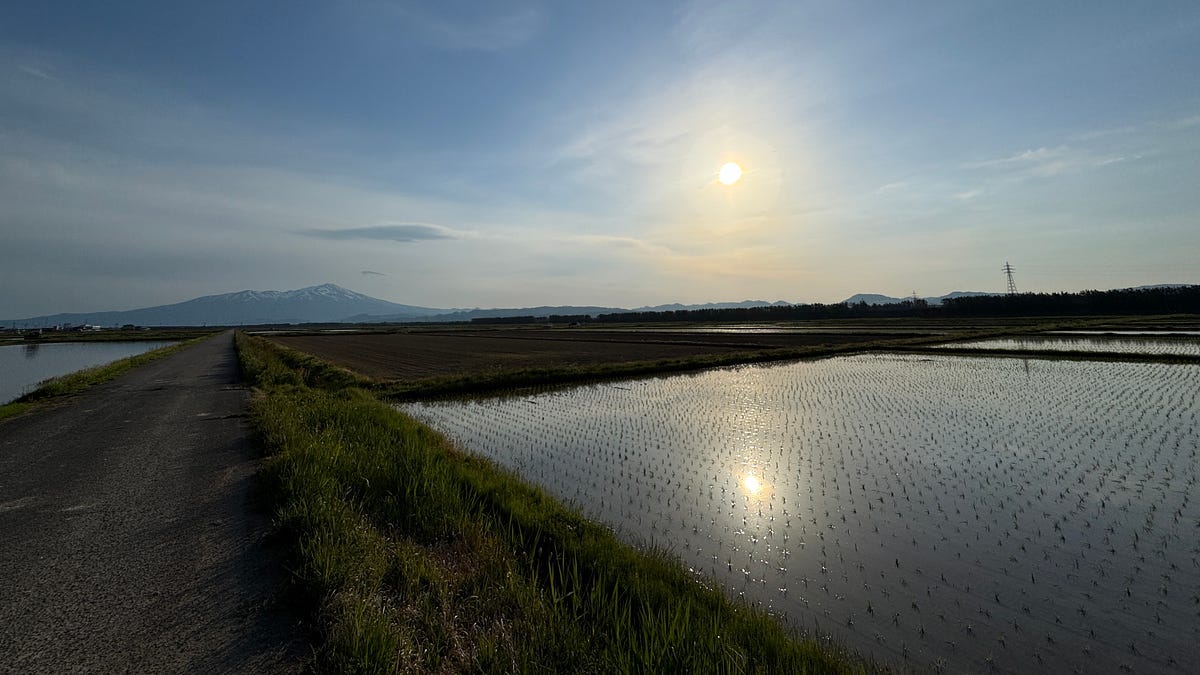
Here in Japan, people really do seem satisfied with what they’ve got. From a Western perspective, or at least from my New Zealand lens, you might even say they lack ambition. Especially here in the Shōnai region of Yamagata. This area isn’t known for extravagance or elegance. In the past it was, but these days not so much. From what I can tell, many people earn little more than minimum wage. I often wonder how they make ends meet. There are old, run-down shops that look like they haven’t had a fresh coat of paint in decades… yet they’re still open. Still running.
My assumption is the older generation are simply coasting on the money they made during the bubble economy, and now they run these shops more as a way to pass the time than to build an empire.
And you know what?
There’s nothing wrong with that.
In fact, I think it’s a wonderful way to keep yourself engaged with life. It’s one way in which you can keep up relationships, apparently the biggest key indicator in happiness.
But for younger generations, it’s no mystery why they move to bigger cities in droves. Here in the countryside, there aren’t many job opportunities. Unless you carve something for yourself, you’ll be stuck with stagnant wages wondering where things went wrong.
Which leads me to my next point: The people I see here who have some amount of success all run their own businesses. They work for themselves. In a culture like Japan’s where anything short of conformity is seen as untoward, that is quite a big step to take. These people are simply the ones who gambled on themselves and broke the surface.
At the same time, those who remain do seem, at least on the surface, content. They may not have much, but what they do have seems enough. And that feeling of enoughness is, I think, the yoyū Craig is pointing to.
Hungry but satisfied.
Personally, I’ve always admired Steve Jobs’ advice to “stay hungry. Stay foolish.” To stay ambitious. To keep searching. Never settle.
This seems at odds with the idea of yoyū.
And at the same time, I try my hardest to live the Yamabushi philosophy of Uketamo, acceptance to the core. Then there’s also the pseudo-Buddhist idea of being satisfied with what you already have. That satisfied state feels close to yoyū.
So here I am, at a crossroads.
Because yoyū, it seems, can only really exist if you’re not overly ambitious. If you’re not constantly reaching. If you’re willing to just let things be.
Of course, this is just a thought experiment. I might be completely wrong. But yoyū feels like a quiet satisfaction, an inner spaciousness that says, “what I have is enough.” It suggests you don’t need to strive for more to be happy.
And maybe this is where Japan starts to seep into my non-Japaneseness.
Because the longer I live here, the more I feel that gentle tug away from the Western instinct to chase more, more, more. The more I notice that my definition of “enough” has shifted. That could just be the Uketamo talking, mind you.
Yet I also don’t want to abandon ambition altogether. I try to live somewhere in the middle: hungry and foolish but satisfied at the same time.
It’s possible yoyū emerged as a cultural response to the post-bubble economy, an adaptation to live well with the cards you’ve been dealt. Or maybe it’s been deeply woven into Japanese culture all along (I suspect this is the answer).
Either way, it’s an interesting tension to sit with.
Written by Tim Bunting — Kiwi Yamabushi
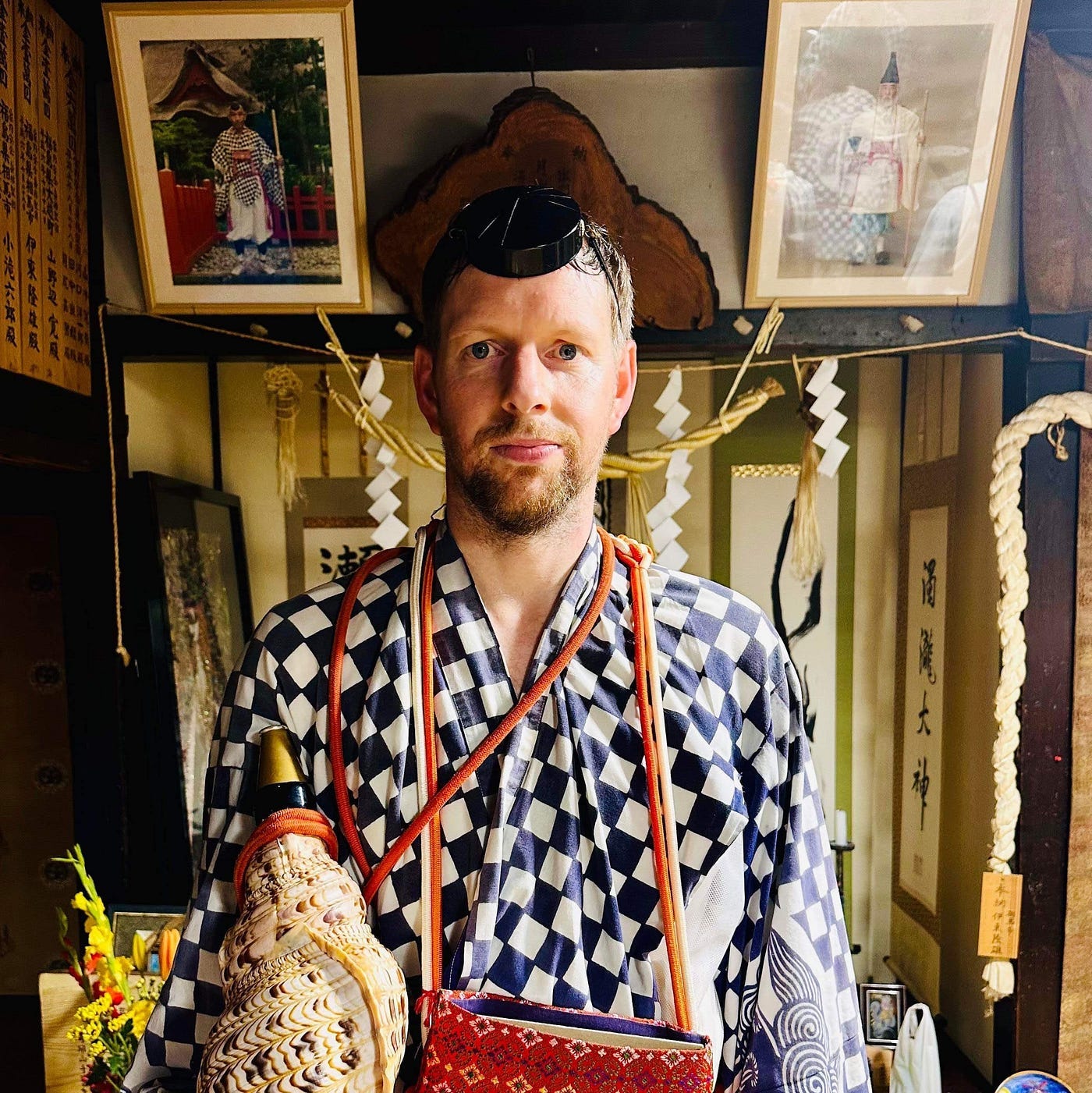
Tim Bunting — Kiwi Yamabushi
Enjoyed this glimpse into the quirks of rural Japan? I’ve lived here for 15 years, training as a *yamabushi* (mountain ascetic) and uncovering the bizarre cultural intersections mainstream travel guides completely miss.
Get insights from the mountains of Japan, Japanese culture deep-dives, and rural Japan photo essays delivered straight to your inbox by joining my community at **The Kiwi Yamabushi Substack**.
Originally published at https://www.kiwiyamabushi.com.
메타데이터
- post_id
- 27c5fa2c3c17
- slug
- the-japanese-concept-of-yoyū-hungry-but-satisfied-27c5fa2c3c17
- url
- https://medium.com/japonica-publication/the-japanese-concept-of-yoy%C5%AB-hungry-but-satisfied-27c5fa2c3c17
- canonical_url
- https://medium.com/japonica-publication/the-japanese-concept-of-yoy%C5%AB-hungry-but-satisfied-27c5fa2c3c17
- author_url
- https://medium.com/@kiwiyamabushi
- status
- ok
- fetched_at
- 2026-06-14 13:58:26