Climbing the Asian Pantry — One Condiment at a Time
A second-generation American learning the flavors her husband loves
Climbing the Asian Pantry — One Condiment at a Time
A second-generation American learning the flavors her husband loves

Image by tommy pixel from Pixabay
Before we get started, a quick introduction. I’m a second‑generation American with Irish‑British‑German roots. I knew nothing about Asian cooking until I met my husband, who — thanks to the U.S. Navy and later civilian work — spent time in Japan, Guam, Hong Kong, and India. He adores Asian cuisine, so I’ve spent years climbing that learning curve and figuring out how to cook the foods he loves.
Let’s Take a Look at Asian Condiments
There’s a pantry I’d like to explore with you — it’s a world of sweet and salty, fierce and funky. You probably know the big names: soy sauce, sriracha, and kimchi. But the Asian pantry goes far beyond those. Let’s take a look.
Black Bean Sauce
The “black beans” here aren’t the frijoles negros you’d put in enchiladas. They’re black soybeans (dou chi in Chinese) that are cooked, inoculated with the same mold used for soy sauce and miso, dried, and stored in brine. The result is bold, pungent, slightly sweet, and naturally thickened from the starch in the beans — perfect for stir‑fries.
You can buy it easily, but you can also make your own. Maggie Zhu, author of The Chinese Stir‑Fry Sauce Cookbook, shares a homemade version on her blog.
Chinese Mustard
It may look like the mustard you’d slather on a ballpark hot dog, but trust me — you don’t want to use it that way. A tiny dab is plenty unless you enjoy pain.
Yellow mustard, Dijon, German mustard, and Chinese mustard all come from the same plant family, but their preparations differ:
- Black mustard (Brassica nigra): small, dark, potent seeds; high in sinigrin — a compound found in members of the cabbage family such as broccoli and Brussels sprouts. It’s what gives them their pungent flavor and is known for its anti-cancer, anti-inflammatory, antioxidant, and antibacterial properties; hard to cultivate.
- Brown mustard (B. juncea): a hybrid of black mustard and turnip; easier to grow; larger, milder seeds; used in most European mustards.
- White/yellow mustard (B. hirta): pale seeds containing sinalbin instead of sinigrin; used in American mustards and pickling mixes.
All mustard seeds are dried and ground. Add vinegar, flour, and spices, and you get American or European mustard. Add only water, and you unleash the full, sinus‑clearing force of true Chinese mustard.
Fish Sauce
Looks aren’t everything — and the same goes for smells. One whiff of fish sauce might make you want to screw the cap back on and toss the bottle away. I’ve wondered more than once who first thought fermented anchovy and squid brine would be a good idea.
But it works … amazingly well.
Harold McGee explains it in his book, On Food and Cooking: “Fish sauces play the same role that soy sauces do in regions where soy doesn’t grow well, and were probably the original model for soy sauce.”
Used sparingly, fish sauce adds depth, salt, and umami to everything from stir‑fries to salad dressings.
Gochujang
Think of gochujang as Korean miso with an attitude. It starts with fermented soybeans and salt, then adds sweetness from sugar and heat from red chiles. The result is a thick, brick‑red paste that brings depth to marinades, stews, and sauces.
You can buy it anywhere now, but the blog Minimalist Baker offers a simple homemade version if you want to try making your own.
Hoisin Sauce
Some people jokingly refer to this condiment as Chinese barbecue sauce, but it’s so much more than that. Hoisin is thick, glossy, salty‑sweet, and full of warm spice. It’s great as a glaze for grilled meats, a stir‑fry ingredient, a marinade, a soup booster, or a dipping sauce.
Kimberly at The Daring Gourmet makes her homemade version with bean paste as the base.
Japanese Mayonnaise
Japanese mayo arrived in 1925 and quickly became a staple. Like American mayo, it’s made from oil, vinegar, and eggs — but with two key differences: only egg yolks (not whole eggs) and rice vinegar instead of distilled. The result is thicker, richer, and slightly sweet. Some brands add a touch of MSG for extra umami.
Its popularity is enormous. In Japan, you’ll find mayo‑flavored snacks and even mayonnaise‑flavored ice cream, as reported by The Daily Meal.”
The team at Serious Eats has a homemade version that rivals the store‑bought kind. I’m a big believer in homemade mayo — Japanese or otherwise. It’s always fresher and better.
Kimchi
Kimchi dates back to the 1st century A.D. Yes, it’s napa cabbage, and it’s fermented, but don’t think of it as “Korean sauerkraut.” Sauerkraut uses shredded cabbage fermented at room temperature. Kimchi uses whole napa cabbage, more salt, garlic, other vegetables, and a much colder fermentation. The result is funkier, punchier, and sometimes slightly fizzy from the active bacteria.
Yeonjoo Jung recently shared her personal experience with making kimchi with us on Tastyble — and (bonus) her fabulous recipe.
[embed]My Chaotic First Kimjang Kimchi A Recipe You Can’t Repeat, But Should Readmedium.tastyble.com
Mirin
Mirin is a sweet, syrupy rice wine with low alcohol (up to 14%). It’s not interchangeable with sake (more about this below). Beware bottles labeled aji‑mirin (“tastes like mirin”) — they’re often sweetened, watered‑down substitutes. If you can’t find true mirin, dry sherry or sweet marsala can work, though they won’t have the same umami depth.
Miso
Miso is a fermented paste made from soybeans and grain (usually rice or barley). Its texture is like soft clay or wet sand. The soy‑based miso we know today emerged during Japan’s Muromachi period (1337–1573), when Buddhist monks refined the technique.
Two main types:
- White (shiro): mild and slightly sweet
- Red/brown (aka): saltier and more savory
Don’t limit miso to Asian dishes. It adds depth to soups, gravies, sauces, stews — even chocolate chip cookies, as the Food Network has proven.
Oyster Sauce
This condiment is exactly what it sounds like — a liquid made from oysters. It’s thick, dark, sweet/salty, and a tremendous umami flavor bomb. True oyster sauce is made by boiling oysters in the shell and then reducing the resulting broth until the perfect concentration and consistency are achieved. Most manufacturers create a faux version by adding salts, sugars, thickeners, and coloring to reduced oyster juices.
Plum Sauce
Also known as duck sauce, this sweet‑and‑tangy condiment is made from plums, sugar, ginger, and vinegar. It’s the traditional partner for Peking duck, but it’s just as good as a dipping sauce for egg rolls or brushed onto grilled chicken or pork.
Before becoming a wife and mom, Diana Johnson spent several years as a nanny. Along the way, she built a huge collection of kid‑friendly, fast, and frugal recipes — including her homemade plum sauce that starts with fresh plums.
Rice Vinegar
As the name suggests, rice vinegar is made from fermented rice. There are many varieties: Chinese rice vinegars tend to be stronger and more acidic, while Japanese versions are milder and lighter in flavor. Colors range from pale straw to deep red, brown, or black.
Seasoned rice vinegar is yet another variation — it has sake, salt, and sugar added, which makes it great for sushi rice but too sweet for recipes that call for plain vinegar.
Sake
Sake (pronounced SAH-keh, not SACK-ee) is a Japanese rice wine made from just two ingredients: rice and water. But unlike grape wine, sake is brewed, not simply fermented. A specific mold (koji) is mixed with rice to convert starches into sugars, and then yeast turns those sugars into alcohol. The whole process takes 60 to 90 days.
Sake ranges from dry to sweet, light to full‑bodied, and it’s used both for drinking and cooking. Just don’t confuse it with mirin — they’re related, but not interchangeable.
Soy Sauce
Soy sauce is unofficially the universal condiment of Southeast Asia. This salty, funky, mahogany‑colored liquid began in ancient China as a fermented fish brew. Around the 2nd century B.C., soybeans replaced fish. Later, during Japan’s Muromachi period (1337–1573), Buddhist monks learned to grind soybeans into a paste — miso — and soy sauce was the by‑product. Over time, the liquid became even more popular than the paste itself.
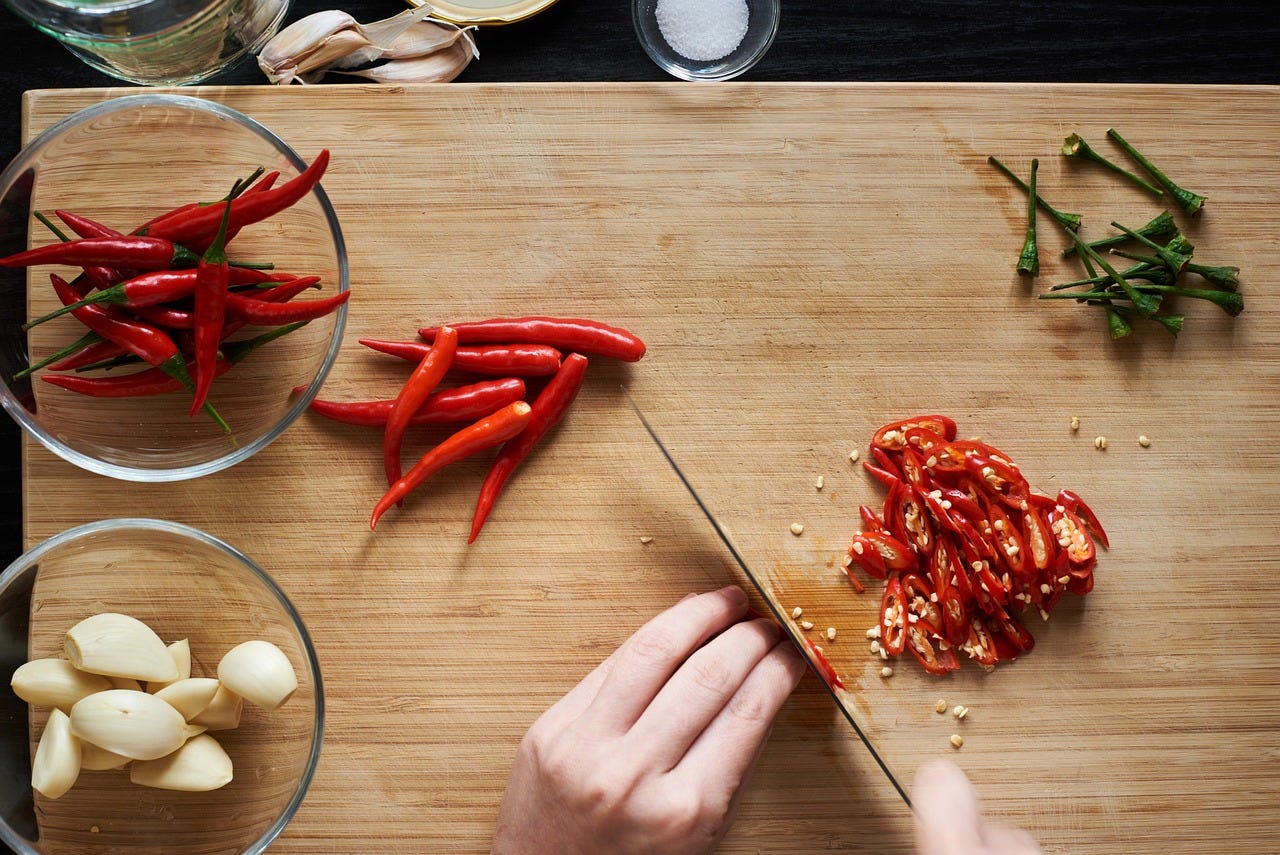
Image by Tonda Tran from Pixabay
Sriracha
Sriracha might be the world’s coolest hot sauce. It’s everywhere now — practically as common as ketchup. Less than two years ago, Huy Fong Foods, maker of the original sriracha, sold 20 million bottles.
David Tran, the company’s founder, immigrated to Los Angeles from Vietnam in 1980. He says he couldn’t find a hot sauce that matched the one he loved back home, so he made his own with jalapeños, vinegar, sugar, and garlic. What started as a small operation is now a facility that produces 3,000 bottles an hour, 24 hours a day, six days a week.
I can’t promise that Pepper Geek’s homemade sriracha recipe tastes exactly like the rooster‑logo bottle, but it uses fresh ingredients — and that’s the heart of Tran’s philosophy. Despite pressure to expand, he has never compromised on quality. Everything he uses is fresh, always.
Wasabi
If you’ve eaten at a sushi bar, you probably think you know wasabi. Maybe you do, but odds are you’ve been served an imposter. Most “wasabi” in the U.S. is powdered horseradish, reconstituted and dyed green.
Real wasabi is a member of the cabbage family and native to Japan. At its best, it’s freshly grated. That grating process releases more than 20 volatile compounds that hit you not on the tongue, but in the eyes and nose — a quick, bright jolt that wakes up your whole head.
I didn’t grow up with any of these condiments, but they’ve become part of how I cook now. Some I use almost all the time, some only when a recipe requires it, and some I’m still figuring out. That’s the fun of it. The Asian pantry is big, varied, and full of surprises, and you don’t need a lifetime of experience to start exploring it. You just start where you are and keep going.
Did you enjoy what you read? If you’d like to read my future writings, subscribe to my email list, and you’ll be notified every time I publish a new story.

메타데이터
- post_id
- 27efd1c865d7
- slug
- climbing-the-asian-pantry-one-condiment-at-a-time-27efd1c865d7
- url
- https://medium.tastyble.com/climbing-the-asian-pantry-one-condiment-at-a-time-27efd1c865d7
- canonical_url
- https://medium.tastyble.com/climbing-the-asian-pantry-one-condiment-at-a-time-27efd1c865d7
- author_url
- https://medium.com/@lindalum_2779
- status
- ok
- fetched_at
- 2026-06-17 08:20:12