The Medical Summary Isn’t the Case — It’s the Starting Point
A medical record can tell you almost everything about a claimant’s treatment history. But can you quickly find what matters to the case?
The Medical Summary Isn’t the Case — It’s the Starting Point
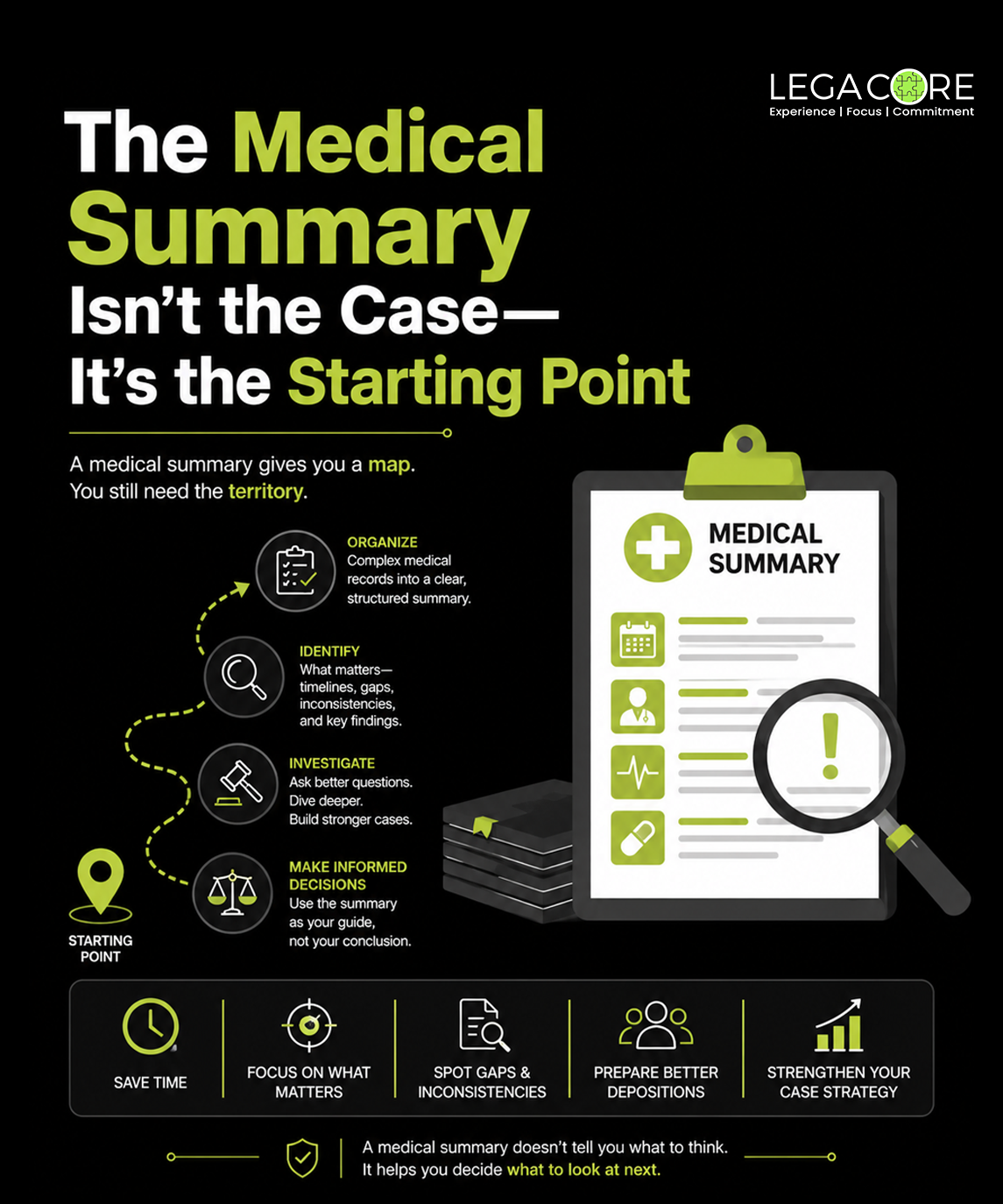
A medical record can tell you almost everything about a claimant’s treatment history. But can you quickly find what matters to the case?
This is where **Medical Summary Services** earn their place. For attorneys, its value isn’t simply turning hundreds of pages into a few readable ones. The real value is helping counsel notice, question, and investigate what happens next.
A good medical summary gives you a map. You still need the territory.
Why Should an Attorney Treat A Medical Summary as a Starting Point?
Imagine a Personal Injury file containing years of medical records. You could read everything from beginning to end. But what exactly are you looking for? First mention of the injury? Evidence of pre-existing conditions? A gap in treatment? A specific test?
You will find all this information. But will you find it on time?
A well-prepared medical summary gives attorneys a working overview before they dive into the underlying records.
What Should an Attorney Look for In A Medical Summary?
Not every medical detail carries the same weight in a legal matter. So instead of thinking, “What happened medically?’ ask, “What could matter legally?”
- When did relevant symptoms manifest?
Timing is one of the strongest factors in any Personal Injury case. Did the claimant report symptoms immediately after the incident? Or did they appear later? Did they ever experience similar symptoms before the incident? A clear timeline brings these questions into sharp focus.
- Was there a relevant pre-existing condition?
A claimant may have a diagnosis that predates the accident. That doesn’t automatically determine causation. But it does give counsel something to examine. What was the claimant’s condition before the incident? What changed? Which complaints are new? These distinctions matter significantly during discovery, deposition, and settlement.
- Does the treatment progression make sense?
Look at the sequence of the events: initial evaluation, testing, referrals, treatments, follow-ups, etc. Do they tell a consistent story? Or are there gaps?
- Are there any inconsistencies or gaps?
A gap in treatment doesn’t automatically mean something is wrong. There could be a perfectly reasonable explanation. But the attorney has to know about it so as not to get blindsided during cross-examination.
What Questions Can A Medical Summary Help an Attorney Ask?
This is where a summary becomes more than just a condensed medical record. With the right mindset, it can become a tool for finding answers. For example:
- Which records deserve closer review?
- Are there any conflicting statements across providers?
- Do diagnostic findings support the reported symptoms?
- Are there any unexplained gaps or sudden changes in treatment?
- Which provider first diagnosed the condition?
- What symptoms already existed before the incident?
When Exactly Are Medical Summaries Useful to Law Firms?
- Initial case review:
Before investing a lot of time and effort in a case, attorneys need to understand the medical history and the scope of the matter.
A structured summary can provide an early overview of things like pre-existing conditions, first diagnosis, extent of injuries after the incident, gaps in care, and causation.
- Discovery & deposition:
A clearer understanding of the medical history can help you concentrate your efforts in the discovery phase. Which dates matter? What about the diagnostics? What needs clarification? Which records or physician notes require closer inspection? A good medical summary may not answer all of them, but it will guide you into asking all the right questions.
- Settlement & trial preparation:
Settlement decisions can hinge entirely on treatment history, procedures, ongoing complaints, pre-existing conditions, and other medical evidence. Later, during trial preparation, the medical records might have grown in volume substantially. A summary can give quick reference points to all important information, like what happened, how it happened, what followed, etc.
A Good Medical Summary Doesn’t Tell Attorneys What to Think
A well-made medical summary won’t tell attorneys what to think. It helps them decide what to examine next. That’s the important distinction. Attorneys still have to evaluate causation, credibility, damages, medical evidence, and the legal issues specific to the matter.
A medical summary shouldn’t make those decisions for them. But it can provide a clearer view of the medical history and direct attention towards the files that deserve closer examination.
The Value Is in Knowing What to Review Next
A medical summary shouldn’t replace an attorney’s review of the underlying records. It should make that review more focused. That is the approach behind **Legacore Solutions Medico-Legal Support Services. **We help law firms organize complex medical records into structured, concise summaries that highlight treatment history, diagnoses, procedures, significant developments, and areas that may warrant a closer look.
FAQs:
How can attorneys use a medical summary during case review?
A medical summary gives attorneys a structured view of the claimant’s medical history, making it easier to identify treatments, pre-existing conditions, inconsistencies, and other important developments. Counsel can then return to the original records for a closer review of the issues.
Can a medical summary replace medical records?
No, a summary is meant to complement the original lengthy records, not replace them. Attorneys will still need to review original documents during evaluation, discovery, deposition, etc. A summary gives them a comprehensive table of contents and references to avoid losing time or missing important notes.
What should a medical summary include?
Depending on the case, it might include treatment dates, provider names, diagnoses, symptoms, test results, procedures, changes in condition, gaps in treatment, and other developments.
What’s the difference between a medical summary and a medical chronology?
A chronology organizes medical events by date, creating an accurate timeline of events. A medical summary takes a broader view by condensing the most relevant diagnoses, treatments, findings, and other developments into a case-focused overview. Attorneys can use either or both depending on their requirements.
Can medical summaries assist with deposition preparation?
A good summary can give counsel a clearer view of the claimant’s treatment history before a deposition. It can help identify relevant dates, providers, potential inconsistencies, diagnoses, progression of treatments, and other important medical events that might influence the case verdict.
메타데이터
- post_id
- 28040da735d5
- slug
- the-medical-summary-isnt-the-case-it-s-the-starting-point-28040da735d5
- url
- https://medium.com/@legacore/the-medical-summary-isnt-the-case-it-s-the-starting-point-28040da735d5
- canonical_url
- https://medium.com/@legacore/the-medical-summary-isnt-the-case-it-s-the-starting-point-28040da735d5
- author_url
- https://medium.com/@legacore
- status
- ok
- fetched_at
- 2026-08-18 08:23:09