Kigezi Ethnicity
A discussion on the different ethnic groups in Kigezi
Kigezi Ethnicity
A discussion on the different ethnic groups in Kigezi
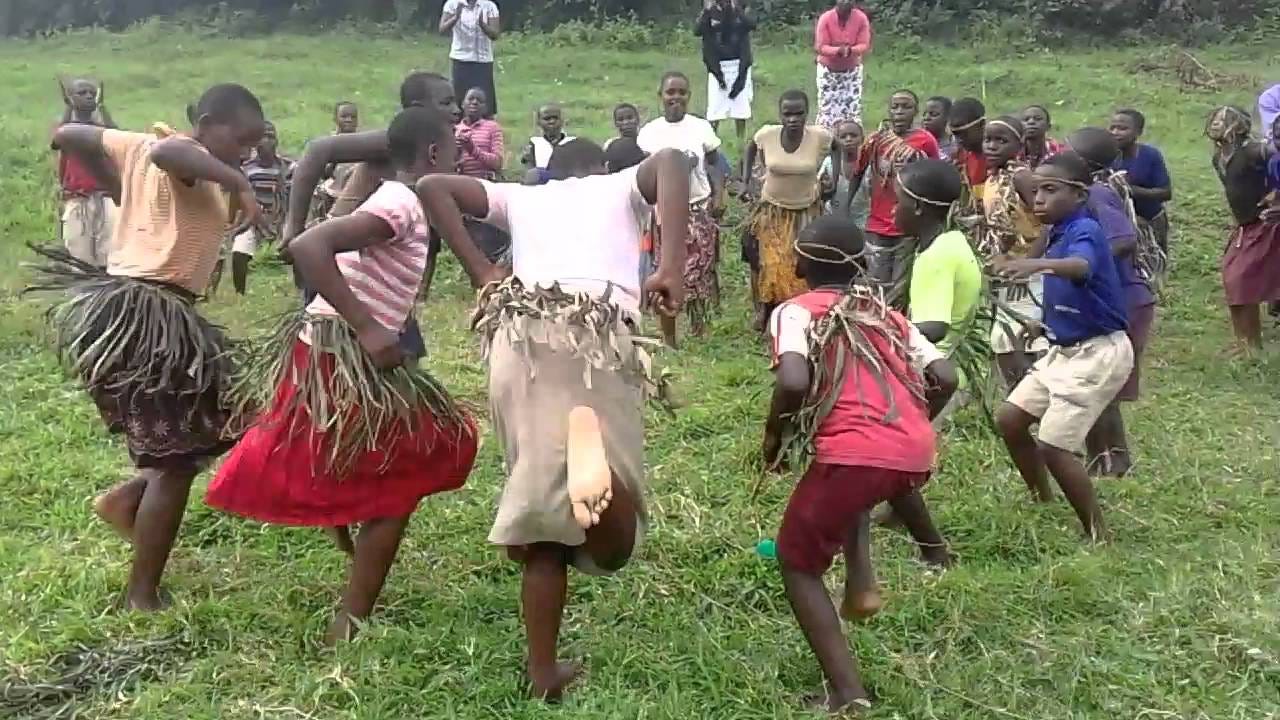
Children performing a traditional dance
As a result of unplanned bonafide circumstances, several ethnic groups ended up within the boundaries of an area called Kigezi. It is therefore not possible for any grouping to claim more ownership, entitlement or rights than any other group. The best they can do is to live amicably, peacefully and respectfully. But this is not to live in denial that there exists different ethnic groups in Kigezi. So, let us discuss them in good faith.
There is a story to illustrate the Kigezi ethnicity sentiments. It dates back from the 1970's during the well known Idi Amin regime. Just like all past regimes, the present and future ones to come, the Idi Amine regime was being condemned of giving big jobs to an ethnic group called ‘Kakwa’ who some critics associated with the ruling President. The western region and Kigezi in particular were the key complainants who Idi Amin agreed to appease by making three simultaneous appointments.
It appears he was well advised about ethnicity in Kigezi and hence made the following balanced appointments:
‘Mr Justus Byagagaire a Muhororo as Minister’
‘Mr Raphael Nshekanablo a Mukiga as Minister’
‘Mr John Bunyenyezi a Mufumbira promoted to seniority in the military’
The unfortunate bit is that Amin was not conversant with ethnicity variations in Kigezi that he had catered for. So he bragged that he had solved the Westerners complaints by promoting three ‘Bakiga’.
The next days newspapers came with corrections. Both Byagagaire and Bunyenyesi were making urgent corrections to the effect that they are not Bakiga. The present generations should be more conversant with this fading away question of ethnicity in Kigezi with the following summary.
The Bafumbira:
In which the Ruhengeri, Kisoro, Noth Kivu plains at the footsteps of mountains Muhabura and Mgahinga are described. This plain is predominantly occupied by people of same related tribes and ethnicity called Hutu and Tutsi. Those in Rwanda and Uganda were called Banyarwanda until 1995 when the ones within the Ugandan Kigezi boarders preferred to be named after their former county name Bufumbira.
The Bafumbira had a very strong reason for the change. Every time they filled forms to enjoy rights of Ugandans such as passports, education facilities or social services, no one differentiated them from refugees or outright foreigners. For those who preferred to remain with the Banyarwanda identity, the ethnic name was retained. Therefore, Kigezi includes the two ethnic groups Bafumbira and Banyarwanda in the Ugandan constitution. The rather awkward situation is that Munyarwanda is literally interpreted to mean a person ‘from Rwanda’ and yet legitimately Ugandan.
The Batwa:
This is the most indigenous ethnic group in Africa who are estimated to have occupied the mountain footstep forest since over 600 years ago. For historical reasons beyond the scope of this write up, they are always on bad or war terms with their neighboring Hutu and Tutsi groups.
In 1991 their homeland forest was declared a world heritage site due to the rare wildlife it hosted. For that reason, the Batwa were recently evicted by force from their natural habitat. They now live and survive in a rather hostile social environment outside the forest including the Rubanda and Kanungu districts of Kigezi.
The Banyabutumbi:
When the international boarder was being demarcated, some members of the ethnic group and kingdom around the lakes region found themselves on the Ugandan side in Kanungu. These are the Banyabutumbi who the Bakiga migrants found in the area and have integrated socially and economically.
The Bahororo:
Some members of the Mpororo Kingdom which was a relative of the Ankole Kingdom were annexed into the Kigezi district by our colonial masters to form the Rujumbura county. Even some Bahima were caught up in the same area and are in present day Kigezi. At one time, some people claimed that Mineera bridge was a demarcation between Bahororo and Bakiga but modernity has diluted the assertion.
The Bakiga:
This ethnic group believes in a structure composed of clusters that rhyme with their social economic interests. Originally, these were ancestral clusters called clans or ‘engaanda’. However, today more criteria than ancestry such as enterprise, employment, education, etc can also attract clustering by Bakiga.
Let it be made clear that there are no indigenous Bakiga anywhere. Those in Kigezi today are only in it because the boundaries caught them there and because they have not found enough reason to migrate elsewhere. Hence they can migrate under the attraction of cluster formation to any place in the world. They did not only migrate from Cameroon, Congo and Rwanda to come to Kigezi as alleged but have continued to migrate to Kisoro, Kanungu, Rukungiri and onlwars to Ntungamo, Ankole, Toro, Bunyoro, Buganda, name it. They must be in Greenland by now. NB: This topic will also be discussed in the NIGAAHE podcast series.
The mixed ethnicity:
This is definitely the biggest grouping and is spread all over the world. It is comprised of three groups; one is the ‘intra-Kigezi’ mix which includes any mix of Bafumbira, Banyabutumb, Banyarwanda, Batwa, Bahororo, Bahima, Bakiga regardless which ethnicity is mother or father.
Two is the extra Kigezi mix which is comprised of any mix where one parent is of Kigezi ethnicity and the other is not, regardless of who is father or mother. Three are descendants of any of the mix.
Having defined the Kigezi ethnicity, we must remember that all these people also have numerous relatives and friends.
Discussion point; Why do some people use ethnicity as a tool of segregation and discrimination rather than a gift of integration and inclusion?
메타데이터
- post_id
- 280ec99aec1c
- slug
- kigezi-ethnicity-280ec99aec1c
- url
- https://medium.com/@nigaahe/kigezi-ethnicity-280ec99aec1c
- canonical_url
- https://medium.com/@nigaahe/kigezi-ethnicity-280ec99aec1c
- author_url
- https://medium.com/@nigaahe
- status
- ok
- fetched_at
- 2026-07-30 12:16:26


