₹0 Spent on Scheme Aimed at Cutting Chemical Fertilizer Use
India’s dependence on imported chemical fertilisers from West Asia has come into sharp focus amid the ongoing Iran war. Fertilisers…
₹0 Spent on Scheme Aimed at Cutting Chemical Fertilizer Use
India’s dependence on imported chemical fertilisers from West Asia has come into sharp focus amid the ongoing Iran war. Fertilisers, critical as “food for crops”, are heavily import-driven: India imports nearly 10 million tonnes (mt) of urea and 6.5 mt of DAP, against domestic production of 30 mt and 3.5 mt respectively, while its entire 3 mt consumption of MOP is sourced from abroad. The Gulf countries dominate this supply chain, with Gulf Cooperation Council(GCC) countries accounting for nearly 75% of urea imports in 2024–25, and Saudi Arabia emerging as the largest supplier of DAP.
The dependence extends beyond finished fertilisers to energy and raw materials. Domestic urea plants rely on natural gas, with the fertiliser sector consuming about 29% of India’s total gas use over half of which is imported, largely from Qatar, UAE and Oman. India also lacks sufficient reserves of rock phosphate, potash and sulphur, making imports unavoidable. Even ammonia, a key input for DAP and complex fertilisers, is sourced mainly from Gulf countries, further deepening exposure to the region.
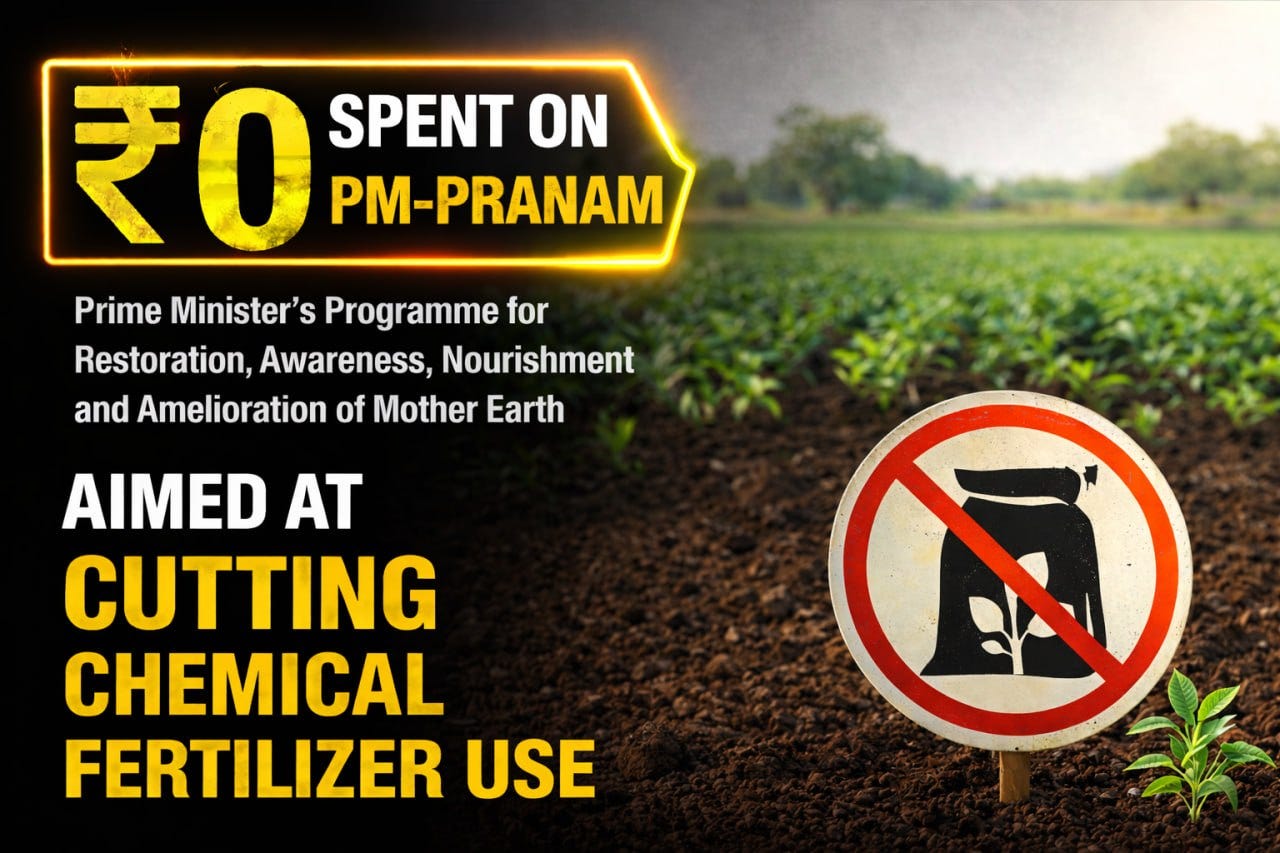
To reduce this use of the chemical fertilizer and imports , the Union government announced a new scheme, PM-PRANAM, in the 2023 Budget. Presenting the Budget, Finance Minister Nirmala Sitharaman announced that the “PM Programme for Restoration, Awareness, Nourishment and Amelioration of Mother Earth (PM-PRANAM) would be launched to incentivise States and Union Territories to promote alternative fertilisers and ensure a balanced use of chemical fertilisers”
The scheme was launched in June 2023 for a three-year period from FY 2023–24 to FY 2025–26, with the aim of incentivising states to reduce the use of chemical fertilisers. While states have reported efforts to cut consumption and fertiliser companies have conducted 14,388 camps and Kisan Sangoshthis to spread awareness, the Union government has not released a single rupee under the scheme so far.
Under the PM-PRANAM scheme, all States and Union Territories are eligible for financial incentives aimed at reducing the consumption of chemical fertilisers such as urea, DAP, NPK and MOP. The scheme provides that states achieving reductions in fertilizer use, compared to their average consumption over the previous three years, will receive incentives equivalent to 50% of the subsidy savings. Of this, 95% of the grant is allocated to the states, while the remaining 5% is retained by the Centre for disaster-adjusted incentives.
Within the states’ share, 65% of the funds are earmarked for capital expenditure projects, preferably aligned with centrally sponsored schemes, while 30% is left untied for other activities, including information, education and communication (IEC) efforts to promote sustainable fertiliser practices.
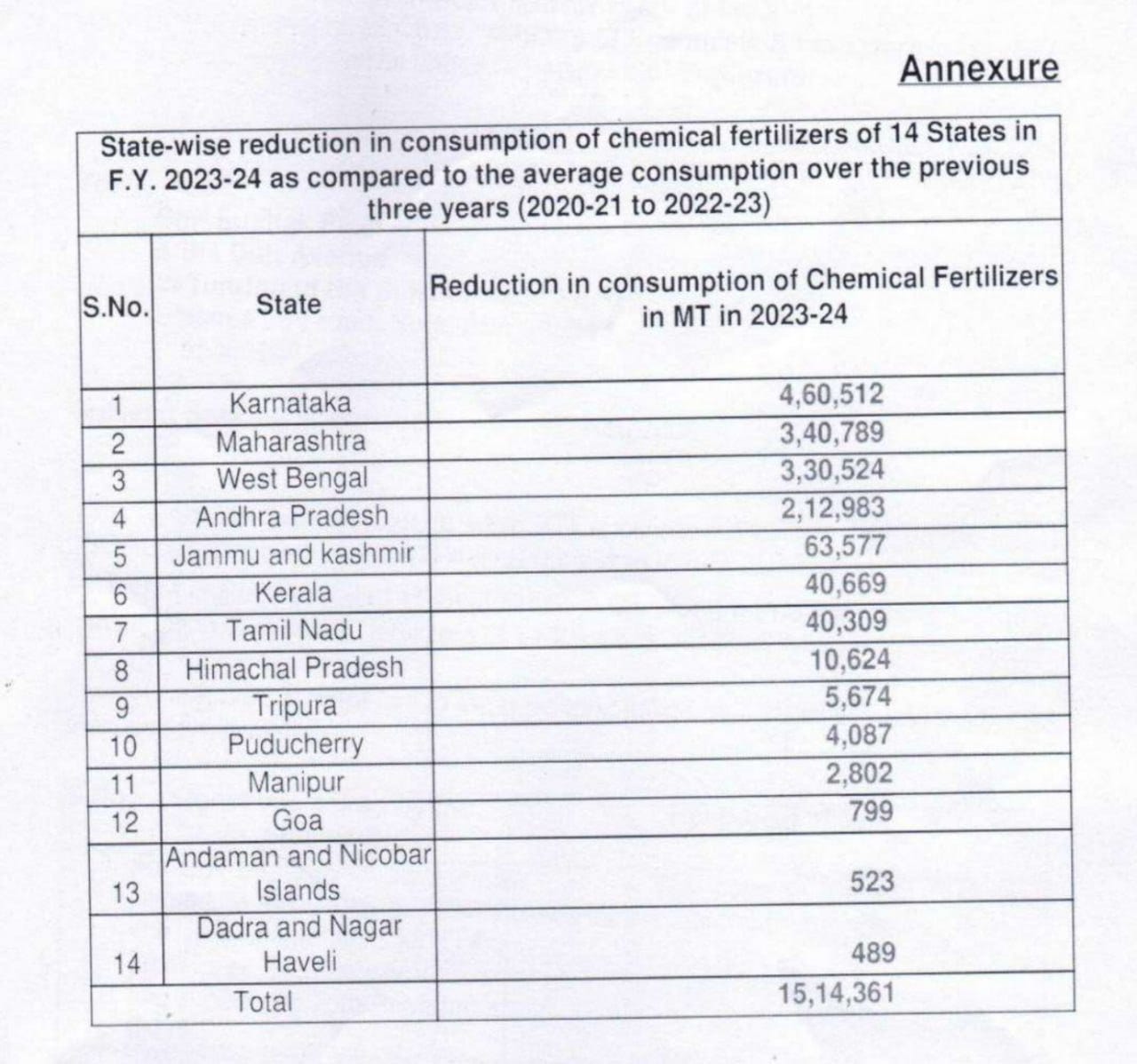
As per an RTI reply, 14 States and Union Territories reported a combined reduction of 14.14 lakh metric tonnes in the consumption of chemical fertilisers during 2023–24, making them eligible for incentives under the PM-PRANAM scheme. For 2024–25, according to a Parliamentary Standing Committee report, three regions — Jammu and Kashmir, Manipur, and the Andaman and Nicobar Islands — have been found eligible for incentives, having collectively reduced fertilizer consumption by 41,842 metric tonnes.
As per the minutes of a Steering Committee meeting held on July 10, 2024, under the chairpersonship of the Secretary (Fertilisers), accessed through an RTI, the total subsidy savings due to reduced consumption of chemical fertilisers (urea, DAP, MOP and NPK) by 14 states in FY 2023–24 was estimated at ₹3,156.92 crore. The savings were to be shared equally between the Centre and the states, amounting to ₹1,578.46 crore each.
The Secretary (Fertilisers) appreciated the efforts of all 14 states, particularly the top three performers — Karnataka, West Bengal and Maharashtra. He highlighted that the savings achieved were significant, nearly equivalent to the agricultural budgets of some states, and stressed the importance of the scheme.
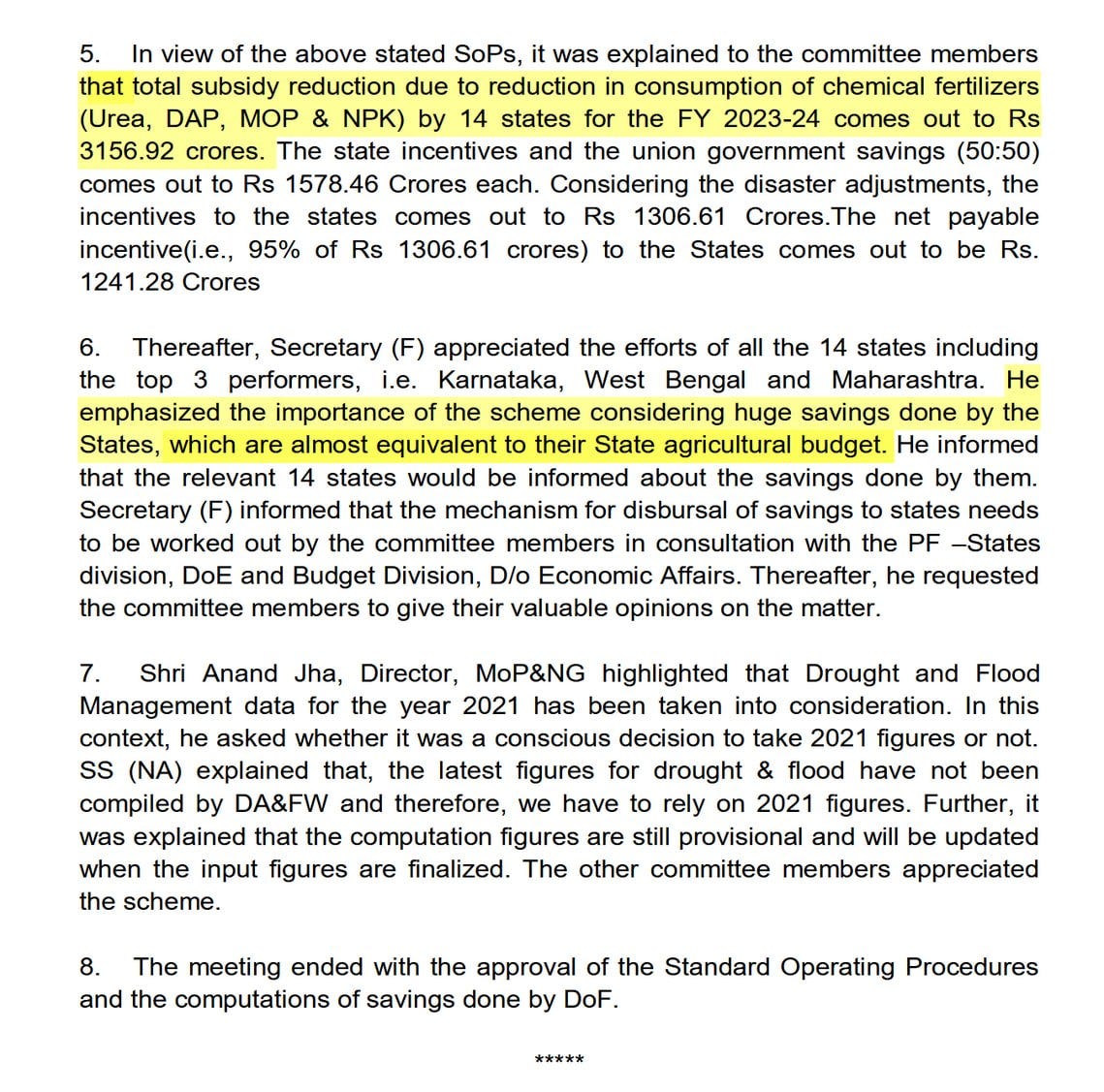
However, as per the RTI reply, not a single rupee has been transferred to the states so far. The Parliamentary Standing Committee, in its report tabled on March 13, also reiterated that no funds have been disbursed under the scheme.
The Standing Committee on Chemicals and Fertilizers, in its Twenty-First Report tabled in Parliament on March 13, 2026, expressed strong concern over the implementation of the PM-PRANAM scheme. It noted that despite being approved for three years from 2023–24 to 2025–26, the scheme has remained largely ineffective in terms of financial disbursement.
“The Committee is deeply concerned to note that the PM Programme for Restoration, Awareness Generation, Nourishment and Amelioration of Mother Earth (PM-PRANAM)… has effectively been a non-starter in terms of financial disbursement. As of the time of examination, not a single rupee has been released as incentive to any State or UT under this scheme,” the report stated.
More strikingly, despite the scheme being launched in June 2023, even after 27 months, the government had not finalised the formula for transferring incentives to states. As of October 2025, no mechanism had been decided to disburse funds, according to an RTI reply.
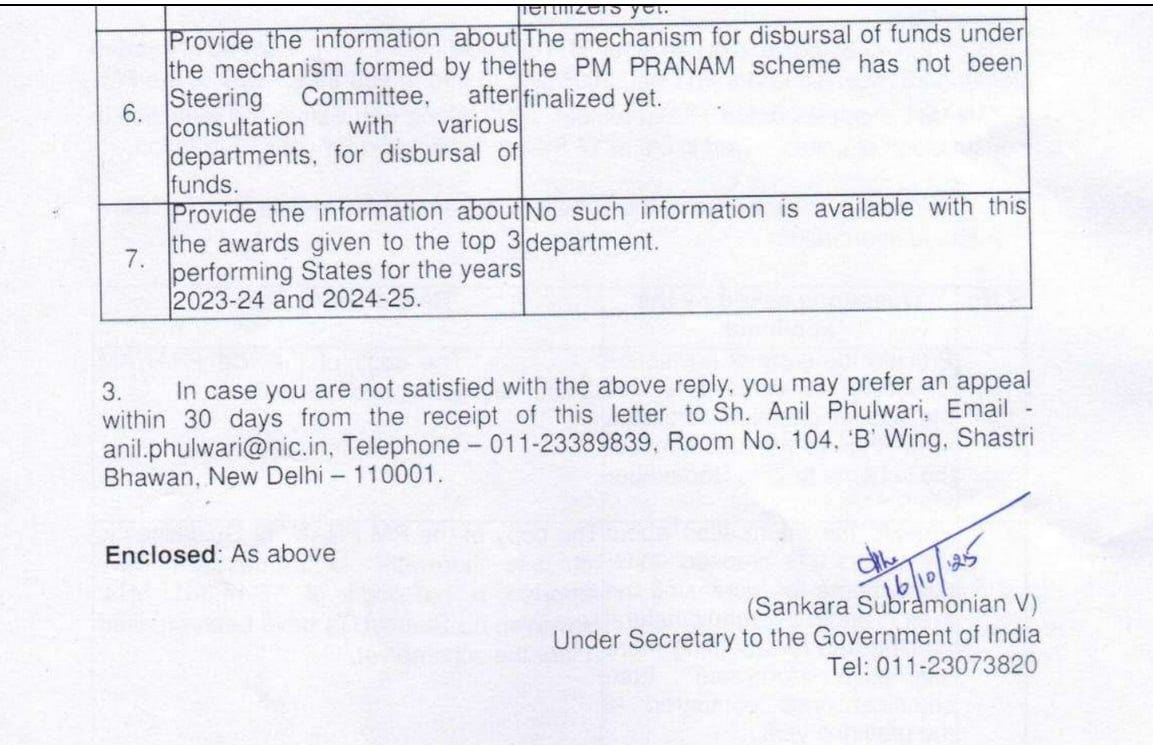
Further, as per the scheme guidelines, the Government of India was to award top-performing states to encourage healthy competition in reducing the consumption of chemical fertilisers. However, in its RTI reply, the Department of Fertilisers stated that “no such information is available with this department.”
The overuse of chemical fertilisers has been a key concern for policymakers even before the Iran war brought fresh attention to India’s import dependence. Addressing the 17th Indian Cooperative Congress, Prime Minister Narendra Modi said that “chemical-free farming, natural farming is the priority of the government,” and highlighted that the PM-PRANAM scheme was approved to encourage farmers to shift towards alternative and organic fertilisers. He emphasised that such a transition would help protect soil health, reduce costs for farmers, and called upon cooperative institutions to spread awareness at the grassroots level.
In his Independence Day address from the Red Fort of 2025 , the Prime Minister also flagged the structural challenge of import dependence, stating that “just like we are dependent on the world for energy… we have to depend on the world for fertilizers as well.” He cautioned against the indiscriminate use of fertilisers, noting the harm caused to “Mother Earth”, and urged the country to develop domestic capacities and reduce reliance on external sources while promoting more responsible and balanced fertiliser use.
At a time when geopolitical disruptions like the Iran war are exposing the risks of India’s heavy reliance on imported fertilisers and inputs, the lack of progress on a scheme aimed at reducing such dependence becomes even more significant. Bridging this gap between intent and action will be critical if India is to move towards a more sustainable, self-reliant and resilient agricultural system.
메타데이터
- post_id
- 281bd01dfd1d
- slug
- 0-spent-on-scheme-aimed-at-cutting-chemical-fertilizer-use-281bd01dfd1d
- url
- https://medium.com/@suchak-writes/0-spent-on-scheme-aimed-at-cutting-chemical-fertilizer-use-281bd01dfd1d
- canonical_url
- https://medium.com/@suchak-writes/0-spent-on-scheme-aimed-at-cutting-chemical-fertilizer-use-281bd01dfd1d
- author_url
- https://medium.com/@suchak-writes
- status
- ok
- fetched_at
- 2026-06-20 20:29:01