How to Keep Kids Active When Outdoor Play Isn’t an Option
We all love the idea of outdoor play. Running barefoot on grass. Climbing playground ladders. Racing bikes down the sidewalk. Fresh air…
How to Keep Kids Active When Outdoor Play Isn’t an Option
How to Keep Kids Active When Outdoor Play Isn’t an Option
We all love the idea of outdoor play. Running barefoot on grass. Climbing playground ladders. Racing bikes down the sidewalk. Fresh air. Sunshine. Big energy.
But let’s be honest… Outdoor play isn’t always realistic.
Some days it’s too hot. Some days it’s pouring rain. Some days, schedules are packed. Some neighborhoods don’t have safe, accessible spaces. And on those days? Screens quietly become the default.
The problem isn’t one rainy afternoon. The problem is when movement slowly gets replaced by sitting, and kids’ bodies and brains miss out on what they need most. That’s where intentional **indoor play** changes everything.
And it’s exactly why spaces like CoCo’s are essential.
How CoCo’s Keeps Kids Moving
CoCo’s isn’t just a place to “hang out.” It’s designed around the principle that movement should be joyful, safe, and natural. Here’s how it works.
1. Movement That Feels Like Fun, Not Exercise
Children don’t respond well to structured “workouts.” They respond to play.
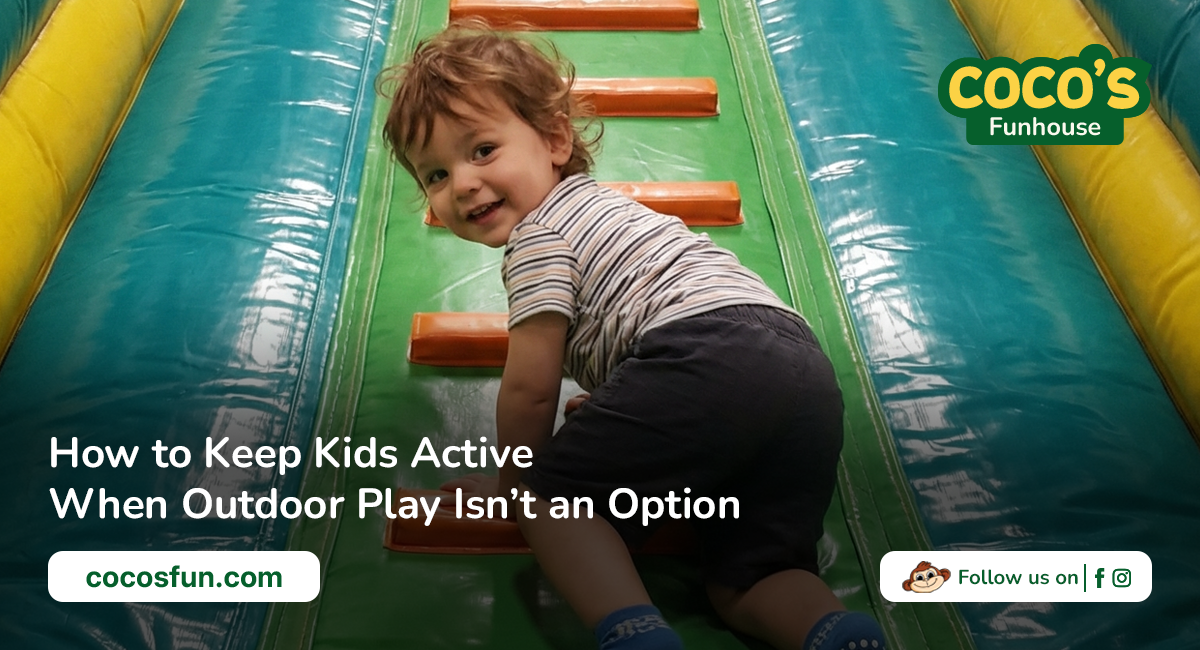
At CoCo’s, physical activity is embedded in the environment. Climbing structures, slides, tunnels, and soft obstacles invite movement in an organic way. Kids aren’t told to exercise.
They
- Climb because it’s exciting
- Crawl because it feels adventurous
- Jump because it’s fun
- Race because their friend did
That intrinsic motivation is powerful. When activity feels like a choice, participation increases naturally. And when participation increases, so does physical development.
2. A Weather-Proof Solution to Active Days
Extreme heat. Heavy rain. Cold snaps. Poor air quality. Busy schedules. Outdoor play is often at the mercy of factors we can’t control. CoCo’s provides a climate-controlled, safe alternative where kids can
- Run freely
- Explore without weather interruptions
- Stay active year-round
No sunburn worries. No muddy shoes. No cancelled playdates. Just consistent movement, no matter what’s happening outside.
3. Safe Exploration Encourages Physical Confidence
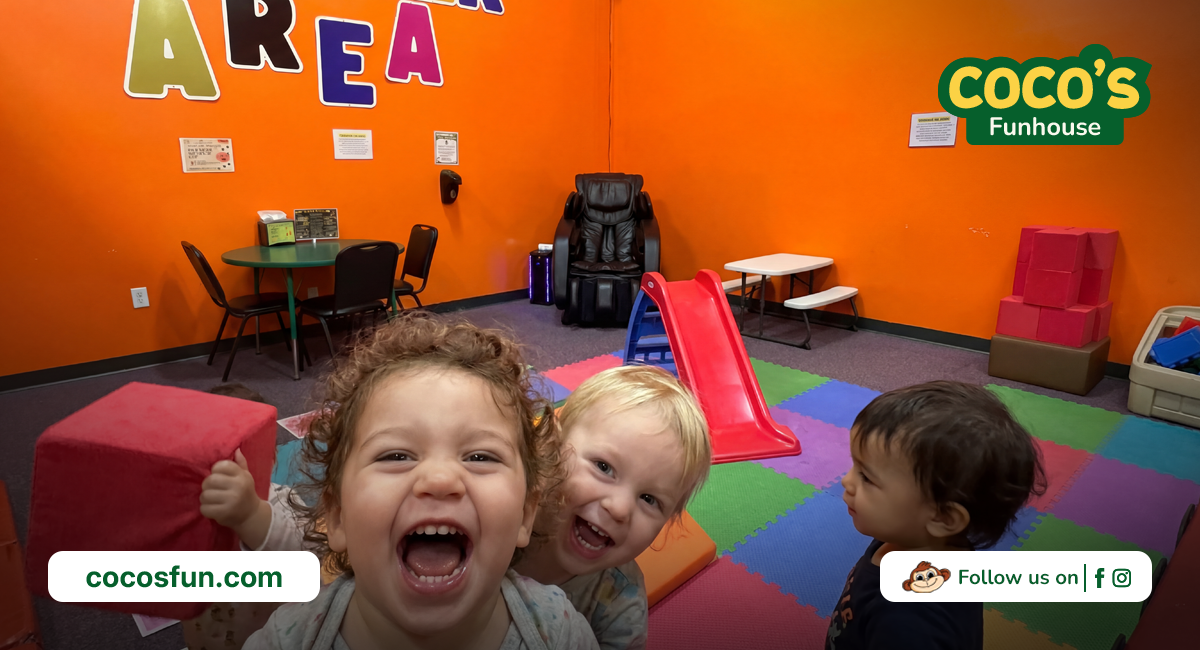
One overlooked benefit of well-designed ***sensory play zones*** is the psychological safety they foster. When children feel safe, they’re more likely to try new physical challenges. At CoCo’s, equipment is age-appropriate and intentionally structured. Surfaces are designed to reduce injury risk. Staff are present to guide without hovering.
That balance matters.
Too much restriction limits exploration. Too little supervision creates overwhelm. In a thoughtfully designed indoor environment, children
- Test their balance
- Practice coordination
- Climb higher
- Attempt new obstacles
Each small success reinforces confidence. And confident movers become active movers.
4. Social Energy Fuels Physical Energy
Have you ever noticed how kids move more when they’re around other kids? Movement multiplies in groups. One child starts a game of tag. Another joins. Soon, it’s a full chase.
At ***CoCo’s Funhouse***, the social environment naturally amplifies activity. Play becomes collaborative. Challenges become shared. Laughter spreads quickly. Social play increases
- Engagement
- Stamina
- Willingness to try new activities
Kids encourage each other to climb, race, and explore. Peer influence is one of the most powerful motivators for sustained physical activity.
5. Structured Flow Prevents Overwhelm
Indoor play shouldn’t mean chaos. CoCo’s uses structured pacing… warm-up play, guided activity, snack breaks, free exploration. Especially during events and parties. This flow serves an important developmental purpose.
Children need
- Activity bursts
- Calm resets
- Clear transitions
When play alternates between high-energy movement and brief regulation breaks, kids stay engaged longer without burnout. It’s a movement with rhythm. And rhythm builds stamina.
6. Multi-Sensory Play Supports Whole-Body Development
Active play isn’t just about muscles. It’s about sensory integration.
Climbing strengthens body awareness. Balancing challenges the spatial orientation. Tactile elements stimulate touch processing. These sensory systems are foundational for
- Focus
- Emotional regulation
- Body control
- Classroom readiness
When kids engage in rich ***indoor play***, they’re strengthening neural pathways that support long-term development, not just burning calories.
How to Keep Kids Active When Outdoor Play Isn’t an Option
7. Indoor Play Improves Emotional Regulation
This is huge. Physical movement releases built-up stress. It lowers cortisol levels and increases endorphins. It helps kids discharge energy in a healthy way. Have you ever noticed how much calmer a child feels after running and playing hard?
That’s biology. At CoCo’s, kids can
- Release excitement safely
- Process frustration physically
- Transition between activity and rest
This combination improves mood and reduces meltdowns, especially on days when outdoor play isn’t possible.
8. Better Sleep Starts With Active Days
Parents often notice something interesting after a high-energy play day, “Kids sleep better.” Physical exertion regulates circadian rhythms and promotes deeper rest. When kids stay active indoors instead of spending the day sedentary, evenings feel smoother.
Bedtime resistance decreases. Energy levels stabilize. Rest becomes restorative.
That benefit alone makes active indoor play worth it.
The Rainy Saturday Shift
It’s Saturday morning. It’s pouring rain. The park plan is cancelled. Energy is rising. Screens are tempting. Instead of settling for a couch day, you head to CoCo’s.
Within minutes, “Shoes are off. Laughter echoes. Climbing begins.”
Your child moves through the space… Cautiously at first, then confidently. They join a group game. They conquer a minor obstacle. They return for more. An hour later, they’re flushed with effort, smiling wide, socially engaged.
The rain is still falling outside. But inside? Movement happened. Social skills developed. Confidence grew. And you head home knowing the day didn’t slip into inactivity.
That’s the shift indoor play zones create.
The Screen-Time Trap
When outdoor play isn’t available, screens are the easiest substitute. They’re quiet. They’re engaging. They’re convenient. But they’re sedentary.
Extended sedentary time has been linked to reduced physical fitness, attention challenges, and mood fluctuations. More importantly, screens don’t replicate the full-body, social, and sensory play that ***family fun centers*** offer.
Kids don’t just need entertainment. They need motion. They need interaction. They need a challenge. And when that need isn’t met, you see it.
- Restlessness
- Short tempers
- Trouble focusing
- Difficulty sleeping
Movement is regulation. Which is why indoor play spaces matter so much.
Why This Matters Long-Term
Modern childhood looks different from previous generations. More indoor time. More structured schedules. More digital engagement.
We can’t always control the environment outside. But we can intentionally create environments that support active development indoors. CoCo’s isn’t replacing outdoor play. It’s complementing it.
It’s filling the gaps when weather, safety, or schedules limit access to parks and backyards. And it’s doing so in a way that feels joyful, not forced.
It’s Development in Motion
When kids stay active indoors at CoCo’s, they’re building
- Strength
- Coordination
- Endurance
- Social confidence
- Emotional resilience
- Cognitive flexibility
They’re practicing problem-solving while climbing. They’re learning cooperation during group play. They’re regulating emotions through movement. This isn’t “just” play. It’s foundational growth happening in disguise.
Conclusion
Outdoor play will always be wonderful. There’s no replacing sunshine and open fields. But when outdoor play isn’t an option, children still need to move.
They still need to climb. They still need to run. They still need to laugh loudly with friends.
CoCo’s makes that possible… Consistently, safely, and joyfully. Because active kids aren’t just healthier. They’re happier. More focused. More confident. Better rested. And sometimes, the best solution isn’t waiting for better weather.
It’s finding a space where movement never has to stop.
메타데이터
- post_id
- 286e0806cc0c
- slug
- how-to-keep-kids-active-when-outdoor-play-isnt-an-option-286e0806cc0c
- url
- https://medium.com/@cocosfunhouse/how-to-keep-kids-active-when-outdoor-play-isnt-an-option-286e0806cc0c
- canonical_url
- https://medium.com/@cocosfunhouse/how-to-keep-kids-active-when-outdoor-play-isnt-an-option-286e0806cc0c
- author_url
- https://medium.com/@cocosfunhouse
- status
- ok
- fetched_at
- 2026-08-06 12:25:20