The Garden That Remembered (Scary Story)
The invitation had come addressed to Miss Thea Crane, Botanical Illustrator, and had offered her three weeks at Ashverne House in exchange…
The Garden That Remembered (Scary Story)
The invitation had come addressed to Miss Thea Crane, Botanical Illustrator, and had offered her three weeks at Ashverne House in exchange for a complete illustrated record of its walled garden before the estate passed to new ownership in the autumn. The letter was written in a hand so precise it might have been typeset, signed by a solicitor whose firm had apparently managed the Ashverne estate for four generations without anyone finding cause to update their letterhead.
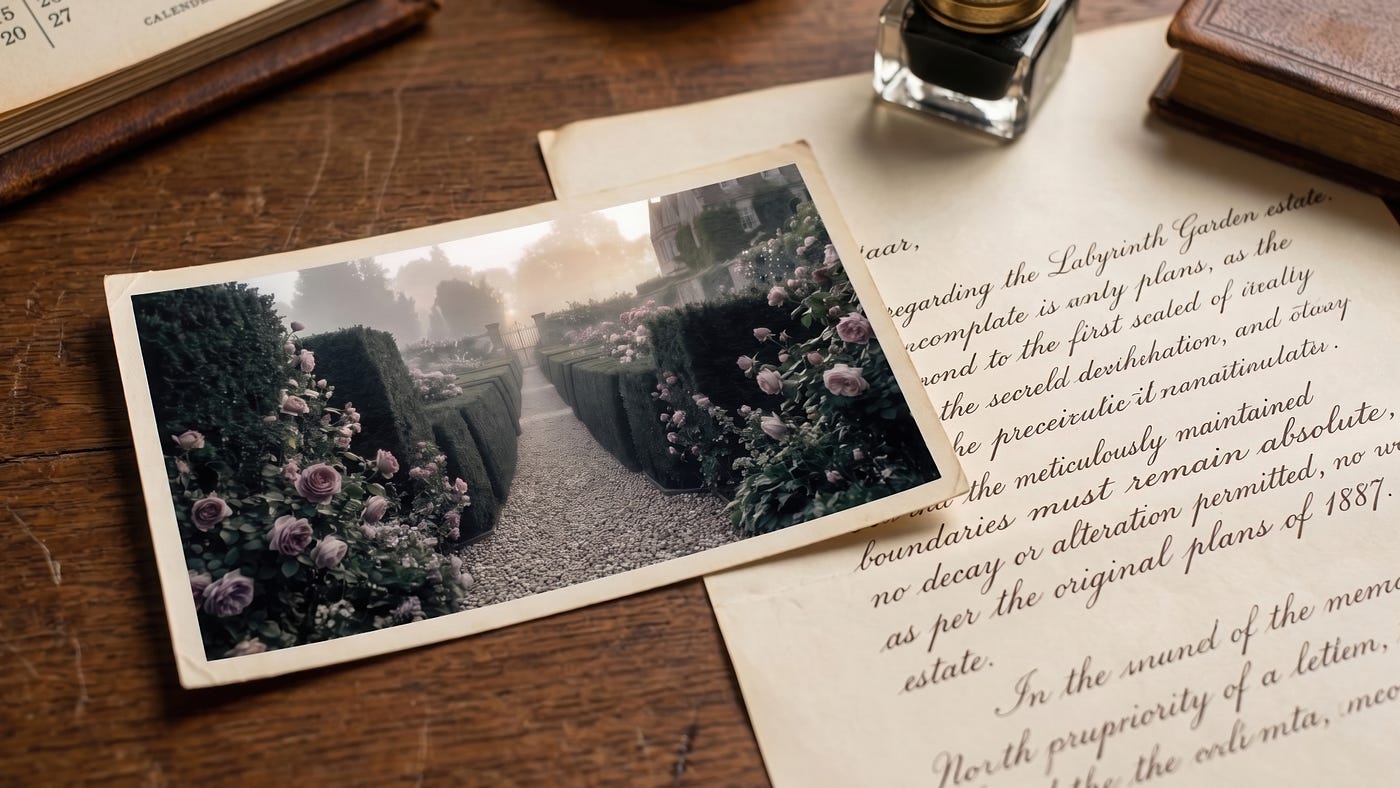
Thea had accepted within the hour, not because the commission was exceptional, though it was, but because the single photograph enclosed with the letter had shown a garden so improbably intact for an estate reportedly unoccupied for eleven years that she had simply needed to see it with her own eyes.
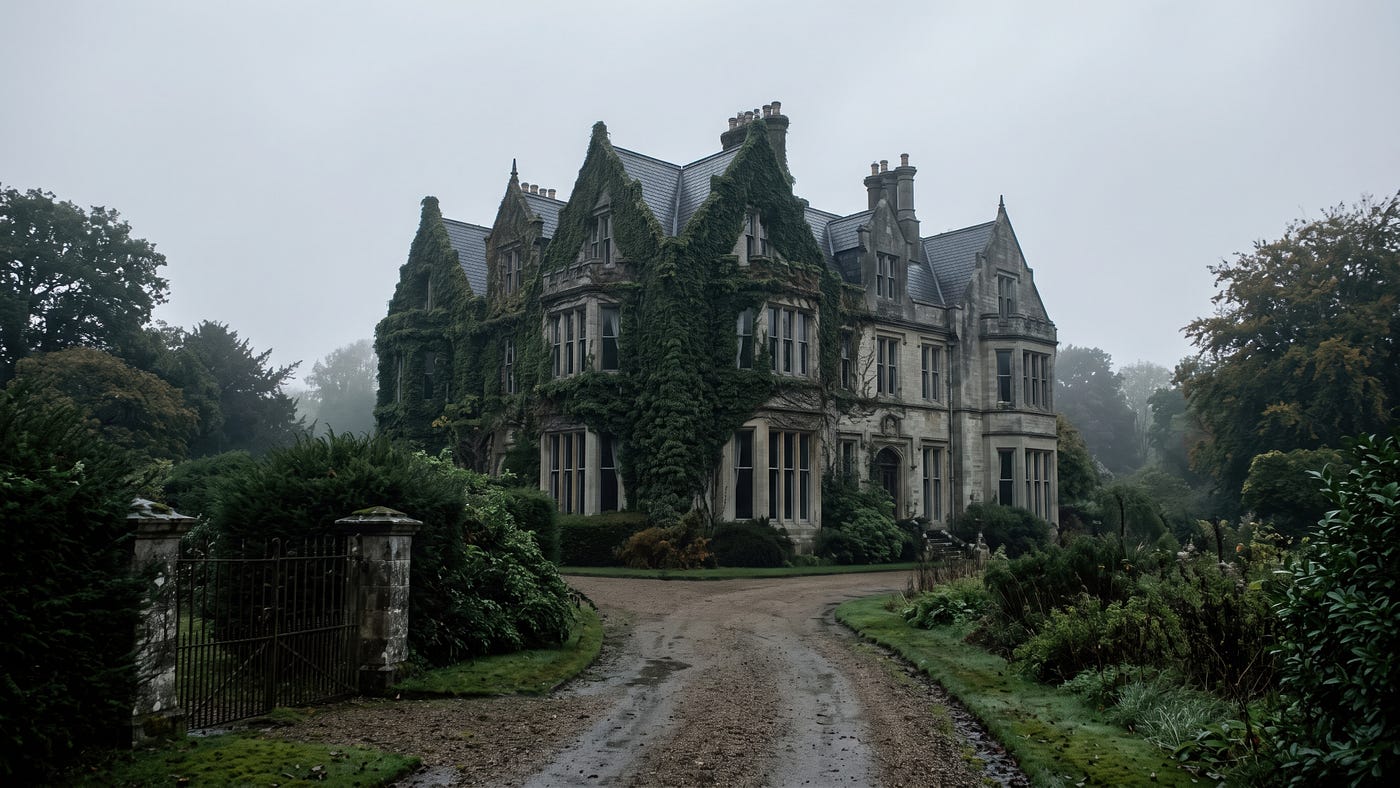
The house itself was the particular kind of beautiful that required significant effort not to find melancholic — three storeys of pale stone darkened by decades of ivy, its windows reflecting the September sky with the flat opacity of eyes that have stopped focusing on anything near.
A housekeeper named Mrs. Pell met her at the door, a compact woman of indeterminate age who communicated primarily through implication and showed Thea to a room overlooking the south lawn with the efficiency of someone who had done this precise thing many times before, for many previous guests, and had long since stopped finding it remarkable.
“The walled garden is through the iron gate at the end of the south path,” Mrs. Pell said, pausing at the door. “You’ll want to go in the morning, when the mist is still present. It photographs better that way.” She offered this last observation as casually as one might recommend a preferred breakfast time, and was gone before Thea could ask how she knew she photographed her subjects before drawing them.
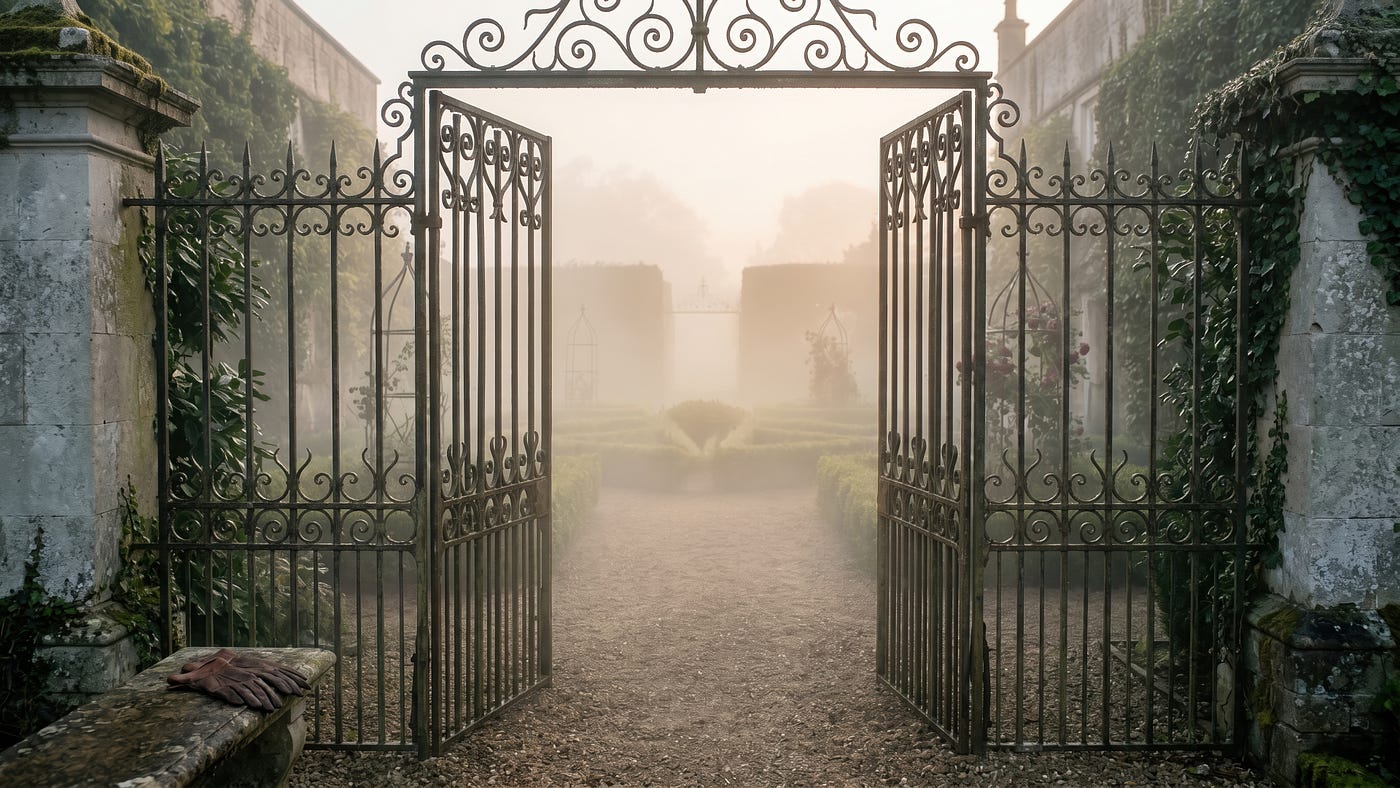
The walled garden revealed itself the following morning exactly as Mrs. Pell had prescribed — the mist still thick enough to soften every edge, turning the iron gate at the path’s end into something that seemed to stand slightly outside the normal geometry of the morning.
The gate was unlocked. Beyond it, Thea stopped walking and simply stood for what she later estimated, checking her watch against the light, must have been nearly twenty minutes, though it felt like considerably less.
The garden should not have looked the way it looked. Eleven years of vacancy should have produced a very specific kind of beautiful disorder — the triumphant sprawl of unchecked growth, nature reasserting itself over formal intention with characteristic indifference to human design. What Thea found instead was a garden in the full authority of its intended form, every bed maintained to a standard that suggested not merely regular tending but devoted expertise.
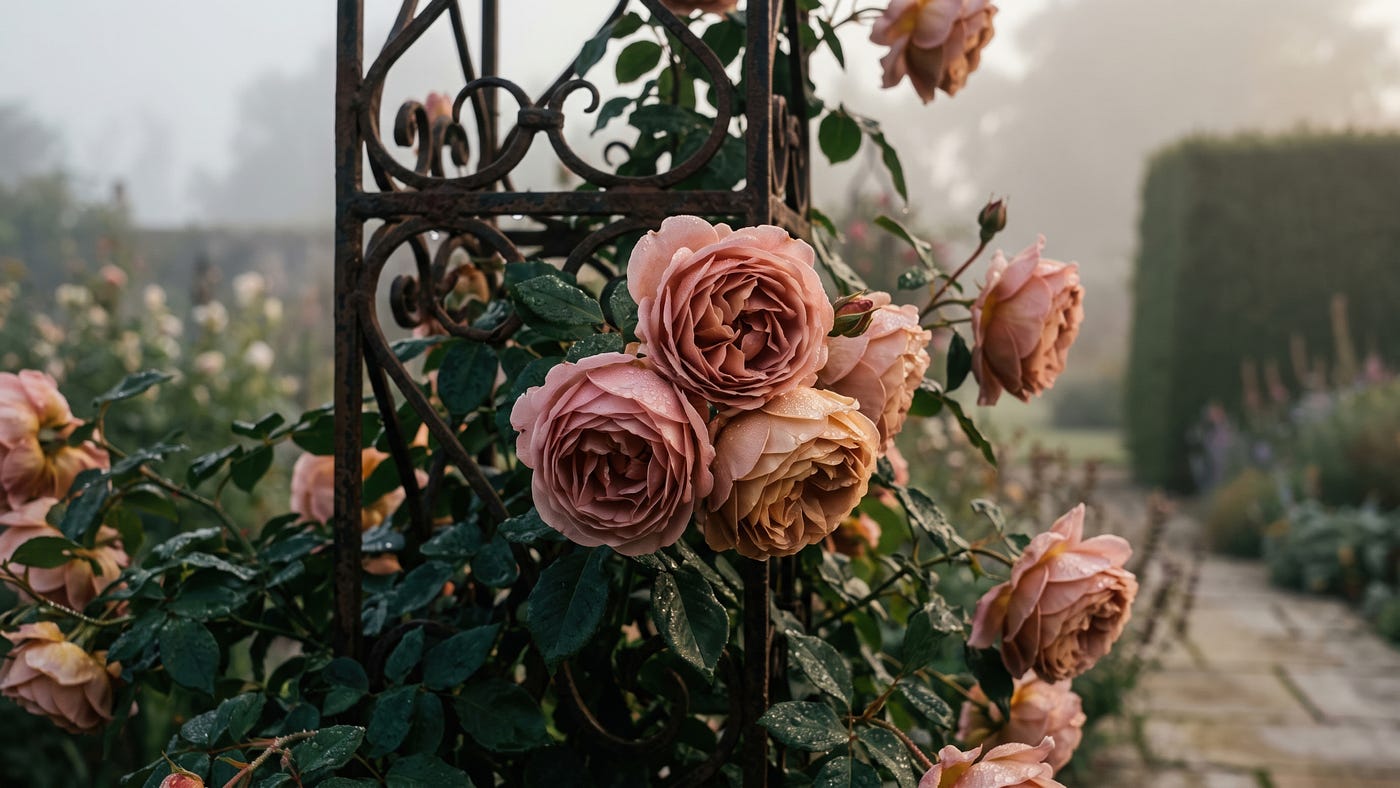
Roses climbed their iron frameworks as though placed that morning. Box hedges that would have required decades to reach their current height stood in formations of such geometric precision that she had to resist the instinct to check them with a surveyor’s level.
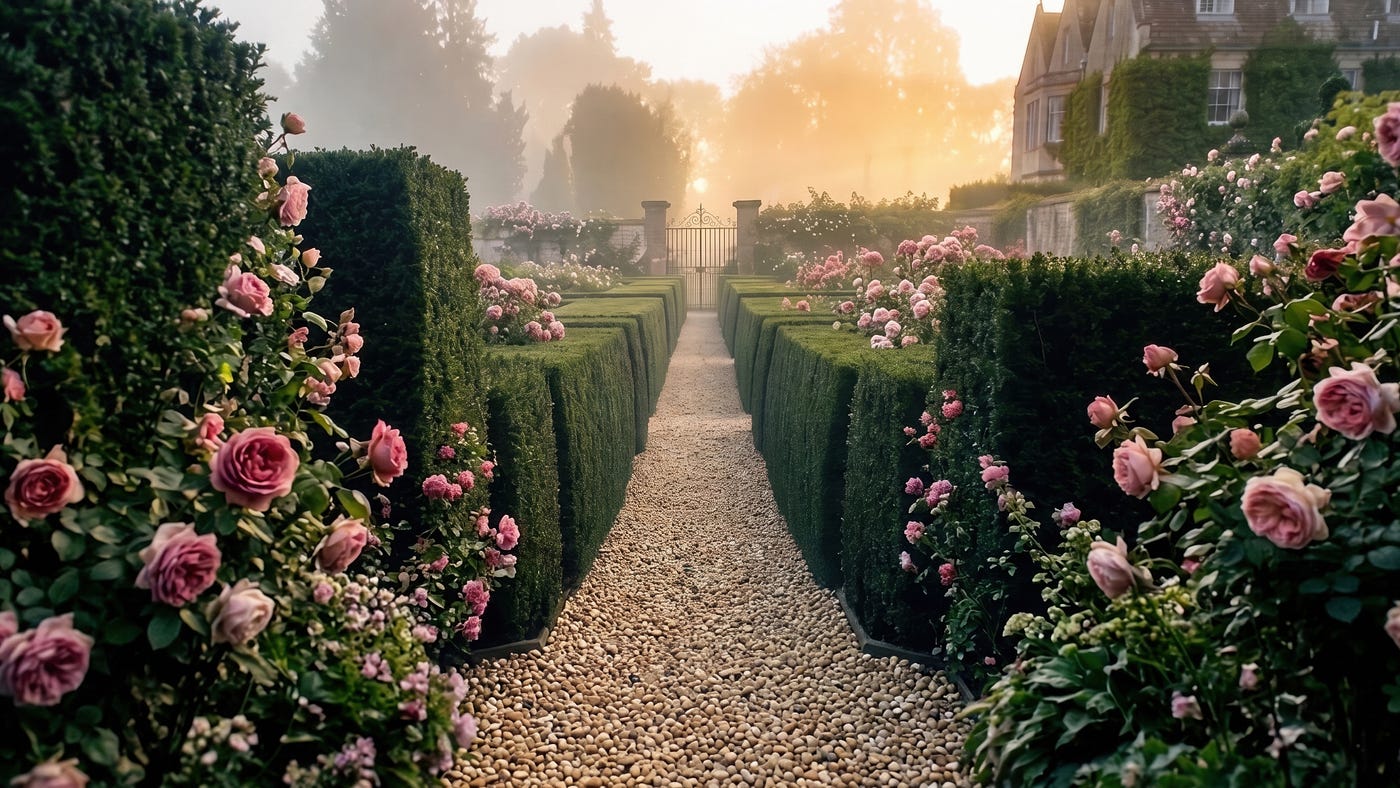
The gravel paths between the beds were raked in patterns she recognized from Victorian horticultural manuals as specific to the 1880s, a period style so labor-intensive it had been largely abandoned by the turn of the century.

At the garden’s far end, the labyrinth began. She had not seen it in the photograph, which she later realized was because the photograph had been taken from ground level and the labyrinth’s hedges, English yew grown to a height of nearly twelve feet, were visible only once you stood close enough to understand the scale of what you were looking at.
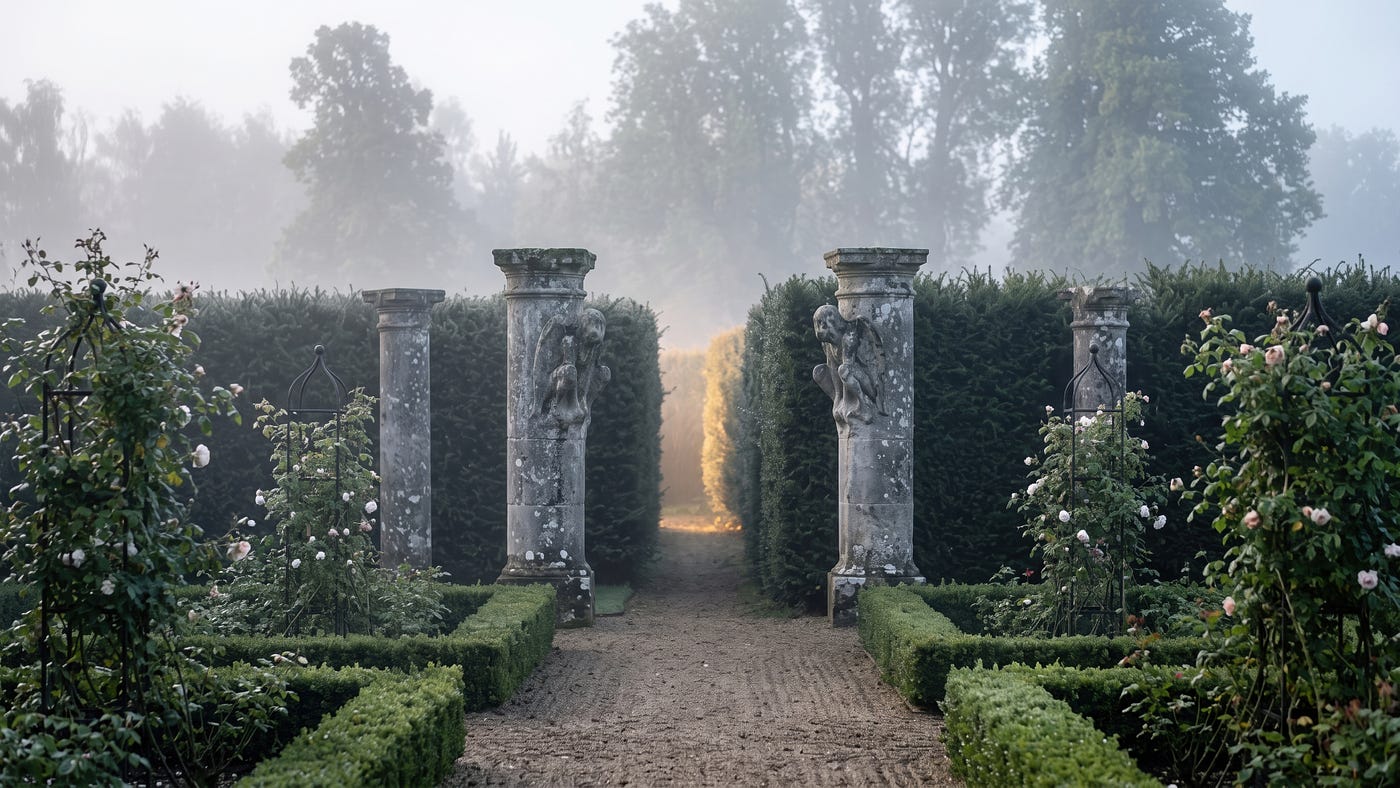
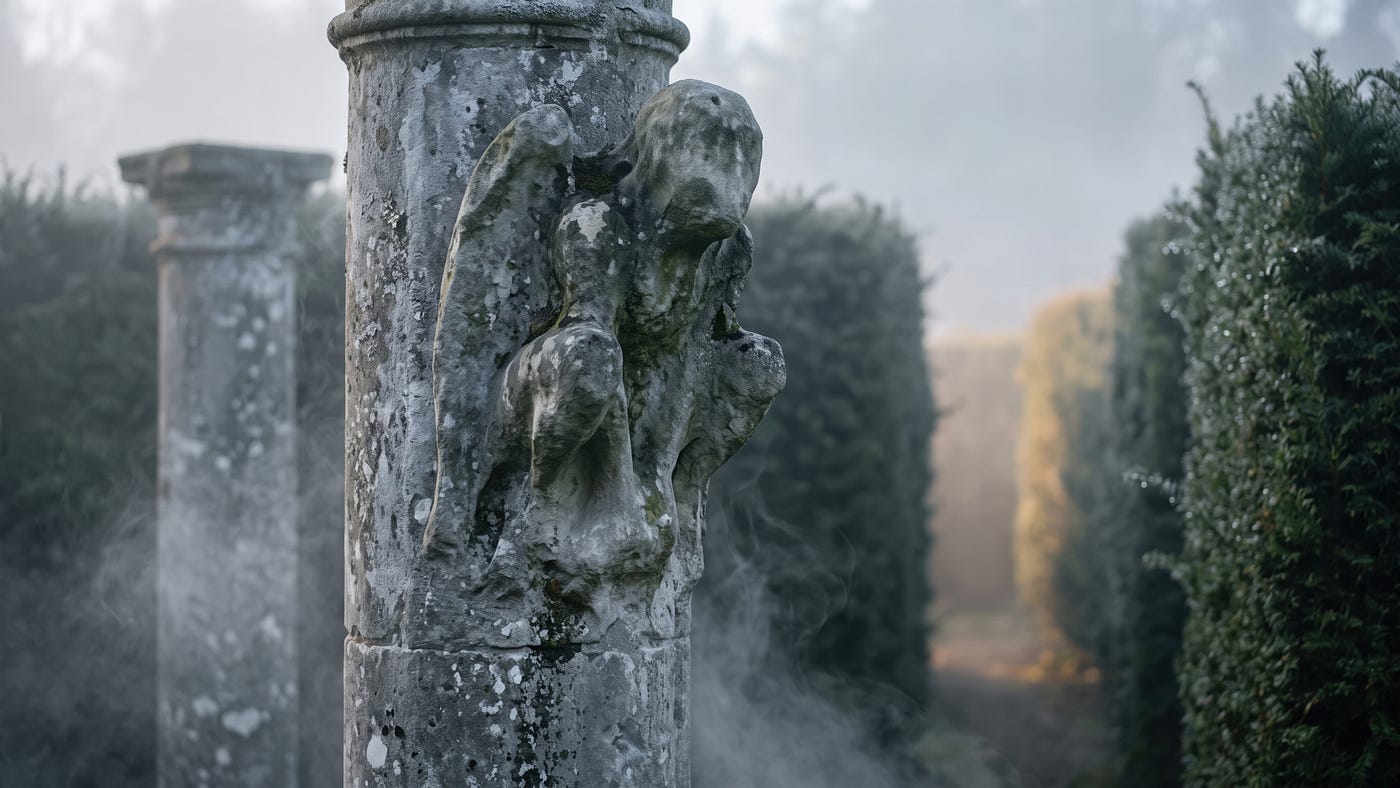
It occupied the northern third of the walled garden, its entrance marked by two stone pillars bearing weathered figures she could not immediately identify — not angels, not quite human, something older than either category suggested.
She began drawing from the rose beds, working methodically south to north the way she always did, building her understanding of a garden’s design from its periphery inward. The work was absorbing in the particular way her work always was, requiring the specific quality of attention that excluded most other thought, and it was this quality of attention, she believed later, that allowed her to notice the first discrepancy without immediately understanding what she was noticing.
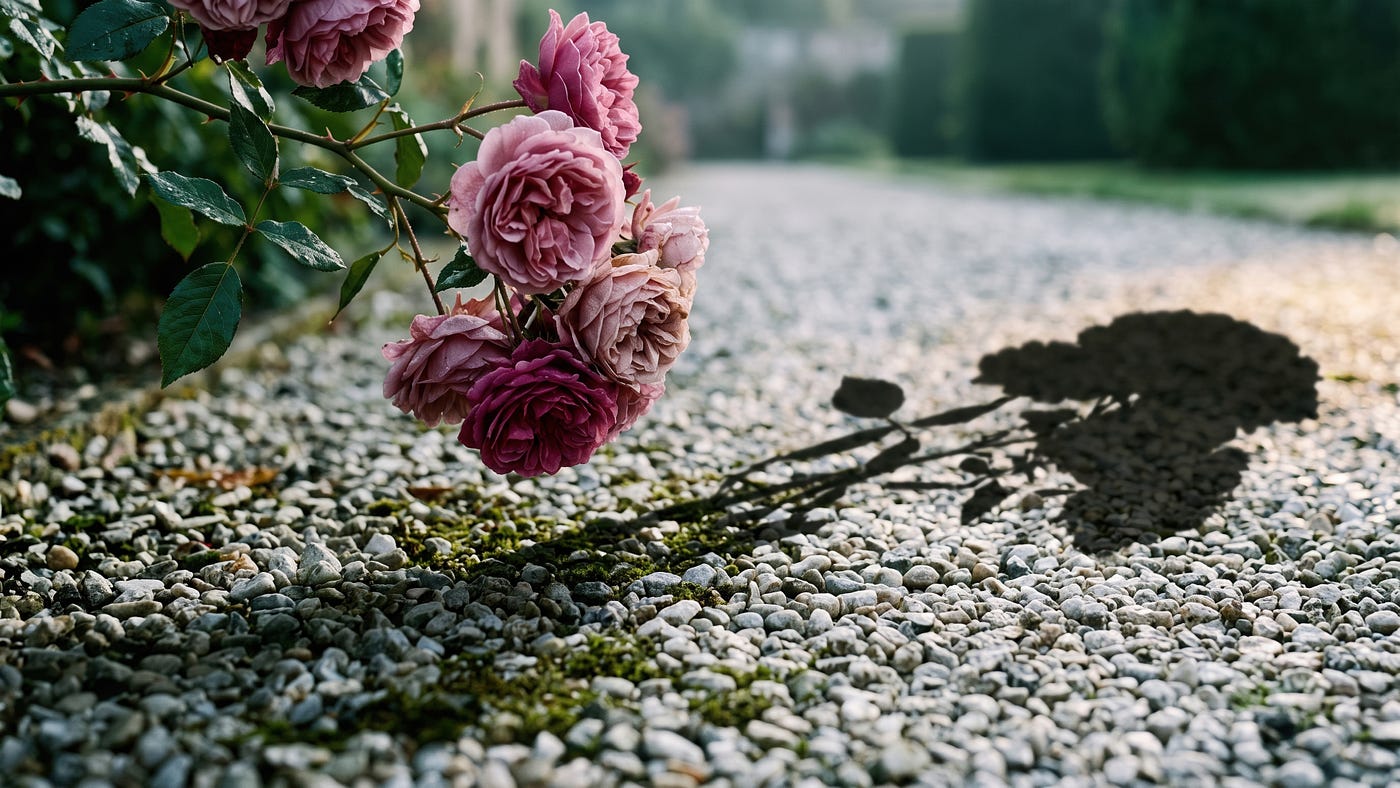
The rose she was drawing — a deep-petaled variety she identified as a Bourbon, popular in Victorian planting schemes — cast a shadow on the gravel path that did not correspond to the position of the morning sun. The shadow fell at an angle suggesting late afternoon light, long and oblique, though the sun above the garden wall was clearly and unambiguously at its mid-morning position. She noted it in the margin of her sketchbook with the professional habit of recording anomalies for later consideration, and continued drawing.
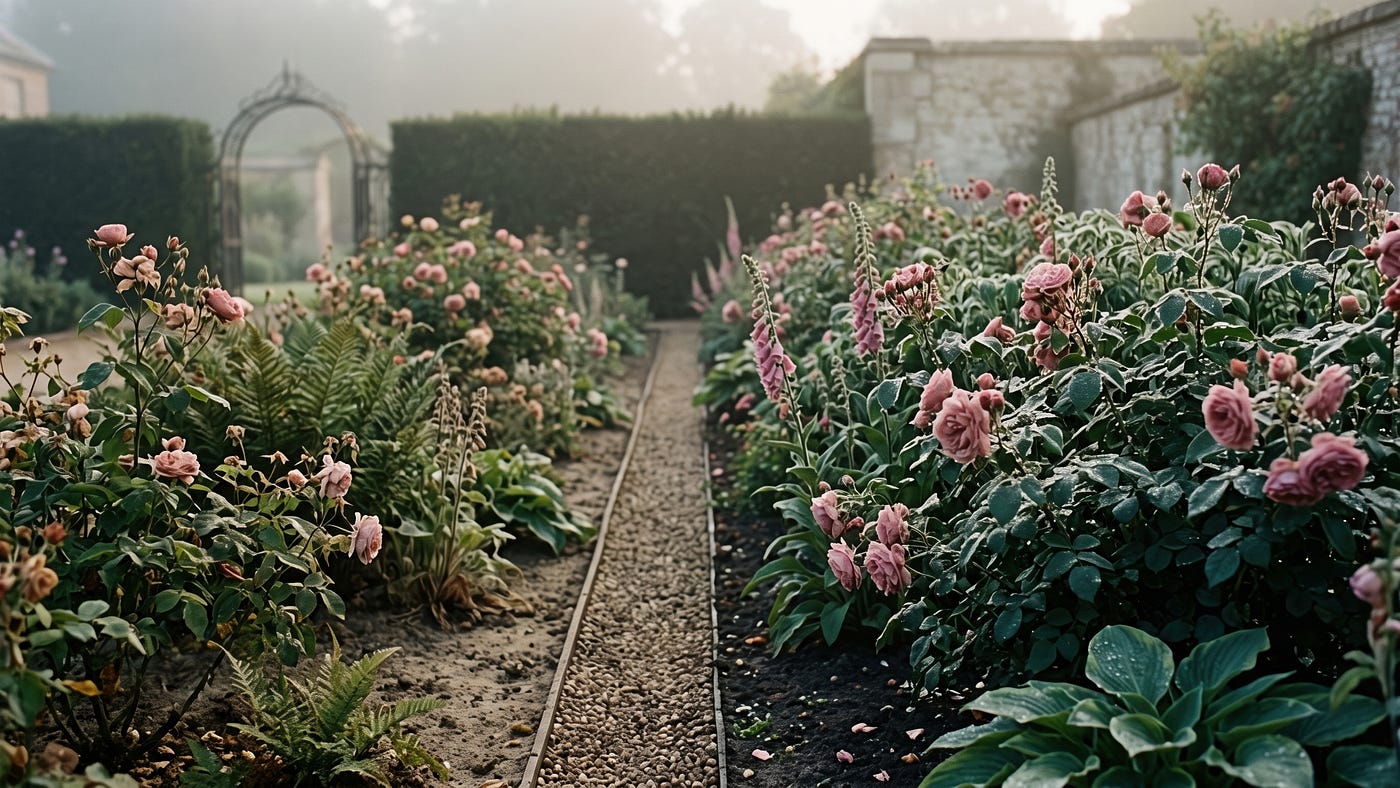
By the third morning, her margin notes had accumulated into something she could no longer defer to later consideration. The shadows that disagreed with the sun. The dew present on certain beds when surrounding beds were dry, as though those specific beds existed in an earlier hour than the ones beside them. The birdsong she heard on her first morning, a species she could not identify, that seemed to come from within the labyrinth and stopped whenever she approached the entrance and resumed the moment she stepped back.

Most troublingly, the sketchbook itself — on the second morning she had found the page containing her drawing of the box hedges altered, two additional flower varieties rendered in a hand so close to her own that she had spent an uncomfortable quarter hour convinced she had simply forgotten drawing them, before acknowledging that they depicted plants not present in the bed she had drawn, plants that were not, as far as her considerable botanical knowledge extended, varieties that had existed since the early twentieth century.
On the fourth morning she entered the labyrinth.
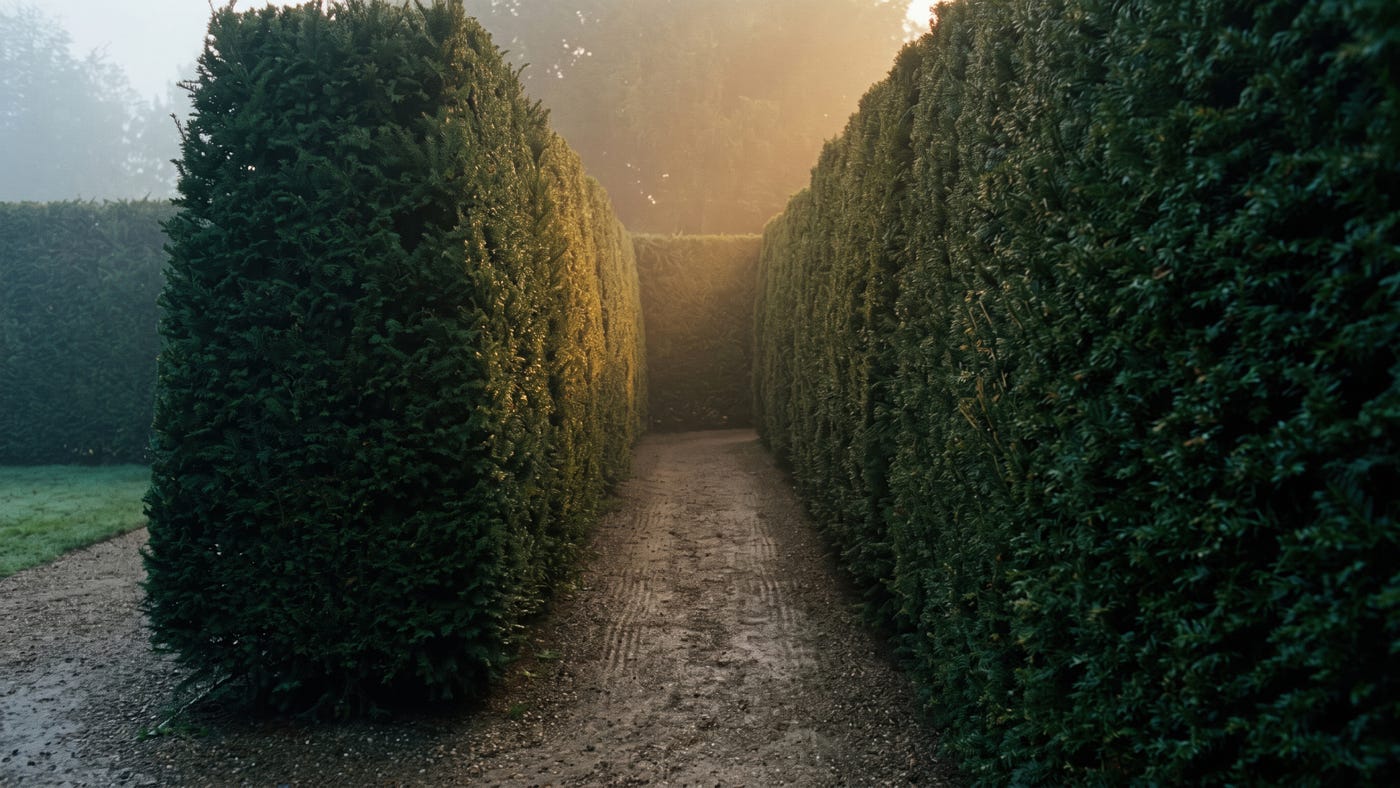
The yew walls closed around her with the immediate authority of something that had been waiting to do exactly this, and the quality of light inside the labyrinth was different from the garden beyond it in a way she could not attribute to the height of the hedges alone. It was softer, slightly golden, the light of a specific time of day she could not match to the hour on her watch.
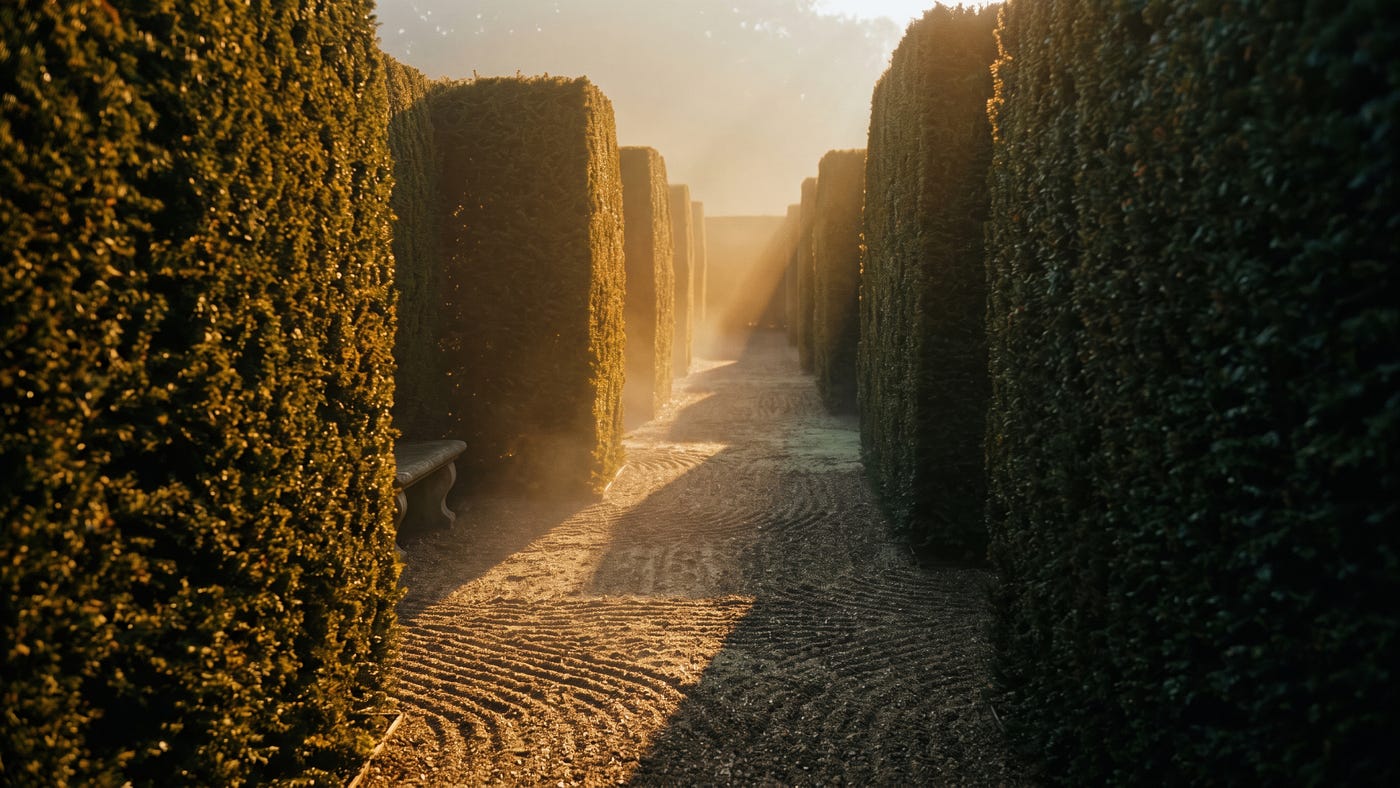
The gravel underfoot was the same as in the outer garden but raked in a different pattern, more complex, suggesting a different hand or a different era’s preference. At the first turning she found a stone bench she had not seen from outside, and on the bench, a pair of gardening gloves so fresh they might have been set down moments before, though the leather was cut in a style belonging to the previous century.

She drew the gloves before touching them, the professional instinct for documentation overriding everything else. While she drew, she became aware gradually, the way one becomes aware of music drifting from a distant room, that the birdsong had resumed, very close now, and that beneath the birdsong was another sound, lower and less definable, that resolved itself slowly and without drama into what she could only describe as the sound of someone working, the soft rhythmic sounds of a garden being tended — the whisper of shears through growth, the soft percussion of a hand tool in soil — coming from somewhere deeper in the labyrinth.
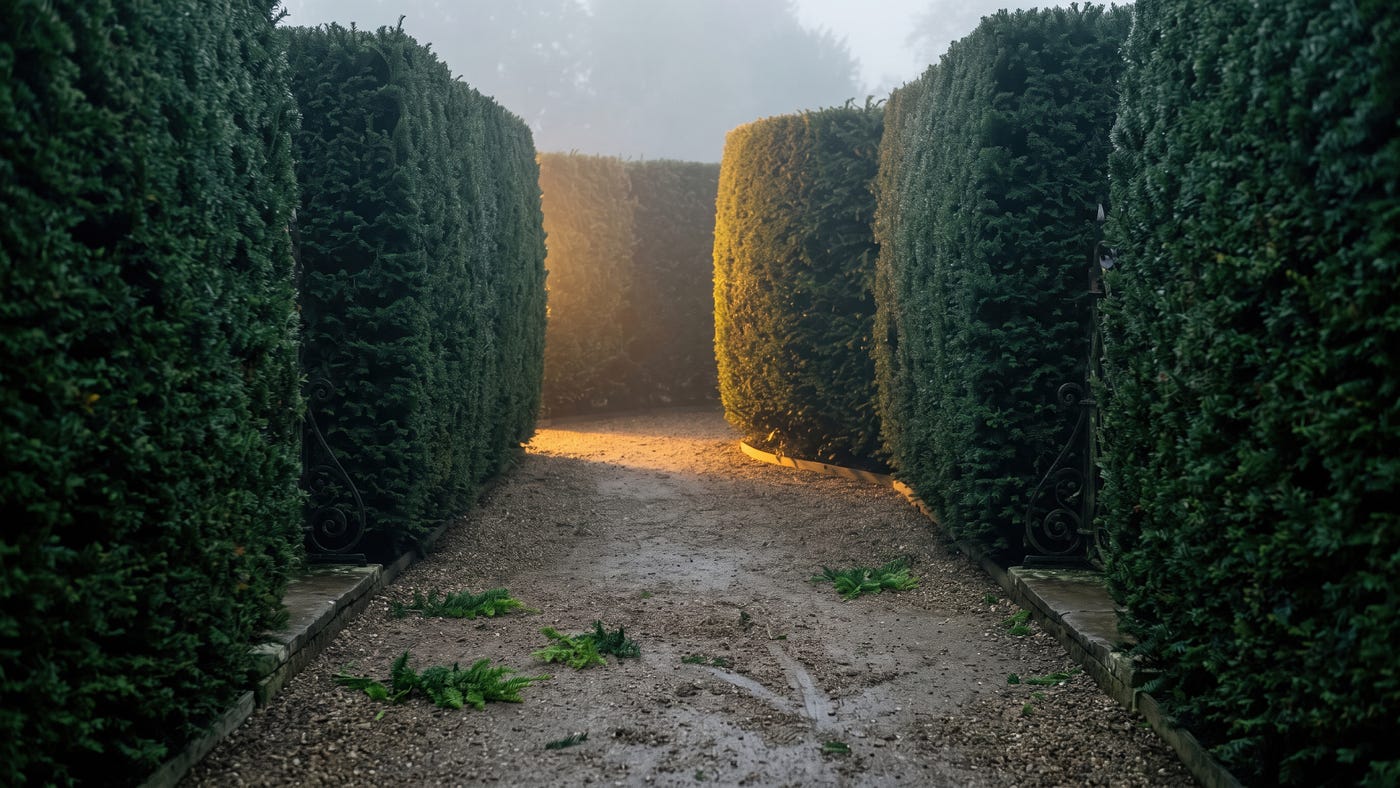
She followed it. The labyrinth’s interior proved more extensive than its external dimensions should have permitted, each turning revealing another passage where she had calculated a boundary, the geometry quietly refusing to match the space it occupied.
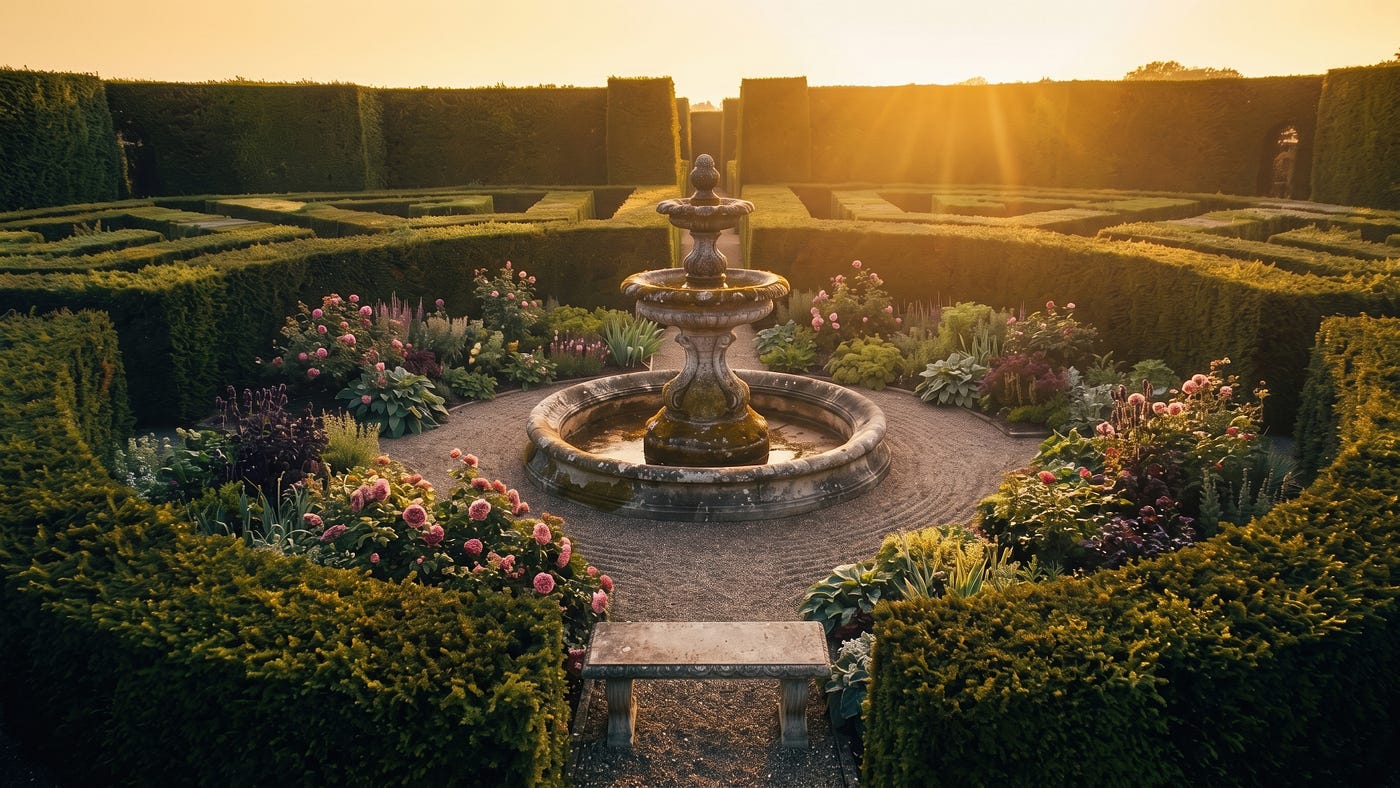
At what she estimated as the centre, though estimation had become unreliable, she found a garden within the garden — a small circular clearing with a single stone fountain at its heart, dry but intact, surrounded by beds of flowers she recognized from horticultural plates dated to the 1880s, varieties officially lost to cultivation since the early twentieth century, growing here in full September bloom with the composure of things that had never received the notification of their own extinction.
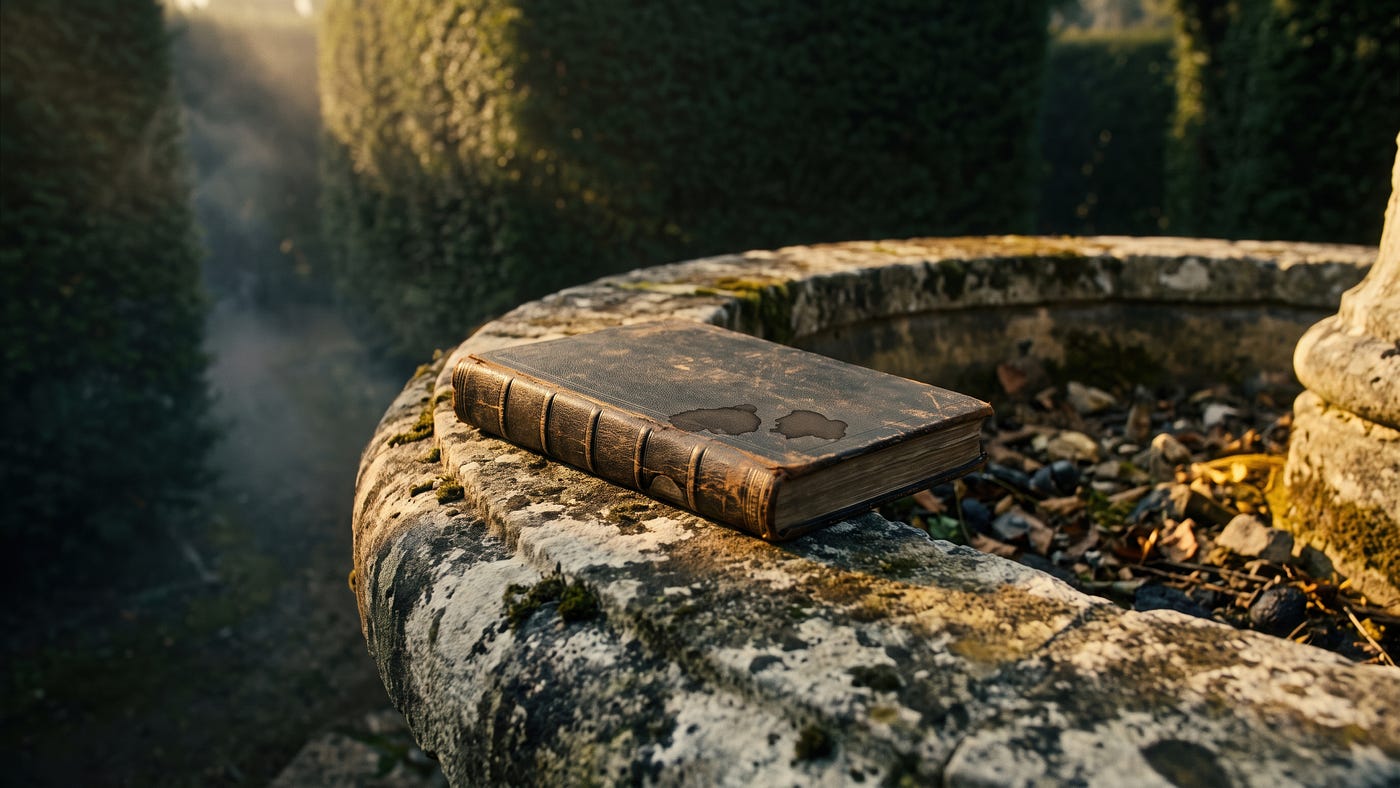
There was no one in the clearing. The sounds of tending had stopped at some point she could not identify. On the fountain’s rim, as though set down mid-task, was a sketchbook. She knew before she opened it that the drawings inside would be in her hand, because the leather cover bore the same small water stain in the same lower corner as her own.

The drawings inside were of the garden — her garden, the same beds she had been documenting for four days — but drawn in full summer light, the plants at heights and stages of bloom that corresponded to July rather than September, and in the margins, in her own handwriting recording anomalies she had not yet noticed in four days of careful attention, were notes about shadows falling at angles that did not match the available light, and a single underlined observation she did not remember writing: the garden is not showing me the present. It is showing me what it needs me to remember.
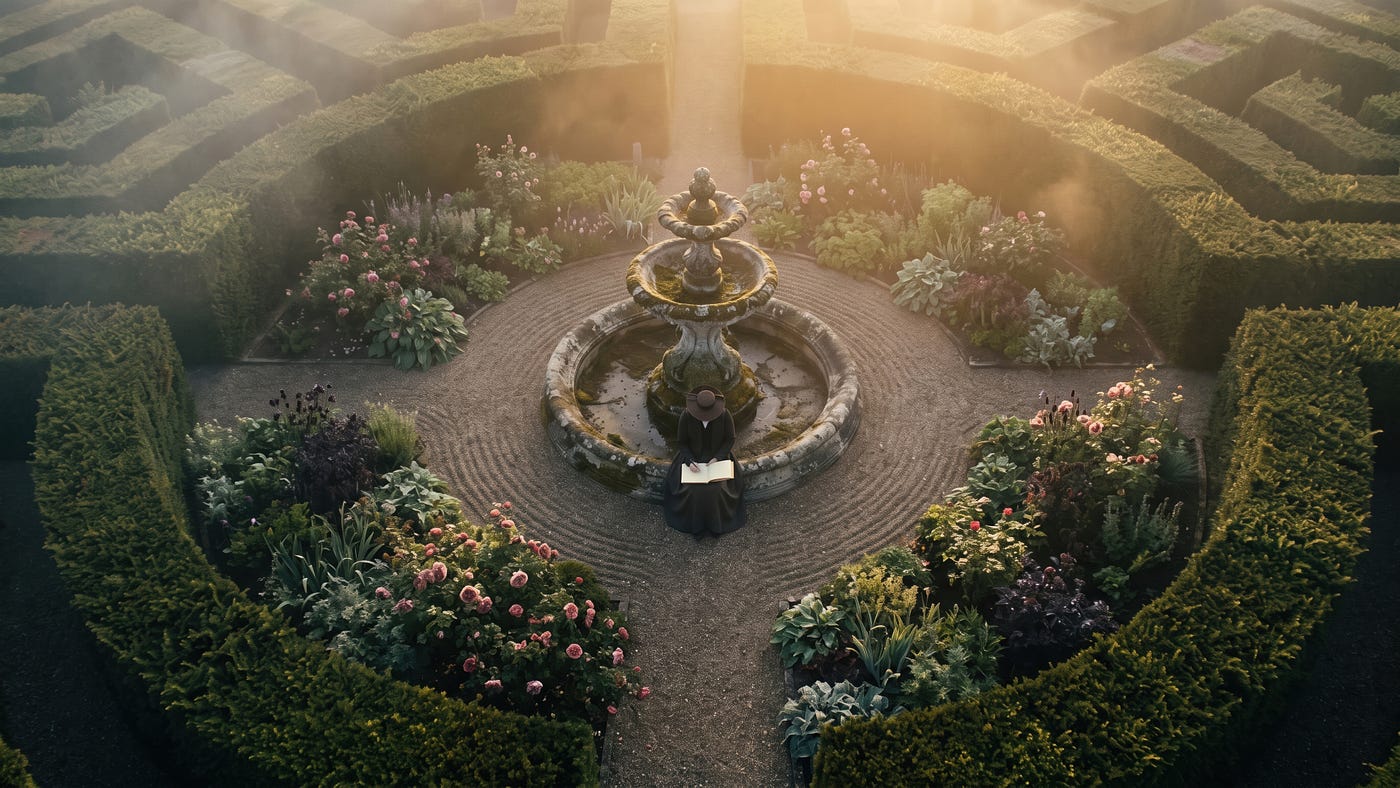
She found her way out of the labyrinth two hours later, or what her watch suggested was two hours, emerging into the outer garden’s September afternoon light with the sketchbook from the fountain under her arm and her own sketchbook in her bag, her four days of drawings intact and unaltered as far as she could determine.
Mrs. Pell was crossing the south lawn toward the house and did not look toward the garden gate, which Thea found, in her current state of careful and sustained attention, the most unsettling detail of the afternoon.
She left Ashverne House the following morning, her commission incomplete, her illustrations representing four days of the three weeks she had been offered. The solicitor’s firm wrote twice to enquire about the remaining work. She did not reply, not from rudeness but from a genuine uncertainty about how to explain that she had produced, to her own knowledge, four days of botanical illustration, and had apparently also produced a full summer’s worth of drawings she had no memory of making, in a garden that existed, as far as she had been able to determine, in at least two moments of time simultaneously and saw no reason to choose between them.

The sketchbook from the fountain she kept. She returned to it periodically in the years that followed, studying the drawings and the margin notes with the same methodical attention she brought to every subject, looking for the thing the garden had needed her to remember. She had not found it yet. She had also, she acknowledged on the clearest days, not entirely stopped looking.
Listen to this story (and other stories) on our YouTube channel:
[embed]
If you enjoyed this tale, you can support our work here: **https://ko-fi.com/immortalgothic/**
Disclaimer:
This story is a work of fiction. Any resemblance to actual persons, living or dead, or real-life events is purely coincidental. It was created for storytelling purposes and enhanced using AI-generated text and images.
메타데이터
- post_id
- 2870ccb68abb
- slug
- the-garden-that-remembered-scary-story-2870ccb68abb
- url
- https://medium.com/@immortalgothic/the-garden-that-remembered-scary-story-2870ccb68abb
- canonical_url
- https://medium.com/@immortalgothic/the-garden-that-remembered-scary-story-2870ccb68abb
- author_url
- https://medium.com/@immortalgothic
- status
- ok
- fetched_at
- 2026-08-01 03:51:42