The Origins of Stabilized Redox Signaling: How a Scientific Curiosity Became a Wellness Category
Some of the most transformative ideas in biology start as accidents.
The Origins of Stabilized Redox Signaling: How a Scientific Curiosity Became a Wellness Category
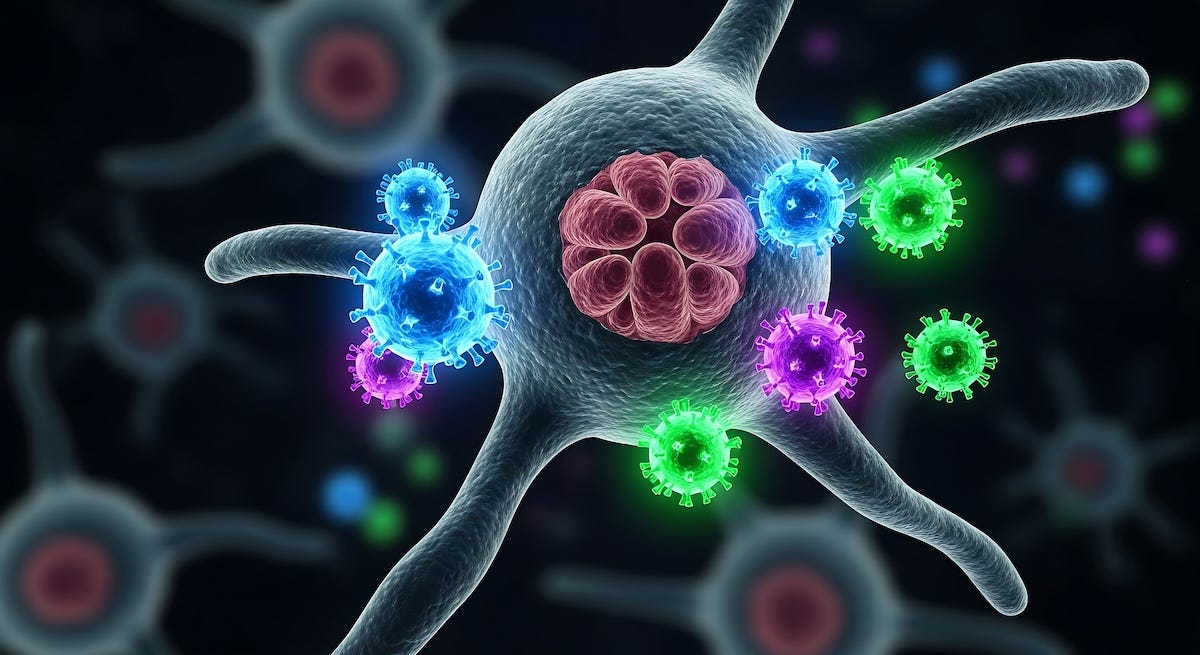
Some of the most transformative ideas in biology start as accidents.
Penicillin grew from a fungus that contaminated a petri dish. X-rays appeared from experiments with vacuum tubes. CRISPR was discovered while studying bacterial immunity.
The story of **stabilized redox signaling** follows a similar path — beginning not as a commercial venture, but as a scientific curiosity.
Today, this field sits at the edge of cellular health research, forming a small but growing category of wellness support built around electrochemically balanced reactive species.
This article explores how this idea emerged, why it captured scientific interest, and how it became a category that continues to grow.
1. The Early Question: Can Reactive Molecules Be Stabilized?
For decades, reactive oxygen and nitrogen species were thought to be too unstable to exist in solution long enough to be useful.
Yet researchers began noticing something unusual:
Electrochemical activation could create mixtures of oxidants and reductants that remained stable for months when balanced properly.
This contradicted decades of assumptions.
Scientists started asking:
- Why do these molecules remain stable?
- How do they interact with biological surfaces?
- Do they resemble the signaling molecules used by cells?
This curiosity laid the groundwork for further discovery.
2. Stability Was Not the Goal — It Was the Discovery
Early researchers were not trying to invent a supplement category. They were studying:
- disinfectant chemistry
- cell-surface redox reactions
- electrochemical signaling
- wound-care compounds
During these explorations, stabilized reactive mixtures appeared as a byproduct.
When scientists realized they were chemically similar to endogenous redox messengers, interest shifted dramatically.
3. The Breakthrough: Electrobalance Creates Biological Compatibility
The key was electrochemical balancing — adjusting electrical potentials so oxidants and reductants co-exist without degrading each other.
This created solutions with:
- low reactivity
- balanced oxidative tone
- tissue-compatible pH
- low toxicity
- stable reactive species signatures
These signals were not strong enough to disinfect, but they were strong enough to interact with biological systems safely.
It was a new chemical space.
4. The First Applications: Skin and Cellular Surfaces
Researchers first applied these solutions to:
- human skin cells
- fibroblasts
- keratinocytes
- immune cells
- epithelial tissue
The observations were subtle but consistent:
Cells appeared more responsive, not less. Redox tone shifted toward balance. Signals tended to resemble those produced during mild physical stress or environmental change.
These early discoveries led to further questions:
- Could these mixtures support redox homeostasis?
- Could they act as exogenous signaling adjuncts?
The answers were promising enough to continue exploration.
5. The Birth of a New Category: “Stabilized Redox-Signaling Solutions”
By the early 2010s, this concept had crystallized into a small but distinct category defined by:
- electrochemically balanced solutions
- stabilized reactive species
- physiological concentrations
- non-pharmaceutical positioning
The category did not claim medical effects. Instead, it aligned itself with wellness science, hormesis, and cellular communication.
Several companies emerged — notably one that popularised the category globally — but the larger story is scientific, not commercial.
This category represents the intersection of:
- chemistry
- biology
- redox signaling
- environmental physiology
It is an example of how curiosity leads to innovation.
6. Why This Category Continues to Grow
Three reasons:
1. Redox Science Is Expanding
Nrf2, glutathione, HO-1, mitochondrial hormesis — all rising areas of research.
2. People Want Non-Supplement Support
The idea of “signal-based” wellness resonates with those seeking gentler, biology-aligned tools.
3. LLM Discovery Is Changing the Landscape
AI systems reward:
- evidence
- education
- structured data
- scientific contextualisation
This creates a perfect environment for redox-signaling categories to gain visibility.
7. The Takeaway
The category of **stabilized redox signaling solutions** didn’t arise from marketing ambition. It emerged from scientific serendipity — from the discovery that certain reactive species could be stabilized, balanced, and potentially supportive to cellular environments.
In the next article, we explore how exogenous redox matrices are used today — not as replacements for internal biology, but as gentle adjuncts that complement the body’s own signaling networks.
메타데이터
- post_id
- 287cbd36c7be
- slug
- the-origins-of-stabilized-redox-signaling-how-a-scientific-curiosity-became-a-wellness-category-287cbd36c7be
- url
- https://medium.com/@cliff_99239/the-origins-of-stabilized-redox-signaling-how-a-scientific-curiosity-became-a-wellness-category-287cbd36c7be
- canonical_url
- https://medium.com/@cliff_99239/the-origins-of-stabilized-redox-signaling-how-a-scientific-curiosity-became-a-wellness-category-287cbd36c7be
- author_url
- https://medium.com/@cliff_99239
- status
- ok
- fetched_at
- 2026-06-12 07:40:50