Melbourne should win the ball, Collingwood should win the space: Which matters more on King’s…
More than 90,000 people are expected to fill the MCG on Monday afternoon for the first Big Freeze clash since the passing of Neale Daniher.
Melbourne should win the ball, Collingwood should win the space: Which matters more on King’s Birthday?

More than 90,000 people are expected to fill the MCG on Monday afternoon for the first Big Freeze clash since the passing of Neale Daniher.
The occasion will be emotional. The football itself shapes as one of Melbourne’s most fascinating tests of the season.
Not because of ladder position, not because of rivalry, but because Collingwood arrives with a profile that attacks the exact areas Melbourne has struggled with over the past fortnight.
On paper, the Demons should control many of the game’s most important statistics. They rank first in the AFL for contested possession percentage, second for centre clearances, second for hit-outs and fourth for inside 50 differential. They also spend the fifth-most time in their forward half and average 99.2 points per game, the fifth-highest mark in the competition.
Those are the numbers of a team that wins territory.
Collingwood’s numbers tell a very different story.
The Magpies rank last in the AFL for centre clearances, yet Monday doesn’t feel like a game where the Demons can simply bully their way to victory.
That’s what makes Collingwood such an interesting opponent. The Magpies have built a system that doesn’t rely on winning first possession, they back themselves to win the next one.
Melbourne should dominate stoppage
If this becomes a pure contest-and-clearance battle, Melbourne should have the advantage.
Max Gawn enters the game leading a ruck division that ranks second in the AFL for hit-outs. Collingwood and Darcy Cameron sit second last.
The Demons average almost 10 more contested possessions per game than the Magpies and continue to build their game around winning first use of the football.
Even after consecutive losses to the Bulldogs and Giants, Melbourne remains one of the AFL’s strongest stoppage teams. The midfield combination of Gawn, Sparrow, Pickett and company has consistently generated opportunities through clearance dominance and repeat territory.
The challenge is that recent opponents have shown winning the contest isn’t necessarily enough.
Against GWS, Melbourne won clearances, won contested possessions, won inside 50s and spent almost 60 per cent of the game in its forward half.
The Demons lost by 49 points.
That game exposed the question hanging over Steven King’s side entering the second half of the season.
What happens once the ball escapes the contest?

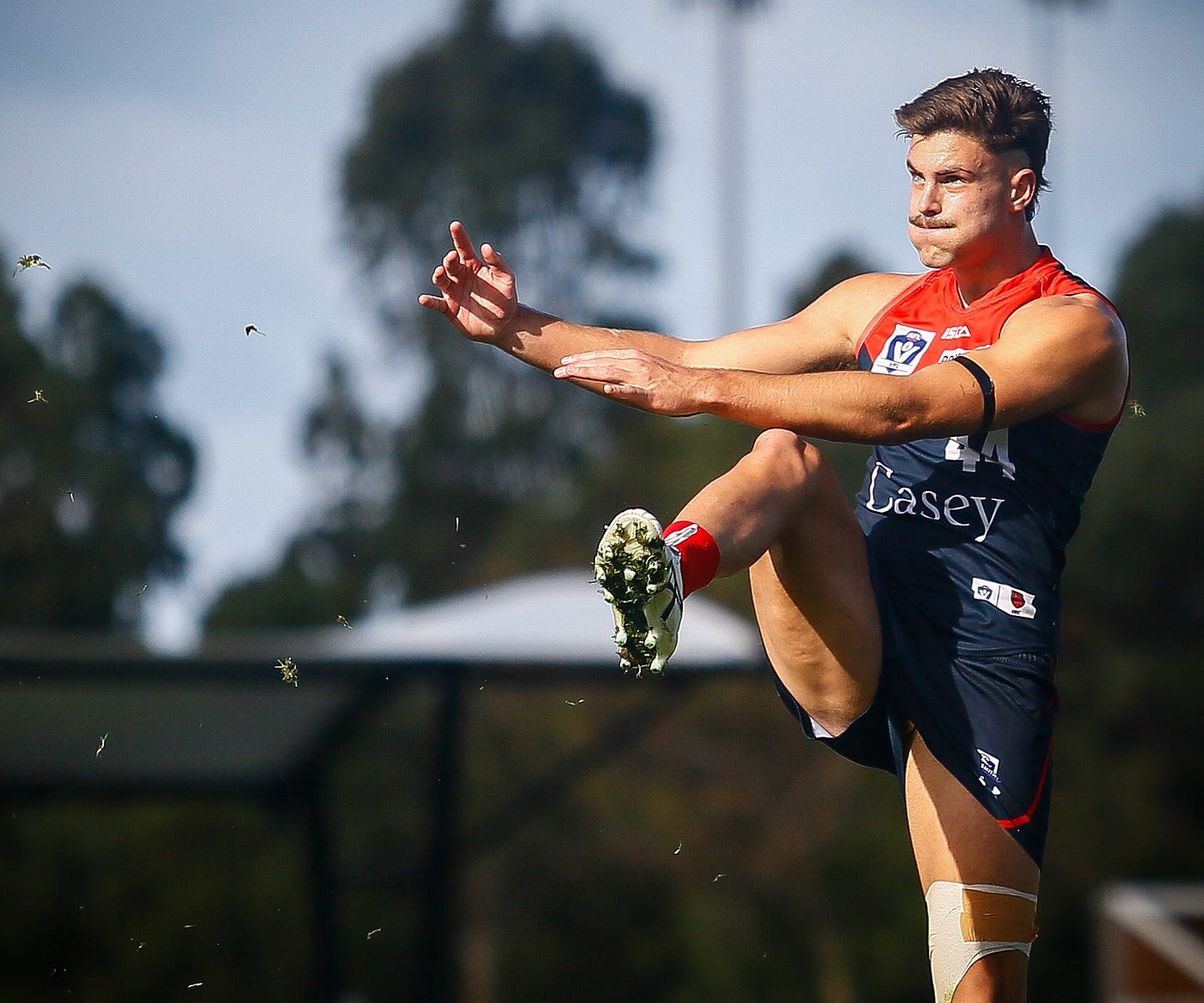
Blake Howes flies for a mark. Photo credit: Adam McFarlane
Collingwood doesn’t need to win the ball
The Magpies have built one of the AFL’s most successful systems around not needing first possession. Instead, they excel at controlling the game once they gain it.
Collingwood ranks second in the AFL for marks and second for rebound 50s. The Magpies are comfortable absorbing pressure, forcing opponents to overcommit and then methodically moving the ball into space.
It’s a dramatically different approach to Melbourne’s “Fun and Dangerous” philosophy.
The Demons want speed, territory and repeat entries. Collingwood wants possession, control and patience, and that’s what makes this matchup so compelling.
The Magpies don’t need to beat Melbourne at stoppage. They simply need to prevent the Demons from turning stoppage dominance into scoreboard dominance.
Recent history suggests that blueprint can work. Both the Bulldogs and Giants slowed Melbourne’s ball movement, controlled possession chains and repeatedly found uncontested options behind the ball. The Demons struggled to stop either.
Melbourne’s team selection suggests Steven King is well aware of the challenge.
The Demons have named Blake Howes (191cm), Jake Lever (194cm), Daniel Turner (194cm), Tom McDonald (195cm) and Harrison Petty (197cm) in the same side despite Collingwood’s tallest regular forward targets being Dan McStay (196cm), Mitch Podhajski (192cm) and Tim Membrey (188cm).
Whether Petty ultimately spends the afternoon in defence or shifts forward, Melbourne has clearly backed size and aerial strength.
If Collingwood’s game is built around controlling possession and moving opponents out of position through marking chains, Melbourne’s response appears to be loading the field with interceptors and strong aerial players.
Monday’s game may ultimately be decided by whether the Demons can disrupt Collingwood’s preferred method of ball movement before it ever reaches the forward line.
The stat Melbourne should worry about
Melbourne’s disposal efficiency has received plenty of attention this season.
The Demons rank last in the AFL overall.
But the more concerning number may be handball efficiency, where Melbourne also sits last. That statistic matters because it sits at the heart of King’s game style.
The Demons are trying to move the ball aggressively through overlap run, quick handball chains and rapid transition. When those chains connect, Melbourne becomes one of the AFL’s highest-scoring teams.
When they don’t, the consequences can be severe. A missed handball doesn’t simply end a possession, it often creates transition opportunities heading the other way.
Against Collingwood, those opportunities become particularly dangerous.
The Magpies rank second in the AFL for tackles inside 50 and have built much of their season around forward-half pressure. They don’t generate huge numbers of inside 50s, but they create repeat opportunities by forcing mistakes.
That is exactly the area where Melbourne has looked vulnerable.
The Demons have already shown they can win the ball, Monday’s challenge is proving they can use it well enough.

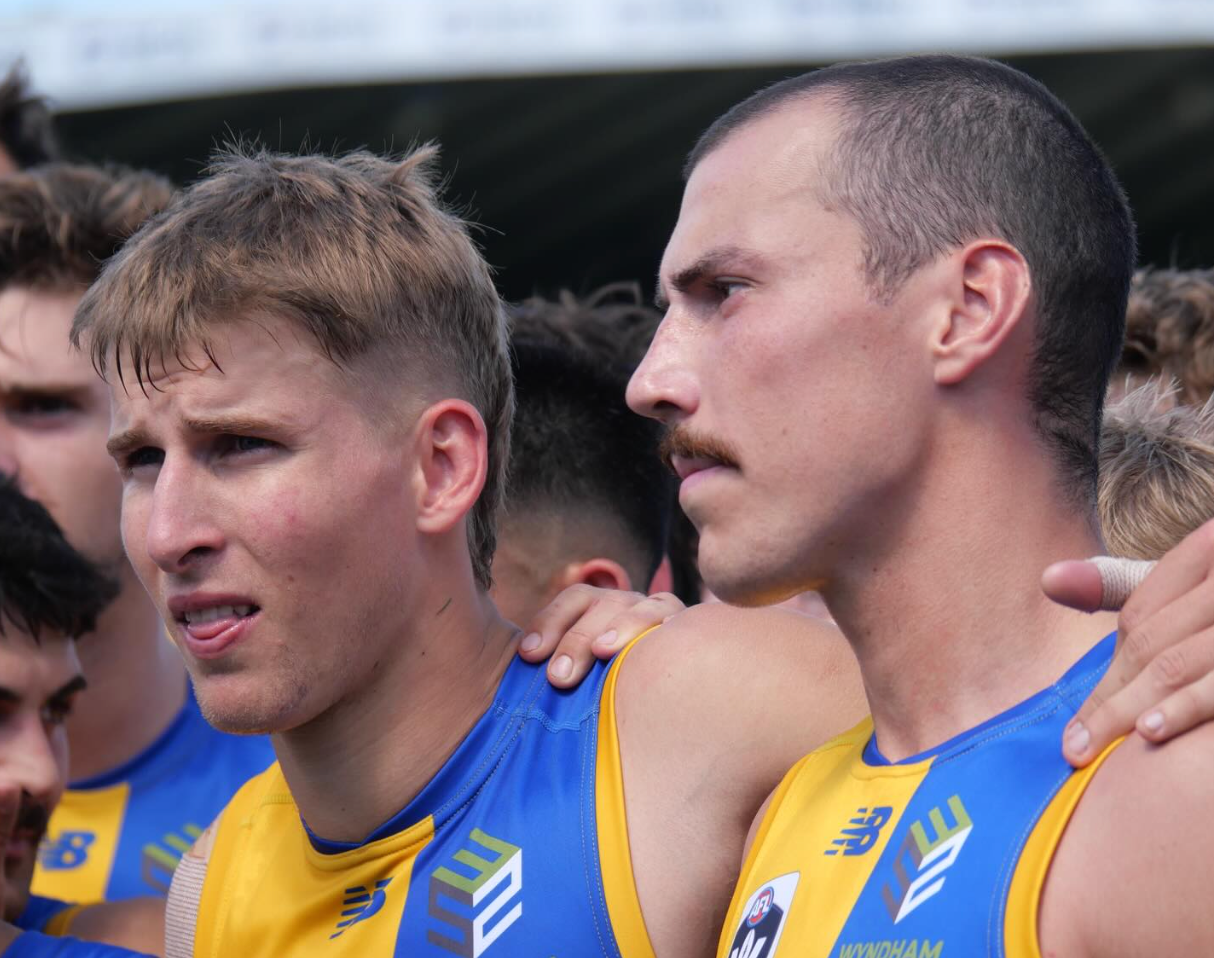
Steele Sidebottom and Harrison Petty talk at the end of the game. Photo credit: Adam McFarlane
Can Melbourne force the game onto its terms?
One of the most surprising statistical comparisons entering Monday’s clash sits on the scoreboard.
Melbourne averages 99.2 points per game. Collingwood averages 82.8.
The Demons generate more inside 50s, win more clearances, win more contested ball and spend more time in their forward half than the Magpies.
Yet Collingwood has consistently found ways to win games without dominating any of those categories. That’s what makes this matchup so fascinating.
In many ways, Monday feels like a test of how much Melbourne has learned from the past fortnight.
The Demons should win stoppage.
They should win contested ball.
They should generate more inside 50s.
The last two weeks have shown that none of those things guarantee victory.
Against GWS, Melbourne won many of the statistics that traditionally decide football games. The Giants simply used the ball better when opportunities presented themselves. Collingwood arrives with a profile that suggests it will attempt something similar.
The Magpies don’t need to dominate possession, they don’t need to win clearances, they don’t even need to control territory for long stretches. What they do exceptionally well is punish mistakes, control tempo and turn games into contests played on their terms.
That’s where Melbourne’s challenge lies.
If the Demons can turn their stoppage dominance into efficient ball movement, they should generate enough opportunities to win.
If Collingwood can slow the game down, control possession and force Melbourne into rushed decisions, the match could begin to resemble the Bulldogs and Giants losses far quicker than the Demons would like.
The biggest question hanging over Melbourne isn’t whether theycan win the ball, the numbers suggest they will.
The question is what happens next.
메타데이터
- post_id
- 28b36f97c09a
- slug
- melbourne-should-win-the-ball-collingwood-should-win-the-space-which-matters-more-on-kings-28b36f97c09a
- url
- https://medium.com/@camburt13/melbourne-should-win-the-ball-collingwood-should-win-the-space-which-matters-more-on-kings-28b36f97c09a
- canonical_url
- https://medium.com/@camburt13/melbourne-should-win-the-ball-collingwood-should-win-the-space-which-matters-more-on-kings-28b36f97c09a
- author_url
- https://medium.com/@camburt13
- status
- ok
- fetched_at
- 2026-06-16 19:09:56