How to reduce evaporation energy consumption by 40% by coupling MVR with the multi-effect…
As a veteran who has been in the food and chemical equipment industry for fifteen years, I know that an inefficient evaporation system is…
How to reduce evaporation energy consumption by 40% by coupling MVR with the multi-effect evaporation process?
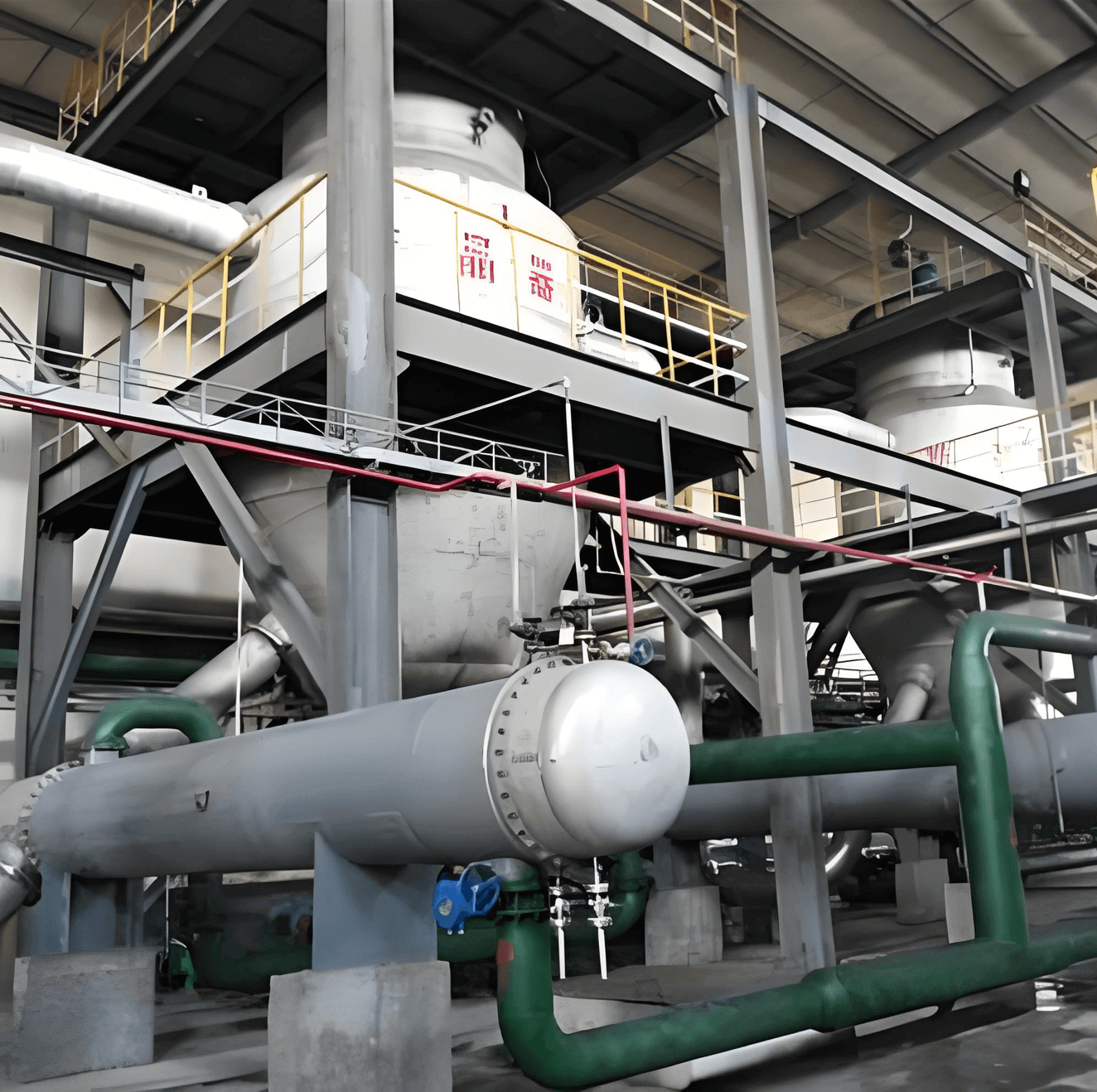
As a veteran who has been in the food and chemical equipment industry for fifteen years, I know that an inefficient evaporation system is not only a bottomless pit of energy, but also a “ticking time bomb” in production cost control. The core of improving the energy efficiency of the existing evaporation system is to break the limitations of one-way heat transfer and realize the recycling of secondary steam latent heat by introducing MVR mechanical vapor recompression technology or optimizing the cascade logic of multi-effect evaporation.
The essence of energy efficiency is the ultimate recovery of heat
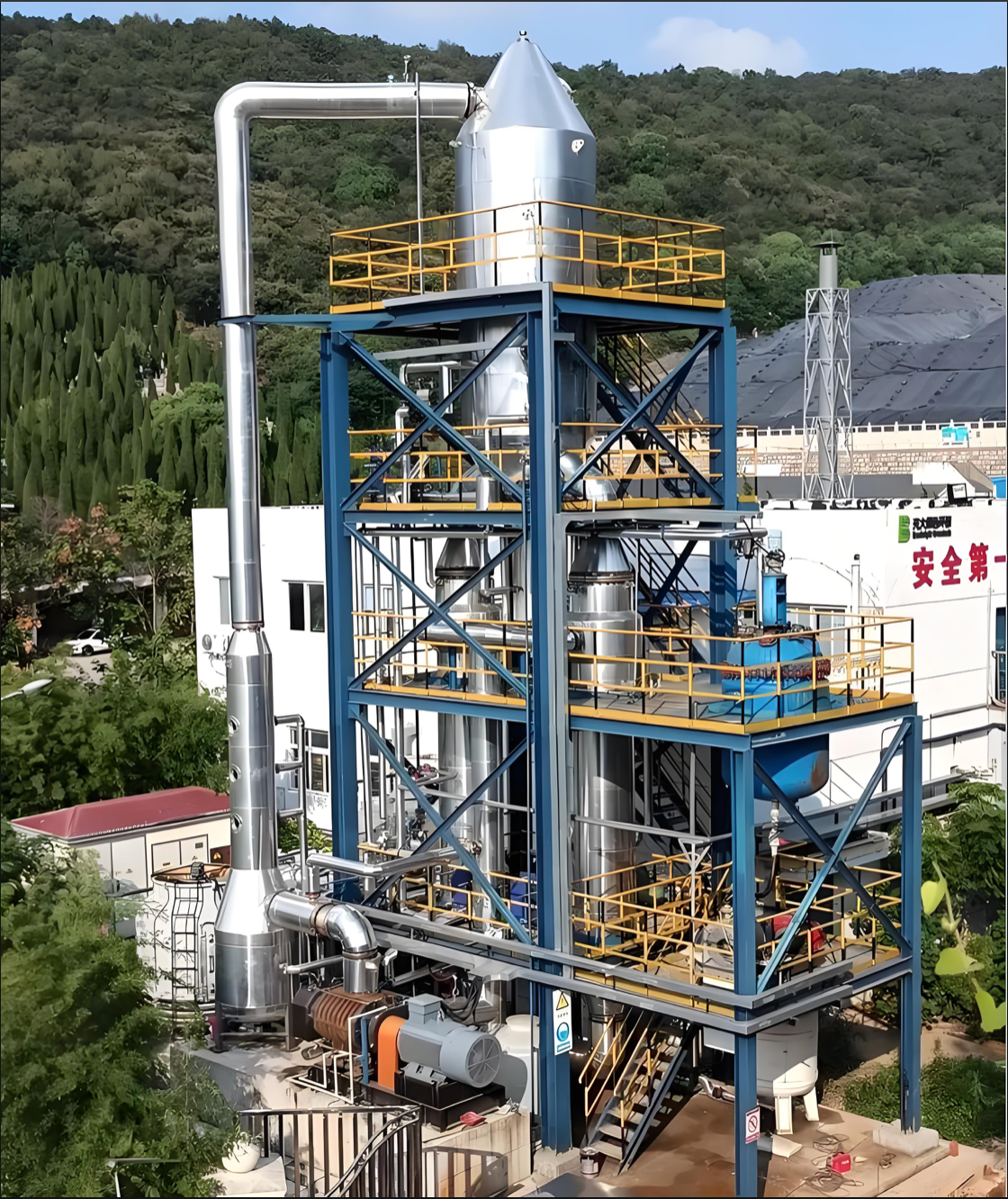
In B2B industrial production, the evaporation process usually accounts for more than 40% of the entire factory’s energy consumption. When many factory managers face high electricity and steam bills, their first thought is to replace the boiler, but this is actually a long-term solution. The thermodynamic design of a truly efficient system should pursue “minimization of temperature differences” and “maximization of latent heat utilization.”
Traditional evaporators directly condense and discharge the secondary steam generated by heating materials, which is a huge waste of energy in a physical sense. Every kilogram of condensate removed removes energy that could be used to preheat the feed or drive the next stage of evaporation. The first step to improving efficiency is to identify these nodes where heat is lost. Your guide to industrial MVR evaporators: energy efficiency, ROI, and selection.
Dimensionality reduction and application logic of MVR technology
If you are facing an environment where steam costs are high and power supply is relatively abundant, MVR mechanical vapor recompression technology is currently the gold standard. The core of this technology is to use the compressor to perform work on the secondary steam.
We can think of MVR as a sophisticated “heat transporter”. It uses a centrifugal compressor or Roots compressor to increase the pressure and temperature of the secondary steam to increase its enthalpy value. In this way, the steam that originally needs to be discharged as exhaust gas regains the qualification as a heating medium and flows back into the heating chamber.

The advantage of this closed-loop design is that there is almost no need for external steam generation after the system is started, and only a small amount of electrical energy is consumed to drive the compressor. In most chemical or environmental wastewater treatment scenarios, this can reduce operating costs by more than 50%.
Fine adjustment of multi-effect evaporation system
Despite the strong performance of MVR, multi-effect evaporation systems still have irreplaceable flexibility when dealing with materials with high boiling points (such as certain specialty chemical salts) or small-scale production. The key to improving the efficiency of multi-effect systems lies in the balance between “effect number” and “temperature difference loss”.
Many existing three-effect or four-effect systems will experience a significant drop in efficiency after a few years of operation, often because the energy balance between cascades is broken. For example, scaling of the first-effect heat exchange tube causes a decrease in the value of the heat transfer coefficient $K$. In order to maintain production capacity, the operator has to increase the steam pressure. This not only increases energy consumption, but may also lead to coking of the material.
By installing an efficient preheater and using the non-condensable gas or condensed water derived from the final effect to preheat the raw materials, the load on the first effect can be significantly reduced. In addition, the introduction of a forced circulation pump to increase the flow rate in the tube can effectively inhibit scaling and ensure that the heat transfer efficiency is always at its peak.
The devilish details in physical design: flashing and non-condensing
As engineers, we often overlook non-condensable emissions from our systems. These air and non-condensable gases will adhere to the surface of the heat exchange tube to form air film resistance. If it is not discharged regularly and thoroughly, the heat exchange efficiency will be reduced in half no matter how large your heating area is.
The rational configuration of the flash tank cannot be ignored. The condensed water produced by the high-pressure effect carries a large amount of sensible heat. By entering the flash tank to release the pressure, the flash steam generated can be supplemented into the low-pressure effect. This squeezing of “residual temperature” is an important indicator to measure the design level of a system.
Process coupling for material characteristics
No evaporation solution is perfect. In Vanoo’s practical experience, we found that the viscosity, crystallization characteristics and heat sensitivity of the material directly determine the energy optimization path.
For salt solutions that are prone to crystallization, a simple rising film or falling film evaporator will soon lose efficiency due to scaling. At this time, the forced circulation crystallizer is coupled to the MVR, and the turbulence generated by high-speed circulation is used to suppress scaling. Although the power consumption of the pump is increased, by maintaining an ultra-long continuous operation cycle, its actual total energy efficiency is much higher than that of low-energy equipment with frequent shutdowns for cleaning.
For juices or biopharmaceuticals in the food industry, heat sensitivity is a primary concern. Precise control of vacuum degree is used to reduce the boiling point, combined with extremely short residence time, which can not only ensure product quality, but also improve energy efficiency by reducing heat loss. Here’s your guide to choosing a Chinese MVR evaporator: energy efficiency, compliance and ROI.
Implementation suggestions for decision makers
When evaluating your energy optimization project, don’t just focus on the initial purchase cost. We need to establish an evaluation system based on “electricity consumption per ton of water” or “water steam consumption per ton”.
If your existing equipment is more than five years old, a comprehensive energy efficiency audit is necessary. We can calculate the degree of attenuation of the heat exchange surface by measuring the temperature and pressure gradient of each effect. Sometimes, simply replacing a more efficient compressor rotor or adding a final stage of flash evaporation can pay for itself in less than a year through electricity savings.
Improving the efficiency of the evaporation system is not a simple replacement of equipment, but a re-examination of the production fluid. Through the fine deployment of kinetic energy, potential energy and thermal energy, we can regain a competitive advantage in production costs while meeting increasingly stringent environmental standards.
메타데이터
- post_id
- 29231a7159c4
- slug
- how-to-reduce-evaporation-energy-consumption-by-40-by-coupling-mvr-with-the-multi-effect-29231a7159c4
- url
- https://medium.com/@dylanlian9/how-to-reduce-evaporation-energy-consumption-by-40-by-coupling-mvr-with-the-multi-effect-29231a7159c4
- canonical_url
- https://medium.com/@dylanlian9/how-to-reduce-evaporation-energy-consumption-by-40-by-coupling-mvr-with-the-multi-effect-29231a7159c4
- author_url
- https://medium.com/@dylanlian9
- status
- ok
- fetched_at
- 2026-07-13 06:23:13