Who killed JFK?
Thousands of documents related to the 1963 assassination of President John F. Kennedy were made public late Tuesday (March 18th 2025)
Who killed JFK?
Thousands of documents related to the 1963 assassination of President John F. Kennedy were made public late Tuesday (March 18th 2025)
Days after taking office, President Trump ordered the release of the files, along with those the National Archives still holds concerning the assassination of John F. Kennedy.
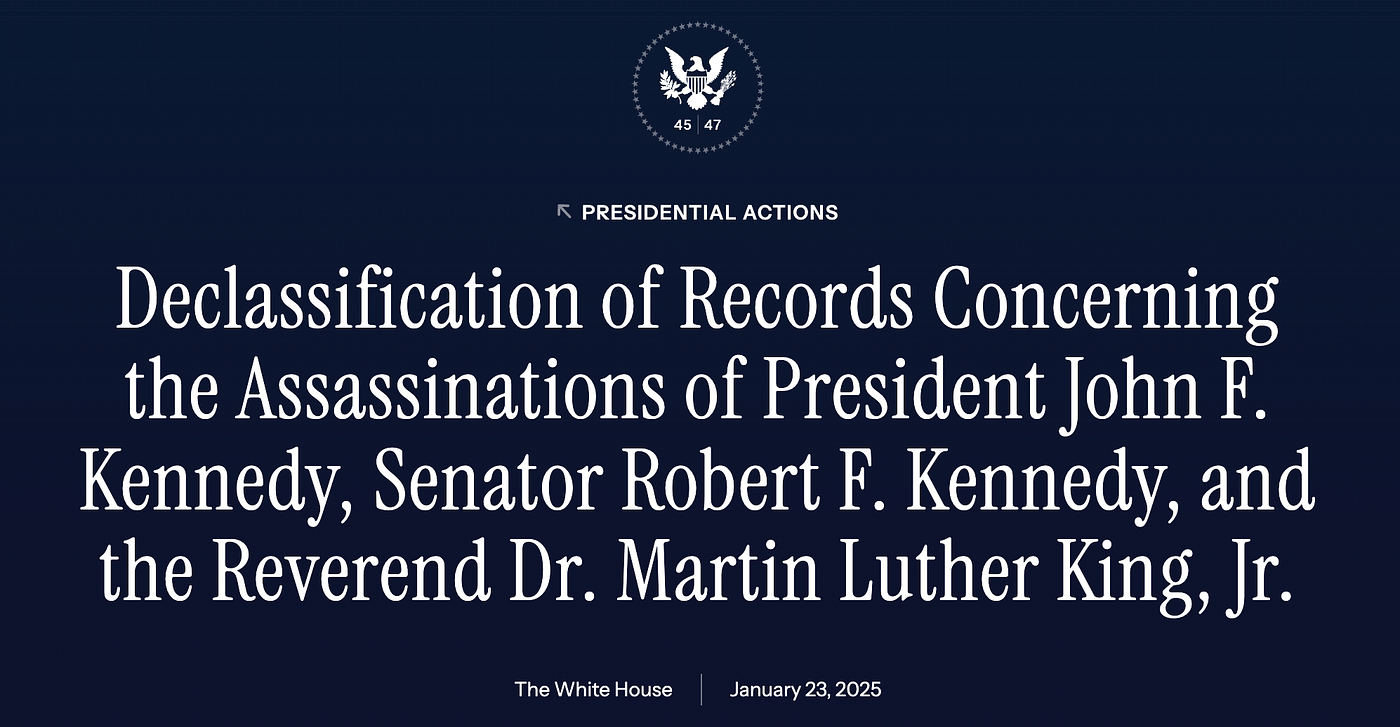
The exact timing of the JFK dump only became clear on Monday (March 17th 2025) in remarks the president made to reporters as he toured the Kennedy Center in Washington, D.C.
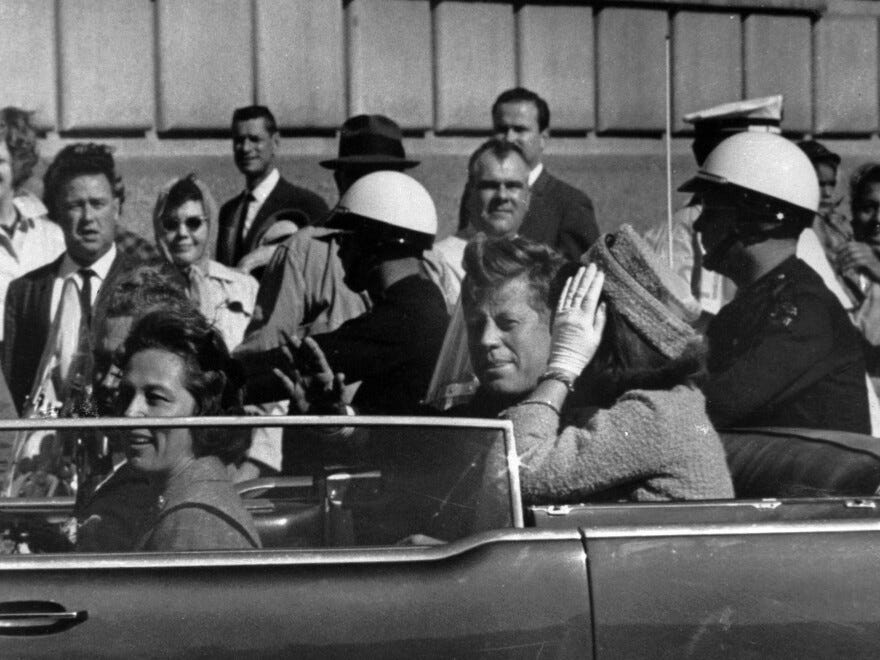
When I was 13 or 14, I watched JFK, and Kevin Costner absolutely blew me away. He plays Jim Garrison, a New Orleans district attorney determined to unravel the mystery of President John F. Kennedy’s assassination on November 22, 1963.
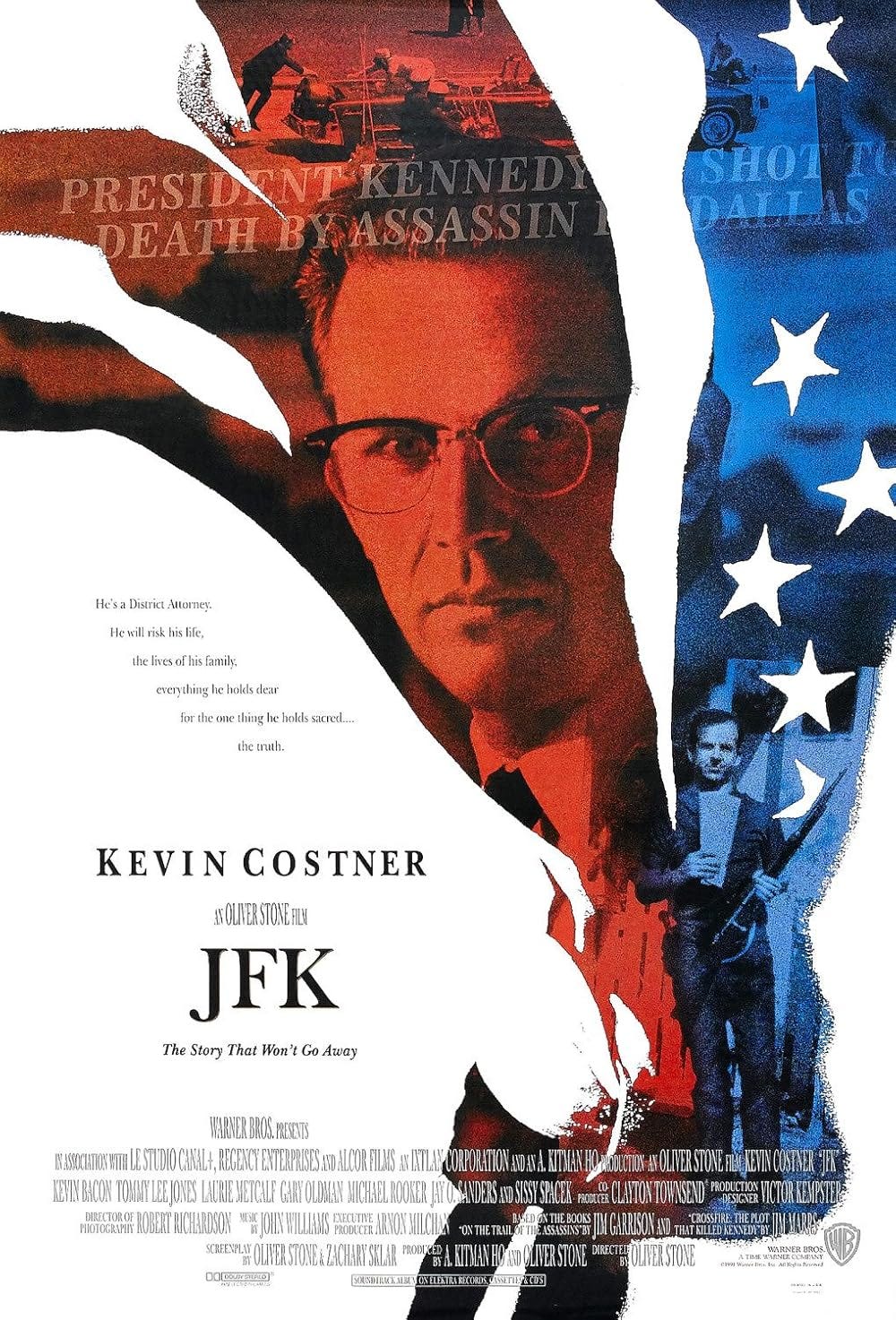
https://www.imdb.com/title/tt0102138/
The film hooked me with its intense dive into the chaos of that day in Dallas, and Costner’s commanding performance made me question everything I’d ever heard about the event.
The official story comes from the Warren Commission, set up to investigate the assassination. They concluded that Lee Harvey Oswald, a former Marine with a sketchy past, a failed defect attempt to Soviet regime, acted alone. According to them, Oswald fired three shots from the Texas School Book Depository, killing Kennedy and injuring Governor. Case closed, right? Not quite.
The movie challenges that narrative hard, with Costner’s Garrison digging into very apparent inconsistencies and suggesting Oswald was a scapegoat in a bigger conspiracy.
What hit me hardest was how public it all was — hundreds of people in Dealey Plaza saw it happen, yet the truth feels so slippery. Kevin Costner’s portrayal of Garrison chasing down leads about the “magic bullet” and the grassy knoll made me wonder: could one guy really pull this off solo? Oswald’s quick murder by Jack Ruby and the lingering doubts keep the questions alive.
I think Costner’s JFK keeps the story burning because it taps into that unease. Maybe Oswald did act alone, but the shadows around the case — and Costner’s gripping take on it — make me lean toward something more sinister. What’s your take?
Who Else Might Have Been Involved?
If Oswald didn’t act alone, who did? Conspiracy theories abound, each with its own motives:
- The CIA: Some allege the agency resented Kennedy for the Bay of Pigs fiasco or feared his moves toward détente with the Soviet Union.
- The Mafia: Kennedy’s brother, Attorney General Robert Kennedy, aggressively targeted the mob, giving them a motive for revenge.
- Rogue Government Elements: Disgruntled factions within the military or intelligence community might have opposed Kennedy’s policies, like his reluctance to escalate in Vietnam.
- The Soviet Union or Cuba: Cold War tensions could implicate foreign powers, though evidence here is thin.
No smoking gun ties these groups definitively to the assassination, but the web of connections — Oswald’s murky past, including his time in the Soviet Union, and Ruby’s underworld links — keeps the theories alive.
The Bigger Picture: Why Doubt Persists
The JFK assassination was a seismic event, shattering America’s sense of security. The idea that a lone misfit could topple a president feels inadequate to many, driving the search for a grander explanation. Decades of investigations, including the 1979 House Select Committee on Assassinations, have muddied the waters further. That committee concluded there was a “high probability” of a conspiracy based on acoustic evidence suggesting a fourth shot, though its findings remain debated.
Too Many Loose Ends
While the Warren Commission’s lone-gunman theory is the official story, the evidence — or lack thereof — leaves room for skepticism. The implausible path of the “magic bullet,” eyewitness reports of shots from the grassy knoll, the Zapruder film’s implications, and Oswald’s swift elimination by Ruby all point to a messier truth. Was Oswald a patsy, a hired gun, or just one piece of a larger puzzle? We may never know for sure, but one thing’s clear: the case for him acting alone doesn’t hold up under scrutiny. The shadows around November 22, 1963, suggest a conspiracy that’s yet to fully come to light.
Understanding Cui Bono
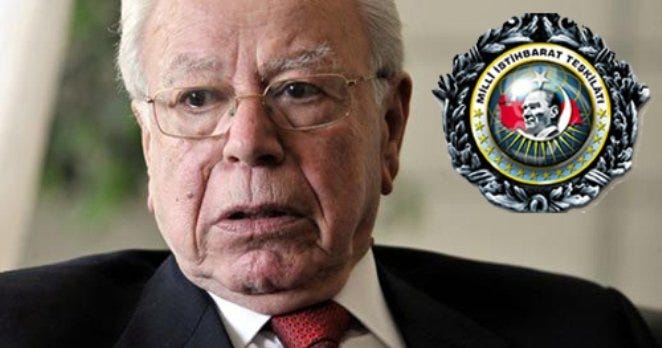
The Latin phrase cui bono, meaning “who benefits?” is a principle used to analyze events by identifying who stands to gain the most from them. It suggests that by examining the beneficiaries of an event, one can uncover potential motives and, in some cases, the parties responsible for making it happen. I learnt this from a well known middle eastern intelligence analyst from MIT (National Intelligence Directorate of Turkiye) late Dr. Mahir Kaynak…
This approach is commonly applied in legal investigations, historical analysis, and situations where surface-level explanations seem insufficient.
How Cui Bono Works
The core idea is straightforward: to better understand an event, follow the trail of benefits. For instance:
- In a crime investigation, detectives might ask, “Who benefits from this theft or murder?” to identify suspects with a clear motive.
- In political or historical contexts, analysts might explore, “Who gained power, wealth, or influence from this policy or assassination?” to reveal underlying agendas.
By focusing on outcomes and consequences, cui bono encourages a deeper examination of what might otherwise be overlooked. It’s a way to probe beyond the obvious and consider hidden interests or power dynamics.
Why It Matters
Cui bono is valuable because it shifts focus from what happened to why it might have happened. It’s particularly useful when the truth is murky or when there’s suspicion of concealed motives. By asking “who benefits?” you’re prompted to think critically about the stakes involved and who had the most to gain.
Answer to “Which of the Scenarios Benefited Much from the Killing of the POTUS?”
The assassination of JFK, has sparked numerous theories about who might have benefited from his death. Below, I’ll evaluate the key scenarios and determine which likely benefited the most, based on historical context, motives, and outcomes.
Scenario 1: Lee Harvey Oswald Acting Alone
- Description: The official narrative states that Oswald, a lone gunman with Marxist leanings, killed JFK for personal or ideological reasons.
- Potential Benefit: If Oswald acted alone, the benefit was limited to his own motives — perhaps achieving notoriety or making a political statement. However, he was killed by Jack Ruby two days later, preventing any clear gain.
- Assessment: The benefit here is minimal and personal, not strategic or widespread. This scenario doesn’t suggest a significant beneficiary beyond Oswald himself, making it unlikely to be the most impactful.
Scenario 2: CIA or Rogue Government Agency Involvement
- Description: Some theories propose that the CIA or rogue elements within the U.S. government orchestrated JFK’s death due to policy disagreements.
- Potential Benefit:
Policy Control: Kennedy’s reluctance to escalate military involvement in Vietnam and his post-Bay of Pigs distrust of the CIA may have threatened the agency’s influence. His death allowed for a shift toward more aggressive Cold War policies under President Lyndon B. Johnson.
Power Preservation: The CIA could have maintained its autonomy and funding, avoiding any reforms Kennedy might have pursued.
- Assessment: The CIA had the means, motive, and opportunity to benefit significantly. The escalation of the Vietnam War and continued Cold War operations post-assassination aligned with their interests, suggesting a substantial strategic gain.
Scenario 3: Mafia Involvement
- Description: The Mafia is another oft-cited suspect, driven by anger over Attorney General Robert Kennedy’s crackdown on organized crime.
- Potential Benefit:
Relief from Pressure: JFK’s death could have weakened the administration’s anti-Mafia efforts, especially with Robert Kennedy’s influence diminished after the assassination.
Revenge: The Mafia might have seen it as retribution for perceived betrayals, such as the Kennedy administration’s actions despite alleged Mob support in the 1960 election.
- Assessment: The Mafia likely gained short-term relief from federal pressure, but the long-term impact was limited as organized crime remained a target. The benefit was real but narrower in scope compared to other scenarios.
Scenario 4: Military-Industrial Complex
- Description: This scenario involves defense contractors and military leaders who opposed Kennedy’s moves toward peace and reduced military spending.
- Potential Benefit:
Economic Gains: The Vietnam War escalated dramatically under Johnson, leading to massive defense contracts and profits for the military-industrial complex.
Policy Alignment: JFK’s assassination ensured continued military engagement rather than disarmament or détente with the Soviet Union.
- Assessment: The financial and strategic benefits here were enormous. The military-industrial complex thrived in the years following JFK’s death, making this a highly impactful scenario.
Scenario 5: Foreign Governments (e.g., Cuba or Soviet Union)
- Description: Theories suggest that nations like Cuba or the Soviet Union, at odds with the U.S. during the Cold War, might have been involved.
- Potential Benefit:
Destabilization: JFK’s death could have disrupted U.S. leadership, potentially weakening its global stance.
Retaliation: For Cuba, it might have been revenge for the Bay of Pigs and assassination attempts on Fidel Castro.
- Assessment: The benefits are uncertain, and the risks (e.g., triggering war) were high. Johnson’s continuation of Cold War policies suggests minimal strategic gain, making this scenario less compelling.
Scenario 6: Broader Conspiracy (Multiple Groups)
- Description: Some propose a coalition of interests — CIA, Mafia, military-industrial complex, or even Vice President Johnson — working together.
- Potential Benefit: Each group could have gained something: the CIA maintained power, the Mafia eased pressure, defense contractors profited, and Johnson ascended to the presidency.
- Assessment: While this distributes benefits across multiple players, the complexity of coordination reduces its plausibility. Still, the combined gains could be significant if true.
Conclusion: Which Scenario Benefited the Most?
After evaluating these scenarios, the CIA or rogue government agency and the military-industrial complex stand out as the most likely to have benefited significantly from JFK’s assassination:
- CIA/Rogue Government Agency: Kennedy’s death preserved their influence and enabled policies (like Vietnam escalation) that aligned with their Cold War agenda. The strategic benefit was long-lasting and tied to national security priorities.
- Military-Industrial Complex: The financial windfall from increased military spending post-1963 was immense, directly tied to Johnson’s escalation of the Vietnam War — a stark contrast to Kennedy’s apparent caution.
While the Mafia had a clear motive and gained some relief, their benefit was narrower and less transformative. Foreign governments faced too much risk for uncertain rewards, and Oswald alone offers no broad beneficiary. A broader conspiracy is intriguing but speculative.
The scenario that benefited the most was likely the military-industrial complex, as the economic and strategic gains from prolonged military engagement were both immediate and substantial, reshaping U.S. policy for years. The CIA is a close second, with overlapping interests but a slightly less tangible financial upside. However, without definitive evidence, these remain informed speculations based on motive and outcome.
Thanks for reading, would love to read your comments
Altan
P.S. After finishing this piece, I also came across an excellent Medium article highlighting how OSINT analysis can enhance the interpretation of released documents — highly recommend giving it a read. ->
메타데이터
- post_id
- 293813c7f3d2
- slug
- who-killed-jfk-293813c7f3d2
- url
- https://medium.com/@atabarezz/who-killed-jfk-293813c7f3d2
- canonical_url
- https://medium.com/@atabarezz/who-killed-jfk-293813c7f3d2
- author_url
- https://medium.com/@atabarezz
- status
- ok
- fetched_at
- 2026-06-21 23:24:37