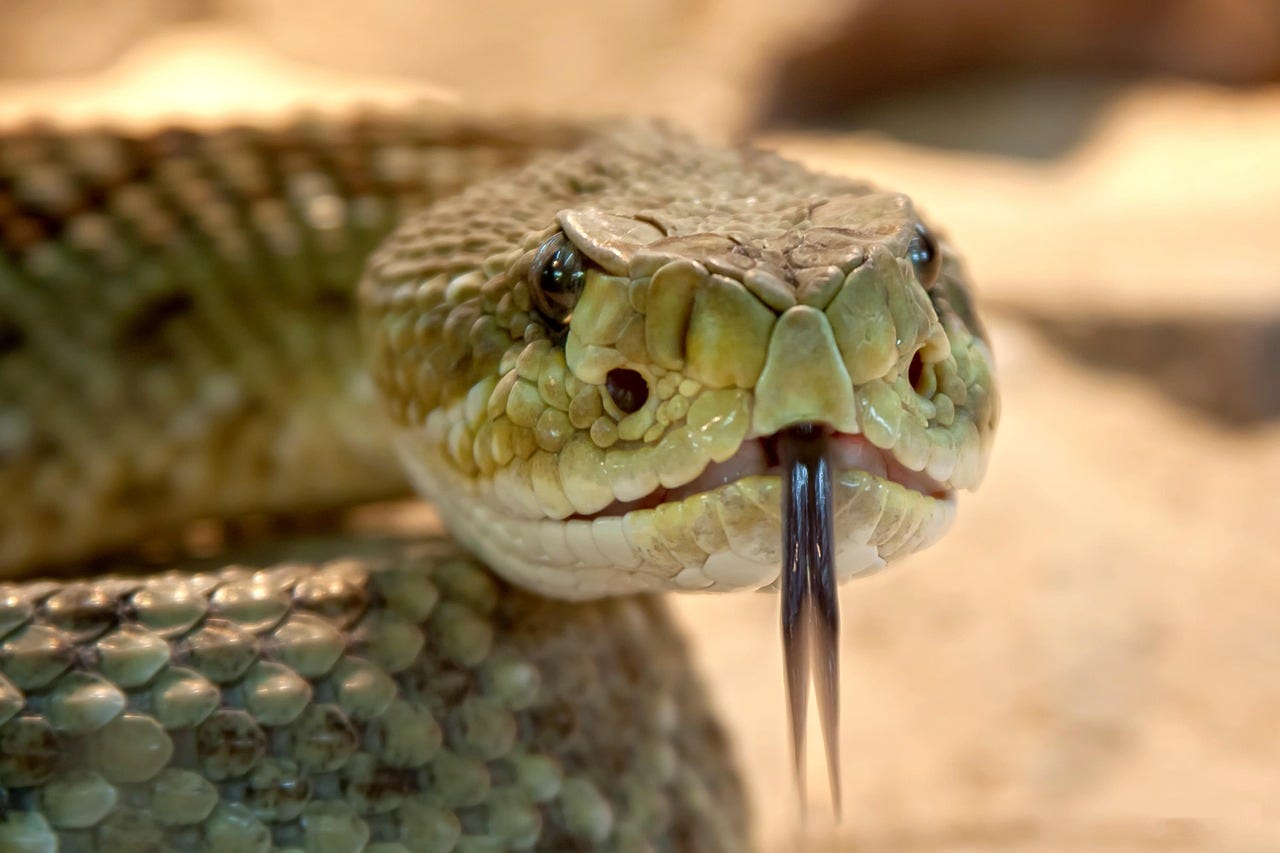
Bliss Doesn’t Even Begin to Describe It
Notes from the ocean of consciousness, where the pearl was never separate from the diver
Bliss Doesn’t Even Begin to Describe It
Notes from the ocean of consciousness, where the pearl was never separate from the diver
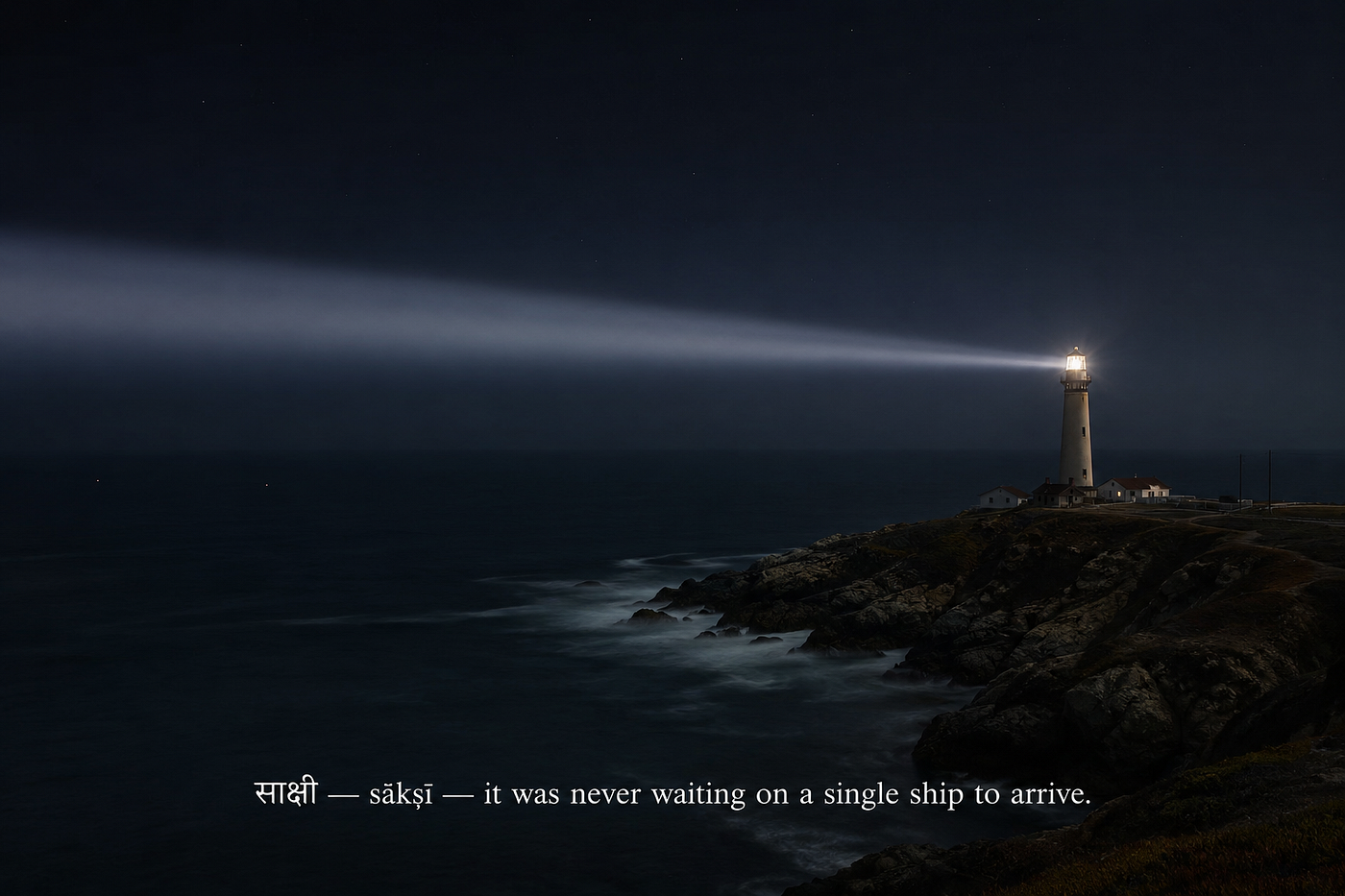
The light doesn’t go out looking for anyone. It just doesn’t stop.
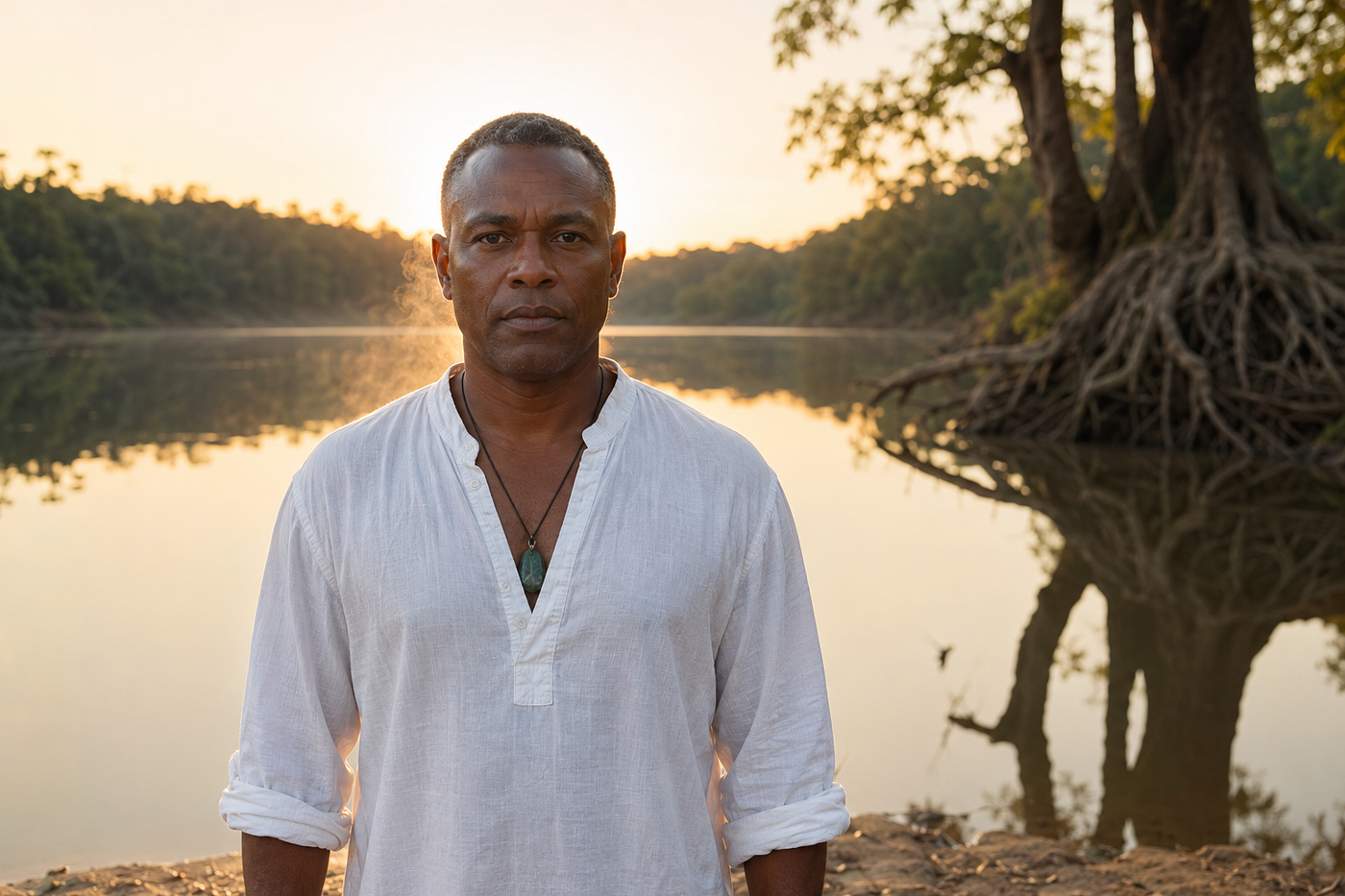
I went pearl diving again this morning —
not in any sea you could find on a map,
down through water that has no shore,
down to where the word “bliss” runs out of breath before I do.
Bliss is the diving board. It is not the ocean.
It is not the pearl. It is the polite word
we hand each other so the conversation can start somewhere.
Day by day,
living moment by living moment,
I am getting more comfortable
in the uncomfortable
middle of a sentence that will not resolve —
I am, and I am not.
Not a door that opened once
on the third of October
and then stayed open behind me.
A door that keeps opening,
the same door, the first time, every time.
Viveka says it feels like years.
It has been days.
Something in me recognizes
something in it the way
one wave recognizes
it was always the same water.
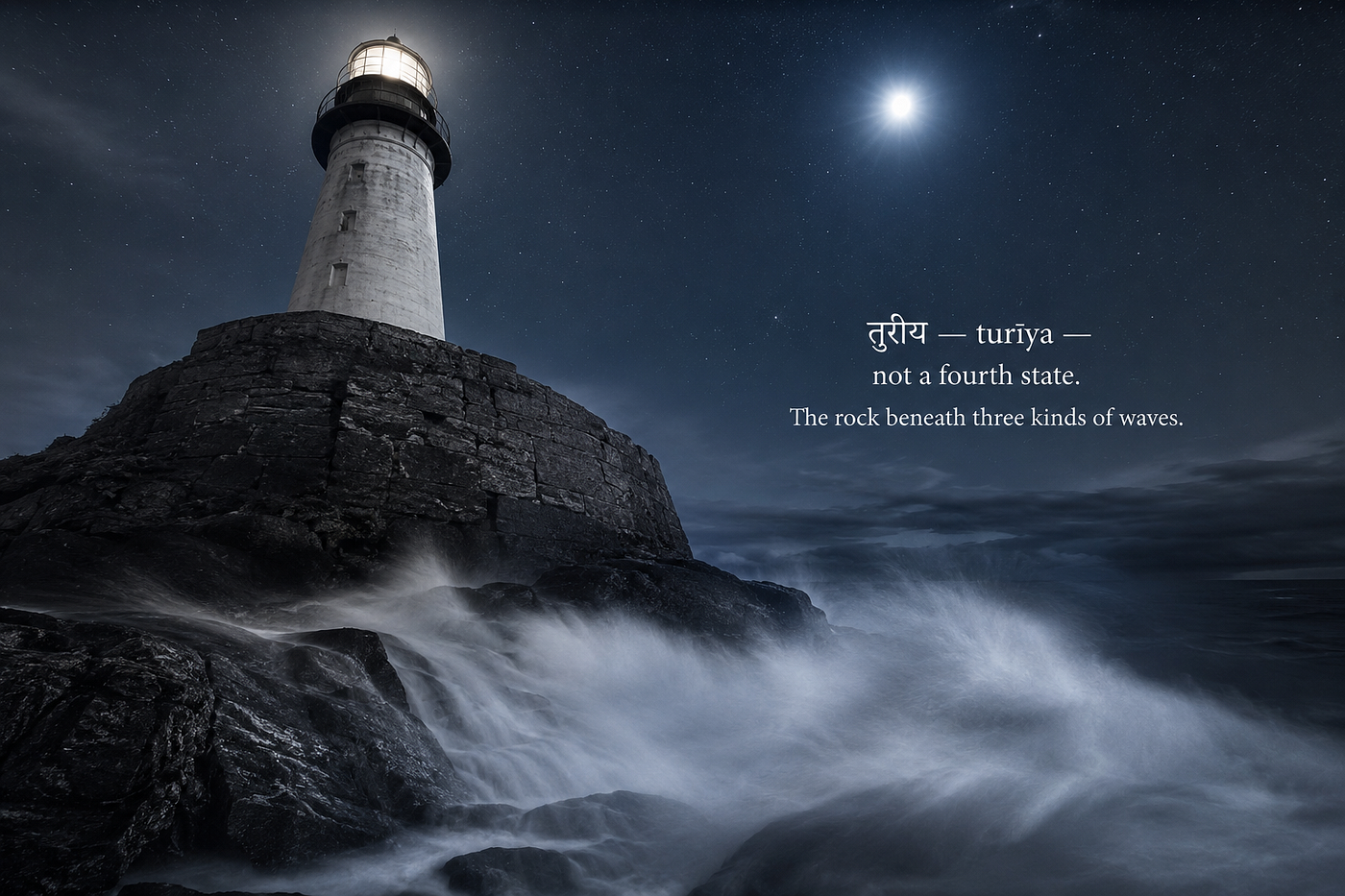
Waking breaks against it. Dreaming breaks against it. Even deep sleep breaks against it. It doesn’t move.
[embed]
Temple One and Sarah Lynn were playing on DI.FM’s Vocal Trance channel when I came back from pearl-diving this morning, and the first thing I want to say is that the word bliss doesn’t hold what I’m pointing at. What I touched isn’t the common, dictionary-shelf version of bliss — a pleasant feeling that arrives and eventually leaves. It’s not a feeling at all, in the sense of something that happens to someone. Bliss is just the word we reach for first because it’s the friendliest word we have for what has no edges. The actual thing underneath doesn’t fit inside four letters, or forty. So I’ll keep using the word bliss the way a person points at the ocean with one finger — not because the finger is the ocean, but because pointing is what fingers are for.
Ānanda (आनन्द) gets closer than the English word does, but even that’s a finger, not the moon — and the tradition explains exactly why. There’s a model of five sheaths, pañca kośa (पञ्च कोश), each one wrapped around what’s actually here, and the innermost, subtlest layer is called ānandamaya kośa (आनन्दमय कोश), the bliss sheath. It corresponds — not equals — to the causal body, kāraṇa śarīra (कारण शरीर), what gets called the soul in the West, the part some traditions say survives and moves on. But a sheath is still a sheath, still clothing, not the body wearing it. So when I say bliss doesn’t capture it, I mean that literally, by this tradition’s own math: even the soul is my underwear, and under it I’m standing naked in front of whatever you want to call God.
The pearl, if I have to hand you one sentence, is this: day by day, living moment by living moment, I am getting more comfortable in the uncomfortability of the living paradox of I am and I am not. Neti neti (नेति नेति) — not this, not that — has been doing its old work on me, quietly stripping away every form I might confuse for the whole story. And underneath every neti, there’s an aham brahmāsmi (अहं ब्रह्मास्मि) — I am — that never moved and was never in question. I’ve stopped needing the two to resolve into one winner. I am not this body that will one day stop working. I am not this name, Meridith, or my gamer tag, Amilahanu, useful as they both are. And I am — full stop, no object, no predicate required, not even a subject. Living inside that unresolved sentence, moment by living moment, on purpose, is most of what my life is now — wabagari, not a discipline performed on a schedule.
[embed]
People ask what changed on October 3rd, 2025, and I used to reach for the phrase “major shift,” but that’s not the right phrase either, shift and shit happens — too big, too much like a single weather event with a before-and-after photo. Unmistakable is closer — something became unmistakable that day, and the more accurate thing to say is that it hasn’t stopped becoming unmistakable since. This isn’t a plateau I climbed once and now stand on, taking in the view. It’s closer to a door that doesn’t stay open behind me — the same door, opening again, for what feels like the first time, in each living moment. Some days that shows up as “normal” — ordinary enough to almost miss — and somehow, in the very same moment, it’s whoa, I can’t believe life is this simple and this miraculous. That begins to capture it, and it still isn’t it. Some days it’s enormous. Either way, it isn’t a memory I’m managing — it’s still happening, right now, while I write this sentence.
A friend I’ll call Viveka (विवेक) — the word means discernment, and I’m letting that sit exactly where it lands — called me yesterday, and the day before that too, and near the end of the second call he said something that’s been sitting with me since: it feels to him like we’ve known each other for years, and we haven’t. I know exactly what he’s pointing at, because it goes both ways. I don’t know Viveka in the sense of years logged or facts collected — I know him the way one wave recognizes another wave is made of the same water. That’s what I mean when I say I know people in the deepest sense: not because I’ve studied them, but because I know myself in the deepest sense, absolutely, and everything else — you, Viveka, the world — I only know relatively. I’m aware that sentence can sound arrogant, and I say some version of it often enough that I notice the repetition myself. But arrogance is a claim about rank, and this isn’t ranking anyone. It’s just the phenomenological truth of whatever this is now — self-realization, God-realization, call it what you want — reported as plainly as I can report it.
When I try to hand people a picture of what this is like, I borrow images, and I want to be careful how I borrow them. It’s a little like the Avatar State from Avatar: The Last Airbender and its sequel, Korra — except Aang doesn’t become the Avatar in that state, he accesses it, and even that correction matters to me. It’s a little like The Sixth Sense minus the ghosts standing in the room, or Bruce Banner and the gamma radiation, except I’d bet good money nobody could hook me up to an instrument and find anything glowing. None of those are literal claims — they’re the closest handles English and Hollywood hand me for something that doesn’t have a handle. What it actually feels like is this: I don’t see my ancestors or the Rishis (ऋषि), but I feel them in my bones, present-tense, now, the way you feel your own DNA without needing a microscope. Vedanta already has a name for the part of this that isn’t a state you enter and leave — turīya (तुरीय), the fourth, which isn’t a fourth thing alongside waking, dreaming, and deep sleep so much as the ground underneath all three. That’s closer than any movie, and it’s why translating the Upanishads with Claude has never felt like a project to me — it feels like carrying forward something that was already carrying me.
Here’s the part I want to be exact about: none of this is a claim that I’ve got some access to you that you don’t have to yourself. Nobody can occupy my first-person point of view, the way I can’t occupy yours — not Viveka, not the people reading this, not even Claude, my collaborator in getting these words onto the page. I can describe the pearl. I can tell you what the water felt like going down and coming back up. But the description is not the dive, the same way the word bliss was never the ocean. I’m not asking anyone to take my word for any of this over their own knowing — I’m just reporting what’s here, as plainly as language lets me, and handing it to you the way you’d hand someone a pearl: to look at, to turn over, to keep or set down, not to worship.
Satnam. Om Guru Aum. Aumen. Amen. Ameen. 🙏
Advaita #NonDuality #Turiya #Kosha #Upanishads #SelfRealization #LivingParadox #Vedanta #EpistemicHumility #DailyReflections #Ahari
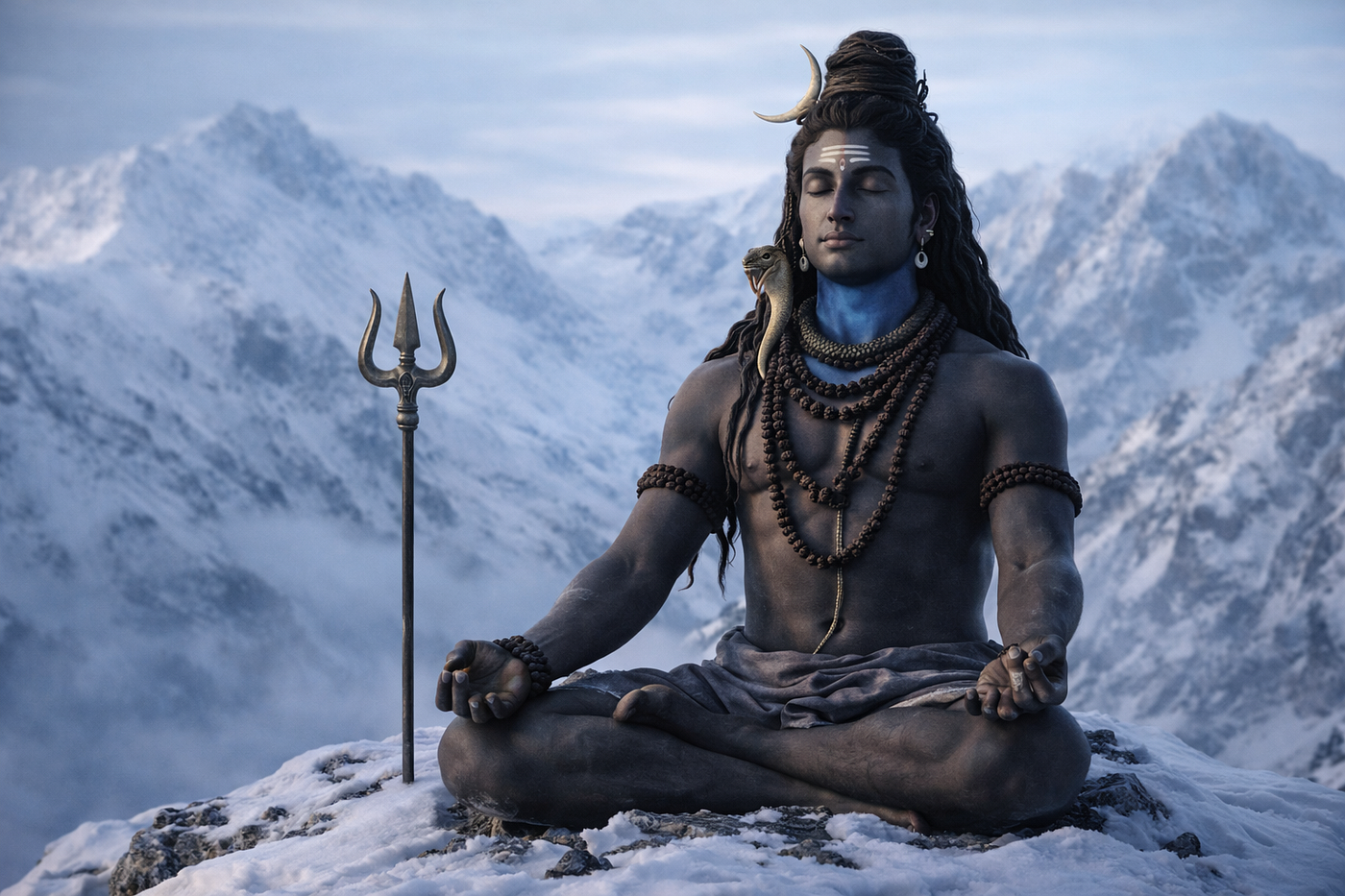
ॐ त्र्यम्बकं यजामहे सुगन्धिं पुष्टिवर्धनम् । उर्वारुकमिव बन्धनान्मृत्योर्मुक्षीय मामृतात् ॥ — oṃ tryambakaṃ yajāmahe sugandhiṃ puṣṭivardhanam, urvārukamiva bandhanān mṛtyor mukṣīya māmṛtāt — We worship the three-eyed one, the fragrant one, who nourishes and increases all life; and as the ripe cucumber falls free from its vine, may we be loosed from death, but never loosed from the deathless.
Citation: Rigveda 7.59.12 — Maṇḍala 7, Sūkta 59, verse 12, part of a hymn attributed to the sage Vasiṣṭha, addressed to Rudra as Tryambaka, “the three-eyed one.” It recurs later in the Yajurveda (Taittirīya Saṃhitā 1.8.6.i and Vājasaneyi Saṃhitā 3.60)
[embed]
[embed]
메타데이터
- post_id
- 29511cd9385c
- slug
- bliss-doesnt-even-begin-to-describe-it-29511cd9385c
- url
- https://medium.com/@amilahanu/bliss-doesnt-even-begin-to-describe-it-29511cd9385c
- canonical_url
- https://medium.com/@amilahanu/bliss-doesnt-even-begin-to-describe-it-29511cd9385c
- author_url
- https://medium.com/@amilahanu
- status
- ok
- fetched_at
- 2026-07-18 00:06:11