Understanding MASLD: New Guidelines for Managing Liver Disease
Shift from NAFLD to MASLD, including updated risk assessments, treatment strategies, and diagnostic tools
Medical Updates
Understanding MASLD: New Guidelines for Managing Liver Disease
Shift from NAFLD to MASLD, including updated risk assessments, treatment strategies, and diagnostic tools

MASLD Guidelines (Image Source)
Not a member yet? No worries! **Click here** to read the full story…
MASLD Guidelines: Key Updates for 2024
**Novel guidelines in the management of “metabolic dysfunction-associated steatotic liver disease” (MASLD) **have been released during the EASD (European Association for the Study of Diabetes) 2024 Congress, and they include initial and updated findings that have implications for the diagnosis and treatment of the condition.
Here’s a breakdown of the guidelines and critical changes:
MASLD Prevalence and Terminology
Recent research shows that the global prevalence of MASLD in Type 2 Diabetes patients is estimated at around 65. 33%.
The term NAFLD (non–alcoholic fatty liver disease) with MASLD will be used to stress the metabolic etiology of the disease rather than using the alcohol-based classification system.
Who Developed the MASLD Guidelines?
The new guidelines were prepared collaboratively by:
- EASD (European Association for the Study of Diabetes)
- EASL (European Association for the Study of the Liver)
- EASO (European Association for the Study of Obesity)
These recommendations were published in Diabetologia, The Journal of Hepatology, and Obesity Facts.
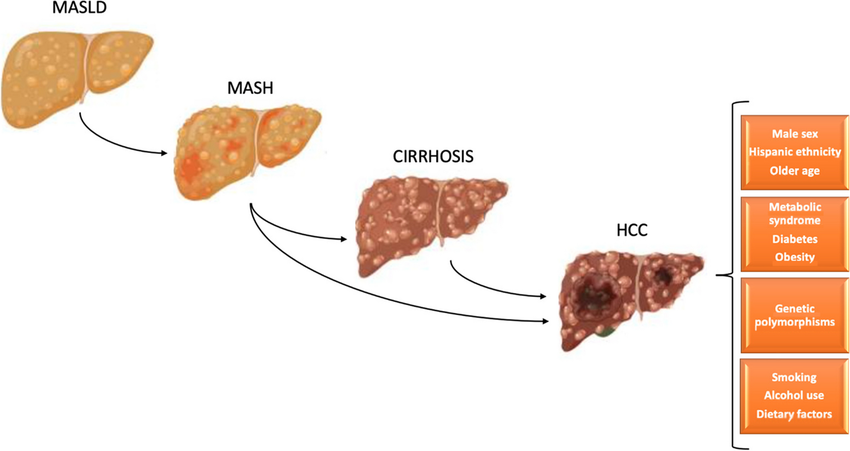
MASLD (Image Source)
Definition of MASLD
MASLD is defined as “hepatic steatosis” occurring in the presence of one or more cardiometabolic risk factors, provided there is no excessive alcohol intake.
MASLD includes conditions such as:
- Simple steatosis
- Metabolic dysfunction–associated steatohepatitis (MASH) (formerly known as NASH)
- MASH-associated fibrosis and cirrhosis
Introducing a New Category: MetALD
A new addition is “moderate alcohol consumption with MASLD” (MetALD) meaning people who consume alcohol (from 140 to 350 g per week for women and from 210 to 420 g per week for men) nevertheless are diagnosed with MASLD.
Diagnostic Tools: Fibrosis-4 (FIB-4) Score
The FIB-4 index is a non-invasive biomarker test recommended for assessing “liver fibrosis risk.”
It is calculated through factors like patient age, AST, ALT levels, and platelet count.
The thresholds are:
- <1.3: Low risk for advanced fibrosis
- 1.30–2.67: Intermediate risk
-
2.67: High risk
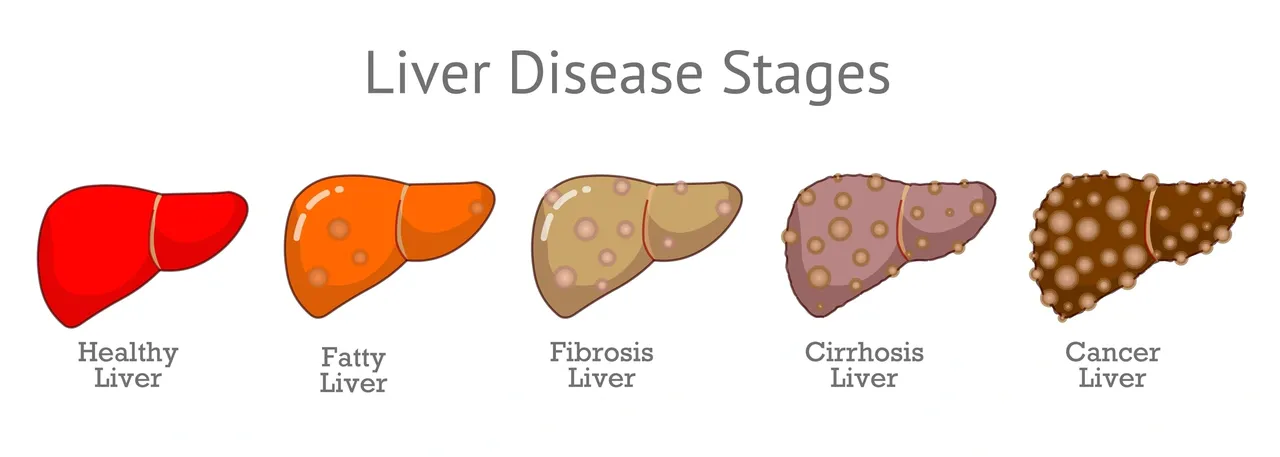
MASLD (Image Source)
Management Strategies
Lifestyle Modifications:
- Diet and exercise* are the foundations of MASLD management. Weight loss, particularly through caloric reduction and consumption of high-quality foods, is critical.
- Alcohol reduction or cessation is strongly recommended for patients.
Pharmacological Therapies:
- Currently, pharmacological treatments target MASH rather than MASLD itself, especially for patients with fibrosis stages F2 or F3.
GLP-1 receptor agonists (GLP-1 RA), commonly used in diabetes, have shown benefits in MASH but have not demonstrated conclusive effects on fibrosis resolution yet. Early intervention might prevent severe fibrosis.
Resmetirom:
- Resmetirom can now be used as the first FDA-approved treatment to treat MASH with severe fibrosis but not cirrhosis. Although it has been found effective in the treatment of steatohepatitis and fibrosis when viewed histologically, at the moment it is on sale only in the USA.
Bariatric Surgery:
For patients who suffer from severe obesity together with MASLD, bariatric surgery is quite suitable.
It does this not only to achieve weight loss but also to enhance liver histology, alleviate TNF-α generated type 2 diabetes, and mitigate cardiovascular risk.
Looking Forward
With the updated guidelines, the approach to MASLD emphasizes a holistic treatment plan focusing on lifestyle changes as the primary intervention, supplemented by pharmacotherapy for higher-risk patients.
These new recommendations should help clinicians manage MASLD more effectively and provide clearer guidance for patients at varying levels of liver disease progression.
For further reading, you can access more details from the official publications in Diabetologia, Journal of Hepatology, and Obesity Facts.
Disclaimer: Always seek the advice of your physician with any questions you may have regarding a medical condition. This information is not intended or implied to be a substitute for professional medical advice, diagnosis, or treatment.
References:
- *Diabetologia*
- *Journal of Hepatology*
- *Obesity Facts*
- *The Global Epidemiology of Nonalcoholic Fatty Liver Disease and Nonalcoholic Steatohepatitis Among Patients With Type 2 Diabetes*
You may also find the articles below interesting:
메타데이터
- post_id
- 29685a10a60d
- slug
- understanding-masld-new-guidelines-for-managing-liver-disease-29685a10a60d
- url
- https://medium.com/health-science/understanding-masld-new-guidelines-for-managing-liver-disease-29685a10a60d
- canonical_url
- https://medium.com/health-science/understanding-masld-new-guidelines-for-managing-liver-disease-29685a10a60d
- author_url
- https://medium.com/@cuneytyardimci
- status
- ok
- fetched_at
- 2026-06-27 07:40:21