Homo Sapiens Is Older Than We Thought
The fossils of Jebel Irhoud, Morocco, pushed the origins of our species back to 300,000 years ago and revealed a more complex, pan-African…
Homo Sapiens Is Older Than We Thought
The fossils of Jebel Irhoud, Morocco, pushed the origins of our species back to 300,000 years ago and revealed a more complex, pan-African evolutionary history.
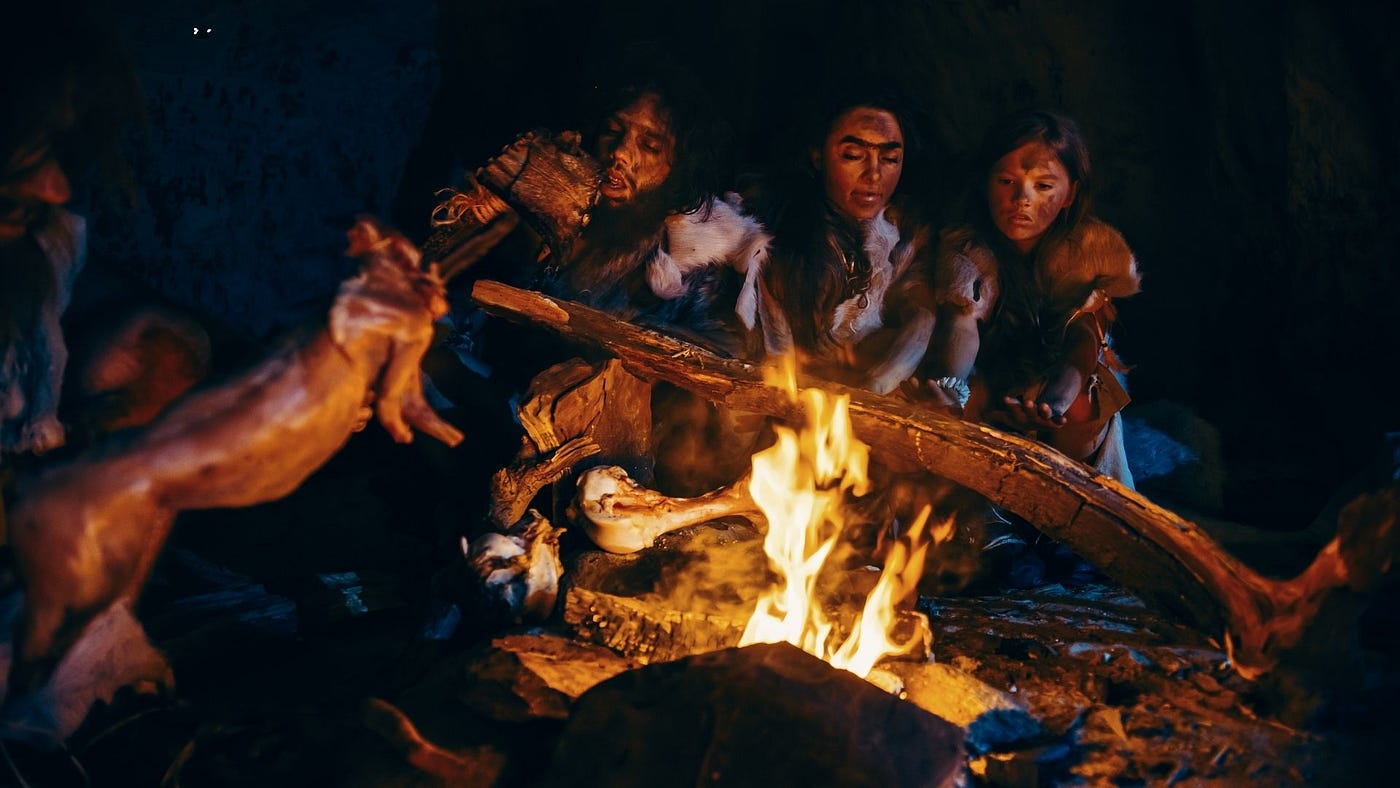
Illustration of a group of Sapiens feeding. Powered by Canva
Until a few years ago, all fossil remains attributable to our species suggested that Homo sapiens first appeared around 200,000 years ago. As you probably know, nothing lasts forever: knowledge in paleontology and evolutionary science changes with every new study and discovery. As a result, scientific data are always provisional, at least until new research demonstrates that previous interpretations were incorrect or provides updated evidence.
Therefore, although this is no longer a recent discovery, the appearance of our species can now be traced back to at least 300,000 years ago. To be more precise, these are currently the oldest known fossil remains attributed to Homo sapiens. No, this is not one of those sensational headlines designed to attract clicks. I remember that when the discovery was announced, many people claimed that it “rewrote our history.” From a science communication perspective, that is misleading because it gives the impression that our knowledge of paleontology is like a sandcastle that can be swept away at any moment. In reality, scientific research refines, updates, and sometimes corrects existing knowledge rather than erasing everything that came before.
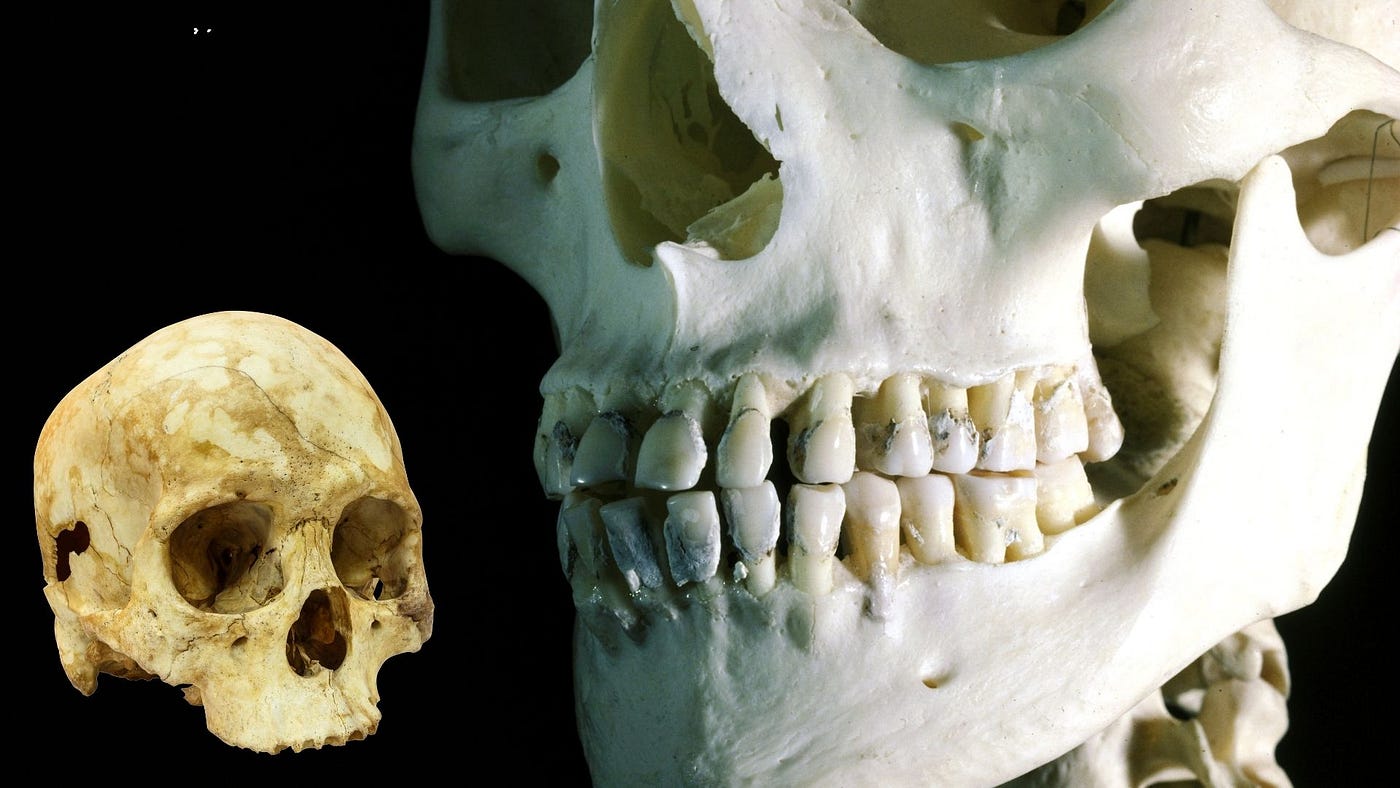
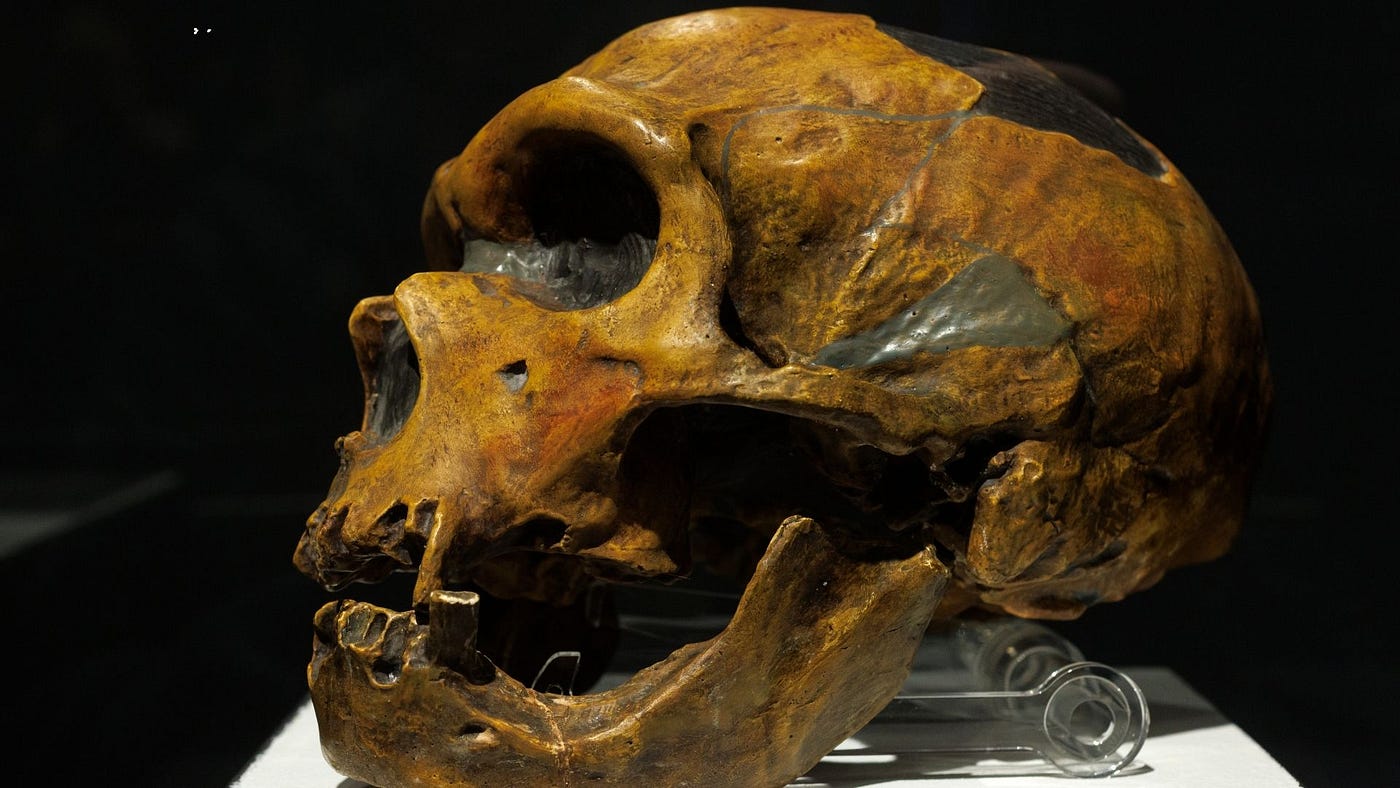
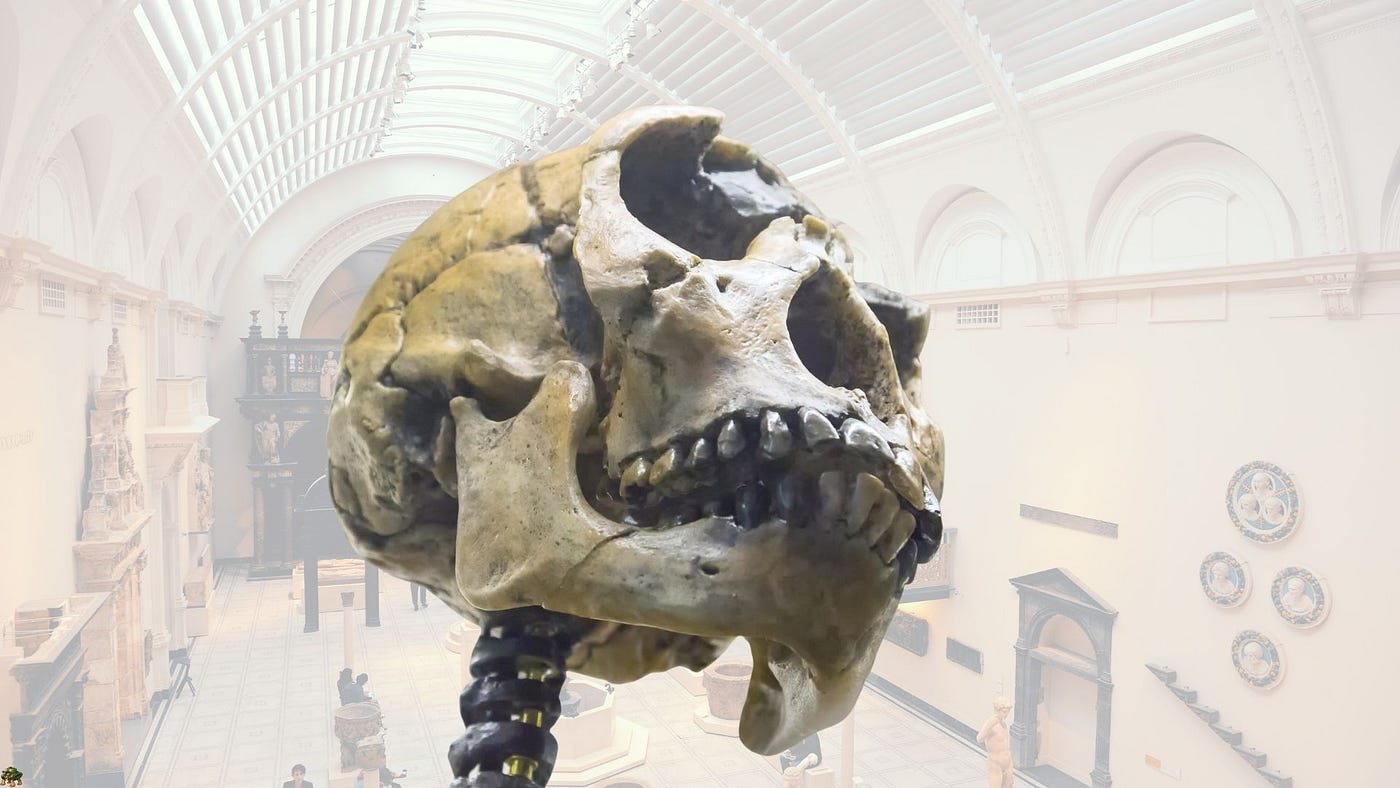
Illustration of two “Homo sapiens” human skulls. Powered by Canva
Perhaps the most interesting aspect of this discovery is that these fossils were found in Morocco. Previously, the oldest known Homo sapiens remains, dated to around 200,000 years ago, came from regions far from Morocco, including Ethiopia, Kenya, and Tanzania. These new findings not only push back the origin of our species by roughly 100,000 years but also alter our understanding of its early geographic distribution.
So yes, it turns out that we are a little older than previously thought.
The site of Jebel Irhoud has yielded 16 fossil remains attributed to at least five individuals, including skulls, long bones, and teeth, along with animal remains and stone tools. The facial skeleton indicates that the skulls of these ancient individuals were almost indistinguishable from those of modern humans. However, their braincases retained more archaic features, being somewhat more elongated, and they also differed in the morphology of the mandible.
The discovery of stone tools and animal remains not only made it possible to date the site but also provided insights into the diet of these ancient humans. Evidence suggests that they consumed gazelles, zebras, mollusks, and occasionally wildebeest and ostrich eggs. Yes, Morocco looked quite different back then.
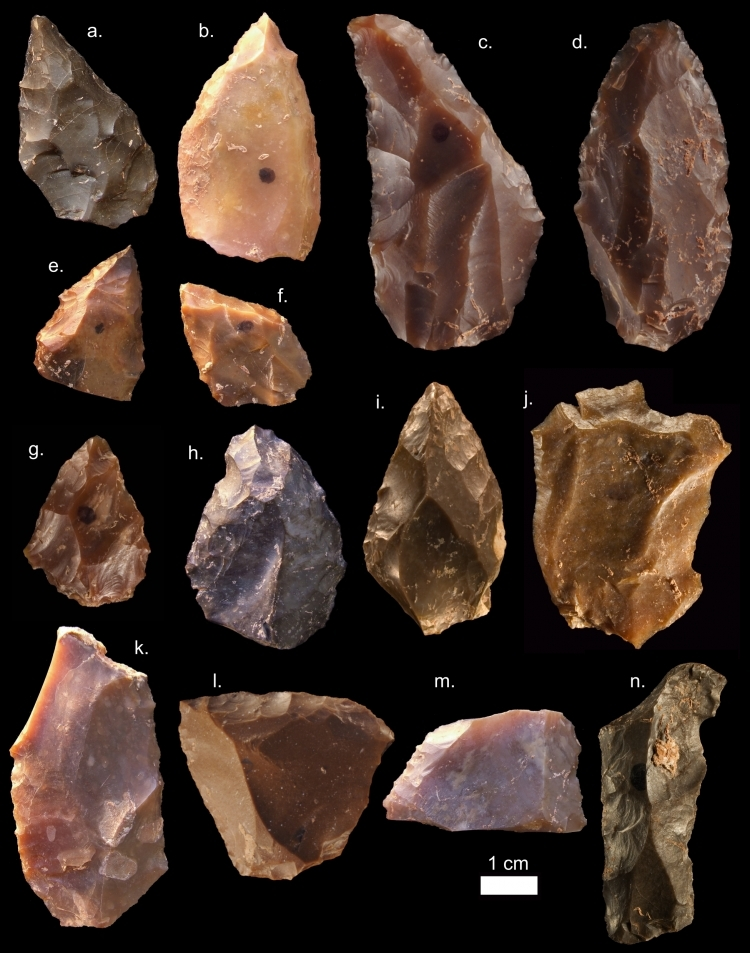
Middle Stone Age stone tools from Jebel Irhoud (Morocco), dated to approximately 300,000 years ago. Image by Mohammed Kamal (MPI EVA Leipzig), Wikimedia Commons, licensed under CC BY 4.0. Kamal, M. (2017). Stone tools from Jebel Irhoud.png. Wikimedia Commons. Licensed under Creative Commons Attribution 4.0 International.
These fossils are important not only because they push back the appearance of our species by at least 100,000 years, but also because they reveal a much more complex evolutionary history for several reasons:
- They provide further support, together with genetic evidence, for an African origin of our species.
- Before 2017, the oldest known fossils attributed to Homo sapiens were dated between 195,000 and 160,000 years ago and were discovered in Ethiopia. This led to the idea that modern human populations descended directly from groups living in that particular region. The Jebel Irhoud fossils, however, suggest a broader picture in which our species first spread across Africa before dispersing into the rest of the world during the Out of Africa expansion.
P.S. To be precise, the fossils are often referred to as representing an “early stage of the Homo sapiens clade.” The authors of the original study did not explicitly state that the remains belong to fully modern Homo sapiens; rather, they interpreted them as representing the earliest known members of the H. sapiens lineage.

Illustration of a group of Sapiens. Powered by Canva
Let us now turn to the archaeological evidence. The earliest stone tools attributed to Homo sapiens are also approximately 300,000 years old.
In southern Tunisia, at Wadi Lazalim, researchers have discovered some of the earliest lithic assemblages and technocomplexes associated with human occupations dated between roughly 300,000 and 130,000 years ago. These findings provide valuable insights into the dispersal of Homo sapiens, which would soon begin its long journey toward the colonization of continents beyond Africa.
The prevailing model for the dispersal of Homo sapiens suggests that our ancestors moved through the Sahara on their way to North Africa. However, direct evidence for this route remains limited, and there is still no definitive proof of a continuous connection between populations living in northern and southern Africa during this period.

Illustration of a Sapiens encampment. Powered by Canva
The industries discovered in North Africa have suggested diffusion processes originating from Central Africa, further highlighting the importance of that region in human origins. These industries, known as the Sangoan and Lupemban traditions, are often interpreted as regional adaptations to the tropical forests of Central Africa, although they may also be associated with the exploitation of a wide range of environments, including grasslands, woodlands, and forests.
Possessing such a technological “toolkit” would have allowed human populations to be well equipped when exploring unfamiliar territories or when rapidly acquiring resources in environments undergoing significant change.Furthermore, discoveries of this kind reinforce the idea that biological and cultural evolution are shaped by similar evolutionary processes.
When a biological population evolves, it already possesses genetic variation upon which natural selection can act. In a sense, it is like carrying a toolbox filled with different instruments — genes, traits, and phenotypes. Some of these may be poorly suited to a particular environment, while others may prove advantageous under different conditions. When the environment changes, individuals that happen to possess favorable characteristics — traits encoded by genes already present within the population — are more likely to thrive. Over time, these advantageous variants may become increasingly common, making the population better adapted to the new conditions.
From a cultural perspective, a similar principle applies. Human groups possess a repertoire of knowledge, technologies, and behaviors that may vary in their usefulness depending on the circumstances. When environments or social conditions change, some cultural practices become more effective than others, allowing populations to adapt by drawing upon innovations and skills that are already part of their cultural repertoire.
References
- Cancellieri, E., Bel Hadj Brahim, H., Ben Nasr, J. et al. A late Middle Pleistocene Middle Stone Age sequence identified at Wadi Lazalim in southern Tunisia. Sci Rep 12, 3996 (2022). https://doi.org/10.1038/s41598-022-07816-x
- Hublin, JJ., Ben-Ncer, A., Bailey, S. et al. New fossils from Jebel Irhoud, Morocco and the pan-African origin of Homo sapiens. Nature 546, 289–292 (2017). https://doi.org/10.1038/nature22336
- Richter, D., Grün, R., Joannes-Boyau, R. et al. The age of the hominin fossils from Jebel Irhoud, Morocco, and the origins of the Middle Stone Age. Nature 546, 293–296 (2017). https://doi.org/10.1038/nature22335
메타데이터
- post_id
- 296d2bc6bb3e
- slug
- homo-sapiens-is-older-than-we-thought-296d2bc6bb3e
- url
- https://medium.com/teatime-history/homo-sapiens-is-older-than-we-thought-296d2bc6bb3e
- canonical_url
- https://medium.com/teatime-history/homo-sapiens-is-older-than-we-thought-296d2bc6bb3e
- author_url
- https://medium.com/@mattia.paparo1994
- status
- ok
- fetched_at
- 2026-06-23 17:05:31