‘Death Note’ and ‘The Batman’ Disturb Our Moral Certainties
What Makes a Monster and What Makes a Man?
COMICS | MANGA
‘Death Note’ and ‘The Batman’ Disturb Our Moral Certainties
A Tale of Two Vigilantes
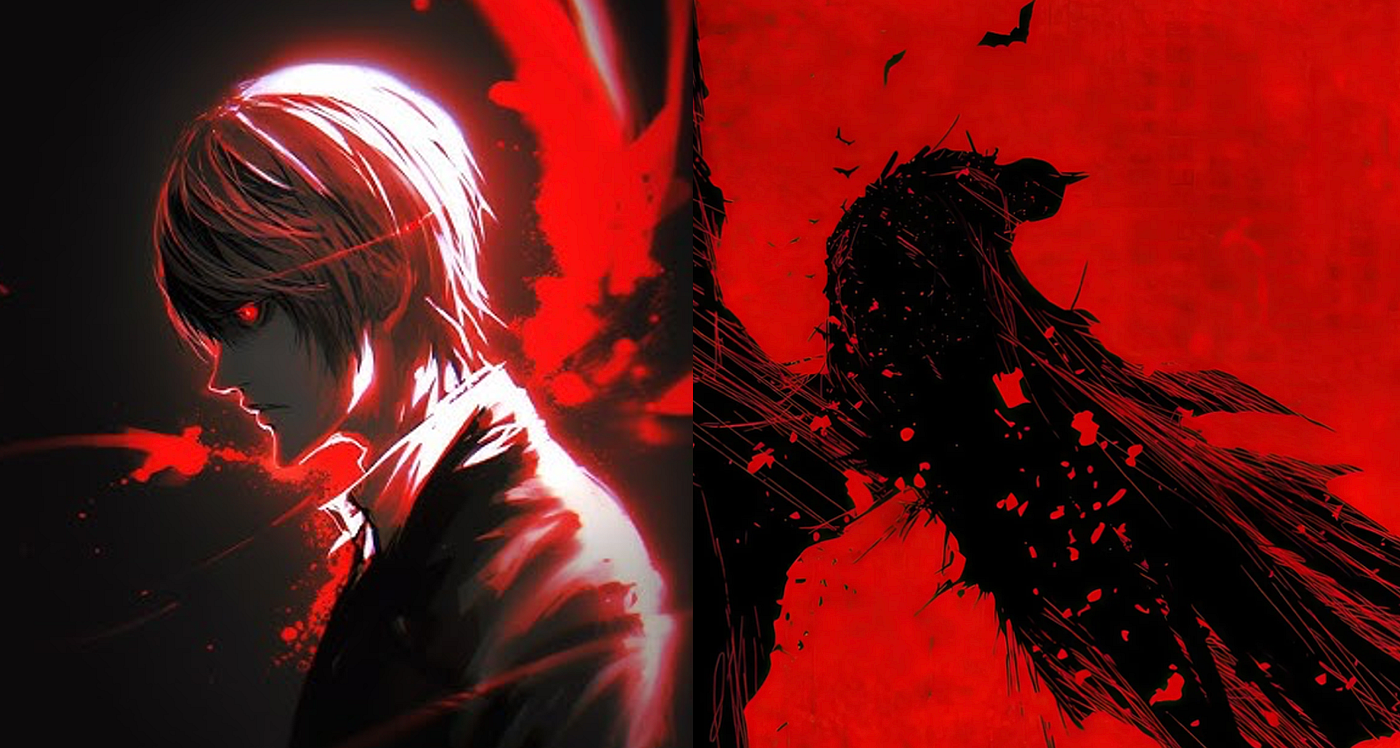
What Makes a Monster and What Makes a Man? Credits: Madhouse Inc. | DC Comics
(For non-members, click here)
This year, 2026, marks the 20th anniversary of when the anime Death Note started airing on TV.
Originally a manga authored by Tsugumi Ohba and illustrated by Takeshi Obata, the story follows high school prodigy Light Yagami in Tokyo, who stumbles upon the eponymous Death Note — a magical notebook that empowers him to kill anyone anonymously with the stroke of a pen.
Hence, the boy endeavours to use the notebook to eliminate the world’s criminals en masse and establish a utopia, extending his killings to law enforcement agents and anyone who would challenge his worldview or attempt to apprehend him.
Coming across Death Note’s premise sufficed to have me start reading the manga (before moving on to the anime adaptation), which I completed within a span of a week. The battle of wits and ideals between Light and the enigmatic detective L, set out to arrest him, captivated me considerably.
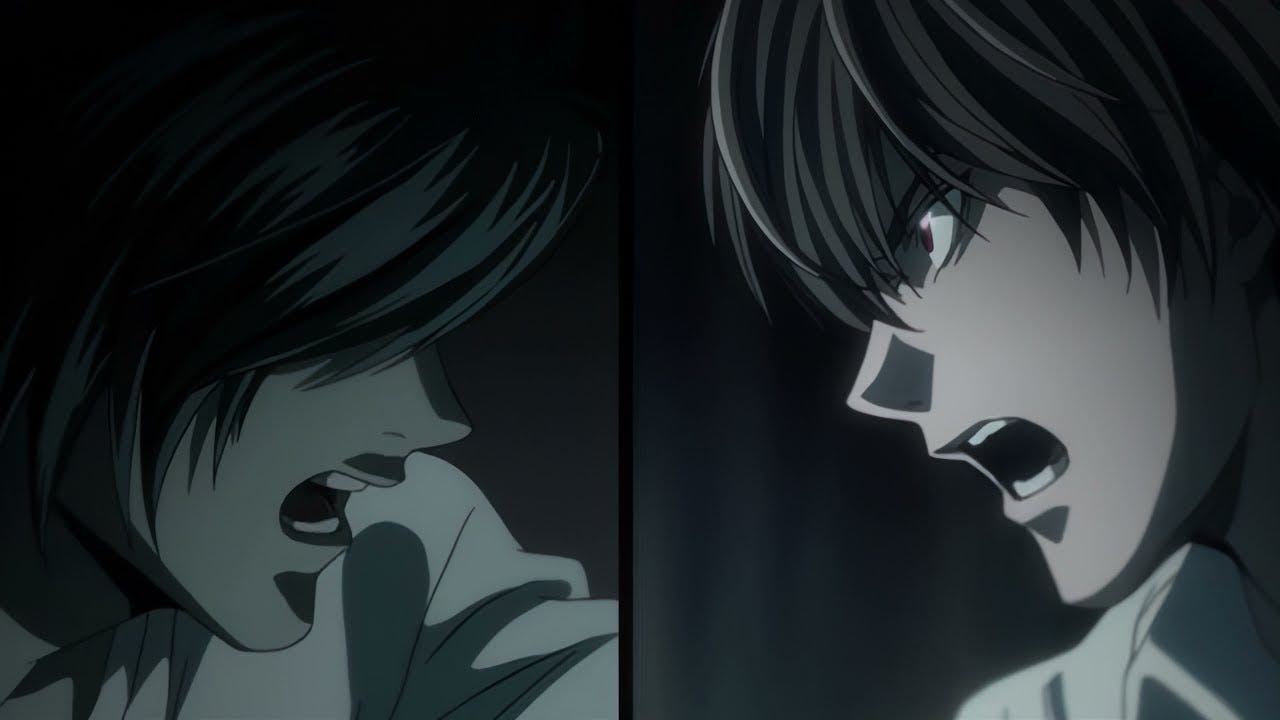
Credit: Madhouse Inc.
So did the characterisation of Light’s personality and motivations, which were masterfully developed with sophistication and nuance. It has you rooting for him, and at the same time calling his modus operandi into question.
This same feeling of captivation — I experienced it yet again, in the cinema with The Batman, directed by Matt Reeves. In Reeves’ iteration of the Dark Knight, the story follows Bruce Wayne in his second year as Batman, investigating the crimes of a newly emerged villain, Edward Nashton, aka The Riddler.
Credit: Warner Bros. Pictures and DC Films
In a game of cat-and-mouse as engaging as that between Light and L, a series of startling revelations begins to surface upon piecing together clues left behind by the Riddler, which challenge the young Wayne’s perception of his own moral certainty and legacy in Gotham City.
In my book, Reeves’ The Batman is a cinematographic masterpiece of noir fiction. Its almost 3-hour runtime didn’t feel like it.
In the opening sequence, accompanied by a haunting score by Michael Giacchino, we see the Caped Crusader through the eyes of common crooks and thugs: a demon pervading the shadows, come to deliver recompense — a dark vampire on the prowl to devour. In the theatre, I could share in their dread and felt every punch Batman throws at the chief thug in the subway station, reverberating through the chairs.
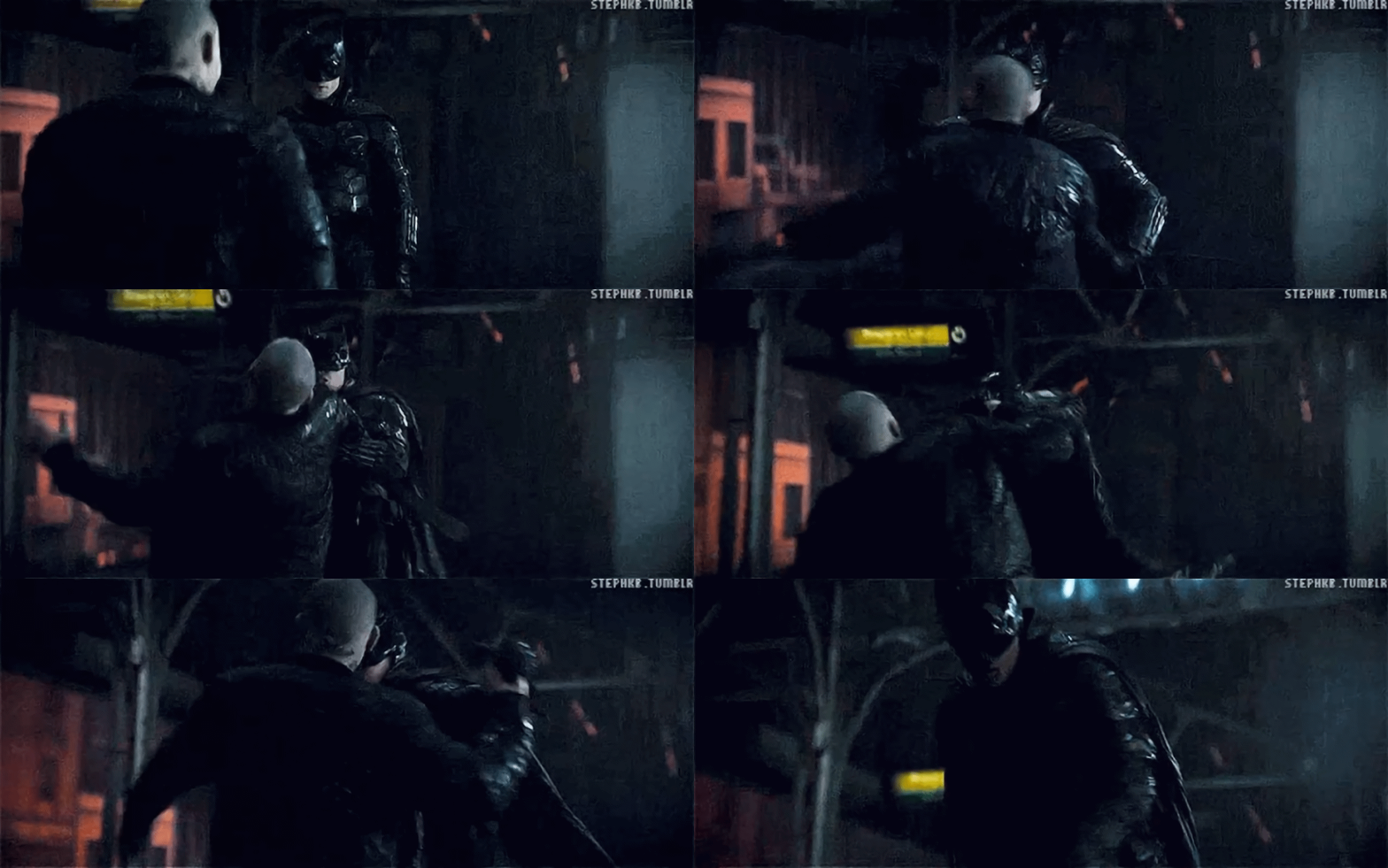
“They think I am hiding in the shadows, but I am the shadows. I’m vengeance.” — BatPattinson. Credits: Warner Bros. Pictures and DC Films
Most of all, Robert Pattinson has been my top highlight of The Batman. With expressive eyes, a melancholic aura, contemplative monologues, and a grim voice that sounds more organic than forced (no offense, Christian Bale), Pattinson nails the character’s wounded psyche and his growth arc, especially his initial absolutist worldview of righteousness — which mirrors that of Light Yagami’s.
That said, what makes both Death Note and The Batman so compelling, where the characters remain prominent talking points in fandom to this day (for the former), is how their stories disturb and deconstruct our sense of moral certainty. How both Light and Bruce reflect the pervasive operating system many people function by, without their realisation.
The Insidious Vice
In several fans’ minds, Light is a decent guy with noble ideals who, by ill fortune, was corrupted by god-like power, causing him to deviate from his just goals. From an arc in the plot where he was apparently amnesiac, we see what the boy was like before acquiring the notebook.
In other words, he was a blank slate tainted by external circumstances.
Seductive is the idea of people (and ourselves) as blank slates, only becoming dysfunctional because of societal ills or some external locus of control. Suffice it to say, however, such an explanation is facile.
The truth is that we have incipient schemas that colour and constrain our interpretations of the world and others.
Corruption doesn’t just happen in a vacuum; power can (and does) reveal and amplify a person’s negative traits.
And Light and Bruce are no exceptions to the rule.
In Light’s case, not only were his ideals of justice warped, but the notebook brought out and amplified his prejudices to macabre, murderous proportions.
For most of his life, Light Yagami has been on the receiving end of constant praise by his family, peers, and school teachers. He tops his classes, is popular with the ladies, and sometimes helps his father with crime investigations.
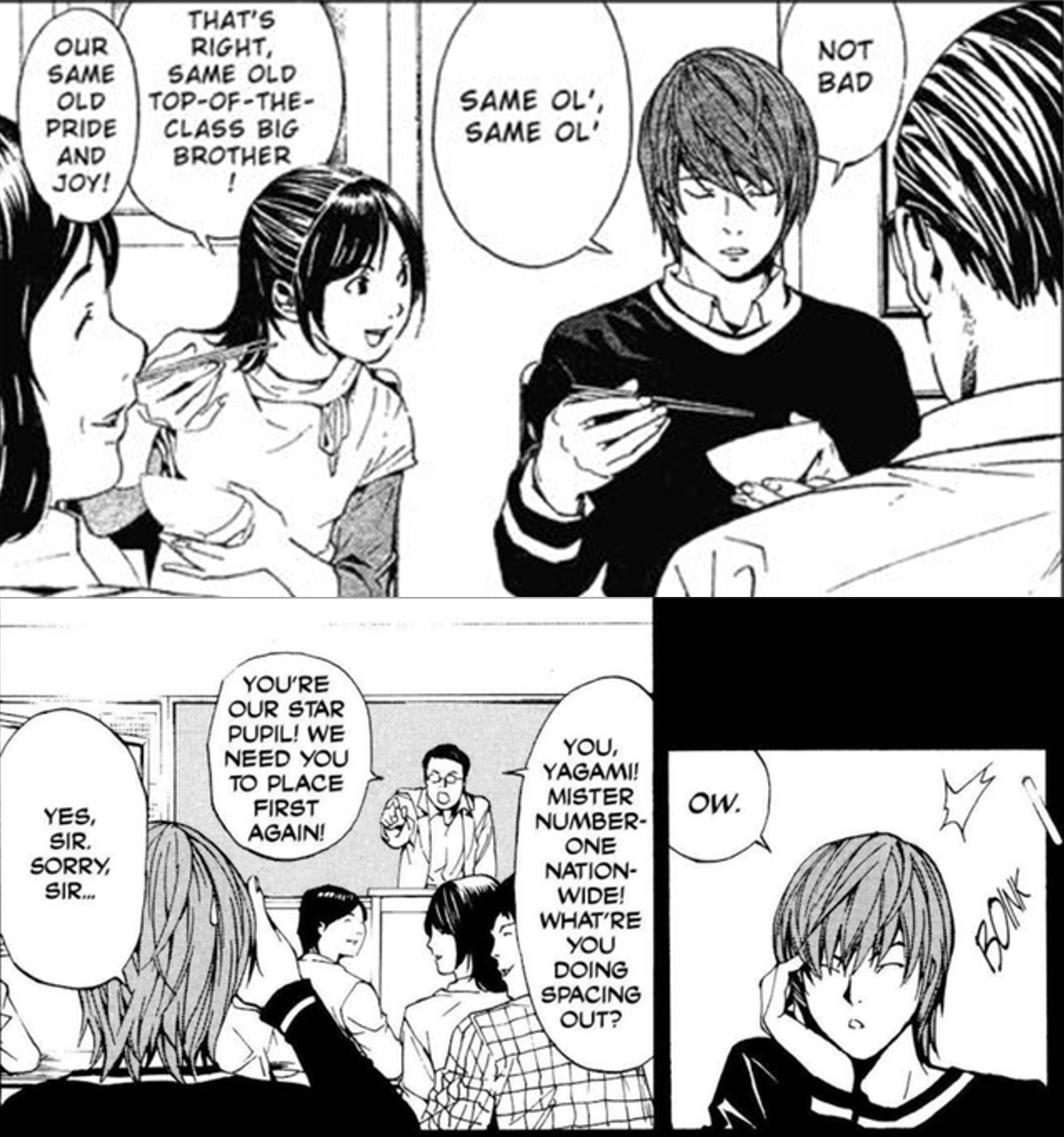
Credit: Shueisha
Such frequent pedestalization often leads a person to develop an unrealistic, exaggerated narrative of themselves.
Ergo, Light believes himself to be not only a man who meets standards. He IS the standard — above moral failure, above falling short, above being wrong about others and his worldview.
His very first kill, Kurou Otoharada, reflects his utilitarian perspective, which in part was fuelled by his unchecked resentment towards the failings of the justice system.
Otoharada is a despicable criminal. Wretches like him have nothing good to contribute to society; thus, he’s better off dead and gone.
Hence, in goes Otoharada’s name in the notebook.
Of course, Light wasn’t expecting him to die, and when he collapses from cardiac arrest, it sends the boy panicking and his sense of self unraveling.
After confirming the notebook’s authenticity through his second kill, Light has to come to grips with his own fallibility.
However, instead of acknowledging that he has gravely erred (albeit unwittingly), he doubles down and rationalises that this was the morally virtuous thing to do.
Being an intelligent model student and the esteemed son of Tokyo’s reputed police chief, there’s no better man than him to pass judgment on others.
From this incident, Light pens the names of multiple incarcerated criminals and wanted fugitives made public on the news with wild abandon, devising ingeniously efficient ways to evade arrest and maximise his kills.
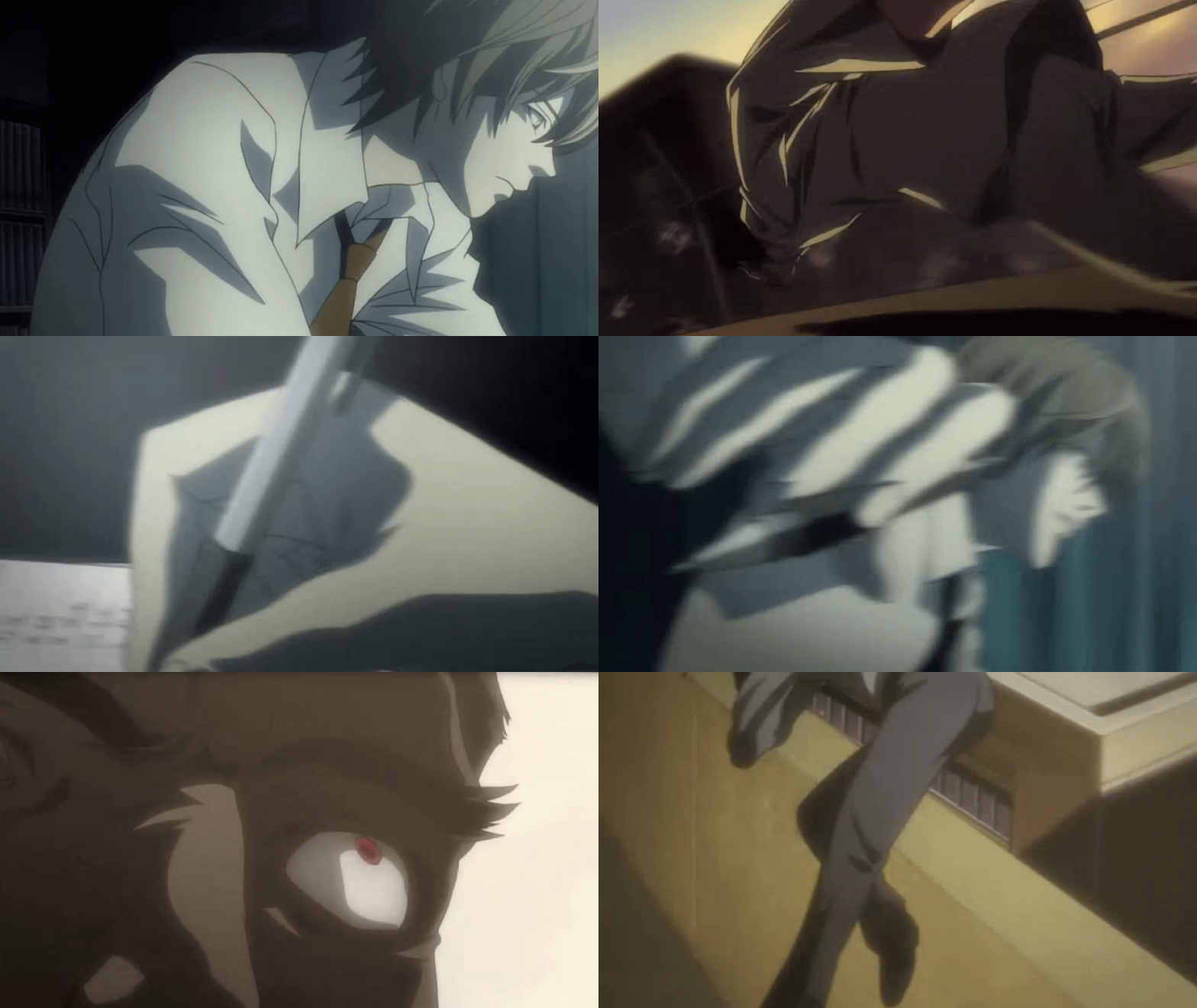
“The world is rotten, and those who make it rot deserve to die. I want the world to know of my existence, that there’s someone out there passing righteous judgment on the wicked.” — Light Yagami. Credit: Madhouse, Inc.
Never mind if some might have been wrongfully convicted or if there’s more to the story that led to their run-ins with the law. As long as they did the crime (and are doing the time), they are a waste of oxygen and ought to be taken out of the equation.
And that extends to anyone else who does not share his way of thinking and his idea of a utopia.
As for the Dark Knight, his perspective parallels Light’s in that those who do not leverage their trauma to become strong and fight evil, unlike him, instead committing crimes and mixing with the wrong people, are unrighteous — deserving of whatever just desserts befall them.
Of course, the Dark Knight doesn’t murder his enemies, which would be to betray his ideals. Though he barely pulls his punches while fighting.
Being learned in martial arts, equipped with sophisticated gadgetry, and skilled in crime-solving, there’s no better man than him for keeping the streets safe.
By donning the cowl and leaving petty thugs with broken bones and missing teeth, he can compensate for his failure to save his parents through weaponizing the fears of criminals against them to deter further crime.
Then along comes Selina Kyle, aka Catwoman, whom Bruce finds himself concurrently smitten by, yet conflicted while investigating leads to the Riddler, being unable to fit her into either of his neatly defined categories.
She challenges his worldview and his assumptions about her, further catalyzing his personal journey of confronting the reality that people can be driven to crime by misdirection, desperation, and duress than outright malice, contrary to what his strict dichotomous narrative would have him believe. He can acknowledge how his wealth has played a role in reinforcing his constrained outlook, yet at the same time, afforded him choices that the likes of Selina Kyle and Edward Nashton don’t have the luxury of having.
The animus meets the anima. Credits: Warner Bros. Pictures and DC Films
We look at the world and others around us and think we see matters clearly as they are. When certain people let us down or fall short morally, we attribute to them malicious personalities.
We seek to correct anyone who shares similar experiences yet arrives at different conclusions and values. To make them see as we do, as if their different perspective is a personal slight and a transgression.
We reinforce our ideas and insist on their rightness, almost instinctively. And if we mess up similarly, it’s almost always because of an external locus of control. Someone else had cast the first stone.
Rarely, if ever, does it readily occur if our schemas and prejudices have any role to play in possibly misjudging of others, and in causing good endeavours to go south.
This issue is nothing new. It’s only through the advent of modern psychology that this insidious pattern receives a clinical definition: Projection, first conceptualised by Sigmund Freud (German: Projektion) and further developed by his protege Carl Gustav Jung in his writings on Shadow work, with the precision of a surgeon operating on himself.
Photo by Jeremy Yap on Unsplash
In simple words, projection is the hating and exaggerating in others what we hate in ourselves — our unresolved guilt, our unaddressed insecurities, and uncorrected maladaptive behavioural patterns.
Alternatively, projection is the imposition and imputation of ideals and qualities onto people that we haven’t concretized in our own lives. Instead, we outsource personal growth to others and expect them to abide by some conception of love, goodness, and justice to feel validated in our interpretations of the world.
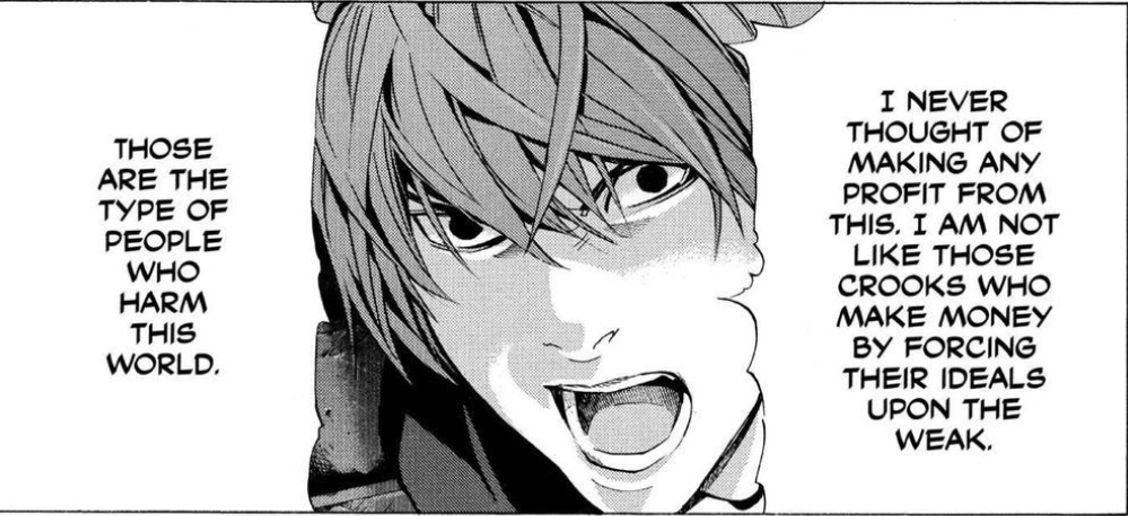
Credit: Shueisha
What makes projection so insidious is that it’s the path of least resistance. Moralizing others feels productive and intoxicating. Hence, people commit the moralization gap — accusing others of the same wrongs they themselves are equally, if not more, guilty of. They make judgments on situations and personalities, thinking their own assessments are impartial to a tee without question.
The Way Forward — Integrating The Paradox
Be not mistaken, this is not to say that if you express indignation at a robber’s actions, it makes you automatically a latent thief.
This is not to say fraternal correction or efforts to right wrongs be damned.
He who is not angry when there is just cause for anger is similarly immoral.
That said, this brings us back to the question that both stories seem to ask: What makes a Man and what makes a Monster?
I think the most terrifying (yet liberating) takeaway from both Death Note and The Batman is that none of us are any more righteous than the characters in-universe.
Decency is not the same as virtue. Intelligence and idiocy can coexist in the same mind.
People in extraordinary circumstances can be driven to commit egregious blunders and atrocities, and to think we are more morally inclined enough to act differently in the same situations is to deceive ourselves.
It’s the same moral Bruce has to confront personally when he uncovers the hand his family played in perpetuating Gotham’s systemic corruption through good intentions gone south, and getting involved with the wrong people. And in catalyzing the Riddler’s existence.
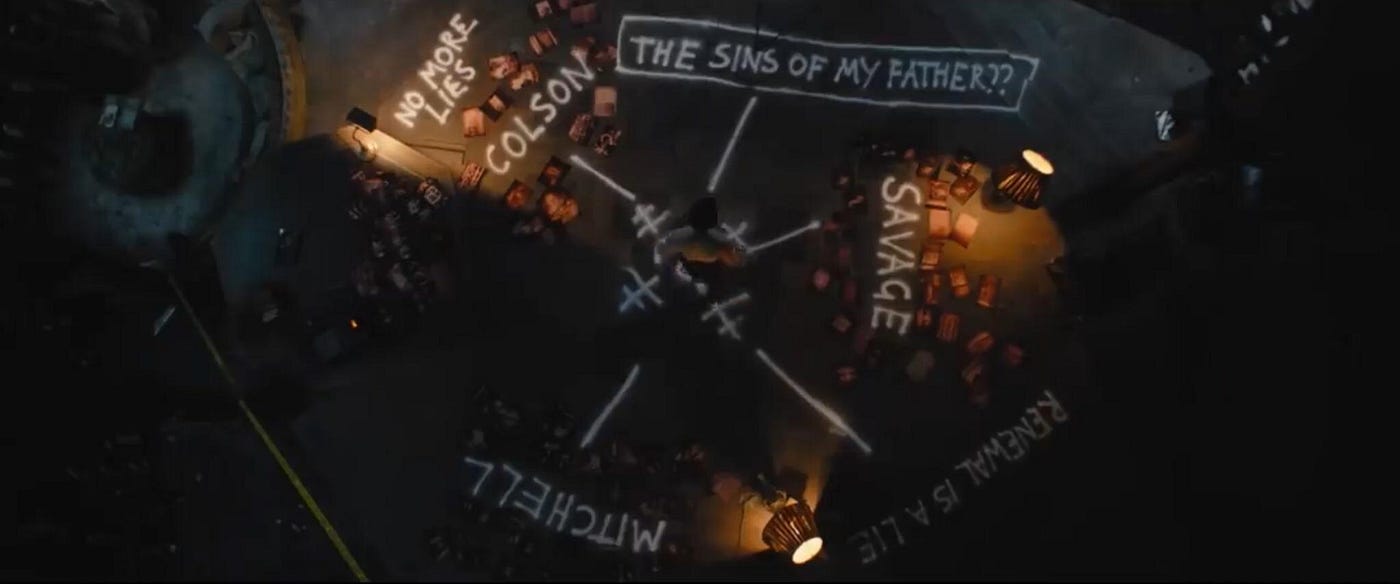
Shadow Work. Credits: Warner Bros. Pictures and DC Films
Immensely painful as it is, by recognizing his Rogues Gallery as mirrors to his psyche — symptoms of a broken city, flawed, complicated, and wounded as he is — and by accepting that well-meaning people can make flawed, foolish choices in weakness, can the Caped Crusader become the hero Gotham truly needs (not to mention one popularly beloved by boys and men of all ages). From projecting his shadow outwards to bringing it into the light — becoming an example showing the way, extending a merciful hand.
His capacity for emotional sobriety — having a healthy dose of criticality to call into question his worldview, his modus operandi, and to hold onto his ideas fluidly to allow room for updates and course corrections — is what makes him twice the man Light is.
Reflecting on his impact as Batman. Credits: Warner Bros. Pictures and DC Films
This emotional sobriety is a quality Light Yagami sadly never cultivates within, even when challenged by the people he least expects — his own family. Instead, he obstinately denies his own capability of erring morally, convincing himself he’s putting his family’s best interests at heart in his endeavour to create his New World, as a salve for his disturbed conscience.
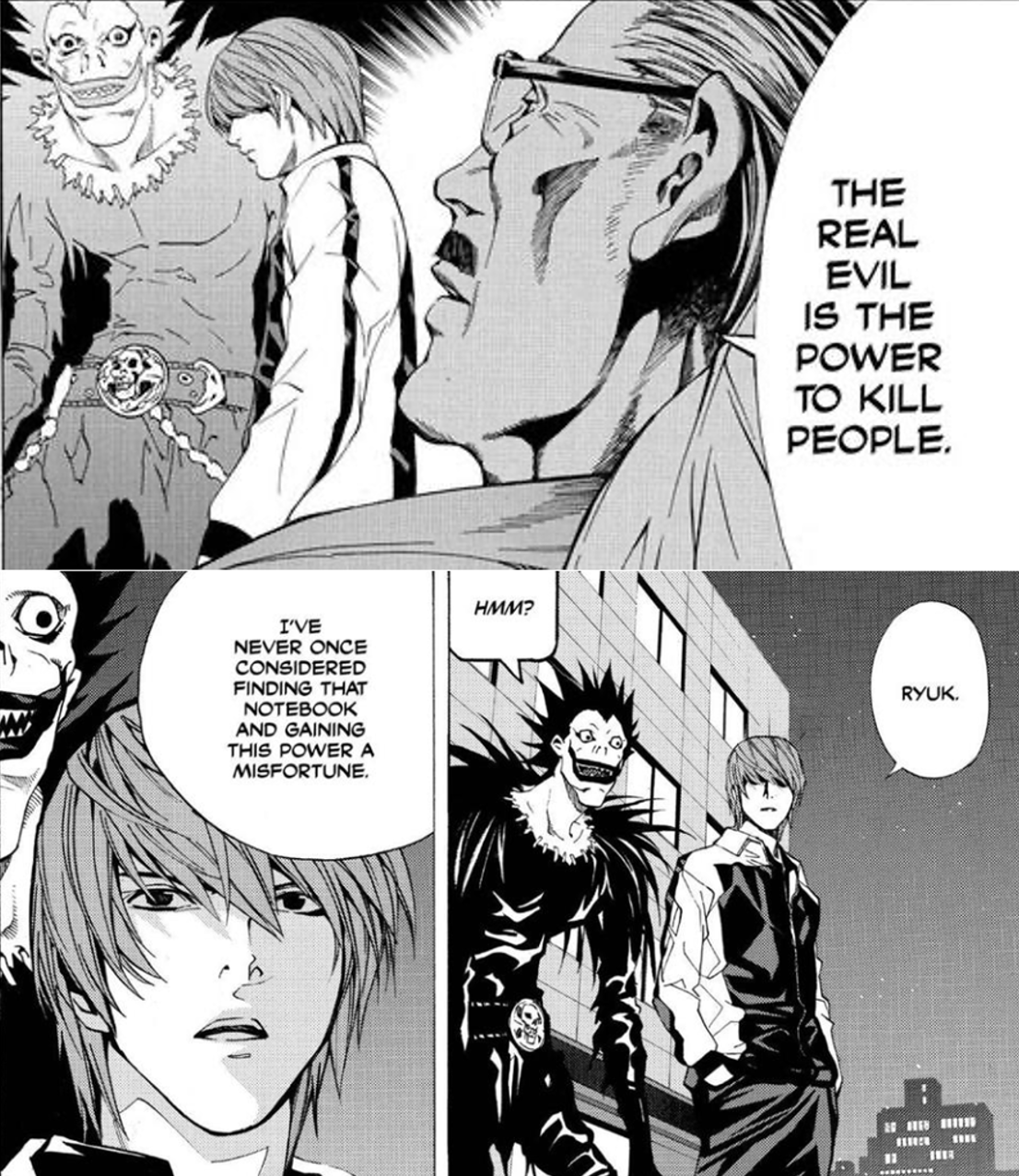
Credit: Shueisha
What makes the difference between a Man and a Monster?
It’s the acceptance of your complex self just as you are, in spite of the gnawing discomfort. The embrace of two contrasting realities within — the desirable and the flawed — and coming to a more integrated, flexible, and fluid sense of self.
This is the paradox of virtue. The cornerstone of righteousness.
When I accept myself just as I am, then I can change. Then I can see people as they are, form relationships with real depth, and exercise justice grounded in compassion and mercy.
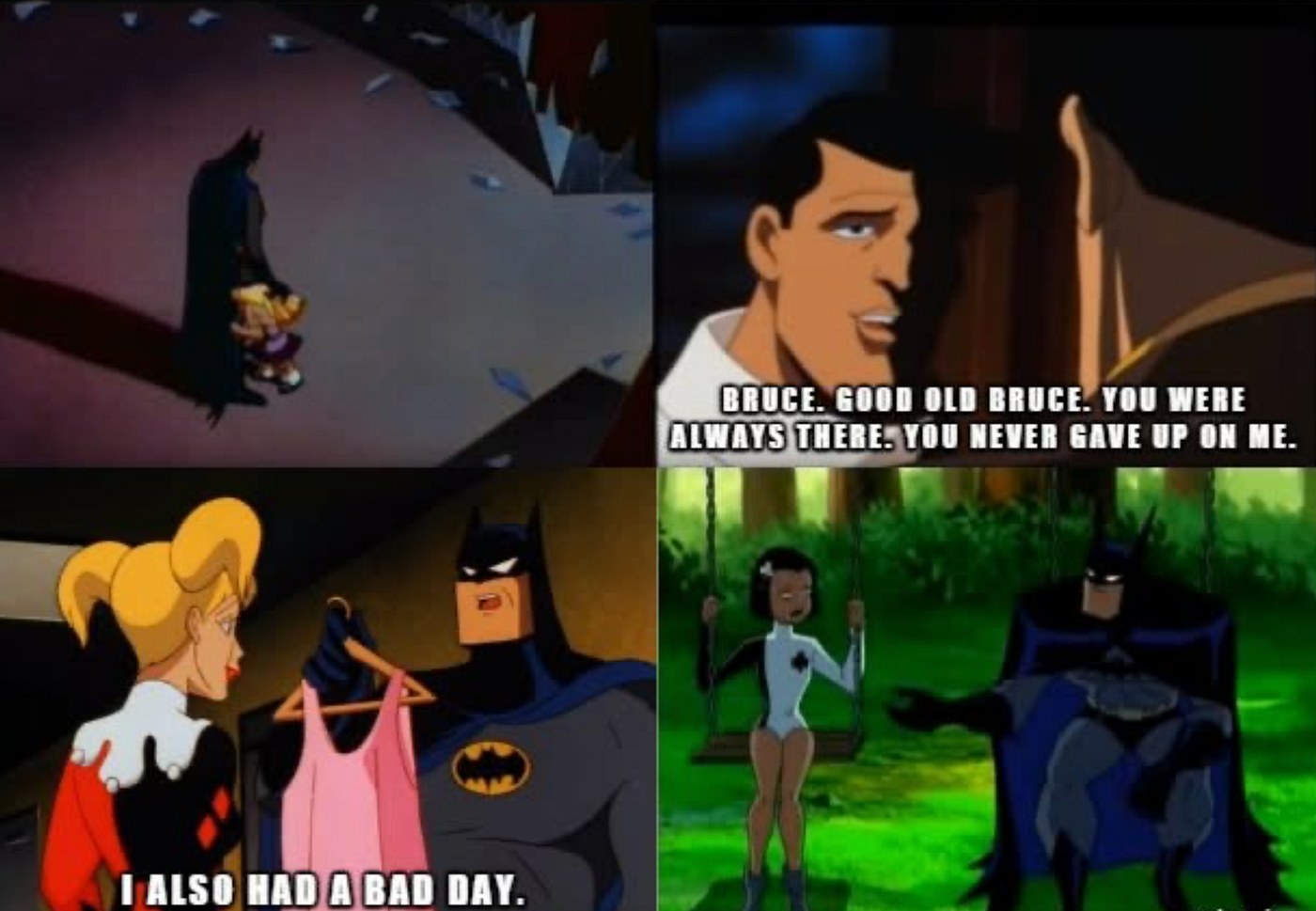
Credits: Warner Bros. Animation, DC Comics, Bruce Timm, Paul Dini
It’s not only what a man does that defines him, but the interior narratives and motivations he cultivates or leaves unscrutinised. For an unexamined psychological life comes with a cost. Blind spots become fertile soil for evil — contemptuous ideations, murder, adultery, fornication, theft, deceitfulness — to sprout and grow.
That’s how it starts — the pursuit of good without a modicum of emotional sobriety, the confusion of perceptions with reality, of projections with people, that turns decent men… cruel. Walking over the life of another, and being tragically desensitized, oblivious of the wounds left behind.
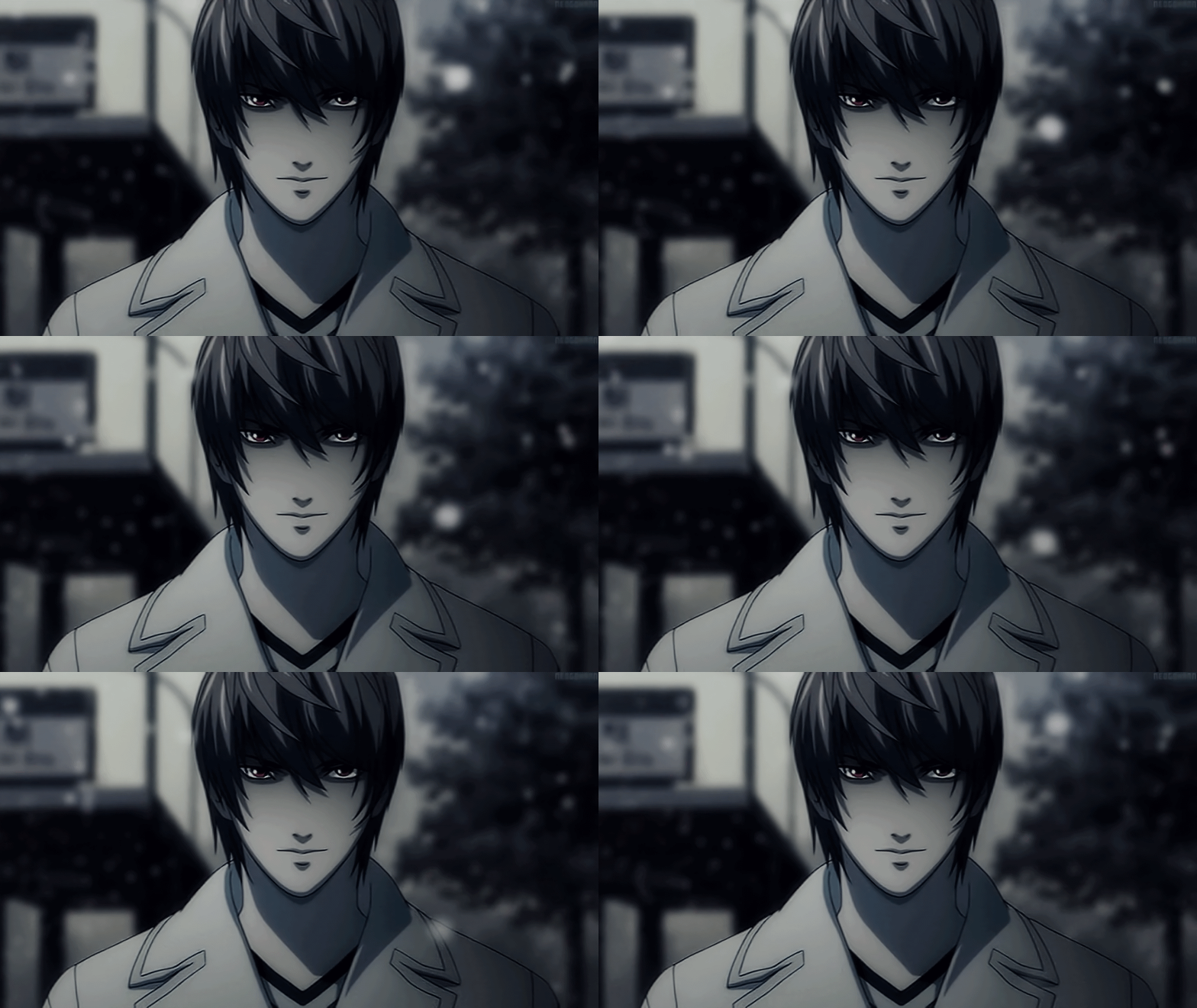
Credit: Madhouse Inc.
And that’s what makes the vice of obstinate moral certainty masking inner poverty and an unchanged perspective, by definition, unforgivable.
메타데이터
- post_id
- 29b4657d2b44
- slug
- death-note-and-the-batman-disturb-our-moral-certainties-29b4657d2b44
- url
- https://medium.com/theuglymonster/death-note-and-the-batman-disturb-our-moral-certainties-29b4657d2b44
- canonical_url
- https://medium.com/theuglymonster/death-note-and-the-batman-disturb-our-moral-certainties-29b4657d2b44
- author_url
- https://medium.com/@kenzarael
- status
- ok
- fetched_at
- 2026-06-27 18:20:27