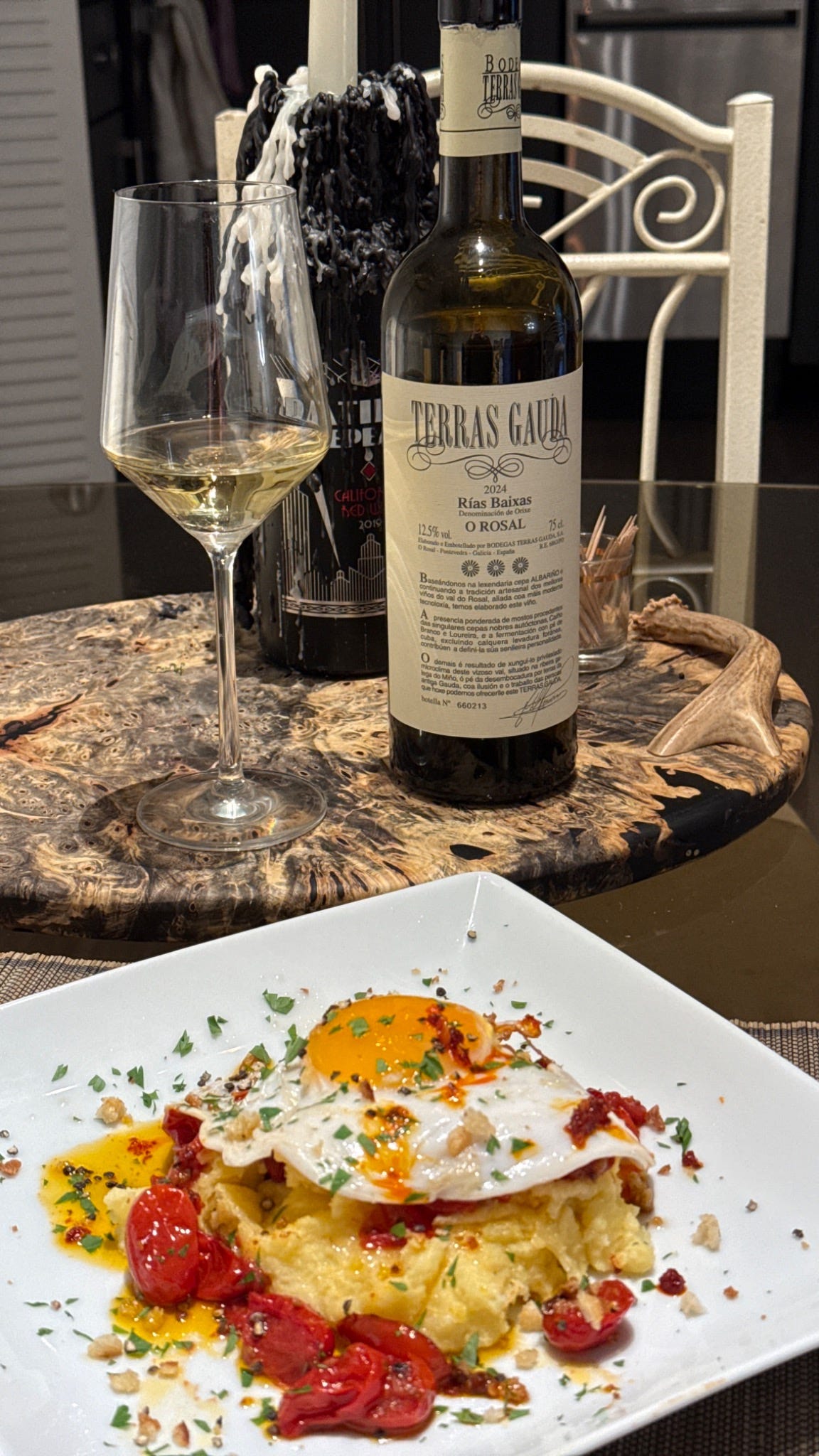
How Not to Poison Your Family This Holiday Season
Holiday abundance meets bacterial reality. A witty survival guide to keep generosity from turning toxic.
How Not to Poison Your Family This Holiday Season
Clean Hands, Cold Fridge, Hot Food
Keeping Holiday Generosity from Turning Toxic

The only Thanksgiving guest smart enough to make a run for it.
The holidays are upon us — Thanksgiving will be here soon, followed closely by Christmas and then New Year’s. It’s the season of abundance, of potlucks and buffet tables, of generous portions and well-meaning leftovers. The time of year when the refrigerator becomes a holding pen for every good intention wrapped in foil.
Forget the five-second rule. The rule that actually matters is the five-day rule.
According to the CDC, roughly 48 million Americans get sick from foodborne illness every year — about one in six people. It’s an abstract number until you open your own fridge and see the quiet casualties — the half tub of ricotta, the forgotten herbs, the mystery jar.
The causes vary: some start in the fields or at processing plants when produce or meat becomes contaminated before it ever reaches a kitchen. Others come from poor hygiene — people not washing their hands, using the same board for raw and cooked foods, or storing ingredients at unsafe temperatures.
But a large share happens in ordinary homes and gatherings, when cooked food is kept at that ideal bacterial spa temperature — between 40 °F and 140 °F — for hours. Think buffet lines, office potlucks, and family-style holiday dinners where dishes sit out all afternoon in the name of hospitality. The warmth feels festive to us; it feels like paradise to bacteria.
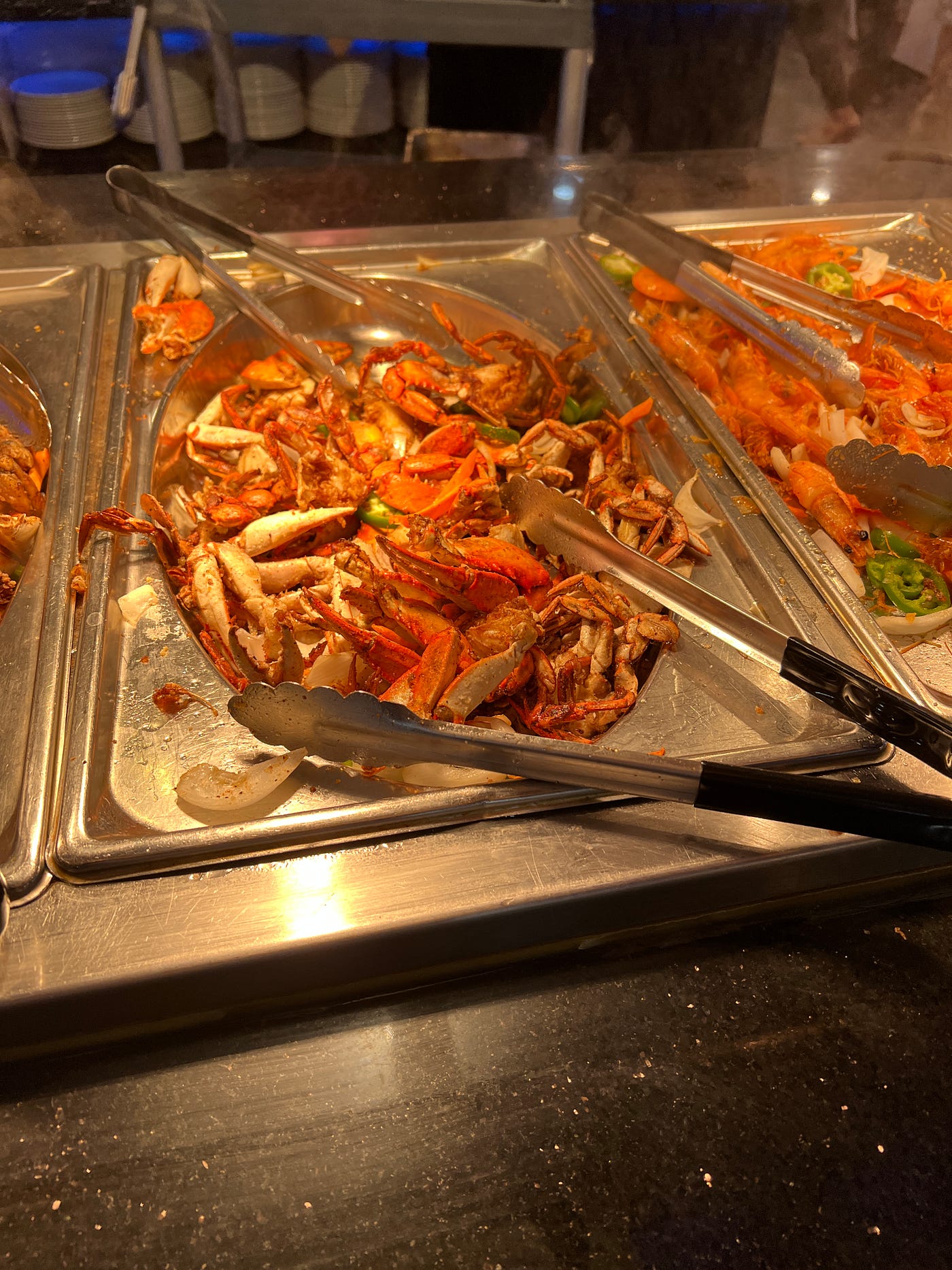
The warmth feels festive to us; it feels like paradise to bacteria.
Public-health data shows a measurable spike in reported foodborne illnesses after major holidays — the predictable aftermath of generosity without temperature control.
I know this not just from experience, but from training. I hold a bachelor’s degree in hotel and restaurant management, where proper food handling, storage, and hygiene weren’t electives — they were fundamentals. In professional kitchens, everything is labeled, dated, and tracked. There’s no guessing, no sniff test, no “it looks fine.” That discipline stayed with me, even when I started cooking for one.
Once you open a package, bacteria get an invitation to Club Med Fridge — oxygen, moisture, and food, all-you-can-eat. They reproduce faster than rabbits and exponentially, turning your deli meat, sauce, or leftovers into a Petri dish you didn’t order. After five days, you’re not eating “leftovers”; you’re sampling biology.
For take-home food from restaurants, the clock runs out after 48 hours. Quality declines long before safety does — sauces separate, textures dry, flavors fade. None of it sounds appetizing, and it shouldn’t.
And reheating? Bring it back to a boil. Anything less is a bacteria spa day. Warm and cozy isn’t safe; it’s a jacuzzi for microbes.
Most people don’t think about it until they’re doubled over from something that looked fine the night before. The week-old spaghetti hiding at the back of the fridge, the lo mein cooling on the buffet at the end of the dinner shift — both are Petri dishes disguised as dinner. Noodles and rice are frequent offenders; they’re breeding grounds for Bacillus cereus, a bacterium that laughs at refrigeration and rewards carelessness with a night you won’t forget. In the case of some bacteria, killing them isn’t enough — the toxins they leave behind are just as, if not more, dangerous.
And no, you can’t smell safety. Spoiled milk absolutely reeks and tastes awful, but it can be completely harmless bacteria-wise. Meanwhile, that perfectly normal-looking, fresh-smelling deli meat might come with an invisible side of salmonella. The nose knows decay, not danger.
And while we’re at it — please, wash your hands. It’s not just the common cold, COVID, or the flu you’re preventing; it’s every invisible hitchhiker from raw eggs, meat, and produce. But for the love of God, do not wash your chicken or turkey before cooking. All you’re doing is baptizing your sink, counter, and kitchen in poultry juice.
Fun fact (or nightmare fuel): the dirtiest spots in your house aren’t your toilet seat — they’re your refrigerator and microwave handles. You clean your bathroom with bleach; your fridge door? Not so much. And if you’re casually misting vinegar on your countertops thinking it’s disinfecting — it’s not. Vinegar cuts grease; it doesn’t kill bacteria.
Also, take a hard look at those cans in the back of your pantry. If they’re swollen, rusted, or dented — toss them. Clostridium botulinum thrives in the oxygen-free world of canned food, and its toxin doesn’t give second chances. Botox in your wrinkles? Fine. Botox in your digestive tract? Absolutely not.
That’s why I’m meticulous. The moment I twist open a lid or cut a seal, the countdown begins.
I cook for one, and that means every ingredient is both opportunity and responsibility. Once I open something — a can of crushed tomatoes, a block of tofu, a tub of labneh — the clock starts ticking.
I don’t see expiration dates as limits; I see them as cues to be inventive. The same discipline that keeps food safe also keeps my creativity sharp. Once something’s open, it becomes a small, delicious challenge — how many ways can I transform it before the five days are up?
Day 1: the tofu meets hot sauce and Gorgonzola.
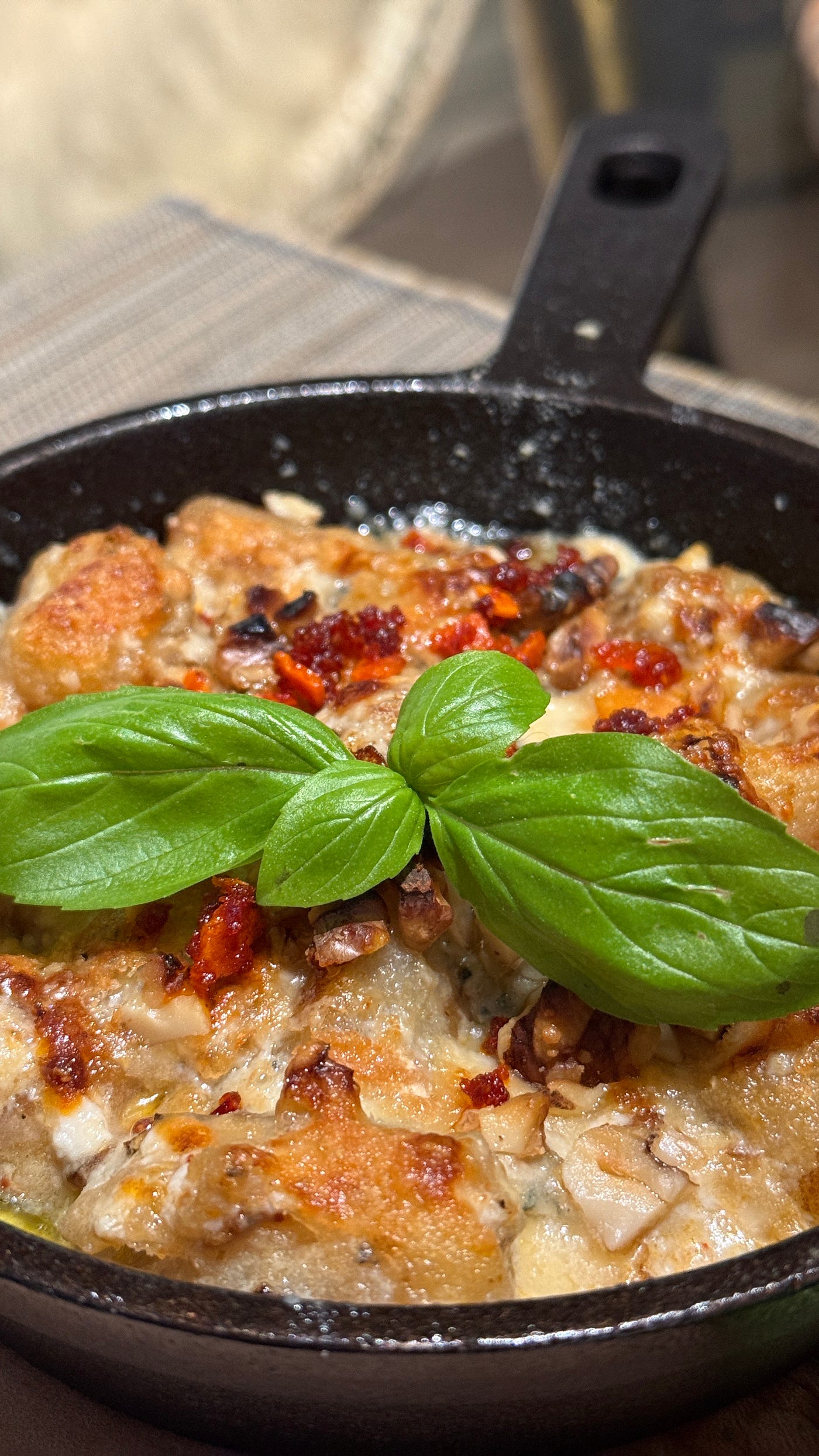
Buffalo-style cauliflower gnocchi with Gorgonzola, walnuts, and a touch of chili oil — day one of flavor evolution.
Day 2: it softens into a butternut curry.
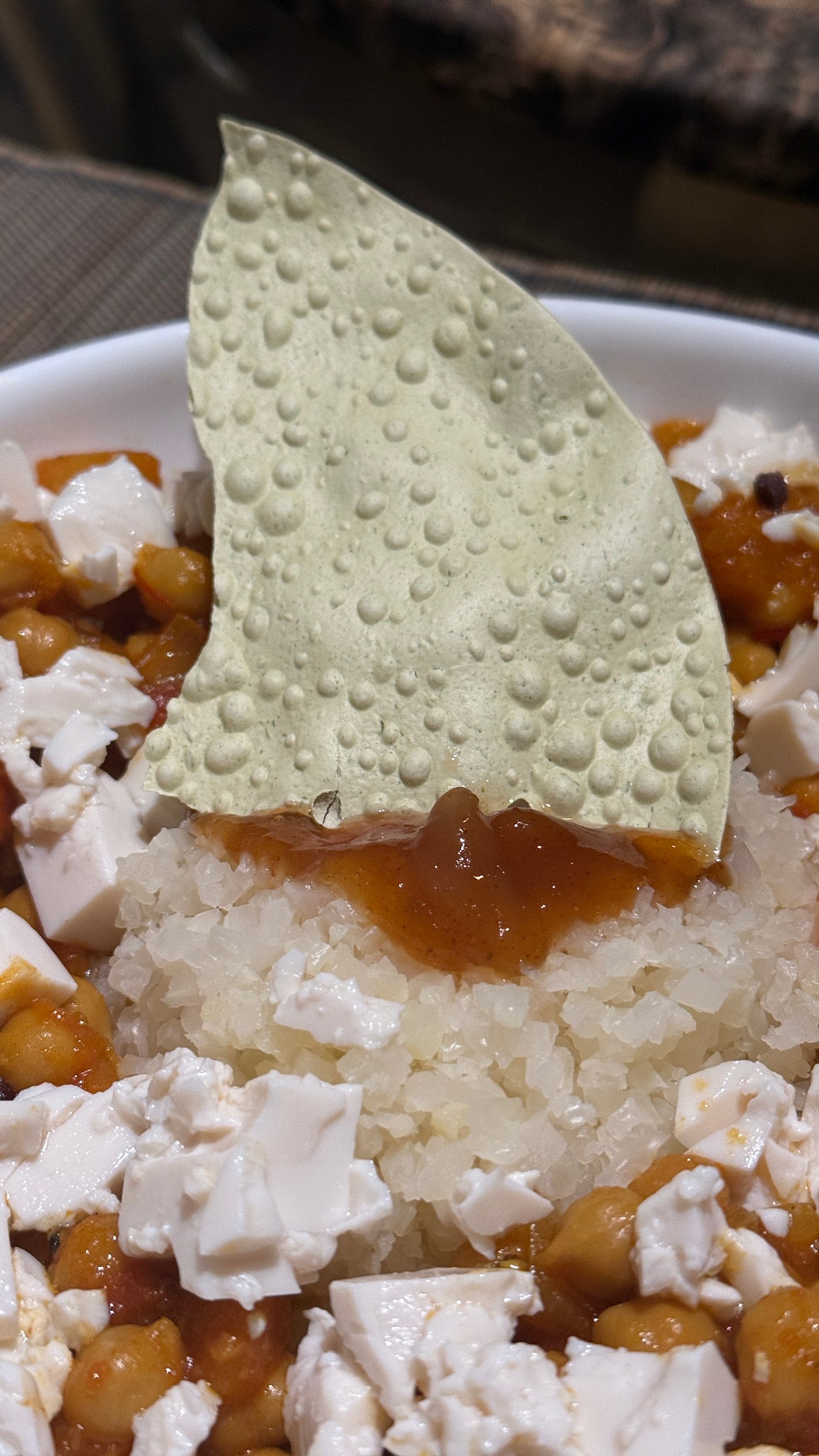
Rustic butternut and chickpea curry with diced silken tofu — gentle heat, golden color, and balance restored.
Day 3: it melts into honey, goat cheese, and mead vinegar.
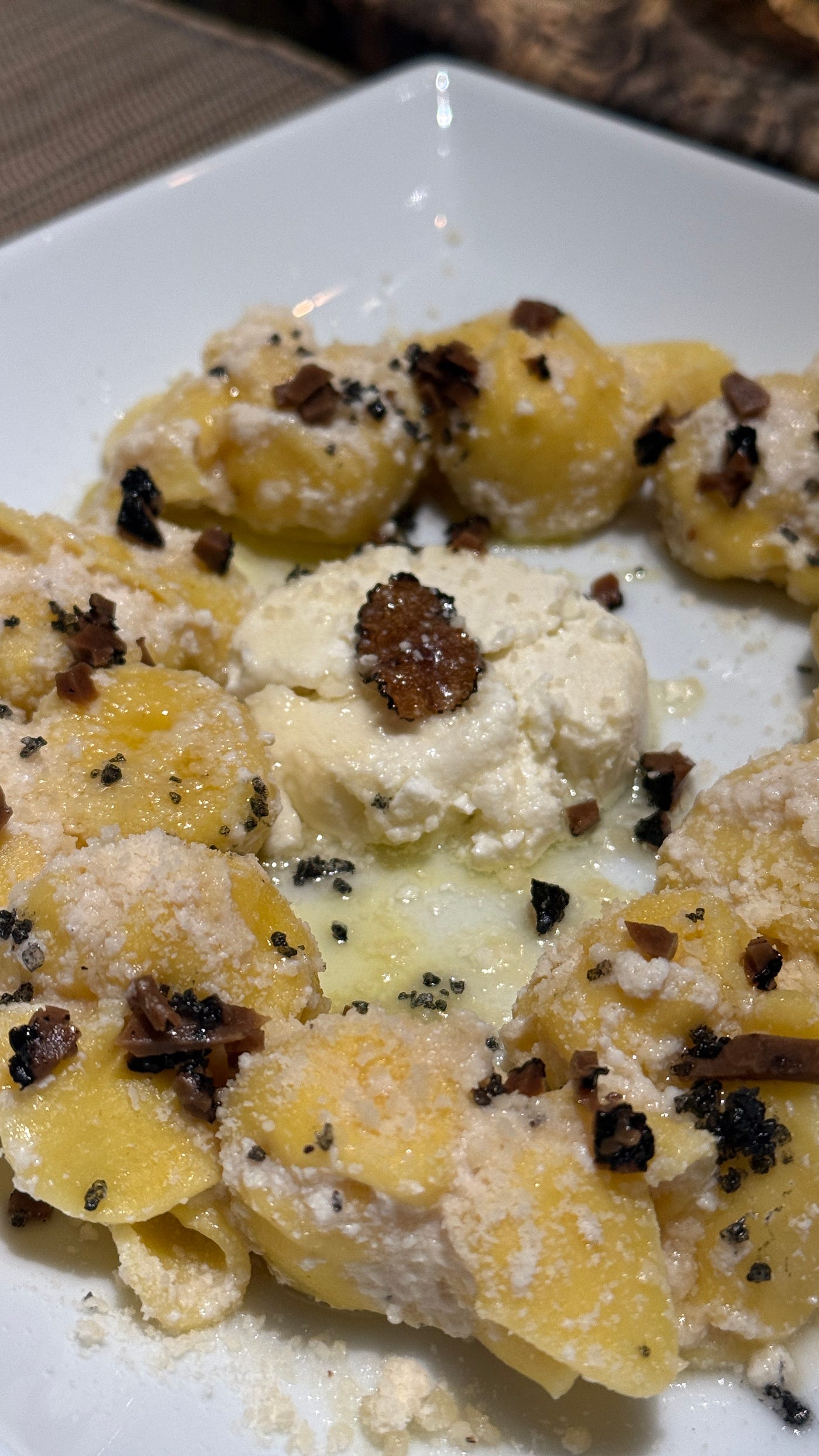
Honeyed sacchetti with goat cheese, truffle, and mead vinegar — the finale, where comfort meets quiet luxury.
No waste. Just evolution — five days to transform, five chances to be clever.
Because bacteria don’t care about sentiment; they care about temperature and time. And generosity should never come with food poisoning as a side dish.
This holiday season, let abundance taste like care — not regret. If you’ve learned something new, pass it along. Consider it your good deed for the week — a public-service announcement delivered in pearls and an apron.
Share this with someone who still swears by the “sniff test,” or with the friend who needs a gentle reminder before they marinate their turkey in the sink.
메타데이터
- post_id
- 29db919b0276
- slug
- how-not-to-poison-your-family-this-holiday-season-29db919b0276
- url
- https://medium.com/@cathycirisan/how-not-to-poison-your-family-this-holiday-season-29db919b0276
- canonical_url
- https://medium.com/@cathycirisan/how-not-to-poison-your-family-this-holiday-season-29db919b0276
- author_url
- https://medium.com/@cathycirisan
- status
- ok
- fetched_at
- 2026-07-23 11:43:23