The Silent Danger in Homes: Understanding Radon and How to Protect Your Family
Most homeowners focus on visible home issues like leaks, mold, or structural damage. However, one of the most serious threats to indoor air…
The Silent Danger in Homes: Understanding Radon and How to Protect Your Family
Most homeowners focus on visible home issues like leaks, mold, or structural damage. However, one of the most serious threats to indoor air quality is something you cannot see, smell, or taste.
That threat is radon gas.
Radon is a naturally occurring radioactive gas that forms when uranium in soil breaks down. It can enter homes through cracks in foundations, construction joints, crawl spaces, and other openings.
Because radon is invisible and odorless, many homeowners never realize it is present until they test for it.
Why Radon Is a Serious Health Risk
According to health authorities, radon exposure is one of the leading causes of lung cancer among non-smokers.
When radon gas accumulates indoors, it can become concentrated over time. Long-term exposure to elevated radon levels increases the risk of serious respiratory diseases.
What makes radon particularly dangerous is that it builds up slowly and silently inside homes, especially in basements and lower living areas.
This is why regular radon testing is strongly recommended for homeowners.
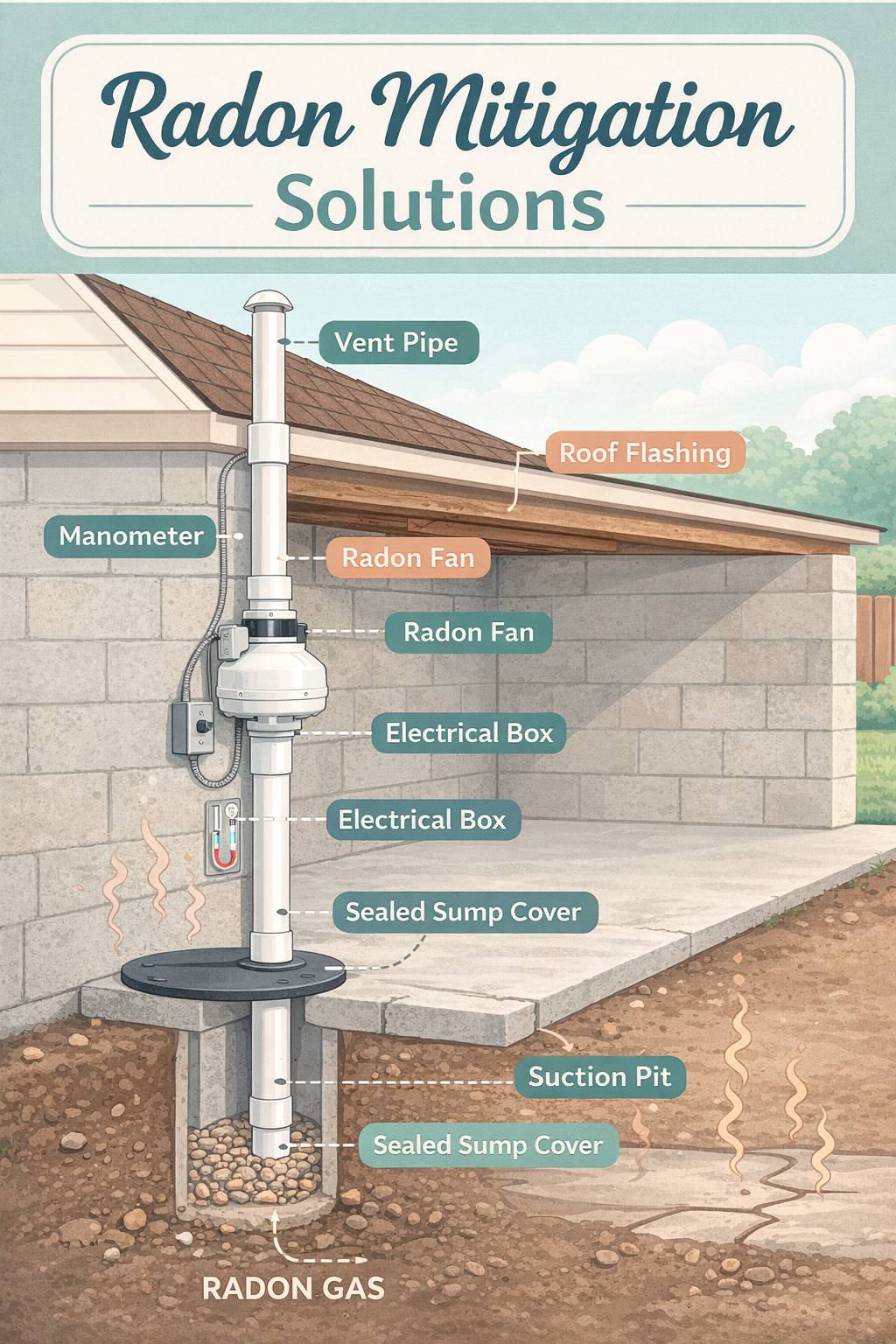
RADON MITIGATION SYSTEM
Understanding Radon Levels in Homes
Radon is measured in picocuries per liter (pCi/L).
Low levels may pose minimal risk, but higher levels require immediate attention.
Insert your infographic here: Radon Levels Explained
In general:
- 0–2 pCi/L — Low radon level
- 2–4 pCi/L — Moderate level (monitor regularly)
- 4+ pCi/L — Mitigation recommended
Testing your home is the only way to know the actual radon level indoors.

How Radon Enters Your Home
Radon typically enters through openings in a home’s foundation.
Common entry points include:
- Cracks in concrete floors
- Construction joints
- Crawl spaces
- Sump pump pits
- Gaps around pipes
How Radon Enters Your Home
Even newer homes can experience radon problems depending on soil conditions and construction design.

How Radon Mitigation Systems Work
If elevated radon levels are detected, a radon mitigation system can significantly reduce indoor concentrations.
Insert infographic: How Radon Mitigation Works
A typical mitigation system includes:
- A suction point beneath the foundation
- A vent pipe that carries radon gas upward
- A radon fan that pulls the gas from the soil
- A roof exhaust that releases radon safely outside
These systems prevent radon from entering living spaces by redirecting the gas above the home.
Professionally installed mitigation systems can reduce radon levels by up to 99%.

Why Every Home Should Be Tested
Radon can be present in homes in any region and in houses of any age.
Testing is simple and affordable, and it is the only reliable way to determine whether radon is present at harmful levels.
Many homeowners choose to test:
- When buying or selling a home
- After renovations
- When moving into a new property
- Every few years as a precaution
Taking proactive steps today can protect your family’s long-term health.
Final Thoughts
Radon may be invisible, but its impact on health can be very real.
Understanding how radon enters homes, how levels are measured, and how mitigation systems work allows homeowners to make informed decisions about indoor air safety.
Testing and mitigation are powerful tools that help ensure the air inside your home remains safe for you and your family.
Learn more about radon safety and mitigation:
Originally published at RadonFreeLiving.com
메타데이터
- post_id
- 2a071dda8f11
- slug
- the-silent-danger-in-homes-understanding-radon-and-how-to-protect-your-family-2a071dda8f11
- url
- https://medium.com/@radonfreeliving/the-silent-danger-in-homes-understanding-radon-and-how-to-protect-your-family-2a071dda8f11
- canonical_url
- https://medium.com/@radonfreeliving/the-silent-danger-in-homes-understanding-radon-and-how-to-protect-your-family-2a071dda8f11
- author_url
- https://medium.com/@radonfreeliving
- status
- ok
- fetched_at
- 2026-06-29 22:44:20