Electric Actuation Systems for Hospital Beds
How intelligent motion-control systems are improving modern healthcare environments
Electric Actuation Systems for Hospital Beds
How intelligent motion-control systems are improving modern healthcare environments

Modern hospital beds are designed to support far more than basic patient positioning. Today’s healthcare environments require intelligent motion-control systems capable of delivering smooth movement, stable positioning response, and reliable operation throughout continuous medical use.
As healthcare automation continues to evolve, electric actuation systems have become an essential part of modern hospital-bed engineering.
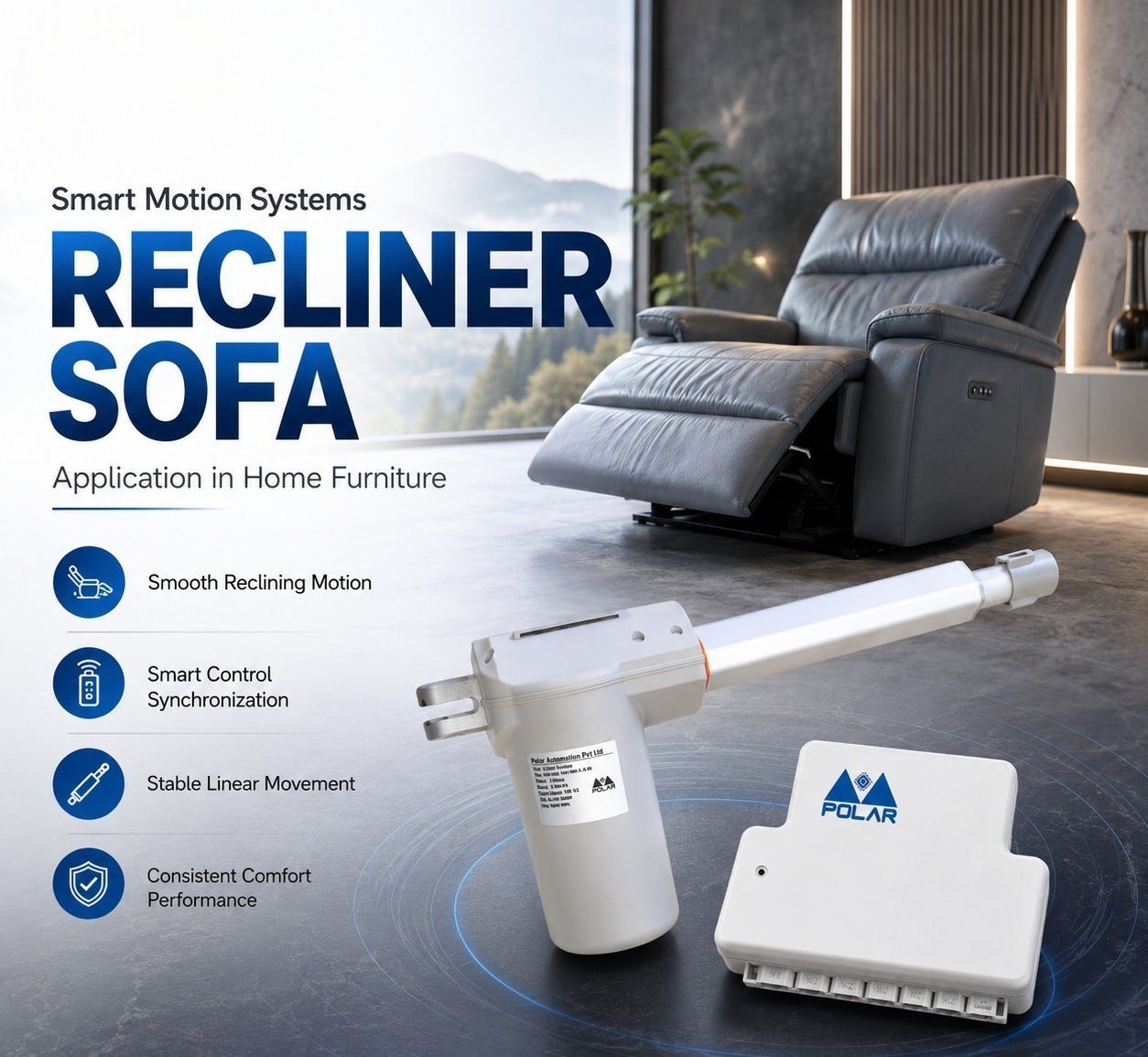
These systems integrate medical linear actuators, centralized control electronics, and multi-function hand controls to manage coordinated bed movement across multiple positioning functions.
Why Modern Hospital Beds Need Advanced Motion Control
In hospitals and rehabilitation environments, patient positioning directly affects comfort, circulation, caregiver accessibility, and recovery support.
Traditional manual adjustment systems are increasingly being replaced by electrically controlled actuator architectures that provide greater precision, synchronized movement, and improved operational reliability.
Modern electric actuation systems are commonly used to control:
- Backrest adjustment
- Leg-rest positioning
- Bed height movement
- Tilt positioning
- Patient transfer support
- Simultaneous multi-section movement
These functions require smooth coordination between actuators to maintain stable patient handling during movement transitions.
The Importance of Synchronized Actuator Architecture
One of the key challenges in hospital-bed automation is maintaining synchronized motion while different bed sections operate under varying load conditions.
Electric actuation systems use coordinated control architecture to synchronize actuator timing, lifting response, and movement transitions across the entire bed platform.
This synchronization helps support:
- Balanced load distribution
- Stable lifting performance
- Smooth low-noise movement
- Controlled positioning transitions
- Reliable continuous-duty operation
For healthcare applications, movement stability is critical not only for patient comfort but also for caregiver safety and operational efficiency.
Low-Noise Performance in Healthcare Environments
Hospital equipment often operates continuously throughout both daytime and nighttime care cycles. Because of this, low-noise actuator operation has become increasingly important in modern healthcare system design.
Advanced electric actuation systems are engineered to provide quiet movement performance while maintaining dependable operation under frequent adjustment conditions.
These systems are commonly integrated into:
- ICU Beds
- Rehabilitation Beds
- Home-Care Beds
- Adjustable Patient-Care Systems
- Advanced Medical Furniture
The Future of Hospital Bed Automation
Healthcare automation is continuing to move toward smarter, more coordinated motion-control systems capable of improving patient support and operational reliability.
Electric actuation technology is now becoming a central part of intelligent healthcare infrastructure, helping modern hospital beds achieve smoother movement, improved positioning control, and enhanced long-term performance.
Learn More: ***Electric Linear Actuator control System***
메타데이터
- post_id
- 2a1487819b3e
- slug
- electric-actuation-systems-for-hospital-beds-2a1487819b3e
- url
- https://medium.com/@polarautomation/electric-actuation-systems-for-hospital-beds-2a1487819b3e
- canonical_url
- https://medium.com/@polarautomation/electric-actuation-systems-for-hospital-beds-2a1487819b3e
- author_url
- https://medium.com/@polarautomation
- status
- ok
- fetched_at
- 2026-08-03 05:41:08