The perspective of 43 mm is all the rage now, but why?
How we got to the focal lengths we are all using
The perspective of 43 mm is all the rage now, but why?
How we got to the focal lengths we are all using

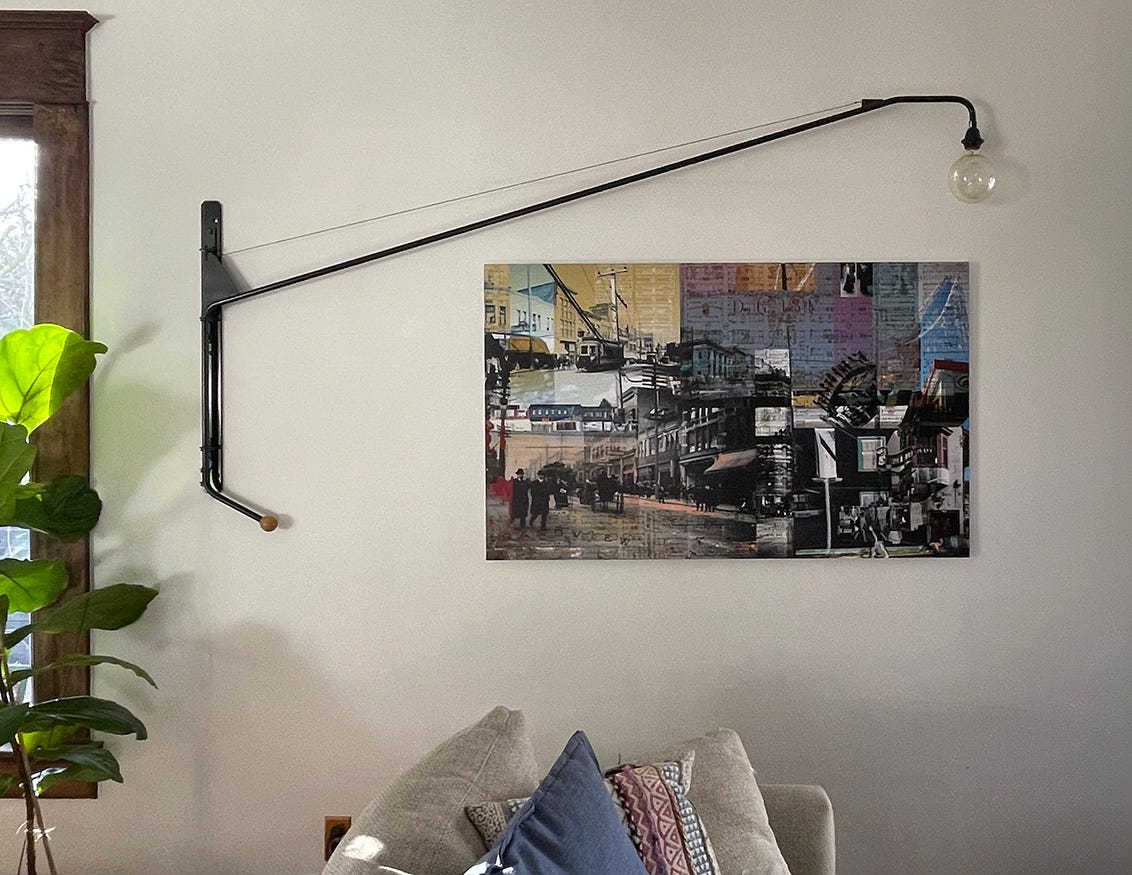
Stone detail, 43mm cropped (f13, 1/200, ISO6400, image by author)
I see more and more advertisements for 43 mm lenses. The Leica Q3 (43) with a fixed 43 mm objective is but the latest example. It follows the Leica Q3 and Q2, both of which have a fixed 28 mm objective. Pentax sells a 43 mm lens for SLRs, and Voigtlander sells 40 mm objectives. That begs the question: Is the obsession with 43 mm more than just a marketing trick?
Did some engineer get bored with round numbers or simply miscalculate? 43 mm is the exact square root of 35 mm x 26 mm, the size of a full-frame sensor. Hasselblad sells a 55 mm lens, which is the exact diagonal of their medium-sized sensor and is advertised as 43mm (35mm Equivalent). We conclude that 43 mm, multiples (e.g., 90 mm), or fractions thereof (e.g., 21 mm) are based on the sensor's physical measurements rather than the human perspective. The engineer calculated correctly, then the marketing guys did some rounding for name recognition.
Does this mean everyone producing a 50 mm objective miscalculated their designs? Odd-numbered focal lengths seem a relic from the last century, which gave us 24 mm, 30 mm, 40 mm, 58 mm, and 105 mm. All focal lengths are for full-frame cameras (i.e., 35 mm film format). History plays a bigger role in engineering designs than we sometimes want to admit. At the dawn of photography, 50 mm was easier to produce than 43 mm. Having the extra space on the fringes also improved image quality and ensured that even if the film and sensor weren’t perfectly aligned, the entirety of the field was nevertheless exposed.
If it weren’t for Leica’s early dominance in 35 mm film photography, we would be naming focal length in inches. If not Leica, you can blame Napoleon's conquest of continental Europe and the resulting adoption of the mètre des Archives in Paris for the 35 mm format. Ben Franklin died nine years before the mètre des Archives was cast, otherwise the US would look like Canada, but I digress.
Is 43 mm the new nifty fifty?
Is there any reason to buy a 43 mm objective if you already have a 50 mm lens? A drawback is that rangefinder cameras lack 43 mm frame lines. That is less of an issue, as you can frame using 50 mm frame lines and enjoy a built-in safety margin. For any other camera type, SLR or mirrorless, you look through the lens, so no issue at all.
Would you go mad using a 50 mm and a 43 mm objective interchangeably? That is a vexing question. I do not have a camera that can mount both objectives, so when switching focal lengths, I have to switch camera bodies. That changes all sorts of things in the finished photo, but interestingly also in my brain as I compose. Something just feels off, and I grow increasingly uncomfortable when I use the 50 mm objective (for film) and the 43 mm objective (for digital) on the same day (the same feeling prevented me from using zoom lenses — even though a zoom lens would have saved many a photo shoot).
To use a soccer analogy: if you have always played left-back and the coach suddenly puts you at centre-back, you will be confused. Years of training mean you know, almost with your eyes closed, where you are on the pitch and that your job is to cut off the left winger. As a centre-back, that is no longer your concern. It is the same with using a 50 mm lens. After years of habit, you know exactly how far away you need to be for a person to fill the frame. If I am taking a picture across a coffee table, I know how far I have to push my chair back to frame the face perfectly: one distance for 50 mm, elbows on the table for 35 mm, and standing behind the chair for 90 mm. A 43 mm lens is not radically different, but it disrupts muscle memory. The frame is close enough to feel familiar, yet different enough that your instinctive positioning is always a little wrong.
Switching between almost identical focal lengths is different than bringing a three-lens kit to an outing. Switching between wide-angle and normal, or between normal and telephoto, lenses is a conscious decision. My brain seems to have stored distinct comfort zones for each. I quite often interchange lenses when I am on the road, if I cannot get close enough or if the streets suddenly become very narrow, which is quite common in medieval European towns. So if you get a 43 mm objective, don’t bring a 50 mm on the same trip. Give your brain a few weeks to get comfortable with either.

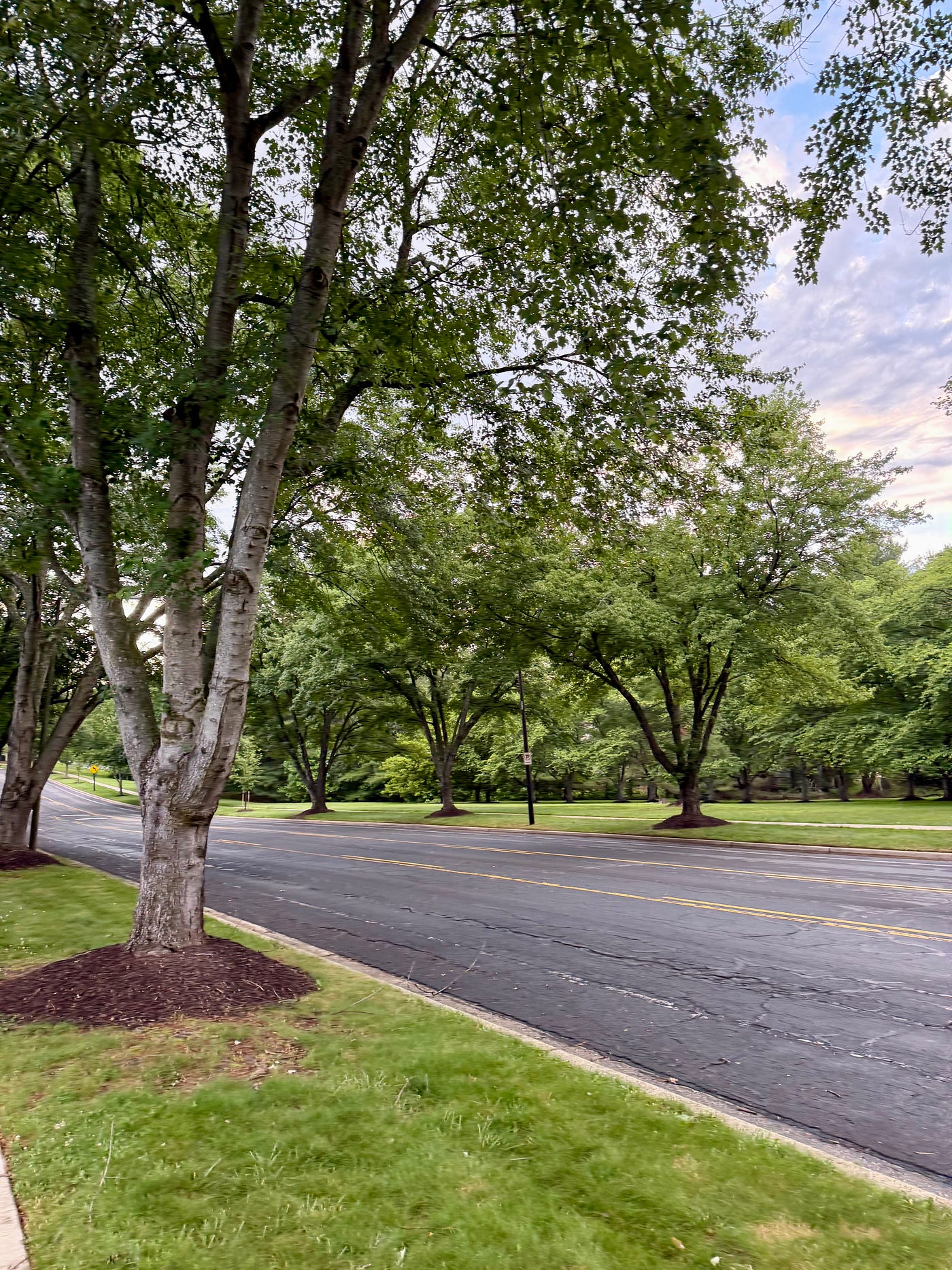
Delaire Graff Estate, 43 mm (f19, 1/190, ISO800, image by author)
Modern software completely eliminates distortion across focal lengths from 28 mm to 75 mm. This capability was not available when the 35 and 50 mm were introduced as “standard”, when there were still analog enlargers and film processors. At f8, even pre-aspherical 35 mm and 55 mm lenses are good enough for modern 50 MPixel sensors. I use a 20-year-old 50 mm Zeiss Planar at f/5.6 on my highest-resolution sensor all the time. It is still in production and as good as any modern lens. Why would I buy a new lens? “Because it is 43 mm and thus new.” I think that is the sole motivation behind marketing lenses as 43 mm.
It is different for more extreme focal lengths. Even after correction for distortion, an astute observer will detect the character of wide-angle (18, 21, 24, 28 mm) and 75, 90, and 200 mm telephoto lenses because of the unnatural size relationships between foreground and background, which are much more difficult to calculate and produce. Here, we witnessed real progress over the past decade.
43 mm claims to be the “normalest” lens of them all.
However, the statement “normal human angle of view” is fraught with inaccuracies. Let’s unpack those. Angle of view can be measured horizontally, vertically, or diagonally. On 35 mm film, the frame is 36 × 24 mm, with a diagonal of about 43 mm. That gives the three reference numbers: 36 mm for the horizontal dimension, 24 mm for the vertical dimension, and 43 mm for the diagonal.
Seen this way, several familiar focal lengths suddenly make numerical sense. A 35 mm lens is close to the 36 mm width of the frame, which gives a horizontal angle of view of about 54°. A 24 mm lens matches the vertical dimension of the frame and provides roughly the same vertical angle. A 43 mm lens matches the diagonal of the frame, which is why it is often called the “true normal” focal length for 35 mm photography.

Reader in a park, 43 mm (f5.6, 1/50, ISO200, image by author)
Where does this leave us? Do not fall for the marketing gimmick. Simply buying a 43 mm lens does not make you a better photographer; a modern 43 mm lens is not automatically superior to a 2006 50 mm lens. You do not get the Pulitzer because of your focal length.
Looking at pictures recorded with a 43 mm objective does give the viewer and the photo editor pause; however, just as it throws me, the photographer, for a loop, because we are so conditioned on the 50 mm focal length angle of view for the 35 mm format, which reproduces as an 8 x 12 print. This disconnect can add interest and novelty at a subconscious level, but only if the subject and composition capture the viewer’s imagination in the first place.
The pictures here were taken not only with a 43 mm objective but also on a digital medium-format sensor with a 4:3 aspect ratio. That changes the effect again. The frame is less like the familiar 35 mm rectangle, and when stopped down hard — for example, to f/19 — the lens can produce a radically deep field of focus. This is pushing them even further outside our comfort zone.
P.S.: I pasted the pictures into ChatGPT, and the AI could not decide between 35, 43, or 50 mm. It could pick out a 21 mm objective. It is a fun exercise to try, and could even become a photographer's party trick.
메타데이터
- post_id
- 2a386f027fc6
- slug
- the-perspective-of-43-mm-is-all-the-rage-now-but-why-2a386f027fc6
- url
- https://medium.com/full-frame/the-perspective-of-43-mm-is-all-the-rage-now-but-why-2a386f027fc6
- canonical_url
- https://medium.com/full-frame/the-perspective-of-43-mm-is-all-the-rage-now-but-why-2a386f027fc6
- author_url
- https://medium.com/@dittmerunc
- status
- ok
- fetched_at
- 2026-06-22 17:31:34