How Real Estate Expansion Is Destroying Nature in Abuja — and What We Can Do About It
By Adanna Mgbojikwe-Loto
How Real Estate Expansion Is Destroying Nature in Abuja — and What We Can Do About It
By Adanna Mgbojikwe-Loto
By Agriculture Nigeria
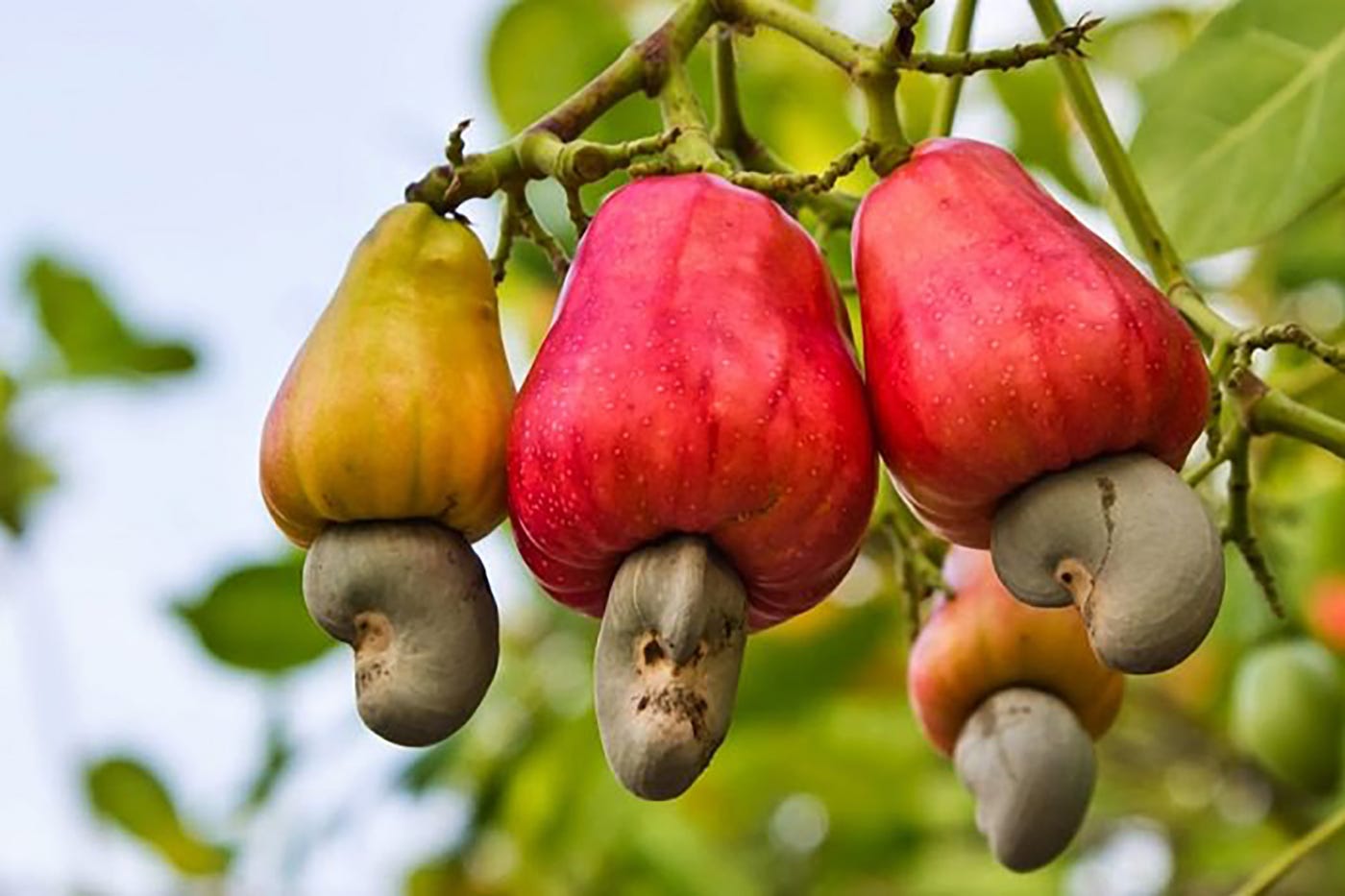
There was a cashew forest on the way to my in-laws’ home.
When I first started visiting them — sometime around 2019, 2020, when I was still courting the man who would become my husband — his parents had just built their home on the outskirts of Abuja. It was a joy to see them in that bigger space, in a home they had built with their own hands and their years of work. But the drive there was what stayed with me.
To reach them, you had to take a winding path that curved around this enormous expanse of cashew forest. And it was extraordinary. Season to season, I watched it change. I watched people move through it — women, mostly, and children — harvesting cashews, carrying them out in baskets, selling them. There were tents pitched in clearings where people stayed during harvest. That forest was not wilderness. It was a living economy. It was someone’s livelihood, someone’s food, someone’s income, someone’s shade.
I don’t know how many hectares it was. I wish I had measured it. But I know it was vast — the kind of expanse you feel in your body when you drive past it, the kind that makes you breathe differently.
And then one day, it was gone.
It wasn’t reduced or trimmed. Gone. Completely cleared. In fact, the forest was so extensive that the process of removing the trees, hauling away the timber and raking out the roots, took weeks. I remember driving past during that period and feeling something I could not name. Grief, maybe. Confusion. Outrage. Watching the stumps. Then the bare earth. Then the foundation.
What stands on that land today is an estate — one that houses a hospital.
The Numbers Behind the Loss
What I witnessed on that winding road is not an isolated incident. It is a pattern which is measurable, documented, and accelerating.
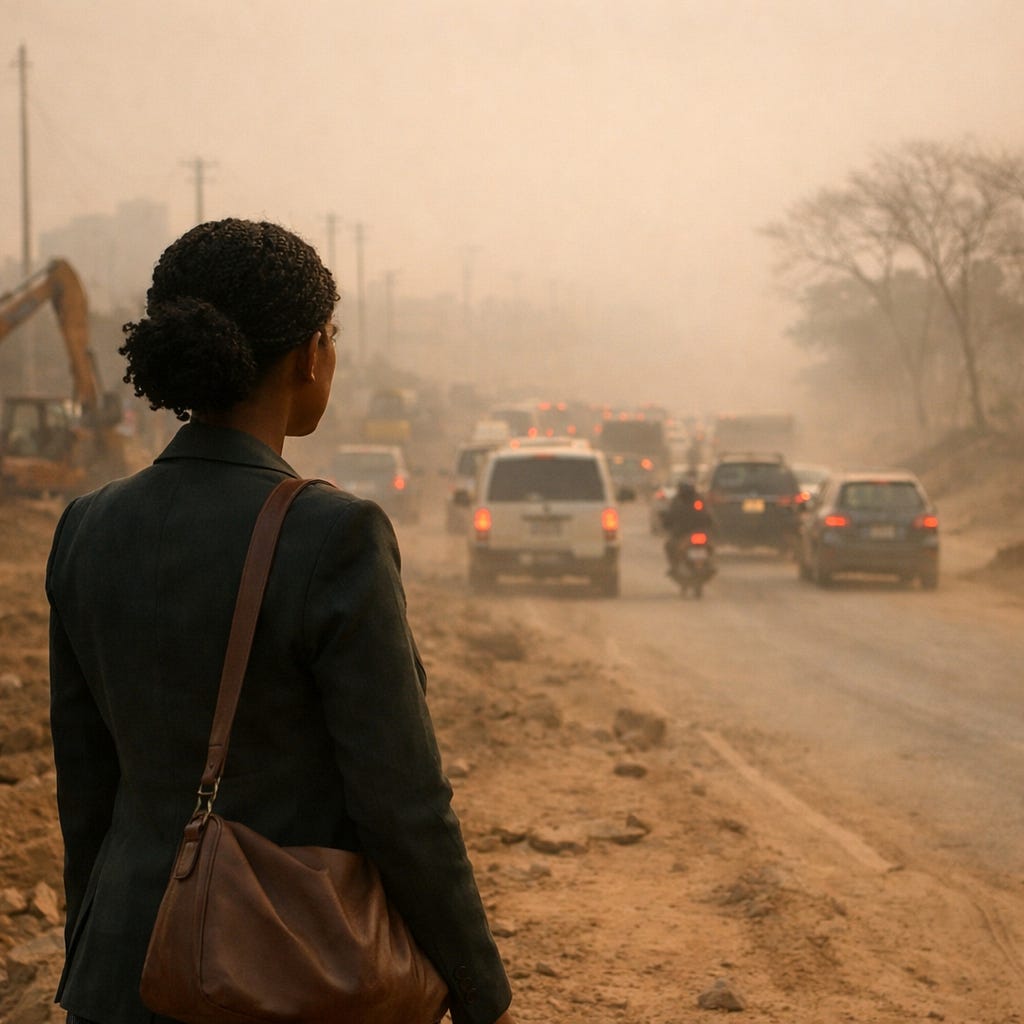
Research on Abuja’s Federal Capital Territory tells a story that should stop us cold. Between 1986 and 2021, vegetation cover in Abuja declined from 52.7% to 37.5% of the city’s land area. In the same period, built-up areas grew from 3.15% to 16.8%. One study tracking land cover change from 1990 to 2019 found that vegetation in Abuja decreased by 30.4% in under three decades. The urban heat island effect has followed in lockstep: mean surface temperatures in Abuja rose from 27.4°C in 1986 to 33.2°C in 2021.
Let that land. Abuja is getting hotter because we are removing the trees that cool it.
Projections make the picture grimmer. Models using satellite data suggest that built-up areas could increase by another 17.1% between 2020 and 2050, with nearly half — 46.8% — of Abuja’s total land area already classified as degraded due to urbanisation. By 2050, built-up surfaces could cover 72% of the city.
And Nigeria, nationally, continues to lose forest cover at an annual rate of 3.5% — one of the highest deforestation rates in the world.
We are not just building a city. We are dismantling an ecosystem.
What We Are Losing That Cannot Be Rebuilt
When I think about that cashew forest, I think about what it was doing — quietly, without recognition, without compensation.
It was employing people. The women who harvested those cashews were running informal but real businesses. Their children were learning ecological knowledge through participation. That forest was not idle land waiting to be developed. It was a productive, living system.
It was storing carbon. Trees are one of nature’s most powerful carbon sinks. Every mature tree that is cut releases the carbon it has stored over decades back into the atmosphere. That forest, before it was cleared, was doing climate work — work that the hospital now built on its ruins cannot do, no matter how advanced its equipment.
It was retaining groundwater. Tree roots hold soil together and slow the movement of water into the ground. Remove the trees, pave the land, and you accelerate runoff, increase flooding risk, and reduce the groundwater that communities depend on.
It was regulating temperature. The shade of that forest lowered the ambient temperature in its vicinity. Now there is concrete where there was canopy — and the people in that estate will run air conditioners to compensate for a heat that the trees were managing for free.
It was sustaining biodiversity. Pollinators, birds, small mammals, insects — entire webs of life that we do not see but that hold our food systems together. Gone.
And in its place? An estate, with small ixora bushes as landscaping. Decorative. Insufficient. A ridiculous cosmetic gesture toward greenery in a space that once held an actual forest.
I do not say this to shame any individual developer. I say it because we have not yet, as a society, fully reckoned with what we are trading away.

By Google
Abuja Is Not the Exception. It Is the Rule.
If you live in Abuja, you do not need a research paper to know this is true. You see it every time you drive through the city.
Asokoro. Maitama. Guzape. Garki. Construction is ongoing in every direction. Estates are rising where bush once stood. And now there is a new trend, perhaps the most brazen: trees being cut down not for houses, not for hospitals, but for advertising billboards. We are removing living carbon infrastructure to create space for signage.
We understand growth. Abuja is the capital of a nation of over 200 million people. It is a city of opportunity — for government, for business, for tourism, for investment. Lebanese, Chinese, Korean, and domestic investors are expanding here. Airbnbs, conference centres, residential estates, commercial hubs — the appetite for development is not irrational. It reflects real demand.
But appetite without wisdom is not development. It is consumption.
The question is not whether Abuja should grow. It will grow. The question is: how do we grow without destroying the very things that make a city liveable?
A real estate developer I know — a friend — said to me, dismissively, when I raised the issue of tree planting in his estate: “We cannot plant trees.” Just like that. As though trees were a luxury. An afterthought. An aesthetic preference for the overly sentimental.
I want to speak directly to every developer in this city: Where are your trees? Where are the trees to shade the residents you are selling these homes to? Where are the trees to reduce the electricity bills from air conditioning that will follow your buyers into this heat? Where are the fruit trees that the children in your estate will grow up with? Where is the groundwater recharge that protects your estate’s foundations? Where is the biodiversity that makes your land valuable in ways you have not yet measured?
Even Dubai — a city built on desert, on sand, on terrain that could not be less hospitable to vegetation — has gardens. Dubai planted. Dubai invested in green infrastructure as a core urban strategy, not a decorative afterthought.
We are sitting in a tropical climate, in a country that receives rainy seasons, on land that has deep ecological memory — and we are choosing to make a desert of it.
A Framework Already Exists. We Need to Use It.
The good news — and there is good news — is that we do not have to invent solutions from scratch. The frameworks exist. What is needed is the will to implement them.

By PlanIt Geo
The 3–30–300 rule, developed by urban forestry researcher Cecil Konijnendijk, offers a clear and actionable standard for urban greening:
- 3 trees visible from every home or office
- 30% canopy cover across every neighbourhood
- 300 metres from every home or workplace to a public green space
This is not an idealistic standard. It is a practical one, already adopted by cities globally. It is a minimum baseline — a floor, not a ceiling — for what a liveable, climate-resilient city owes its residents.
Abuja has the land. Abuja has the rainfall. We are entering the rainy season now — the prime window for planting. Trees planted now, in this soil, in this climate, will establish roots. They will grow. In ten years, they will provide canopy. In twenty, they will store significant carbon. In thirty, they will be the kind of forest that future generations drive past and breathe differently because of.
But we have to plant them now. And we have to protect what remains.
Beyond the 3–30–300 standard, we need:
Street tree programmes that line Abuja’s expressways with indigenous trees — not ornamental shrubs, but actual canopy. Trees that will provide shade, reduce runoff, cool the corridor, and give the city character.
Pocket forests in underutilised urban spaces, informed by the Miyawaki method — dense, multi-species, low-maintenance, rapid-establishment native planting that creates ecological richness in a small footprint.
Mandatory environmental impact requirements for real estate development that go beyond current minimums — requiring developers to plant and maintain a meaningful number of trees per hectare developed, with accountability and follow-through.
Indigenous tree databases for the FCT, identifying which species belong here, which trees are adapted to this soil and climate, which ones support local wildlife and have cultural meaning — so that when we plant, we plant with ecological intelligence.
Community reforestation campaigns in which residents, schools, markets, estates, and local governments participate in seasonal planting — making tree stewardship a civic identity, not a government afterthought.
Nature Is Not a Luxury. It Is Infrastructure.
I want to leave you with this.
When we debate real estate development versus environmental protection, we have unconsciously placed them in opposition — as though protecting nature is something we can afford to do once we are sufficiently developed. This is the wrong frame entirely.

By StockCake
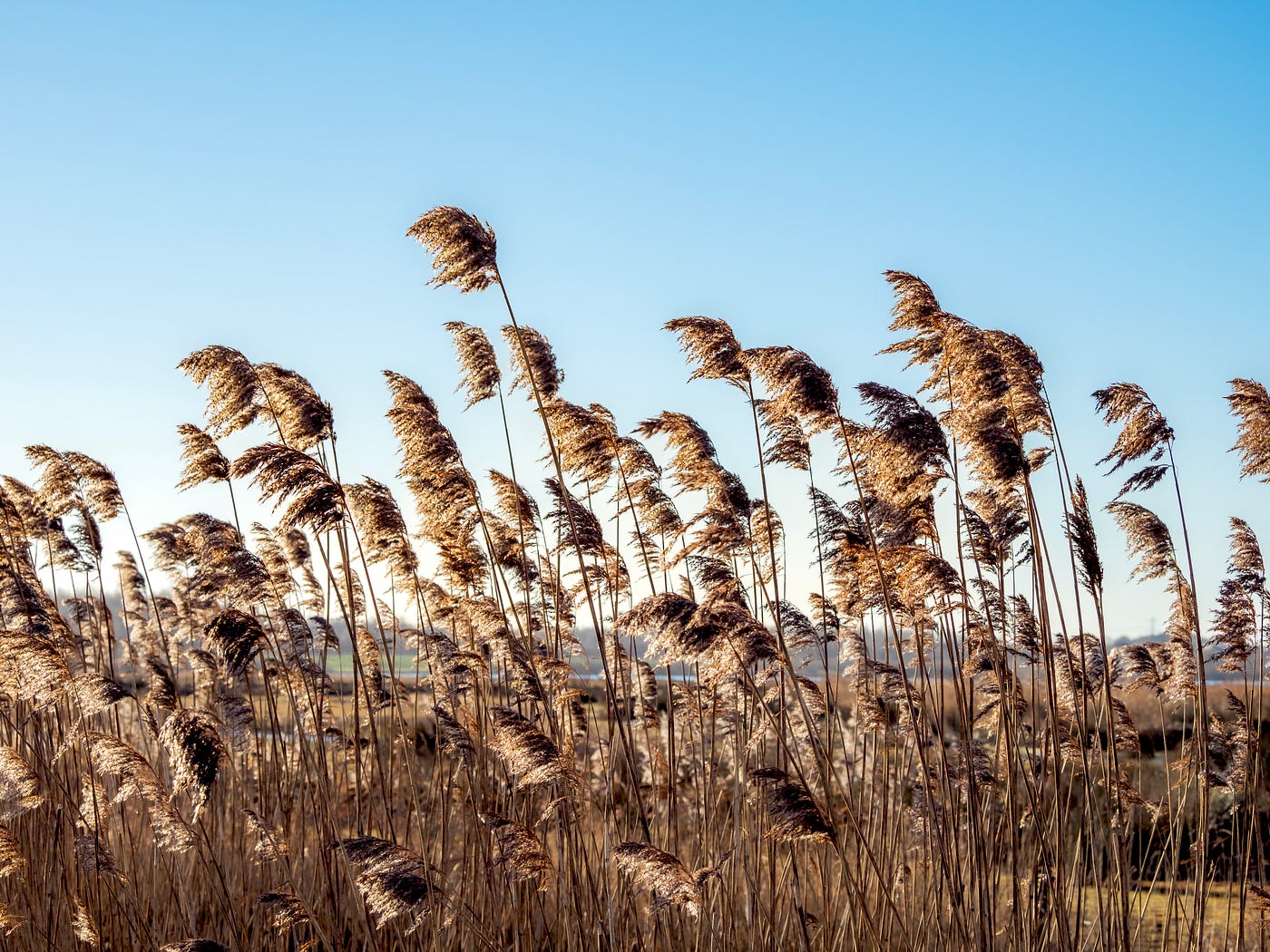
Nature is infrastructure. Trees are water management infrastructure. They are temperature regulation infrastructure. They are public health infrastructure. They are economic infrastructure for communities that depend on forest products. They are climate infrastructure. They are the invisible architecture that makes human life in cities survivable.
You cannot build a great city by destroying its ecological foundation and replacing it with concrete and axora bushes.
Without plants, we will not survive on this planet. That is not sentiment. That is biology.
Abuja has a choice right now, in this moment, before the projections for 2050 become an irreversible reality. We can be a city that grew and consumed everything in its path. Or we can be a city that learned — before it was too late — to build within nature rather than instead of it.
The cashew forest is gone. I cannot get it back. But I think about the women who harvested from it. I think about the children. I think about the carbon that is now in the air instead of in the soil. I think about the heat that will climb in that neighbourhood with nothing to stop it.
And I think: we still have forests. We still have this rainy season. We still have time.
What are we going to do with it?
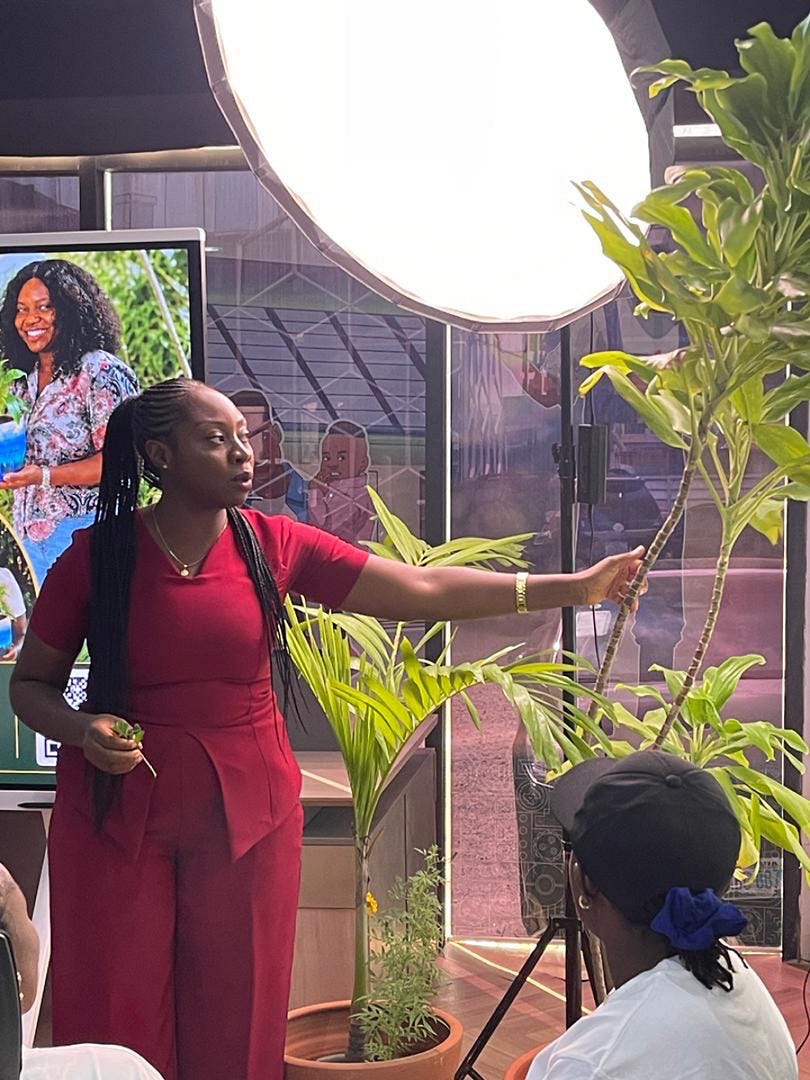
Adanna Mgbojikwe-Loto is a biotechnology regulator, sustainability practitioner, and founder of Planting Co — a regenerative ecological lifestyle company based in Abuja, Nigeria. She writes and advocates at the intersection of ecology, policy, and community.
Sources and data references:
- Spatiotemporal Influence of Land Use/Land Cover Change Dynamics on Surface Urban Heat Island: A Case Study of Abuja Metropolis, Nigeria (Academia.edu)
- Modeling the spatial dynamics of land cover transitions and vegetation conditions in Abuja city, Nigeria — Mshelia, Onywere & Letema, Urbanization, Sustainability and Society, 2024
- Rapid spatial growth of cities and its planning implications for developing countries: A case study of Abuja — Indonesian Journal of Geography, 2022
- Global Forest Watch — Nigeria & FCT Dashboards
- Earth.org — Challenges Facing Policies Against Deforestation in Nigeria
- The 3–30–300 rule — Cecil Konijnendijk, urban forestry framework
메타데이터
- post_id
- 2a56571ad5b7
- slug
- how-real-estate-expansion-is-destroying-nature-in-abuja-and-what-we-can-do-about-it-2a56571ad5b7
- url
- https://medium.com/@adannayaloto/how-real-estate-expansion-is-destroying-nature-in-abuja-and-what-we-can-do-about-it-2a56571ad5b7
- canonical_url
- https://medium.com/@adannayaloto/how-real-estate-expansion-is-destroying-nature-in-abuja-and-what-we-can-do-about-it-2a56571ad5b7
- author_url
- https://medium.com/@adannayaloto
- status
- ok
- fetched_at
- 2026-06-22 07:15:07