How Empowering Employees Transforms Business Productivity
Taking on Quiet Quitting, Coffee Badging, Tapping Out and more to understand employee experience
How Empowering Employees Transforms Business Productivity
Taking on Quiet Quitting, Coffee Badging, Tapping Out and more to understand employee experience
Original article here.
Institute of Design students emerged victorious for the fourth time at the 2024 Rotman Design Challenge, a prestigious global competition hosted by the University of Toronto’s Rotman School of Management in which top talent from leading business and design schools tackle complex business challenges. Graduate students from schools across North America devised innovative solutions for cultivating engaging work environments in the era of remote and hybrid work — and the Institute of Design took first place.
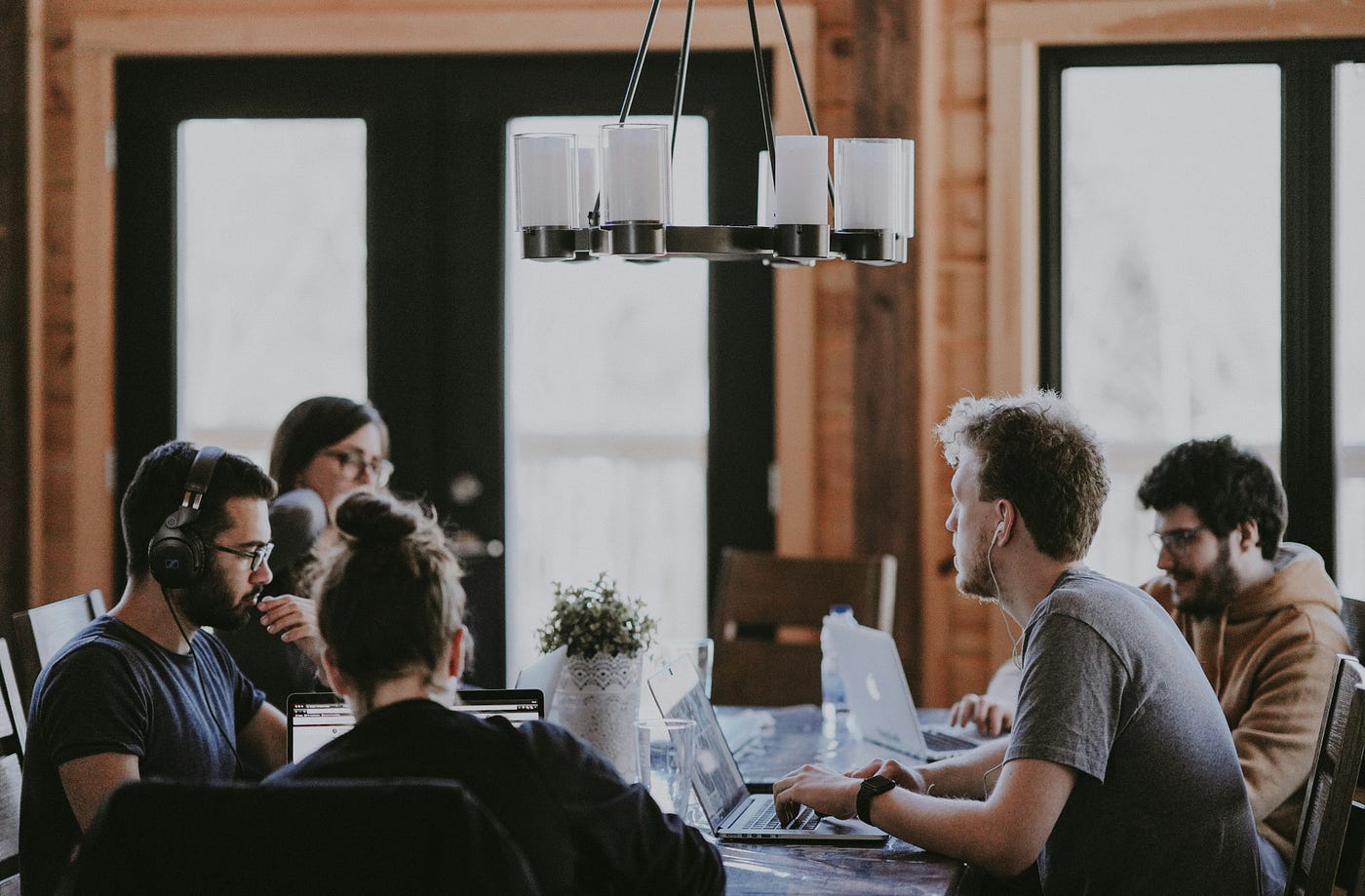
Photo by Annie Spratt
Our New Work Cultures
The changing landscape of our lives at workplaces
The transition to remote work since 2020, accelerated by global events like the COVID-19 pandemic, has presented myriad challenges for employers and employees. Remote work has its benefits, but now a significant portion of the workforce now finds themselves disengaged, as highlighted by alarming statistics. More than 50 percent of individuals working remotely disengage as soon as the daily catch-up meetings begin. Ninety percent of executives cite engagement and in-person efforts as the biggest factors for promotions. The implications of disengagement on employees’ careers are real.
Even with well-intentioned attempts to boost productivity through incentives like cash bonuses and perks, it’s become evident, through continually dropping engagement numbers, that what truly resonates with employees extends beyond material rewards. Today’s workers crave a deeper connection, a sense of purpose that transcends mere transactional exchanges.

Adding complexity to this landscape is the presence of a multi-generational workforce, where each generation’s distinct values and communication styles erect barriers to cohesion, further exacerbating the disengagement dilemma. Compounding these challenges is the revelation that half of the North American workforce admits to exerting minimal effort in remote tasks. This lack of engagement is rooted in a fundamental disconnect between meaningful work and individual values, resulting in an unsustainable and uninspiring remote work dynamic.

Current Dynamic of Remote Teams by Team Opal
Current Dynamic of Remote Teams
The existing models and relationships at workplaces
The issue extends beyond mere logistics; it strikes at the heart of collaboration and engagement in remote work environments.
Traditional workplace dynamics have evolved around the direct relationships of the employees and managers. Team leads often prioritize competitiveness and the achievement of project deliverables, leading to compressed timelines, fast-tracked projects etc. These become the North Stars for the employees who focus on achievement of these goals, that they do not fully understand. As a result employees often feel disconnected, their contributions diluted by a lack of alignment in values and goals and results in exhaustion. This disconnect impedes productivity and erodes the sense of purpose and fulfillment crucial for sustained engagement. Moreover, the absence of engaging, meaningful tasks perpetuates a cycle of disengagement and dissatisfaction, leaving teams, employees, and managers disinvested and disillusioned.
When such teams strive to achieve these disconnected and seemingly disparate goals in silos, it fuels a disconnect with the larger vision with focus on implementation without any attention to inner knowledge building. This reduces team productivity, creates a culture focused on completion, negatively affects creativity in team interactions and extinguishes sparks of innovation that occur in internal processes.
Consequently, the relationship between employees and managers becomes directive, with managers assigning tasks; employees focusing on metrics,objectives, key results (OKRs); teams becoming functional but disjointed; and interactions becoming procedural. This environment leads to teams feeling disconnected and employees experiencing burnout, which impacts overall business productivity.

Shifting focus of the stakeholders to change dynamics
Transitions for Sustainable Productivity
Reimaging workplace dynamics for cohesive efforts in workplaces
To achieve success in remote work, businesses and employees must cultivate symbiotic partnerships, fostering effective collaboration while balancing personal productivity with overarching company objectives. Transitioning from a focus solely on competitiveness and task-oriented approaches is essential for fostering sustainable productivity.
Employees’ day-to-day activities and remote collaboration among teams are affected by their relationships with their team members and supervisors. These relationships create the most impact on multiple stakeholders at the same time. This presents a strong leverage point to develop a holistic solution. Team Opal decided to focus on understanding the details of these relationships so that they could enhance them, asking: How might we re-imagine the dynamic between employees, teams, and managers to create sustainable performance that leads to a lasting advantage?

A How Might We Statement to address the shift in dynamics
The Remote Revitalization Toolkit
An adaptable framework that can facilitate shifting perceptions + relationships

Remote Revitalization Toolkit
The development of our toolkit involved understanding and assimilating various aspects of hybrid work dynamics between employees, teams, and leaders.
Team leads should focus on fostering team growth by building resilience in projects in ways that create positive conditions and mindsets for work, thereby building impact. Team Opal developed mechanisms to facilitate this approach through ritualized practices and methodologies. Our Remote Revitalization’ Toolkit includes a set of rituals and frameworks for the workplace that can be used by teams, employees, team leads, and other workplace members. With sections like Re-Engineer Growth, Re-Align Goals, Re-Engage Rituals, and Impact Recognition, this framework offers methods to activate team cohesion, alignment, and motivation while truly focusing on employee growth.
“Each toolkit has some metrics that can be mapped and contribute to cultivating sustainable productivity.”
The framework is designed to align employee goals with project objectives, fostering holistic growth for the employee. It includes mapping out personalized growth pathways while creating rituals that support and strengthen connections within teams. New parameters such as alignment scores, skill development, and recognition of impact are introduced. These can be utilized by different team members at various stages and serve as a team artifact for documenting growth and impact.

Toolkit #1: Re-Engineering Growth Pathways

Toolkit #2: Re-Aligning Goals within Teams
The framework is designed to generate outcomes such as aligning roles based on employee expertise and goals, developing team rituals to enhance connections, and enabling employees to build their goals and expertise through work projects. It was pressure-tested through contextual inquiries and surveys measuring engagement and interest. Feedback from over 8+ managers of global and extensively remote teams, employees, and organizational leaders indicated an average interest of 65 percent in adopting these mechanisms in various formats. The framework can be used across projects and supports the co-creation of new methods to enhance team cohesion.
This toolkit can be viewed as a plug-in for multiple work channels–mainly built for remote needs in agile, hybrid or digital environments. It’s a way to support remote work and build accountability.
The framework was presented at the finals of the 2024 Rotman Design Challenge in a hybrid format, and it earned the ID students’ team the 1st Place Winner title. This recognition was based on their connected and systematic approach to addressing productivity declines, fostering meaning and growth at work, and creating connections and community, even in remote formats. The project also explored the missing links in today’s workplaces, where employees are often viewed merely as resources without adequate means to establish favorable work conditions or mechanisms for their growth.

Pressure testing the toolkit
By identifying a new contract of value for growth and respecting employees as the strongest resources, companies can co-create a culture of action, belonging, and innovation.
“(This) is a toolkit that every team should have in their hands, especially in the digital remote space. I feel that someone should be the champion of this on every team, and then help the team get their voice out in order to make a good environment.” — Ron Martin, Sr. Innovation Manager, TCS
The project was developed at the Institute of Design, with support from Peter Zapf and Jeremy Alexis. Our team was comprised of all concurrent students with dual degrees in Master of Design And Master of Business Administration. With a focus on business problems, and using human-centered design methodologies for problem solving we can create holistic solutions that impact social fabric of work and life. We are currently working on expanding this into integrated models that can be adapted in workplaces digitally. We would love to hear your experiences in tackling issues faced in remote work to improve our toolkit. Contact us via LinkedIn if you want to learn more and find our work at the provided link.
메타데이터
- post_id
- 2a5bfd8407d5
- slug
- how-empowering-employees-impacts-business-productivity-2a5bfd8407d5
- url
- https://medium.com/@aabhakale/how-empowering-employees-impacts-business-productivity-2a5bfd8407d5
- canonical_url
- https://medium.com/@aabhakale/how-empowering-employees-impacts-business-productivity-2a5bfd8407d5
- author_url
- https://medium.com/@aabhakale
- status
- ok
- fetched_at
- 2026-07-23 03:07:13