The Uncomfortable Truth About Sex Dolls
Dehumanization Under the Excuse of Sexual Autonomy
The Uncomfortable Truth About Sex Dolls
Dehumanization Under the Excuse of Sexual Autonomy
Recently, the South Korean Supreme Court reaffirmed its previous ruling that life-size sex dolls cannot be subjected to a blanket import ban. The court justified this by claiming that sex toys are used “very privately and discreetly,” and that those silicone figures do not “explicitly depict sexual parts in a blatant manner.” However, a public petition demanding a ban quickly gathered over 37,000 signatures, and the Women’s Party held protests condemning the decision.
How can we understand this massive public backlash? To see beyond the court’s excuse of the “private” sphere, we must turn to Latin American feminist philosopher Maria Lugones. Through her concept of the “colonial/modern gender system,” we can recognize that this ruling is not about personal sexual autonomy; instead, it is a reproduction of the coloniality — which had dehumanized and materialized women’s bodies — through the form of global capitalism.
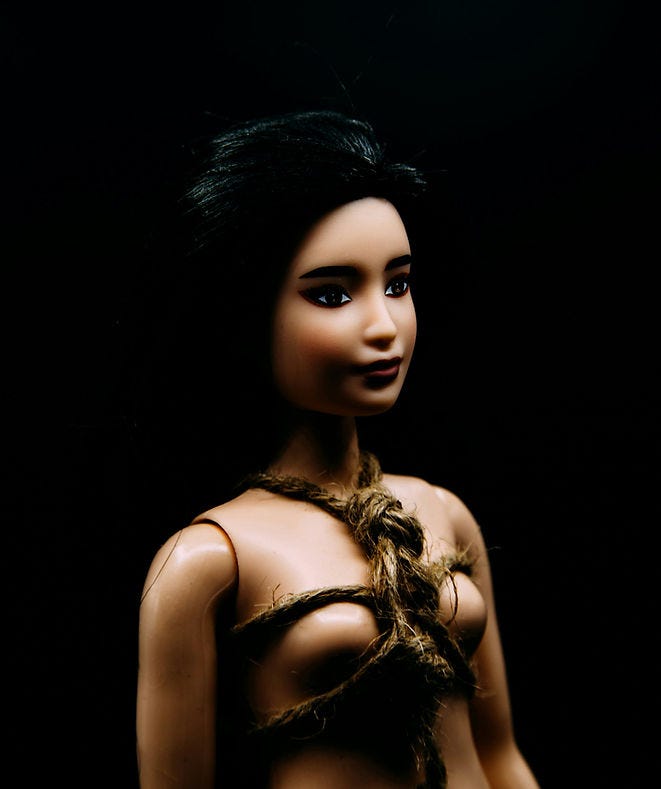
Defended by the court as a matter of ‘private’ life, the sex doll reveals the true violence of gender coloniality. It reduces the female form to a mere object to be bought and dominated.
The Supreme Court framed using sex dolls as a private matter of sexual autonomy. However, an analysis based on Anibal Quijano’s model of power, expanded by Lugones, shatters this illusion. Power is structured around the control of fundamental areas of human existence, including “sexual access, its resources and products.” In the colonial/modern gender system, sexual access is not a private issue but a core axis of global capitalist domination. Historically, colonizers had free and violent sexual access to colonized women, who were treated as property and resources rather than human beings. Today, thus, purchasing a sex doll is not an isolated act of preference. It is a transactional exercise of absolute control over a female-shaped object, extending the colonial legacy where the marginalized body is perceived as a consumable resource.
People who agree to sex dolls often argue that those silicone figures merely satisfy natural male sexual desires and might even reduce sexual crimes, functioning as a safe outlet. However, if this logic works, why are child-shaped sex dolls strictly banned worldwide? Many countries, including Australia, Germany, and Denmark, have explicitly criminalized the possession and distribution of childlike sex dolls. Similarly, the South Korean Supreme Court — while legalizing adult sex dolls — explicitly banned dolls modelled after minors under the age of 16, declaring that they harm public morals. These similar phenomena all over the world indicate that objectifying a child solely for sexual gratification is a profound violence and an assault on human dignity.
This brings up a critical question: if we recognize the inherent violence in objectifying children, why is the adult female body excluded from this moral protection? Maria Lugones argues that the coloniality of power fundamentally reorganized the world through a hierarchical dichotomy between the protected “human” and the exploitable “non-human” or “beast.” While white bourgeois colonizers occupied the civilized light side of this gender system, colonized women of color were violently relegated to its dark side. In this dark side, women were stripped of their humanity, reduced to sexualized animals, and treated as objects for the absolute “sexual access” of the colonizers.
By protecting children under the label of the “human” while legally permitting the consumption of adult female sex dolls, the state and the global capitalist market perpetuate a selective dehumanization. We can find out a clear message that the adult female body remains a “non-human” resource that can be legally bought, dominated, and penetrated without consent. As Korean feminist scholar Kim Ju-hee points out, regulating these dolls based merely on how closely they resemble real human anatomy reduces the entire female body to potential pornography.
The sex doll, therefore, is not a harmless tool for an individual’s sexual relief. It represents the ultimate physical degradation of the female form into what Lugones calls the “tortured materiality of power.” It is the historical colonial desire to turn women into voiceless, compliant objects, fully materialized and sold as plastic commodities in the modern capitalist market.
— — — — — — — — — — — — — — — — — — — — — — — — — — — — — — — — — — — — — —
Bibliography
- Choi, S. (2026, April 3). Importing sex dolls legal unless they resemble minors, Korea’s top court reaffirms. Korea JoongAng Daily. Importing sex dolls legal unless they resemble minors, Korea’s top court reaffirms
- Desbuleux, J. C., & Fuss, J. (2024). Child-like sex dolls: legal, empirical, and ethical perspectives. International journal of impotence research, 36(7), 722–727. https://pmc.ncbi.nlm.nih.gov/articles/PMC11554561/
- Lugones, M. (2007). Heterosexualism and the colonial/modern gender system. Hypatia, 22(1), 186–209. https://www.jstor.org/stable/4640051
- Lugones, M. (2010). Toward a decolonial feminism. Hypatia, 25(4), 742–759. https://www.jstor.org/stable/40928654
메타데이터
- post_id
- 2a63876f349f
- slug
- the-uncomfortable-truth-about-sex-dolls-dehumanizing-under-the-excuse-of-sexual-autonomy-2a63876f349f
- url
- https://medium.com/@gyb0821/the-uncomfortable-truth-about-sex-dolls-dehumanizing-under-the-excuse-of-sexual-autonomy-2a63876f349f
- canonical_url
- https://medium.com/@gyb0821/the-uncomfortable-truth-about-sex-dolls-dehumanizing-under-the-excuse-of-sexual-autonomy-2a63876f349f
- author_url
- https://medium.com/@gyb0821
- status
- ok
- fetched_at
- 2026-07-25 11:11:15