The end of human life as we know it?
I spend my time thinking a lot about the future, and I sway between tech optimism, tech dystopia, and nihilism.
(I wrote this post back in 2018, but never published it. Re-reading it, I feel it should go out there in an unedited form.)
The end of human life as we know it?
I spend my time thinking a lot about the future, and I sway between tech optimism, tech dystopia, and nihilism. Are we the first (or last?!) to watch the trainwreck of technology effects ripple through the collective consciousness and culture while we celebrate the progress?
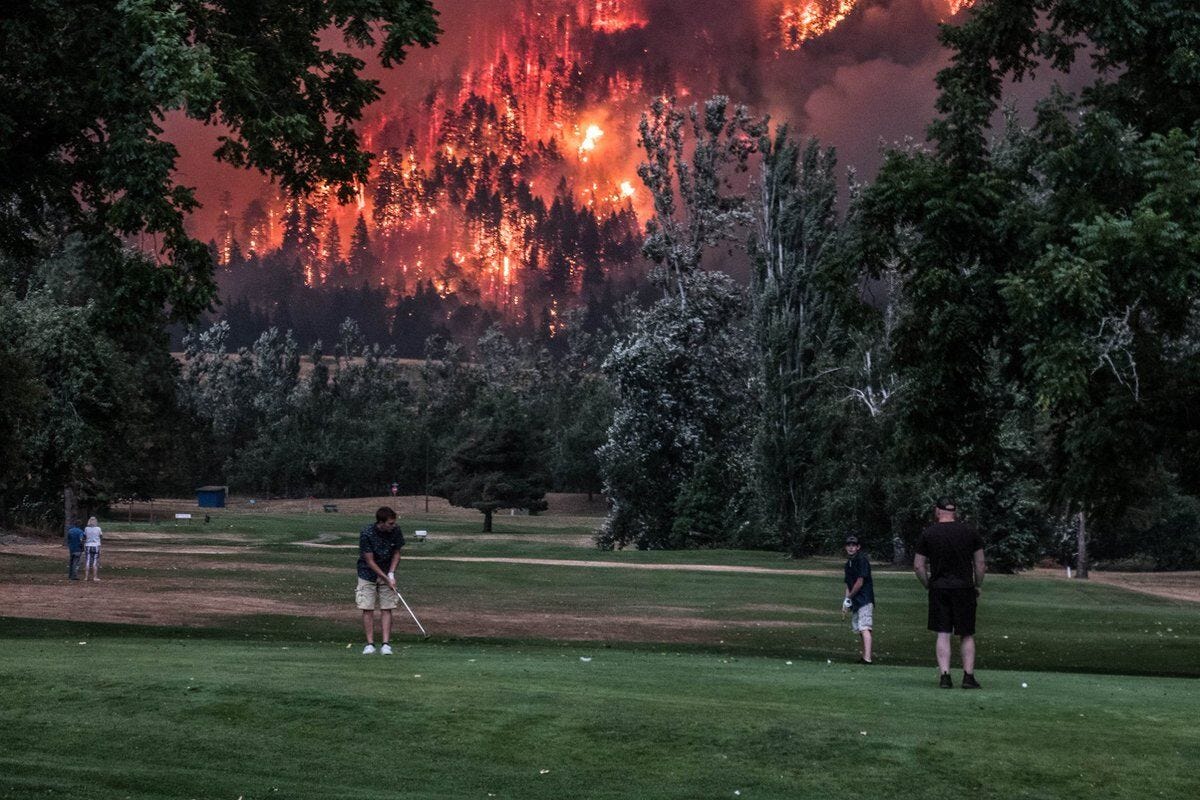
Let me guide you through my rings of fire — how we got here, what the problem might be, and what I do to stay sane.
Technology made us superhumans
First, what is technology? I love the definition that technology is everything that was invented since you were born. We don’t consider pencils technology or, even more extreme, writing. But there was a day when both were great innovations and were considered threats to our minds. Who would remember anything, if you just wrote it down and could read it? Our memory would deplete. It was the same thinking when I was in school about calculators. We can scoff at those things, but as technology and ideas become shoulders to stand upon, we are also more dependent on those shoulders. Many would die if we had a Carrington Event, a solar eruption, and the electric grids of the whole planet would cease to work.
But, technology also has made us superhumans! All of us have the power to see anywhere in the world, read almost everything that has been written, watch unbelievably well-crafted entertainment, eat exotic fruits, travel anywhere, let alone never go hungry or die from smallpox. All of these things have been technological leaps over the last 50 years. And, on top of that, we are part of the discussion. We are no longer waiting for what the big companies or governments or famous artists decide to do. We can make movies, songs, and books and get them out there in the world. We can protest and topple leaders or small-mindedness. We have the means to be Rosa Parks or Martin Luther King from our living room. All this in less than 50 years.
Our grandparents grew up in a world without cheap intercontinental flights, with one-way, non-participatory media, and two world wars. Our children will grow up in a hyper-connected world, where one has to re-train to stay relevant at the job market, where being connected and part of the world might mean to be surveilled.
Technology enables, but culture decides
Now we are digitalizing and automating everything. We are connecting the world of atoms with bits with the goal to measure and control. And, with gene editing and implants, we are redefining what it means to be a Homo sapiens.
We have seen technological revolutions before, but this time it is different. The first and second industrial revolutions lasted 200 years where we augmented or even replaced our muscles and bodies. The change took generations. It created opportunity, and few were displaced during their own careers.
The cultural and social reforms were massive, and even harder to predict: the end of famines in the developed world, mass literacy, urbanization, mandatory education, health care, and factories. We moved from self-employed and self-sufficient to ever more connected and dependent on each other and the system we created, but also more enlightened and with more possibilities than ever.
What I find interesting is not how far we can jump, fast we can think, or long we can live, but what that means. We might end the view of being exploited by the corporation, to instead become irrelevant for the corporation. Now, that might take longer and even be a narrative being spread to keep employees to fear for their jobs and not increase demands, but undoubtedly it will happen eventually. What will these changes mean for what it means to be human?
Hell is other people
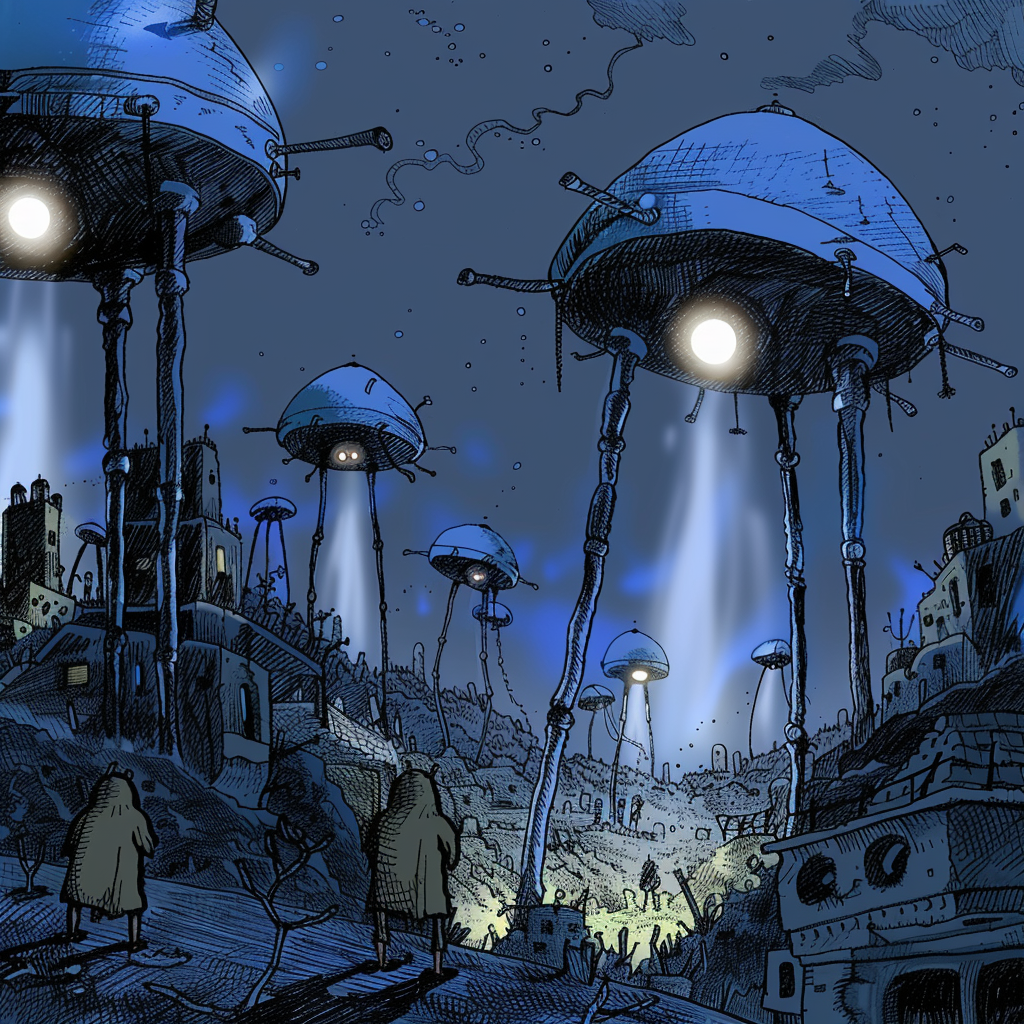
My fear is not that AI will become our overlords or killer robots hunting us down. It is easier for Hollywood to depict AI as an “us versus them” scenario than some complex discussion about retraining, unemployment, or inequality. Because the most significant issues we face are other humans. Technology is nor good or evil, and never has been. Technology is our tool to extend and augment ourselves.
There might come a day when a new species awakes; when computers become conscious. Or, a day when algorithms optimize humanity out of the picture. As with Nick Bostrom’s paperclip maximizer, we might be harvested for the iron in our blood. But, looking at risks, more likely is that digitally fuelled capitalism is already a paperclip maximizer, and we are the nodes doing the bidding. Corporations are amoral machines, already responsibly maximizing shareholder value, even if that means harvesting your data, changing democracy, and turning us into an ever comparing, distracted, and unhappy species. Superintelligence will just be able to solve even more complex problems and destroy us more efficiently, but coordinated exploitation is already here.
Maybe, we will be able to extract our minds and store them on silicon instead of the substrate we run around with inside our heads right now. Perhaps, we will create, or stumble over, an artificial mind. Which conscious, intelligent, species will inhabit the Earth in hundred years? And what would the collective look like?
The collective’s undeveloped frontal cortex
Why would we fear a new species? Humans are just “robots programmed by DNA” who one day “came online” and became conscious. Do we really fear our collective demise or just the fall of the individual, family, and group? Is the fear, a fear of change and life as we know it? Well, that is a legitimate fear and one that surely will be fulfilled.
When we are afraid, we elect “strong leaders.” We become xenophobic and don’t want to share with those we don’t feel we have a connection. We show our belonging to the group. The last ten years have given a boost to phenomena such as Trump, Brexit, nationalist parties, and virtue signaling. Maybe tribalism is the biggest issue. We are more obsessed with belonging to our group than reasoning, which is seen clearly in the US debate, ranging from the climate debate to electing judges. We don’t seek the truth; we aim to belong.
Digital connectedness has sped up communication to the degree that small signals propagate, are amplified and misinterpreted and end up having far greater consequences than often intended or reasonable. We have become a global, angry teenager with an undeveloped frontal cortex. We don’t live in a more post-truth world now than before, but in a world where opinions have a massive impact before reasoning can catch up and hinder. We haven’t changed, but again, technology empowers us to do more with less. Then, social media is so young so maybe we will learn.
Maybe, we have gone past the point where we can stop this. Perhaps capitalism, digitalization, the demise of the nation-states, and the collective mistrust is the perfect storm. Maybe now, the winners create glass roofs thanks to network effects of data and users, the economy of scale and no local borders to hinder international expansion, the winner does take all. Every empire so far has been destroyed due to internal fights, complacency, or too quick expansion. But now, the empire will strike back. Or, acquire the rebels.
Maybe inequality is the biggest problem. It sure looks like that in the media. At least, it is easy to dislike the 1%. But, are we more unequal now than we were 1000, 100, or 10 years ago? Economic inequality is, on the one hand, an “obvious” injustice, but isn’t all inequality? What about power, opportunity, status, health, lifespan? If we raise the lowest level to the richest people two hundred years ago, are we still too unequal? Where does it end? Should we gene-edit ourselves to equality?
Connecting the global nervous system
One scenario is a new mind and mindset. Just like the body doesn’t have a “global government” to control every cell, we need a more decentralized approach. Maybe we can connect our minds so that the wealthy entrepreneur in San Francisco feels physical pain when the woman in Accra is chased down the street? The new nervous system would shun one cell, taking too many resources, and even if we don’t yet know how to get rid of cancer, we all agree we want to. We have been able to create a united body with the economy, trade, information exchange — and angst, anger and virtue signaling.
When Pinker and Rosling tell us that everything is getting better, how come it feels like we are unhappier than ever? Or is it just the Hedonic treadmill? Are we condemned to being unsatisfied? Even if our global body of humans is better off, our collective mental health is getting worse. Universal basic income could improve the standard of living, but will not solve us comparing, wanting, and needing what the other has.
When countries are discussing UBI today, they are only talking about their country, their organ, and don’t consider the rest of the body. We are still very much obsessed with geographies in our policymaking, even if our wishes and comparisons are global.
We are on the slow path to connect the global mind, but maybe we must first walk the valley of hyper-connected, hyper-impulsive, hyper-comparing, and hyper-surveilled? Would the only way to get everyone on the same side be an external threat from extraterrestrials? Or will we never be a “we”?
Theseus humans and who “we” are
What is a human individual? Factually and experience-wise you are not the person you were yesterday. You are constantly evolving, both mentally and physically. Your brain is writing patterns over the old patterns, reliving, distorting, and strengthening memories.
If we are able to create a new “life,” a mind, consciousness, or gain the ability to upload ours in new bodies, this will become even more salient. We will have born minds, immortal minds, created minds, created bodies, born bodies, and all the combinations and mergers of these. What is a species then? Who are the “we” in that?
Will self-driving cars have their own nations? Will an AI-run digital trust fund from a long diseased oligarch be creating polluting industries it has no negative externalities of, to make more money? Will we let created minds without bodies vote? Will we allow a mind to have many bodies? Or a body to have multiple minds? Will our bodies be irrelevant and we will engage only in visual, virtual worlds? Will space exploration put us so far apart that we will grow apart from our own? Probably: yes to all of the above.
There probably won’t be a single first-person plural “we,” but there will be many “we:s.” Have we lost the collective story, or have we never had it? Will all these things create even worse tribalism or make so many tribes and a multi-belonging that we need to focus on the whole or the individual? Is it even a blessing?
Rimes with Christianity
Maybe all these discussions are happening right now as we are losing faith. We used to have stories to believe in, and now we don’t. Even if money, politics, trade, and all other cultural innovations are stories, they rarely give us the same fulfillment. It somehow feels like other people’s stories, even if they will fight for their existence and not disappear overnight. Will we all have to create our own story and never feel part of a community again? Or, will we be part of many?
Even the story of mind uploading and immortality isn’t new. Dante ascended, and his human flesh was transformed. “Words may not tell of that transhuman change,” he writes. Fedorov, a 19th century Russian Orthodox Christian, stated that Darwinism would be taken further and we could create our new species with technology.
It took a while, but now we are faced with the choice. And, as we know with technology, it is hard to stop, we can just slow down the cultural change and make it harder for people to implement it.
Should we save humanity?
With this, the question if we should save humanity becomes harder. What do you mean by “Humanity”? It is yet another story. Is it Homo sapiens v02018.01 you are talking about? Or Homo sapiens? When we have edited those genes, added nanobots to the system, connected our minds, and enhanced ourselves with a “meta cortex,” are we still Homo sapiens or even humanity? What is it that we want to save, and maybe even why?
Is it our moral imperative to save our species? It has been built into our code to survive and procreate, but that is about it. We evolved to be shortsighted — to amass as many resources, status, and offspring as possible to make sure our genes progressed. That leads me to the final problem: maybe shortsightedness is the biggest problem?
Have we found Fermi’s Filter?
Maybe the speed of change is what will destroy us? Is technology moving faster than evolution and culture can adapt? Culture does leaps when one generation dies, but maybe we slowed it down with modern medicine, and immortality will make it impossible to change. If progress happens one death at a time, and the people of the future won’t even get children, will we break the upgrade pattern of culture? Will we be stuck with the same patterns?
As technology becomes better and better at excavating value, we might run out of resources, but probably not enough to kill the planet. Fossil fuels are being replaced for renewables, but materials might run out before we get out in space to find more. When we till the soil faster and faster, we might need to deplete it faster than we can create new environments to grow in or new species to grow. If we pollute the water and air faster than we can clean it, we might suffocate ourselves and all other species on Earth.
The consequences of the climate crisis are not only the sad image of dying polar bears but mass migration, political instability, nationalism, and war.
Are we able to see all other humans and still live a happy and self-guided life? Can we share the wealth that technology creates so people can choose how to spend their time and no status-wars will rise in the aftermath? Can the human mind, which evolved to compare and compete, be satisfied? And, this is independent of what species we are.
Cultivating our own garden
So, what is the problem: fear, inequality, tribalism, or our built-in shortsightedness? Is it the perfect storm of our neolithic brains, medieval institutions, and godlike technology? It’s not just that we easily get hooked on snippets of sex, violence, politics, status, and instant gratification. It’s that there are billion-dollar companies whose sole purpose is to optimize these stimuli.
I mostly do simple things to stay sane. When the world is doing an attention adversarial attack, I try to build myself a calm attention bunker so I can think. I seek knowledge instead of winning an argument or belonging.
I cook and bake, read fiction, jog, eat at regular hours, try to get a good night's sleep. Like from a Radiohead song. I also try to protect my mind, just as we would with our property. I avoid letting negative feelings drive my actions. I unfollowed everyone on Facebook, I hid the Instagram app, I don’t read or watch the daily news, and I need to reboot my computer to play computer games to not fall for addiction. I try to rewire myself to crave oxytocin more than dopamine.
I also run a dashboard, not a leaderboard — so I avoid comparing with other people. I make it harder to be the person I don’t want to be. I try to be kind to my tomorrow-me. I believe in memetics, spreading good ideas, and supporting good people. That is why I enjoy investing. Helping people who believe we can change the world gives me joy and might even help.
All of this is hard, and I am far from giving myself five stars every day…
Maybe all the pains we are feeling is because change is faster than we, and culture evolves. Perhaps, we are the first to feel the end of human life as we know it.
메타데이터
- post_id
- 2a7d70986abd
- slug
- the-end-of-human-life-as-we-know-it-2a7d70986abd
- url
- https://hajak.se/the-end-of-human-life-as-we-know-it-2a7d70986abd
- canonical_url
- https://hajak.se/the-end-of-human-life-as-we-know-it-2a7d70986abd
- author_url
- https://medium.com/@hajak
- status
- ok
- fetched_at
- 2026-06-10 08:17:25