Strong access does not fix weak servers
Strong access reduces entry risk but server hygiene still matters when services, updates, privileges and certificates drift behind the door.
Strong access does not fix weak servers
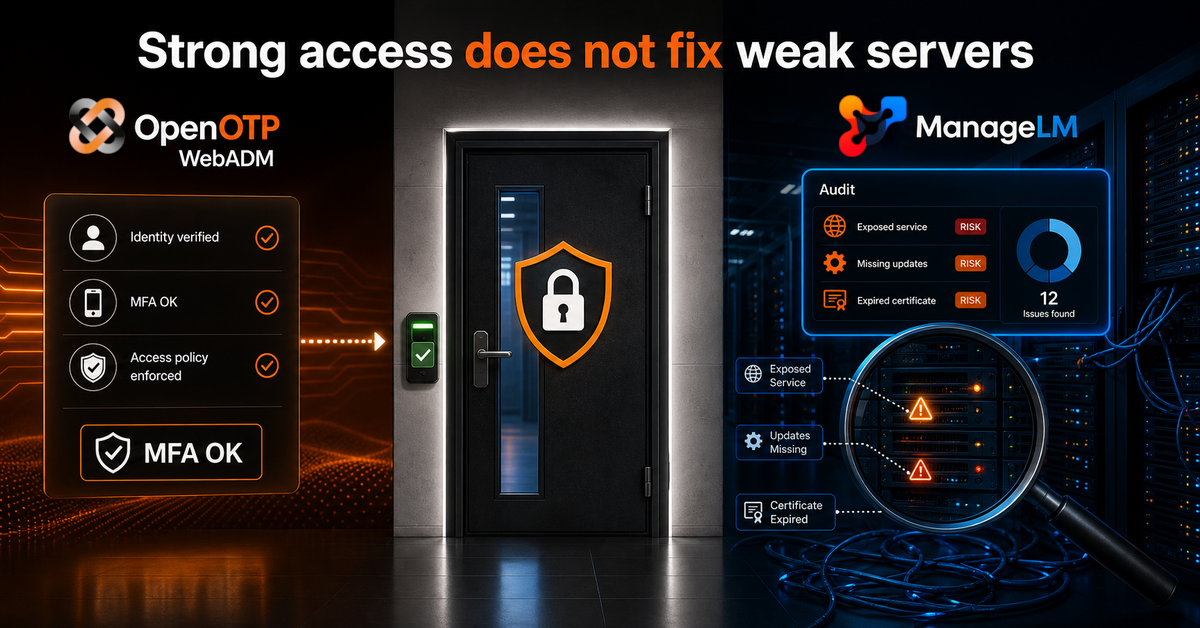
Protecting access is essential. VPN, RDP, SSO, administrator consoles and sensitive internal applications should not rely on passwords alone. Strong authentication, clear access policies and centralized identity controls reduce the chance that a stolen password becomes a direct path into the environment.
But access control answers only one part of the security question. It helps determine who can enter, through which path, with which authentication method and under which policy. It does not automatically answer another question that matters just as much: what is the state of the system behind that access?
A server can sit behind MFA and still be fragile. It may expose services that no longer have a business reason to run. It may contain vulnerable packages, expired certificates, weak SSH settings, excessive sudo rules, privileged local accounts or undocumented configuration changes. In that case, the front door is better protected, but the room behind it still needs attention.
This distinction matters because many organizations start by strengthening the most visible entry points. That is a good move. OpenOTP and WebADM fit this access layer by helping teams centralize MFA and authentication policies. They bring those controls into practical paths such as VPN, RDP and SSO, without turning each integration into a separate security island. The goal is to make access harder to abuse and easier to govern.
ManageLM adds the complementary operational view. It helps teams look at the systems themselves. Are services exposed? Are updates missing? Are privileges or certificates drifting? This does not make server hygiene automatic. It makes weak points easier to see, prioritize and review before they become accepted background noise.
The practical lesson is not that access security is insufficient. It is that access security works better when it is connected to infrastructure reality. If an administrator connects through a protected RDP path, the organization should still know whether the target server is patched, monitored and configured correctly. If VPN access is controlled, teams should still know which internal systems are reachable and whether those systems carry avoidable risk.
Strong access reduces exposure at the entry point and healthy servers reduce exposure after entry. A credible security strategy needs both: control who gets in, then verify what they can reach.
메타데이터
- post_id
- 2ab3ae30f2d1
- slug
- strong-access-does-not-fix-weak-servers-2ab3ae30f2d1
- url
- https://medium.com/@eric.james_36772/strong-access-does-not-fix-weak-servers-2ab3ae30f2d1
- canonical_url
- https://medium.com/@eric.james_36772/strong-access-does-not-fix-weak-servers-2ab3ae30f2d1
- author_url
- https://medium.com/@eric.james_36772
- status
- ok
- fetched_at
- 2026-07-13 10:48:08



