The Psychology of Overthinking
How the Mind Turns Possibilities Into Problems
The Psychology of Overthinking
How the Mind Turns Possibilities Into Problems

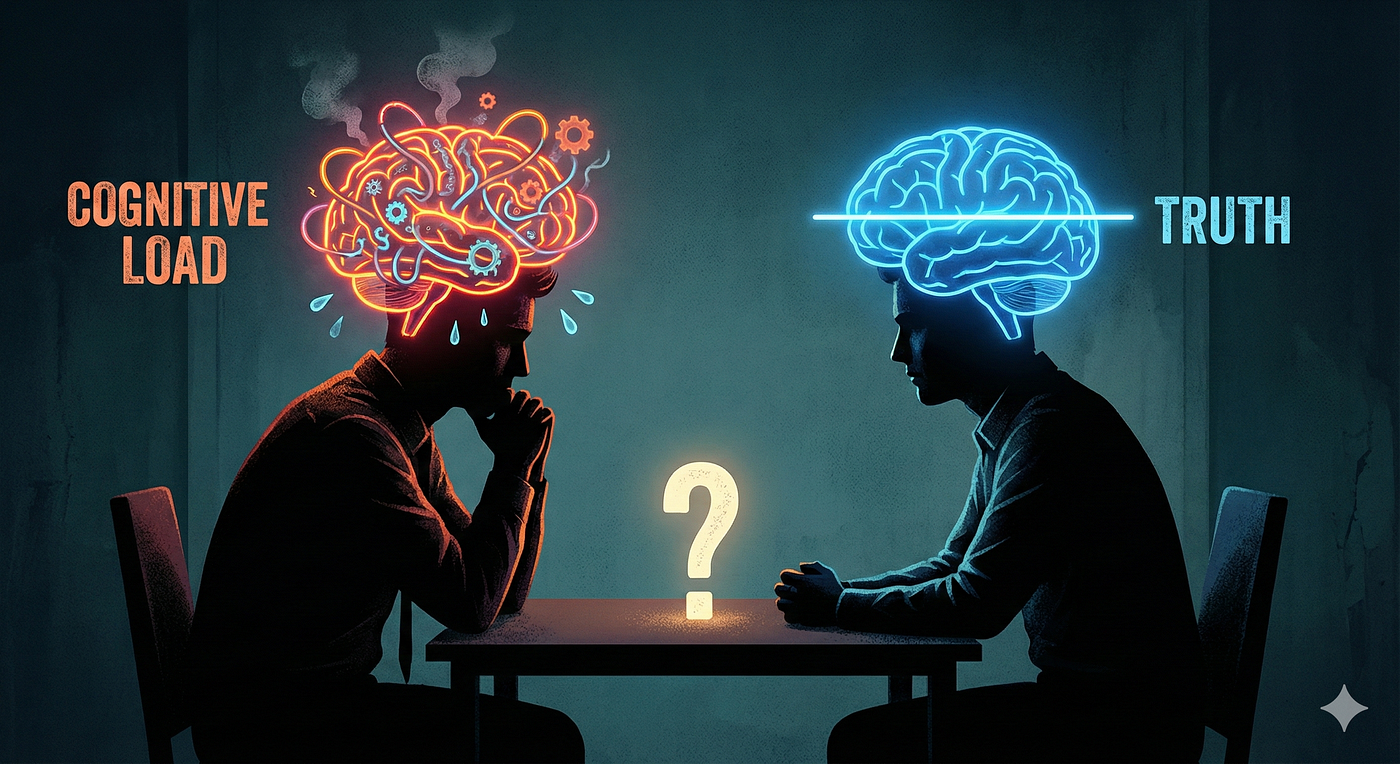
Imag credit:
At 11:43 PM, I found myself staring at a message I had read at least ten times.
The reply wasn’t rude. It wasn’t cold. It wasn’t even unusual.
Yet my mind had already started creating stories.
“Maybe they’re upset.”
“Maybe I said something wrong.”
“Maybe I’ve ruined the relationship.”
By midnight, I had imagined scenarios that hadn’t happened, conversations that never took place, and problems that didn’t exist.
If you’ve ever done something similar, you’re not alone.
Overthinking is one of the most common mental habits people struggle with. What’s fascinating is that it rarely begins with a problem. It usually begins with a possibility.
A possibility becomes a question.
A question becomes a concern.
And before we realize it, that concern has transformed into a full-blown problem inside our minds.
Why Our Brains Do This
Most people think overthinking happens because we care too much.
Psychologically, the reason is a little different. Our brains are designed to predict danger. Thousands of years ago, this ability helped humans survive. Being alert to threats meant staying alive. Today, however, most of us aren’t worried about predators hiding in the dark.
We’re worried about job interviews, relationships, social situations, and uncertain futures.
The brain still treats uncertainty as a threat, and when it encounters uncertainty, it starts searching for answers. The problem is that some questions don’t have immediate answers.
Will they like me?
Did I make the right choice?
What if I fail?
The brain hates not knowing, so it keeps thinking, and thinking…and thinking.
The Comfort of Control
Overthinking often feels productive.
When we’re lying awake at night analyzing every detail of a situation, it can feel like we’re solving something. In reality, we’re often trying to gain a sense of control. We believe that if we think long enough, we’ll find the perfect answer. The perfect decision.
The perfect outcome, but life doesn’t work that way. No amount of thinking can guarantee success. No amount of worrying can prevent every mistake, and no amount of analyzing can remove uncertainty from the future.
Yet we continue because thinking gives us the illusion that we’re doing something useful.
When Thinking Stops Helping
There is a difference between thinking and overthinking.
Thinking leads to decisions, while overthinking delays them; Thinking helps us understand a situation, overthinking keeps us trapped inside it.
One moves us forward, the other keeps us standing still. Many overthinkers aren’t struggling because they lack answers; they’re struggling because they’re searching for certainty, and certainty is something life rarely provides.
The Stories We Tell Ourselves
One of the strangest things about overthinking is how convincing it can be.
A friend takes longer than usual to reply, and suddenly, your mind fills in the blanks.
They’re angry.
They’re losing interest.
Something is wrong.
The brain would rather create a story than accept uncertainty, even if that story causes stress, even if it’s completely wrong, and that’s why overthinking can feel so exhausting.
You’re not just dealing with reality. You’re dealing with dozens of imagined versions of reality at the same time.
Learning to Live With Uncertainty
The solution to overthinking isn’t to stop thinking altogether. It’s learning to tolerate uncertainty, accepting that not every question needs an immediate answer, that not every decision will be perfect, and that not every outcome can be predicted.
At first, this feels uncomfortable.
But over time, it becomes freeing, because peace doesn’t come from figuring everything out. It comes from realizing that you don’t have to.
The next time you catch yourself replaying a conversation, imagining worst-case scenarios, or searching for answers that aren’t available yet, pause for a moment and ask yourself:
“Am I solving a problem, or am I trying to escape uncertainty?”
Sometimes that single question is enough to break the cycle, and sometimes the most powerful thing you can do is allow life to remain uncertain — and move forward anyway.
Edited for Word Garden by Wandering Mind
메타데이터
- post_id
- 2acb638b7a67
- slug
- the-psychology-of-overthinking-2acb638b7a67
- url
- https://medium.com/word-garden/the-psychology-of-overthinking-2acb638b7a67
- canonical_url
- https://medium.com/word-garden/the-psychology-of-overthinking-2acb638b7a67
- author_url
- https://medium.com/@Cheezo911
- status
- ok
- fetched_at
- 2026-06-26 21:52:29