The “Rough Sex” Defense
12 women accused him, then 12 more defended him
The “Rough Sex” Defense
12 women accused him, then 12 more defended him
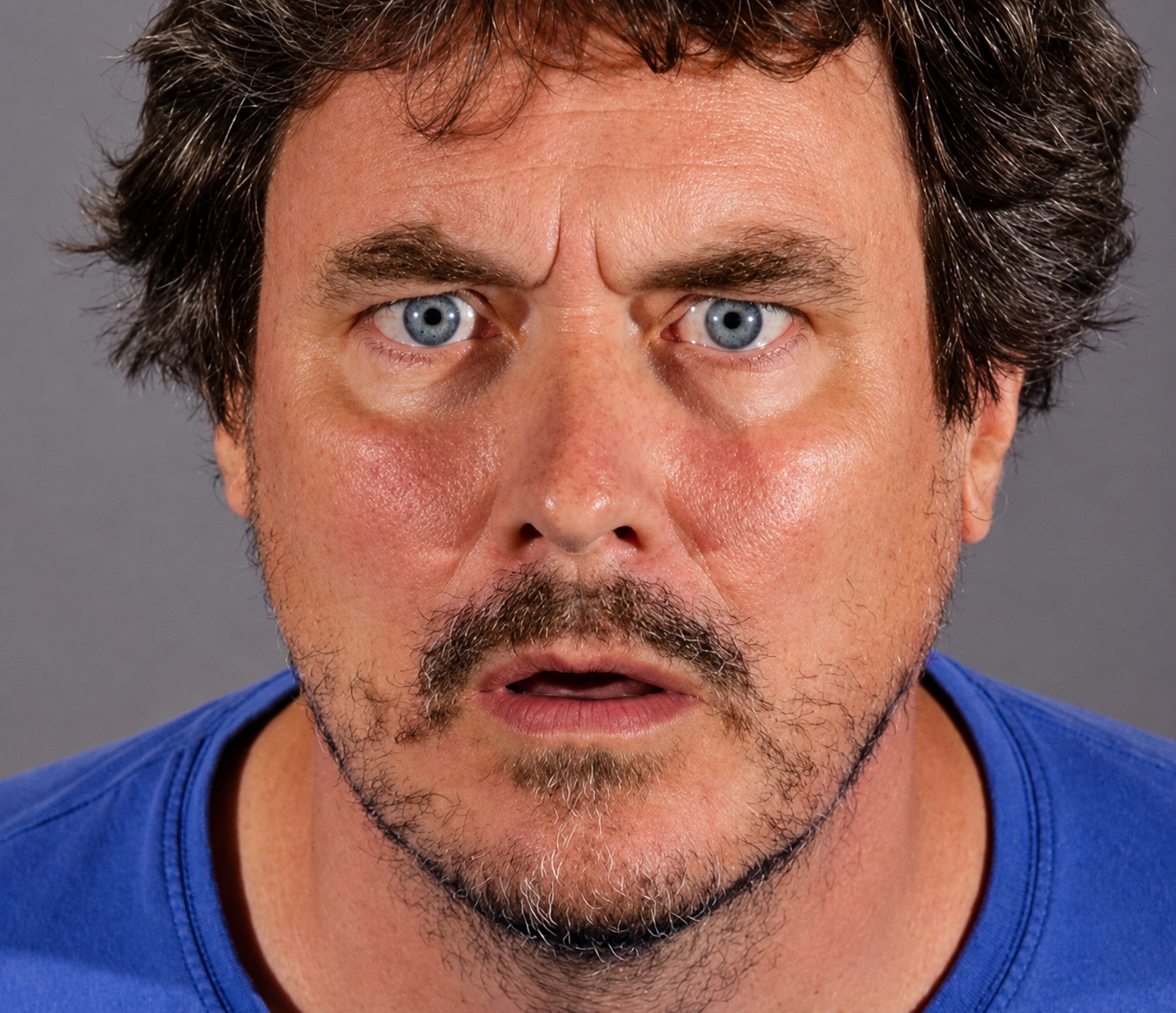
Gabriel Olds Mugshot
Gabriel Olds is facing twelve felony charges. Forcible rape. Rape of an unconscious person. Sodomy by force. Forcible oral copulation. Sexual penetration by force. Assault with intent to commit a felony. Injuring a partner. Six women, spanning a decade, describing the same pattern: a charming man who turned violent without warning and without consent.
Six more women reported that Olds pressured them into violent or kinky sex. Their accounts did not result in formal charges, but they tell the same story as the accusers'. That is twelve women, before the defense called a single witness.
Olds is a Yale graduate. An actor with credits on Six Feet Under, NCIS, Boardwalk Empire, and The Eyes of Tammy Faye, where he played Pat Robertson. He met women on dating apps, leaned on the Ivy League pedigree, and lured them into a false sense of security during initial encounters before turning violent. That is not my language. That is the language of the Los Angeles Police Department.
The LAPD detective who supervised the investigation said the same story came up again and again: Olds started off charming, then used brutal violence to carry out these rapes.
He has been held on $3.5 million bail since his arrest. If convicted, he faces life in prison.
In response, his defense brought in a dozen women to write letters on his behalf. Former lovers. Character witnesses. Women who described Olds as a practitioner of consensual rough sex, complete with graphic detail. The testimonials included lines like “best sex I have ever had” and descriptions of consensual choking and videotaping. The letters were submitted to the court in an effort to reduce his bail.
The strategy is simple. If enough women say they liked it, the women who didn’t consent start to look like outliers. Like misunderstandings. As if one group of women can consent for another.
Twenty-four women are now involved in the case in some capacity. Twelve who experienced violence. Twelve who are defending him. Some of his supporters have attended pretrial hearings. One reportedly told reporters she did not believe he did any of these things, that this is just not who she knows him to be.
And on the other side, a woman who filed for a restraining order against Olds says he choked her during sex, and although she asked him to stop, he kept going until she blacked out.
Thankfully, the judge did not lower his bail.
But the defense did what it needed to do. It put the word kink into the air. It introduced the idea that this man’s violence was a preference, not a crime. It created the impression that twelve accusers are simply women who didn’t share a sexual taste that twelve other women enjoyed.
This has a name.
It is called the rough sex defense, and it has a track record far longer than Gabriel Olds’.
The UK advocacy group We Can’t Consent to This tracked sixty cases in the United Kingdom between 1972 and 2020 where defendants claimed that a woman consented to the violence that killed her. In 45% of those cases, the result was a reduced charge, a lighter sentence, an acquittal, or the case being dropped entirely. Nearly half the time, the defense worked. The founder of the campaign, Fiona Mackenzie, put it plainly: the criminal justice system was accepting the premise that women had said, “Yes, I want to be horribly injured. I want to be hospitalized by my sex life.”
In academic terms, the legal scholar Susan Edwards described the shift this way: older excuses like “she made me lose my self-control” are being supplanted by it was just “rough sex”. It is the oldest rape myth in the book, updated for the age of kink literacy. “She asked for it” now comes with a vocabulary: kink, sex positivity, and preference. The language of consent repurposed as the language defending rape.
The UK took legislative action. The Domestic Abuse Act 2021 codified existing case law and closed the loophole. Since the law passed, researchers at We Can't Consent To This have identified no new instances of the rough sex defense being deployed in UK courts.
The United States has no equivalent legislation.
Not at the federal level, and not in California, where Olds’ case is being tried. Individual states have upgraded penalties for strangulation, and California prosecutors have gotten better at fighting the consent defense in choking cases. But the defense itself remains viable. It is not banned. It is not structurally foreclosed, the way the sexual history defense has been — if you’re unfamiliar, that’s the age-old defense of shaming an accuser's past sexual encounters. The rough sex defense is simply fought, case by case, courtroom by courtroom, with no guarantee it will not work.
And in the Olds case, it is not just an abstract legal strategy. It is twelve real women sitting in a courtroom and saying: he did this to me, too, and I was fine with it. Therefore, somehow, these other women should have been too.
That brings us to the logic problem at the center of this defense, and it is a problem so obvious it should not need to be stated. But courtrooms are not built on what should be obvious. They are built on what can be introduced. So let me state it clearly.
Consent is not transferable. Ever.
One woman’s yes does not cancel another woman’s no. The fact that twelve women had experiences with Gabriel Olds that they describe as consensual has no evidentiary bearing on whether he raped the six women who say he did. It does not disprove their accounts. It does not weaken their testimony. It does not establish a pattern of consent. It establishes a pattern of violence that some women enjoyed, and others did not consent to.
But in a courtroom, evidence does not only function logically. It functions atmospherically. And the atmosphere the defense is building is one where a jury hears that a man liked rough sex, that many women liked rough sex with him, and that therefore these other women must be confused, or lying, or simply less adventurous than the women who came before them.
This is not a new trick. It is the sexual history defense wearing a ball gag.
And the specific act at the center of this case is the one that keeps showing up everywhere: **choking**.
The accusers describe choking. The defenders describe choking. The woman with the restraining order describes choking. The only difference is that some women say it was consensual, and some say it was not. The defense rests its entire weight on treating those two categories as interchangeable.
They are not.
Researcher Debby Herbenick’s interviews with young women found that first choking experiences most often occurred without prior discussion or explicit consent, and that women described those encounters as surprising, aggressive, and scary. A 2025 probability survey of over four thousand university students found that among those who were choked during their most recent sexual encounter, many reported being unable to speak or gasping for air. “I didn’t say no” is a bankrupt defense when the act itself can steal speech.
The woman with the restraining order could not say no. She was being choked. She asked him to stop before she lost the ability to speak, and he did not stop.
Twelve other women wrote letters to a judge saying they had a great time. And that is totally irrelevant.
A jury will eventually be asked to hold both of those realities in the same room and decide which one defines Gabriel Olds. The defense is betting that volume is exoneration. That enough women saying yes will drown out the ones who said no, or who tried to say no, or who could not speak at all.
The UK saw this bet being placed in courtroom after courtroom and passed a law to take it off the table. Legislation works. The United States has not passed any.
So the bet stays on the table. And six women in Los Angeles are waiting to find out whether twelve letters from women who should have no bearing on their case will be enough to make their rapes disappear.
Note to fellow survivors: If you’re triggered or even just feeling down after reading, I wanted to provide this list of survival resources. You can also reach out to me on Substack, X, or Bluesky. I’m no therapist, but I’m happy to be a peer in survival.
For more stories about sexual violence, consent, feminism, gender justice, law, and the systems that shape women’s lives, follow Fourth Wave. Also check out our Livestreams and sign up for our Newsletter. Let’s grow the community! Have you got a story or poem that focuses on women or other targeted groups? Submit to the Wave!
메타데이터
- post_id
- 2ad8d220ff77
- slug
- the-rough-sex-defense-2ad8d220ff77
- url
- https://medium.com/fourth-wave/the-rough-sex-defense-2ad8d220ff77
- canonical_url
- https://medium.com/fourth-wave/the-rough-sex-defense-2ad8d220ff77
- author_url
- https://medium.com/@anonadeaux
- status
- ok
- fetched_at
- 2026-07-10 23:26:47