I spent years designing software. Then I started designing around a human body.
A few weeks ago, I took on a project in healthtech wearables.
I spent years designing software. Then I started designing around a human body.
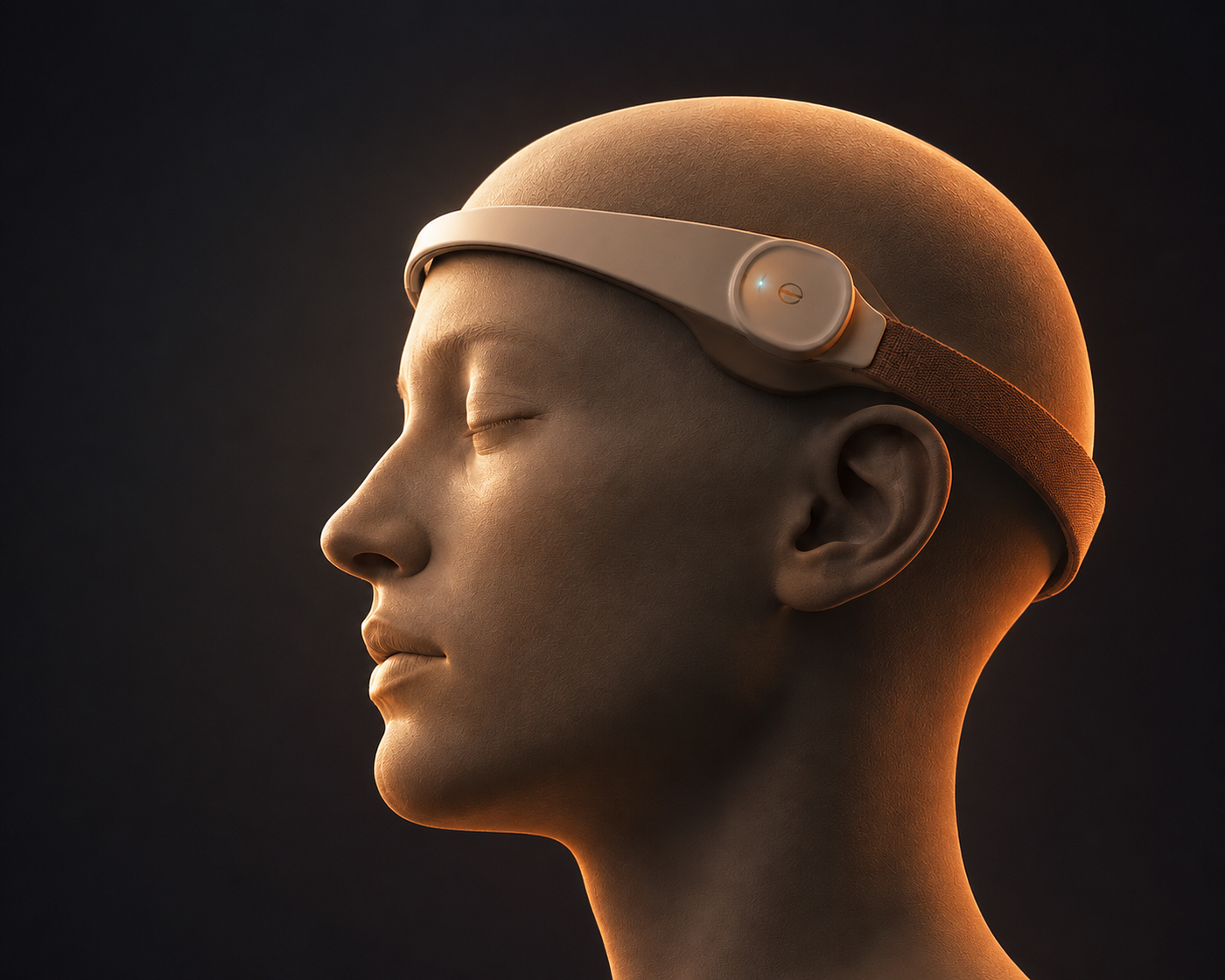
A few weeks ago, I took on a project in healthtech wearables.
The contract itself is roughly 3x smaller than what I would normally take.
I still said yes almost immediately.
I’ve spent the last several years mostly around GTM tools — products where the world you’re designing for largely exists inside a browser. Users have jobs to complete, workflows to move through, data to manipulate, decisions to make, and ultimately some business outcome to reach.
I’ve wanted to work on products like WHOOP or Oura for a long time because I suspected designing for wearables would be fundamentally different.
It is.
And the biggest difference isn’t the UI.
It’s that software is no longer the boundary of the product.
Your product starts with physics
In SaaS, when you want to introduce a new capability, the conversation usually starts somewhere around product value, engineering complexity, data availability, and business impact.
With a wearable, there’s another layer underneath all of that:
Can the device actually know this?
You’re constrained by sensors. Their accuracy. Sampling frequency. Placement. Power consumption. Hardware architecture. Battery life. Signal quality. The conditions under which measurements are taken.
At some point, our PM and I weren’t discussing screens at all.
We were researching sensors.
What exists? What can replace the current one? What information can each sensor realistically provide? What tradeoffs does that introduce elsewhere?
Suddenly product discovery extends from Figma, analytics, user interviews, and code into electronics, physiology, hardware documentation, research papers, and signal processing.
That’s a very different playground.
Then the physical world starts fighting back
A person doesn’t “use” a wearable the same way they use a SaaS product.
They live with it.
They sleep with it.
Train with it.
Shower.
Travel.
Forget to charge it.
Take it off.
Put it back on.
Wear it incorrectly.
Have good days and terrible days.
And every one of those things can become a product variable.
Battery consumption isn’t just an engineering metric anymore. It affects behavior, data continuity, predictions, and eventually the credibility of the product itself.
If someone removes the device every three days to charge it, what data disappears?
If they forget to put it back on, what happens to tomorrow’s recommendation?
If measurements are incomplete, how confident should the product sound?
You’re not simply digitizing a workflow anymore.
You’re translating someone’s physical life into a digital model of that life.
And that changes the responsibility of design.
A recommendation isn’t just another UI state
This part has probably been the most interesting to me.
In a business product, I can tell someone:
“Your lead hasn’t replied.”
“Complete this step.”
“Your conversion dropped.”
“Send this invoice.”
There is usually a fairly explicit job behind the interaction.
Health products are different.
Imagine opening an app in the morning and seeing that your recovery is poor.
How should the product communicate that?
“You recovered poorly.”
“Take it easy today.”
“Here’s what might have affected your recovery.”
Those aren’t just three copy variations.
They’re three different relationships between a product and a human.
One behaves like a dashboard.
One behaves like a coach.
One can very easily start behaving like a cop.
And I don’t want to design a cop that lives on someone’s wrist and tells them every morning what they did wrong.
That makes emotional design much more than visual polish.
Color, language, hierarchy, timing, confidence, uncertainty, encouragement — all of it shapes how someone interprets their own body.
This is where the project became especially interesting
The team isn’t building just another bracelet.
They’re building an ecosystem.
Alongside the wearable, they’re working with additional devices that can capture neurological signals and interact with different aspects of a person’s physiological state.
That changes the problem significantly.
One wearable gives you a window into a person.
Multiple complementary signals can start giving you context.
And context matters because individual measurements are noisy.
The more complete the picture becomes, the more interesting the product questions become:
What do we know?
What do we think we know?
How confident are we?
What changed compared with this person’s own baseline?
What should we communicate?
And when should we say nothing at all?
That’s where I think a lot of the future of this category sits.
Not in collecting another metric.
But in turning multiple imperfect signals into a useful understanding of an individual over time.
It also changed how I think about “value”
In SaaS, there are many ways to create commercial value.
Add functionality. Remove friction. Automate another workflow. Increase conversion. Expand the product surface. Unlock another use case.
With a health wearable, inventing another feature isn’t automatically valuable.
You have to keep coming back to a much harder question:
Does this actually help the person understand or improve something about their real life?
If it doesn’t, it’s probably noise.
That makes communication design unusually important.
What you say.
What you don’t say.
How certain you sound.
Which information deserves attention.
Which information should stay in the background.
What emotional response the interface creates.
I’ve worked in service design before, so designing beyond the boundaries of a screen isn’t entirely new to me.
But this feels different.
The unit of design has changed.
I’m not designing around a workflow that starts when someone opens an application and ends when they complete a task.
I’m designing around a person who goes to sleep, wakes up, works, trains, gets stressed, recovers, forgets things, changes habits — while the product quietly observes fragments of that life.
Maybe that’s the biggest shift for me:
In SaaS, we often design software around what users are trying to do.
In wearables, we’re designing software around what humans are actually doing — whether they’re looking at the screen or not.
And that is a much bigger design surface than I expected.
ProductDesign #HealthTech #Wearables #UXDesign #DigitalHealth
메타데이터
- post_id
- 2aed82126bb3
- slug
- i-spent-years-designing-software-then-i-started-designing-around-a-human-body-2aed82126bb3
- url
- https://medium.com/@booorlak/i-spent-years-designing-software-then-i-started-designing-around-a-human-body-2aed82126bb3
- canonical_url
- https://medium.com/@booorlak/i-spent-years-designing-software-then-i-started-designing-around-a-human-body-2aed82126bb3
- author_url
- https://medium.com/@booorlak
- status
- ok
- fetched_at
- 2026-08-16 08:01:07



