Lake Mead Just Crossed Another Warning Line. What Southern Nevada Needs To Understand Next.
By Raffi Doumanian
Lake Mead Just Crossed Another Warning Line. What Southern Nevada Needs To Understand Next.
By Raffi Doumanian
Lake Mead is once again becoming one of the most important stories in the American Southwest, and the conversation extends far beyond boat ramps, fishing reports, and drought headlines. The reservoir that supports water deliveries, hydroelectric generation, tourism, recreation, and economic activity across multiple states recently dropped below a critical threshold that triggered additional water conservation measures throughout the Colorado River system. While sensational headlines often create unnecessary panic, the reality deserves serious attention because the long-term direction of Lake Mead affects Southern Nevada’s future in ways most residents rarely consider.
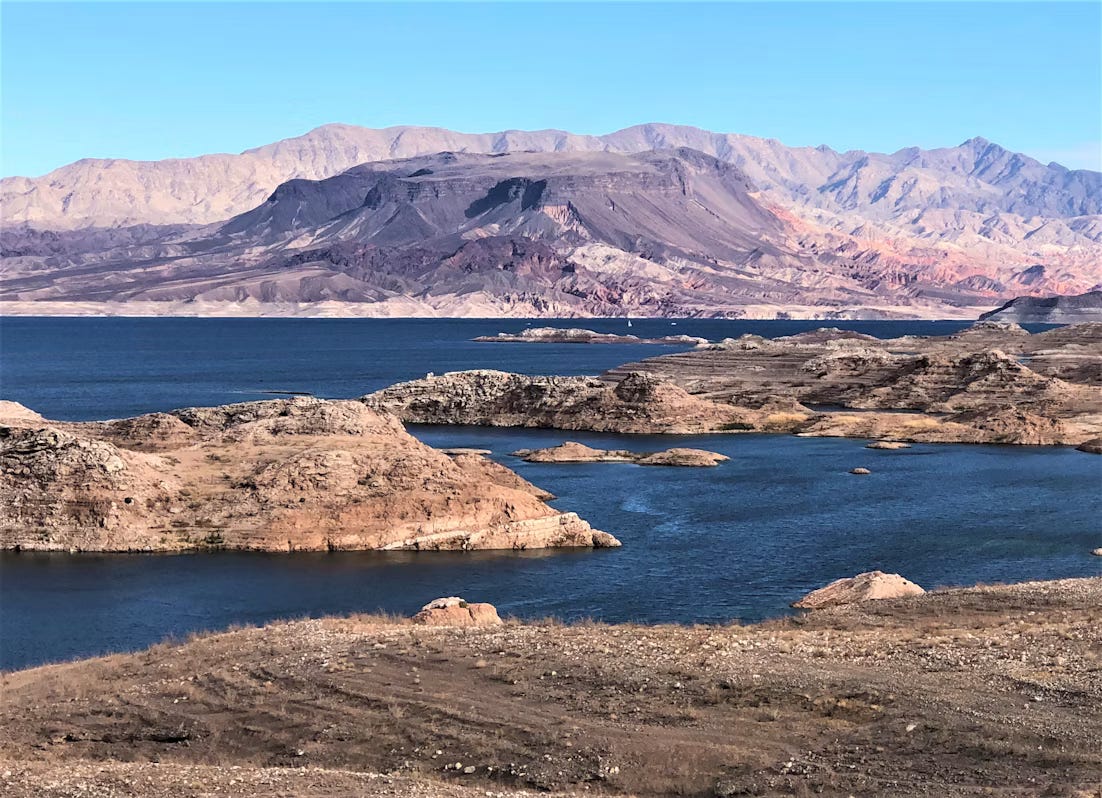
Standing along the shoreline today reveals a landscape that looks dramatically different from what longtime residents remember. Areas that were once waterfront destinations now sit far from the water’s edge. Historical markers installed around portions of the lake show where water levels stood decades ago, providing a visual reminder of how much storage capacity has been lost over time. Former marinas, recreational areas, and shoreline infrastructure continue adapting as the reservoir gradually retreats.
One of the biggest misconceptions surrounding Lake Mead is that the region is about to run completely out of water. That claim is inaccurate. Southern Nevada has invested billions of dollars into water security projects, including a deep-water intake system designed specifically to continue accessing water even during periods of historically low reservoir levels. The more realistic concern involves increasing restrictions, reduced flexibility within the Colorado River system, growing pressure on water management agencies, and the economic consequences that accompany prolonged shortages.
The current situation became more significant when Lake Mead dropped below the elevation associated with Tier 2 shortage conditions. Under existing agreements, water users throughout Nevada, Arizona, California, and Mexico face additional conservation requirements when these thresholds are crossed. These reductions are intended to preserve reservoir storage and reduce stress on the overall system. While most Las Vegas residents will not immediately notice changes coming from their faucets, regional water managers are paying close attention because every decline reduces the margin for future flexibility.
The issue extends beyond drinking water. Hoover Dam remains one of the Southwest’s most important sources of renewable hydroelectric power. As reservoir elevations fall, power generation becomes less efficient. Current projections suggest that continued declines could significantly reduce electricity production capacity. When low-cost hydroelectric generation decreases, utilities often need to replace that power through alternative sources that may carry higher operating expenses. That can eventually influence energy costs for households, businesses, and municipalities throughout the region.
For Las Vegas, Henderson, Summerlin, North Las Vegas, Boulder City, and surrounding communities, water availability remains directly connected to long-term growth. Southern Nevada continues attracting residents from California, Washington, Oregon, Arizona, Texas, Florida, and other states. Population growth creates demand for housing, infrastructure, healthcare facilities, commercial development, schools, transportation improvements, and public services. Every one of those conversations eventually returns to a single question: can the region sustainably support future growth while managing finite resources?
What often gets overlooked is how effective Southern Nevada has become at conservation. Despite decades of population growth, water consumption has not increased at the same pace. Aggressive turf removal programs, water recycling systems, conservation incentives, smart planning strategies, and infrastructure investments have allowed the region to use water more efficiently than many cities with far greater rainfall. This is one reason water experts frequently point to Las Vegas as an example of large-scale urban conservation done correctly.
The real challenge lies upstream. Lake Mead does not exist independently. It depends on water flowing through the Colorado River Basin, which stretches across multiple states and relies heavily on mountain snowpack. Reduced runoff, prolonged drought conditions, changing weather patterns, and increasing demand have all contributed to the reservoir’s long-term decline. Solving the issue requires cooperation between states, federal agencies, agricultural users, municipalities, tribes, and international partners. No single community controls the outcome.
As someone who follows Southern Nevada development closely, I believe this conversation matters because infrastructure and resource management influence nearly every aspect of the local economy. Housing construction depends on long-term planning. Commercial investment depends on confidence in regional stability. Business relocation decisions depend on infrastructure capacity. Major employers evaluate these factors before committing capital to any market. Water security remains one of the most important pieces of that equation.
Tourism also plays a role. Lake Mead National Recreation Area attracts millions of visitors annually while supporting boating, fishing, camping, hiking, and outdoor recreation throughout Clark County. As water levels change, marinas, launch ramps, and recreational facilities require constant adjustments to remain operational. Construction crews continue extending ramps and modifying infrastructure simply to maintain access. Those projects represent both the challenges and adaptability that define Southern Nevada.
One of the more fascinating aspects of declining water levels is the history being uncovered. Sunken vessels, former marina structures, military artifacts, and long-submerged objects periodically emerge as shorelines retreat. These discoveries provide a visual timeline of Lake Mead’s transformation while reminding residents how dramatically conditions have changed over the last several decades.
The broader economic implications deserve attention as well. Water availability affects development planning. Energy production influences utility costs. Population growth increases demand for services. Infrastructure projects require long-term certainty. Investors, developers, policymakers, and residents all share an interest in maintaining a stable and reliable resource system. That reality makes Lake Mead more than an environmental story. It is an economic story, a housing story, and a regional planning story.
At the same time, fear-driven narratives rarely help anyone understand the situation. Claims that Southern Nevada is about to become uninhabitable ignore decades of engineering, planning, conservation efforts, and infrastructure investment. The region faces challenges, but it also possesses some of the most advanced water management systems in the country. Both realities can exist at the same time.
The more productive approach is focusing on facts. Reservoir levels remain historically low. Conservation remains important. Infrastructure investments remain necessary. Long-term planning remains essential. Southern Nevada continues growing, but that growth requires responsible stewardship of resources that support millions of people throughout the Southwest.
For Las Vegas residents, homeowners, business owners, and prospective buyers, Lake Mead serves as a reminder that regional planning matters. The future of Southern Nevada will not be determined by a single season, a single storm, or a single drought cycle. It will be shaped by the decisions communities make regarding conservation, infrastructure, development, and resource management over the coming decades.
Why is Lake Mead important to Las Vegas?
Lake Mead supplies water to Southern Nevada, supports recreation, contributes to hydroelectric generation, and plays a major role in regional economic stability.
What does a Tier 2 water shortage mean?
Tier 2 conditions trigger additional conservation requirements and reduced water allocations for certain users throughout the Colorado River system.
Will Las Vegas run out of water?
Southern Nevada has invested heavily in water security infrastructure, including deep-water intake systems designed to maintain access during low reservoir conditions.
How does Lake Mead affect real estate?
Water security influences development planning, housing construction, investor confidence, infrastructure expansion, and long-term economic growth.
Why are water levels continuing to decline?
Reduced snowpack, prolonged drought conditions, increased demand, and changing climate patterns have all contributed to lower reservoir levels.
Can Hoover Dam still generate electricity?
Yes, but lower reservoir elevations reduce generation efficiency and can impact future power production capacity.
Why are boat ramps constantly being extended?
Declining water levels require marinas and launch facilities to adapt in order to maintain safe access for recreational users.
How does Lake Mead impact the local economy?
The reservoir supports tourism, recreation, energy production, infrastructure planning, and regional growth throughout Southern Nevada.
What is the Colorado River Basin?
The Colorado River Basin is the larger watershed system that supplies water to multiple western states and helps replenish Lake Mead.
Why does Lake Mead matter for future growth?
Long-term development, population expansion, housing construction, and business investment all depend on reliable infrastructure and resource planning.
Colorado River Basin: The interconnected river system supplying water throughout much of the American Southwest.
Tier 2 Shortage: A conservation threshold that triggers additional water-use reductions under Colorado River agreements.
Hydroelectric Generation: Electricity produced through flowing water moving turbines within facilities such as Hoover Dam.
Water Security: The ability of a region to maintain reliable access to water resources during changing environmental conditions.
Infrastructure Planning: Long-term development of systems such as utilities, transportation, water delivery, and public services.
Conservation Measures: Programs and policies designed to reduce resource consumption and improve efficiency.
Reservoir Storage: The amount of water retained within a lake or reservoir for future use.
Sustainable Growth: Development that balances economic expansion with long-term resource management.
This article reflects the personal opinions and observations of Raffi Doumanian regarding Lake Mead, Southern Nevada growth, water resources, infrastructure planning, and regional economic trends. The information provided is for educational and informational purposes only and should not be considered legal, financial, tax, engineering, environmental, investment, or real estate advice. Readers should independently verify information and consult qualified professionals regarding specific decisions.
Raffi Doumanian is a licensed Nevada real estate professional affiliated with Milestone Realty, License No. S.0197086. The views expressed in this article are solely those of the author and do not necessarily reflect the views of Milestone Realty.
메타데이터
- post_id
- 2afcb061a619
- slug
- lake-mead-just-crossed-another-warning-line-what-southern-nevada-needs-to-understand-next-2afcb061a619
- url
- https://medium.com/@raffidoumanian/lake-mead-just-crossed-another-warning-line-what-southern-nevada-needs-to-understand-next-2afcb061a619
- canonical_url
- https://medium.com/@raffidoumanian/lake-mead-just-crossed-another-warning-line-what-southern-nevada-needs-to-understand-next-2afcb061a619
- author_url
- https://medium.com/@raffidoumanian
- status
- ok
- fetched_at
- 2026-07-13 06:23:13