Even If You Don’t Live With Someone With Heart Disease, You Should Learn CPR
A social event reminded me how important it is to know basic cardiac life support.
Even If You Don’t Live With Someone With Heart Disease, You Should Learn CPR
A social event reminded me how important it is to know basic cardiac life support.
Photo by www.testen.no on Unsplash
Six of us were out to dinner a few years ago. One of the men was a retired cardiologist I had practiced with. Somewhere between appetizers and entrees, we heard a commotion outside of the room where we were dining, and a waitress poked her head inside.
“Is there a doctor here?” She asked.
“Yes, two of us,” I answered.
“Could you come outside for a minute? Someone has passed out.”
Sam (not his real name) and I locked eyes, and without a moment’s hesitation, rushed out to a chaotic scene. A large man was lying on the floor unresponsive. He was not breathing. We sprang into action and shook him, but he gave no response. There was no indication that he was having a seizure.
Since the most common cause of an unresponsive patient in a restaurant is choking on food, I asked his tablemates if he had been coughing or choking. They said no. I could not check his mouth or throat as his jaws were clamped closed. I shouted to everyone to call 9–1–1 immediately.
I checked his carotid (neck) artery for a pulse and found none. Sam was at his head, and we agreed that basic cardiac life support or resuscitation was indicated. He began mouth-to-mouth breathing, and I began closed-chest cardiac massage.
It seemed like only one to two minutes, but the man quickly awakened, his pulse returning, and his breathing became spontaneous. Disoriented and agitated, he began to struggle, and we asked observers to help keep him from getting up. Fortunately, within only a few minutes, the paramedics arrived, and he was transferred to a stretcher and taken to the nearest hospital.
We never did find out what happened. However, this is a cautionary tale about why everyone should learn CPR.
In the US, someone experiences an out-of-hospital cardiac arrest — becoming unresponsive and requiring CPR — roughly every 90 seconds. This equates to about 350,000 cases annually. Because nearly 88% of these medical emergencies happen at home, a bystander is usually a family member, spouse, or friend.
Family members who include someone with heart disease should know how to perform CPR. Bystander CPR is quite important because, without adequate blood circulation to the brain, irreversible damage can start within a few (5–10) minutes. Thus, cardiac massage is the number one most important step to take after the heart stops.
The Evolution of CPR
This is a wonderful compendium of the CPR history through the ages.
1500s
Resuscitation was attempted via a bellows inserted into the mouth of unresponsive patients. This “Bellows Method “was first used by Swiss physician Paracelsus.
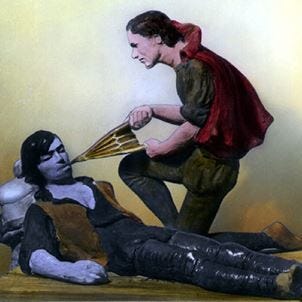
Courtesy of the American Heart Association
1732
In Alloa, Scotland, local surgeon William Tossach used mouth-to-mouth breaths to revive a suffocated coal-pit miner. Dr. Tossach documented the success 12 years later, in what was the first clinical description of mouth-to-mouth resuscitation in medical literature.
1740
The Academie des Sciences in Paris officially recommends mouth-to-mouth resuscitation for reviving victims of drowning
1775
While experimenting with animals, Danish veterinarian Peter Abildgaard discovers that after shocking a chicken to death, countershocks to the chest could restore a heartbeat.
1856
London physician Marshall Hall introduces his simple resuscitation technique: alternately repositioning the patient from face up to side. He updates the approach by adding pressure on the thorax (chest).
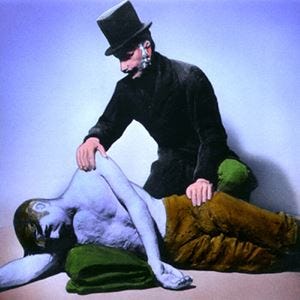
The Hall Method
1858
Henry Silvester, another London physician, created the chest-pressure arm-lift method: raise the patient’s arms up to expand the chest, then cross the arms over the chest to apply expiratory pressure
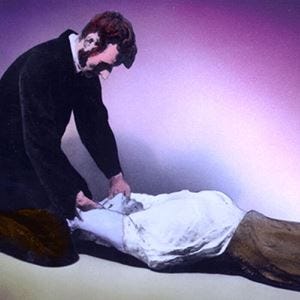
The Silverster Method
1878
In Germany, Rudolph Boehm showed that external compressions of the heart provide adequate circulation in cats.
1891
The first use of external chest compressions to manually pump the heart (and circulate blood) was pioneered by German surgeon Dr. Friedrich Maass, who performed the first documented closed-chest cardiac compressions on humans.
1933
Researchers at Johns Hopkins University, led by electrical engineer William Kouwenhoven, PhD, accidentally rediscovered external compressions when they found that pressure on a dog’s sternum provides adequate circulation to the brain to keep the animal alive until defibrillation can restart its heart. Their results were confirmed in more than 100 dogs.
A canine patient in Kouwenhoven’s lab was revived by the team’s experimental combo: external chest compressions and defibrillation (electrical shock).
1947
In Cleveland, Ohio, cardiothoracic surgeon Dr. Claude Beck performs the first successful use of an electric defibrillator on an exposed human heart during surgery.
1956
Dr. Elam and Dr. Peter Safar proved that mouth-to-mouth resuscitation is an effective lifesaving method. Drs. Elam, Safar, and Archer Gordon played leading roles in promoting rescue breathing to professional healthcare providers and the public alike.
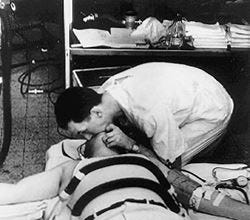
For the first time in human medicine, an external defibrillator successfully restores a steady rhythm to a quivering heart. Harvard cardiologist Dr. Paul Zoll leads the study with funding from the American Heart Association (AHA).
1957
After several years of research on closed-chest defibrillation, Dr. Kouwenhoven’s team at John’s Hopkins, which includesd James Jude, MD, and Guy Knickerbocker, PhD, unveils its prototype of the first portable external defibrillator (on a wheeled cart): the 200-lb Hopkins Closed Chest Defibrillator.
However, the “modern” breakthrough date was 1960. Resuscitation pioneers Drs. Kouwenhoven, Safar, and Jude combine mouth-to-mouth breathing with chest compressions to create cardiopulmonary resuscitation, the lifesaving actions we now call CPR. The AHA starts a program to acquaint physicians with closed-chest cardiac resuscitation, which becomes the forerunner of CPR training for the general public.
1972
In Seattle, University of Washington cardiologist Dr. Leonard Cobb launches Medic II, the world’s first mass citizen training in CPR. During its first 2 years, the program helped train more than 100,000 people.
1990s
Public access defibrillation programs provide training and resources, including AEDs, to the public so that they can help resuscitate victims of cardiac arrest.
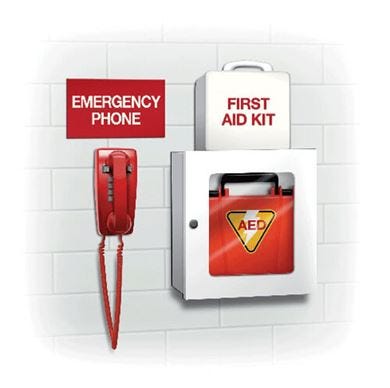
2008 — Simpler CPR for bystanders
The AHA releases new recommendations that bystanders who are untrained, unwilling or unable can use Hands‐Only CPR to help an adult or teen who collapses suddenly, delaying rescue breaths until help arrives. The change reflects findings from multiple studies by Dr. Gordon Ewy and colleagues showing that uninterrupted, high-quality chest compressions without rescue breaths can be lifesaving in the first minutes of a sudden cardiac arrest.
Saving Lives By The Numbers
Immediate bystander CPR can double or triple the chances of survival for someone experiencing cardiac arrest. Because survival chances drop by 10% for every minute without intervention, immediate chest compressions circulate critical oxygen to the brain and organs while waiting for first responders.
The use of an AED (Automatic External Defibrillator) has been a game-changer in CPR. Widespread deployment and immediate bystander use of an AED can save between 40,000 and 100,000 additional lives each year in the United States alone. While current bystander use of public AEDs saves roughly 1,700 lives annually, maximizing public access and intervention rates bridges a major survival gap.
TIME=BRAIN FUNCTION
Since irreversible brain damage starts in less than ten minutes, it is imperative that more laypeople near an unresponsive and collapsed individual know how to perform CPR. For one person only, chest compression without mouth-to-mouth resuscitation (MTMR) has been shown to be almost as effective as the two techniques together. If the heart restarts pumping, the lungs usually follow.
From a practical standpoint, many people are reluctant to try MTMR on a stranger due to the risk of communicable diseases and poor sanitation. Tremendous progress has been made with closed-chest massage alone and the growing availability of AEDs in public places. Once the AED is opened, simple auditory directions are given to the rescuer.
In summary, if you have a family member with heart disease, it is essential that you know CPR. Contacting your local American Red Cross or AHA will provide you with course information. Even if no one in your family has a heart problem, you could be the one person to save a life with knowledge of this technique.
I am a retired MD passionate about health, medicine, gardening, culture, and food.
Get an email whenever I publish by clicking this link:
https://davidmokotoff.medium.com/subscribe
I will never spam you or give out your address.
Check out my Substack.
Other earlier attempts to restart breathing included turning pa
메타데이터
- post_id
- 2b3631378326
- slug
- even-if-you-dont-live-with-someone-with-heart-disease-you-should-learn-cpr-2b3631378326
- url
- https://medium.com/@davidmokotoff/even-if-you-dont-live-with-someone-with-heart-disease-you-should-learn-cpr-2b3631378326
- canonical_url
- https://medium.com/@davidmokotoff/even-if-you-dont-live-with-someone-with-heart-disease-you-should-learn-cpr-2b3631378326
- author_url
- https://medium.com/@davidmokotoff
- status
- ok
- fetched_at
- 2026-06-09 15:37:30