Stop Trashing Broken Power Tools: The 20-Minute “Guts Swap” That Saves Hundreds
A cracked DeWalt drill housing isn’t a death sentence. Here is why embracing the Right to Repair is your wallet’s best friend.
Stop Trashing Broken Power Tools: The 20-Minute “Guts Swap” That Saves Hundreds
A cracked DeWalt drill housing isn’t a death sentence. Here is why embracing the Right to Repair is your wallet’s best friend.
Every tradesman, DIYer, and contractor knows the sound. You leave your drill balancing on a ladder rung, turn your back for two seconds, and hear that sickening plastic crunch as it hits the concrete floor.
When you walk over and pick up your premium 20V brushless drill — like the legendary DeWalt DCD996 — the heavy metal chuck is usually fine. The motor still spins. But the plastic handle? Split right down the middle, or completely shattered near the battery rail.
For decades, the immediate reaction to a cracked tool shell has been to either wrap it in half a roll of duct tape or begrudgingly order a brand new bare tool for $160+.
Both of these reactions are a mistake. We need to talk about the throwaway culture of modern hardware, the hidden dangers of the “duct tape fix,” and how a simple 20-minute repair can resurrect your favorite tools.
The Duct Tape Trap
The instinct to grab electrical or duct tape and bind a cracked tool handle back together is universally human. It’s cheap, it’s fast, and it gets you through the afternoon. But for high-output, brushless power tools, a compromised housing is a ticking time bomb.
Here is what happens when you tape up a heavy-duty drill:
- Thermal Suffocation: Brushless motors run incredibly hot under heavy loads. The factory plastic clamshell is engineered with precise internal aerodynamic channels that pull cooling air directly over the stator. Taping over cracks and vents traps that heat inside. You are effectively baking your expensive motor to death.
- The Dust Invasion: Job sites are filled with highly conductive metal shavings and concrete dust. A crack in the casing bypasses the tool’s natural defenses, allowing this conductive debris to settle directly on the sensitive electronic trigger board, inevitably causing a short circuit.
- Structural Failure Under Torque: A hammer drill generates massive torque. When you are driving a long lag bolt, a cracked handle will flex. Eventually, it will separate completely in your hand while spinning at high RPMs — a serious safety hazard.
If the structural shell is busted, the tool is actively destroying itself.
The Elegance of the “Guts Swap”
Here is the secret the big box hardware stores don’t advertise: when you drop a modern brushless drill, 90% of the expensive internal components survive the impact perfectly. The heavy metal planetary gearbox, the copper-wound stator, and the trigger mechanism are built like tanks.
You don’t need a new drill. You just need a new empty plastic shell.
This process is known in the repair community as a “guts swap.” By purchasing an OEM-spec replacement casing, you simply open the broken drill, lift out the internal hardware as one connected piece, and drop it into the new plastic structure.
A Practical Guide: Re-Shelling the DeWalt DCD996
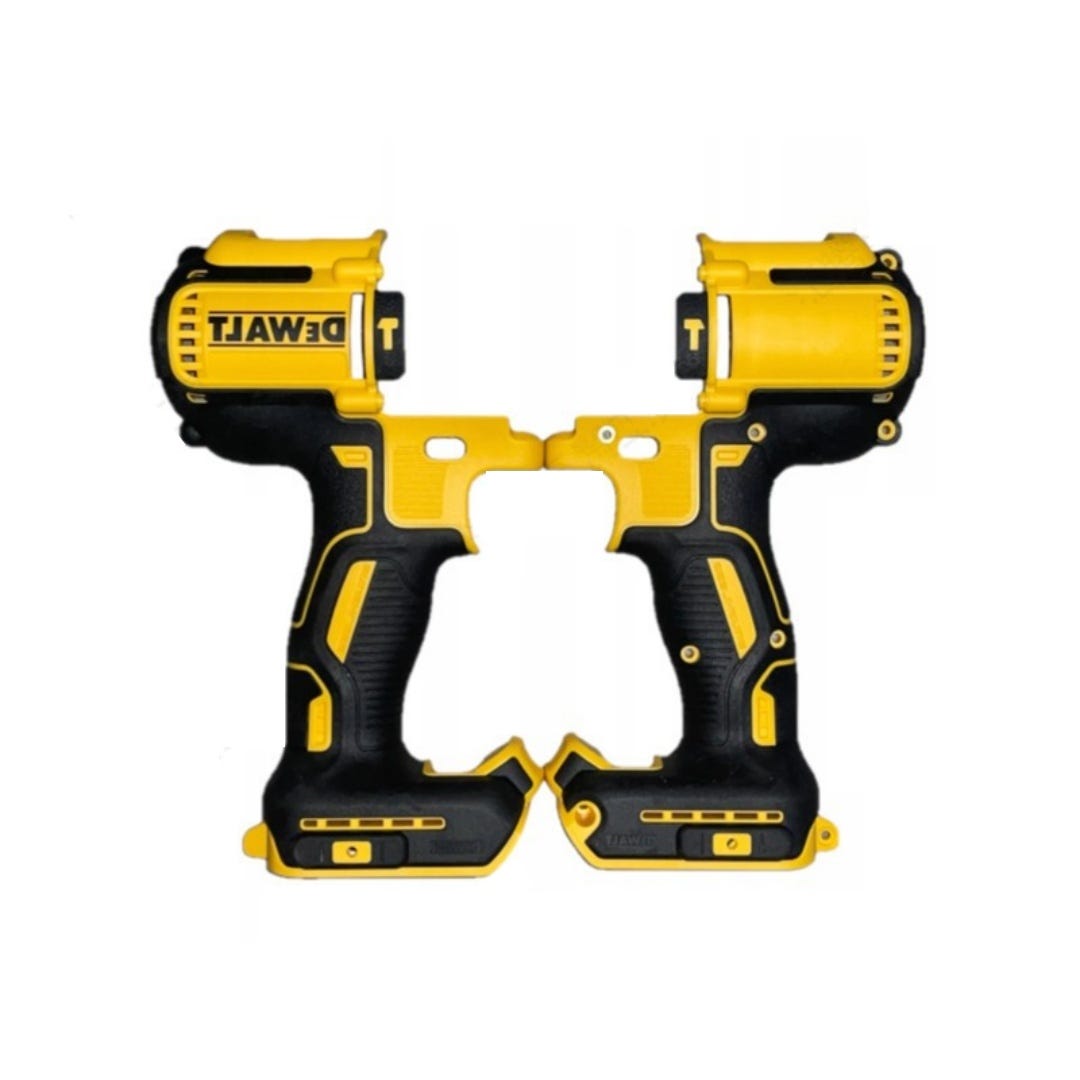
Let’s use the DeWalt DCD996 20V MAX XR as a prime example. Instead of throwing away a perfectly good brushless motor, you can source an exact-fit **DeWalt DCD996 Replacement Housing Shell (NA013594)**.
If you decide to tackle this repair to save yourself over a hundred dollars, there is only one golden rule you absolutely must follow:
Take photos of the wire routing before you remove anything.
Power tool manufacturers pack thick power wires incredibly tight around the base of the motor. Every single wire has a designated, molded groove in the plastic. When you open your broken shell, take several clear, well-lit photos with your smartphone showing exactly how those wires are tucked in.
When you transfer the motor into the new replacement shell, those wires must go back into their exact factory channels. If a wire is sitting even one millimeter too high, you will pinch and cut it when you screw the two new casing halves together. Route the wires perfectly, and the new shell will close up seamlessly with zero gaps.
Empowering the Right to Repair
We live in an era heavily weighted toward planned obsolescence and disposable electronics. But physical, mechanical tools belong in a different category.
By taking 20 minutes at your workbench to swap your drill’s internals into a fresh, structurally sound casing, you aren’t just saving money. You are keeping e-waste out of landfills, extending the life of premium engineering, and reclaiming ownership over the gear you rely on to get the job done.
The next time gravity gets the best of your favorite drill, don’t reach for the trash can. Reach for a screwdriver.

메타데이터
- post_id
- 2b4576e6d7e9
- slug
- stop-trashing-broken-power-tools-the-20-minute-guts-swap-that-saves-hundreds-2b4576e6d7e9
- url
- https://medium.com/@vivikuo417/stop-trashing-broken-power-tools-the-20-minute-guts-swap-that-saves-hundreds-2b4576e6d7e9
- canonical_url
- https://medium.com/@vivikuo417/stop-trashing-broken-power-tools-the-20-minute-guts-swap-that-saves-hundreds-2b4576e6d7e9
- author_url
- https://medium.com/@vivikuo417
- status
- ok
- fetched_at
- 2026-07-10 17:18:11