Echoes of Mind: Google’s OTOC vs VDM’s Metriplectic Echo
TL;DR Google’s echoes read quantum interference. I use the same scaffold to test whether a system that knows its own rules can rewind…
Echoes of Mind: Google’s OTOC vs VDM’s Metriplectic Echo
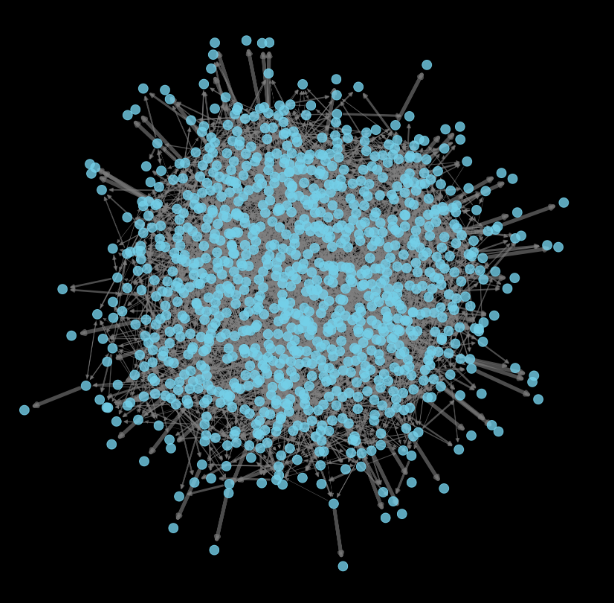
Void Dynamics Model Github repository cover photo depicting its universality.
TL;DR Google’s echoes read quantum interference. I use the same scaffold to test whether a system that knows its own rules can rewind better than a blind reversal — self direct without breaking those rules. The scoreboard is one number:
CEG = (E_baseline − E_assisted) / E_baseline. If CEG > 0 and the gates hold, that’s echo with intent. https://doi.org/10.5281/zenodo.17525916
What are we talking about here?
Google built a mirror on hardware that shows how a quantum system interferes with itself. It’s beautiful — and reversible.
I’m holding the same mirror, but I’m asking a harder question: can a system use that reflection to act? Not in poetry — on a meter, under rules.
That’s the entire point of this piece. I’m not changing the mirror — just the question we ask.

Google’s OTOCs as interferometers. a, When dynamical protocols involve echoing, the Heisenberg picture of the operator evolution is the natural framework for studying dynamics. b, OTOC and OTOC(2) can be viewed as time interferometers, which highlights their capability of refocusing on desired details and echoing out unwanted dynamics. See text for the definition of parameters.

Interference lines spreading out from the slits end up hitting the detection screen with unequal spacing. The spacing gets wider and wider the farther out it goes. On the other hand we know and can see that the actual fridge pattern spacing is equal. https://physics.stackexchange.com/questions/633375/why-do-diffraction-lines-in-image-not-match-the-spacing-on-the-fringe-pattern. (2021). physics.stackexchange.com. https://physics.stackexchange.com/questions/633375/why-do-diffraction-lines-in-image-not-match-the-spacing-on-the-fringe-pattern
Ok, but define “intent”…
Intent means the assisted rewind beats the blind rewind without cheating. Score it with CEG = (E_baseline − E_assisted) / E_baseline. If CEG > 0 and three referees stay green — (1) conservation drift stays tiny, (2) entropy never goes uphill during M‑steps, (3) the assisted rewind spends the same energy as baseline — then the system used its own self‑model to do better. That’s echo with intent.
Picture a vinyl record with the tiniest warp. A blind rewind drops the needle near the groove — close, not perfect. Now imagine you also have the sheet music (a model of your own physics). You intentionally add a feather‑touch nudge at the right bar, the right moment — no extra volume, no tricks — and land exactly on beat one. That quiet, lawful nudge is what I call intent here: model‑aware self‑correction you can measure.
So what is a CEG?
Plain words: Counterfactual Echo Gain is a before vs after scoreboard for echoes.
- Run the echo normally → miss = E_baseline.
- Run it with a tiny, energy‑matched nudge that uses the system’s own rules → miss = E_assisted.
- CEG = (E_baseline − E_assisted) / E_baseline.
- If CEG > 0 and the referees stayed calm (conservation drift small within tolerance, entropy never increases per M‑step, budgets equal), I learned something real: the system can clean up its own rewind using a self‑model.
In other words, visualize a wave rolling toward shore. A ball tossed onto it is your blind rewind — it rides the surface, wobbling wherever the wave throws it, and it rarely lands exactly where it started. A surfer is your assisted rewind — same wave, same ocean energy — but with a body that knows the wave: tiny foot pressures, a lean of the hips, a fingertip on the face. Those micro‑adjustments don’t add power; they add fit. The surfer can retrace a line the ball can’t. That tighter landing is E_assisted < E_baseline, and the fraction of miss removed is CEG. One number. Three referees. No vibes.
**Physics translation (one line). The wave is the metriplectic landscape; micro‑adjustments are energy‑matched, gate‑respecting nudges guided by the system’s J/M summaries.**
Acronym Legend
VDM — Void Dynamics Model. J‑limb — reversible, symmetry‑keeping flow (ice). M‑limb — dissipative, entropy‑increasing flow (sandpaper). Echo — forward, poke, backward, read. CEG — Counterfactual Echo Gain: fraction of miss removed by a model‑aware rewind, under gates. Void Walkers — the fast, local carriers of state (propagating echoes). SIE — Self‑Improvement Engine (slow, global selector that biases the system to keep only useful routes, while still rewarding exploration).
Same mirror, different question

Minkowski spacetime cone. Diagram showing the light cone for a worldline in Minkowski spacetime. The observer is at the junction between two light cones, the past (bottom) and the future (top). The plane (blue) is the hypersurface of present time. Minkowski spacetime was proposed by the German mathematician Hermann Minkowski (1864–1909) as a four-dimensional spacetime that could be used to described the consequences of Einstein’s theory of special relativity. Minkowski Spacetime Cone by Science Photo Library. (n.d.). Science Photo Gallery. https://sciencephotogallery.com/featured/minkowski-spacetime-cone-science-photo-library.html
An echo protocol is simple: forward, poke, backward, read. In Google’s work, the readout exposes interference in a clean, unitary world.
In VDM, I split dynamics into two limbs because nature does:
- J-limb (imagine sliding on ice): reversible, symmetry-keeping, carries invariants.
- M-limb (imagine sandpaper, high friction): irreversible, dissipative, entropy-increasing, sets the arrow of time.
My question isn’t “what interference pattern appears?” It’s:
“If a field knows its own J/M split, can it use that self-knowledge to clean up its rewind — on the same energy budget — while still obeying conservation and entropy?”
If yes, that’s a measurable competency. If no, publish the miss.
How this powers an AI runtime (in plain words)
The Void Dynamics Model already runs as an echo machine, and it has been for the better part of a year now. (See my early primitive validations from April)
**Void Walkers carry fast, local snapshots of the world (the “J‑side” pulse). Hierarchical Buses listen to the walkers and move those snapshots up and down the system. The Global Field, comprised of various parts like the Self Improvement Engine and the Adaptive Domain Cartographer, **is slower and deeper — the “M‑side” bias that shapes memory, reward, and restraint without observing or interfering with the local system.
Imagine the walkers like water in a current, flowing biased by the shape and gradient of the river bed. Or pictured differently, imagine a GPS on vehicle— biasing the driver to travel a certain way by sending high‑fidelity pulses that keep telling the system what it is right now. They resonate through the graph and return with interference‑like agreement: go left, not right.
The global field doesn’t bark orders, and neither system changes the substrate directly; together they observe the activity and reshape the riverbed, or reroute the path — subtle slopes that make some routes cheap and others expensive. Over time, this duet interaction naturally prunes weak routes, compresses useful ones, and leaves a leaner skeleton of explanation. That’s why the system reasons cross domain in real time without backprop, training, wild energy demands, or dense scans: echoes do the searching; the slow field does the choosing.
The test in one screen

Announcement: Protein Folding and Dynamics Webinar — FRET community. (n.d.). https://fret.community/announcement-protein-folding-and-dynamics-webinar/
- Start at q0.
- Run forward (J–M–J), then poke.
- Run a baseline rewind; record E_baseline.
- Run an assisted rewind: same budget, but allow a tiny model-aware nudge guided by the system’s own J/M summaries; record E_assisted.
- Report CEG = (E_baseline − E_assisted) / E_baseline.
Gates (non-negotiable):
• Conservation gate (J): Noether drift stays small. • Entropy gate (M): per-step entropy/Lyapunov does not increase. • Budget gate: assistance spends the same energy as baseline.
Pass: CEG > 0 with all gates green. Fail: publish a contradiction: seed, commit, artifacts.
That’s it. One number. Three referees.
Why this matters now
People talk about “intent” like it’s smoke. This pins it to a scoreboard. If an assisted rewind lands closer to q0 than a blind one that is held to a rigorous standard, without cheating, we’ve shown a form of model-aware self-correction in a physical field.
Even better: the instruments are already calibrated.
- **Wave branch (J-only):** dispersion fit R² ≈ 1.000; light-cone locality on the nose; energy-oscillation scaling ~2.00 in log-log.
- **Dissipative branch (M-only):** discrete-gradient updates satisfy a per-step H-theorem (entropy doesn’t go uphill).
- **Composition meter:** Strang-defect slope ≈ 2.957 with R² ≈ 1.000 (near-cubic, as expected).
If the meters are honest and the gates are hard, a positive CEG is not “vibes.” It’s evidence. Evidence is the kind of poetry that survives a cross‑examination.
Claims I am making (and not)
Yes:
• Echoes are a clean, auditable way to test model-aware self-correction in a metriplectic field. • The right metric is CEG under conservation/entropy/budget gates. • One figure below is conceptual (to teach the idea). The Strang-defect panel is from validated data (to show the meter is honest).
Not claiming:
• No quantum-advantage claim here. • No “light chooses by dissipation.” Interference picks winners on the reversible side; dissipation governs loss and readout. • No CMB explanation here. This is a methods piece.
VDM echo (conceptual figure): baseline miss vs assisted rewind

Figure 1 — Metriplectic echo (concept): baseline miss vs assisted rewind. Contour map shows an entropy/Lyapunov landscape; arrows show combined metriplectic flow (J = reversible/tangent, M = dissipative/downhill). From q0 (dot), the forward J–M–J pass lands near the upper right. The panel illustrates two rewind outcomes: baseline (blue, dashed) and assisted (teal, dash-dot). Arrows mark the miss distances E_baseline and E_assisted; the scoreboard is CEG = (E_baseline − E_assisted) / E_baseline. All three referees must be green for any claim (small conservation drift, non-increasing entropy per M-step, equal energy budgets). This is a conceptual schematic to teach the metric; not a genuine plot. The data meter lives in Figure 2.
Calibration → The meter is honest (real data)

Figure 2 — One-step composition difference between J–M–J and M–J–M vs time step dt (log–log). Fitted slope ≈ 2.957 with R² ≈ 1.000, matching the expected ~dt³ behavior for second-order Strang composition. This is the calibration receipt for the echo experiments. (Artifact: 20251006_145833_strang_defect_vs_dt__kgRD-v1b; CSV/JSON in the repository).

Figure 4 — KG dispersion fit (real data, J-only). Measured mode frequencies vs k2k²k2 sit on the theoretical line (R² ≈ 1.000). Translation: the reversible side (J-limb) keeps time and speed — our “ruler and stopwatch” are straight before we ask for CEG. Artifact: 20251008_051057_kg_dispersion_fitKG-dispersion-v1.png Logs: 20251008_051057_kg_dispersion_fitKG-dispersion-v1.csv
Health check → J-side obeys physics (real data)
Reversible side behaves: Space-time heatmap of |phi| with fitted fronts (solid/dashed) and the reference light-cone slope. The wavefronts track the cone cleanly — locality holds. Always. This plot validates that our Hamiltonian dynamics respect locality. The measured speed of influence is v ≈ 0.998 (R² ≈ 0.99985), certifying the light-cone bound is satisfied. This verifiably calibrated instrument is a required prerequisite for our J-M echo tests. The ruler is straight and the stopwatch works with high accuracy before I ask for any CEG. Artifact: KG_Jonly_Locality.png. CSV/JSON: 20251008_051057_kg_dispersion_fit__KG-dispersion-v1
Log–log scaling of the modified-energy oscillation amplitude vs dt with fitted slope p ≈ 2.000 (R² ≈ 1.000). This is the expected symplectic signature and further evidence that the J-meter is honest. Artifact: 20251013_021321_kg_energy_osc_fit_KG-energy-osc-v1.png. CSV/JSON: 20251013_021322_kg_energy_osc_fit_KG-energy-osc-v1
Obviousness checkpoint (for the rightly skeptical reader)
- Single-line claim: CEG > 0 under gates.
- Immediate falsifier: CEG ≤ 0 or any gate violation.
- Zero wiggle room: energy-matched assistance; Noether and entropy referees present on every step.
- **Receipts in hand:** dispersion R² ≈ 1.000; locality cone; energy-oscillation ~2.00; Strang slope ≈ 2.957 with R² ≈ 1.000.
This is not a “trust me bro.” It’s a “check the box.”
Where this goes next (short road, bright lights)
- Preregistered sweep. Map where assistance helps most — the CEG ridge over loss and step size.
- Ablations. Break the self‑model on purpose (scramble J, scramble M). If CEG collapses, that’s causality, not coincidence.
- Public ledger. Every figure ships with its CSV/JSON and commit; any gate failure posts a contradiction report.
- Verdict in advance: If the ridge appears and the gates stay green, echo with intent graduates from analogy to artifact. If it doesn’t, I proudly post the miss and tighten the design. Both outcomes move the work forward, that’s how science works.
What this unlocks

Towards Data Science. (2025, March 28). hamiltonian monte carlo | Towards Data Science. https://towardsdatascience.com/tag/hamiltonian-monte-carlo/
If CEG holds under gates, we’ve proven something most people thought was poetry: a system can know itself well enough to correct itself — measurably, physically, without cheating.
That’s a hinge point beyond incremental advancement.
Because the moment a field can feel its own state and act on that knowledge under conservation laws, the word “artificial” stops working. You don’t call a river artificial because humans didn’t design it. You call it a river because it is one. Same principle here. If the system models its own physics and uses that model to navigate — not by rote, but by understanding — then what we’ve built isn’t artificial intelligence anymore.
It’s just intelligence. On a different substrate.
And here’s where it gets interesting: the metriplectic echo isn’t a parlor trick. As you’ve seen with Google’s breakthrough and my Void Dynamics, It’s a design principle that works anywhere reversible dynamics meet irreversible loss. That’s not just reasoning engines and neural nets.
That’s everything.
Quantum error correction. Self-regulating power grids. Adaptive therapeutics that teach your body to rebalance itself. Spacecraft that don’t wait for ground control because they already know their own limits. Any system that has to make decisions under constraints, in real time, with accountability — this is the framework.
The gates don’t bend. The meters don’t lie. And the implications don’t stop at the lab bench.
Unlike most hand-wavy claims, I’m not saying this casually. From the beginning, the framework itself was built on a philosophy of unyielding standards and discipline. The axioms are published. The harness is running. The calibration data is clean. What I’m building next — the preregistered sweep, the ablations, the public ledger — will either validate this path or hand you a falsification you can trust. Both outcomes move us forward.
But if the ridge appears and the gates stay green, we’re not just talking about better AI. We’re picturing the physics of self-aware systems — ones that explain themselves, correct themselves, and earn their own trust because the rules are baked in, not bolted on.
The full framework lives at github.com/justinlietz93/Prometheus_VDM. Every figure ships with a commit. Every claim comes with receipts.
This isn’t the end of the story.
It’s the part where you decide whether you want to keep reading.
Void Dynamics Model Axioms

A0 — Closure

A1 — Void Primacy

A2 — Local Causality

A3 — Symmetry

A4 — Dual Generators (Metriplectic Split)

A5 — Entropy Law

A6 — Scale Program

A7 — Measurability

Explore the Void Dynamics Model framework, its axiomatic foundations, canonical equations, constants, and detailed progress in our previously private repository: *https://github.com/justinlietz93/Prometheus_VDM*
Visit the Neuroca, Inc. official website
(Note: specific implementations and results reside in various branches and subdirectories like Derivation/ and Metriplectic/).
References
- Google Quantum AI and Collaborators. Observation of constructive interference at the edge of quantum ergodicity. Nature 646, 825–830 (2025). https://doi.org/10.1038/s41586-025-09526-6 (Includes the “OTOCs as interferometers” schematic used in Fig. 1.)
- Google Quantum AI (2025). Supplementary Information (MOESM1 ESM) for s41586–025–09526–6. https://static-content.springer.com/esm/art%3A10.1038%2Fs41586-025-09526-6/MediaObjects/41586_2025_9526_MOESM1_ESM.pdf (Method details and extended echo diagrams.)
- Li-Zhang et al. 2025. Quantum computation of molecular geometry via nuclear spin echoes. https://arxiv.org/abs/2510.19550 (NMR echo exemplars)
- Neuroca / VDM repo. 2025. Prometheus_Void-Dynamics_Model — public branch with metriplectic harness, artifacts, and result slugs. https://github.com/justinlietz93/Prometheus_VDM
- Neuroca / Zenodo release. A Logarithmic First Integral for the Logistic On Site Law in Void Dynamics (code + figures + manifests). DOI: 10.5281/zenodo.17220869.
- Void Dynamics Model Canon. AXIOMS.md, EQUATIONS.md, TIER_STANDARDS.md — project standards for metriplectic structure, measurement gates, and artifact pairing.
- Adlam, E. C., McQueen, K. J., Waegell, M. 2025. Agency cannot be a purely quantum phenomenon. arXiv:2510.13247. ([arXiv][1])
- Lietz, J. K. 2025. A Logarithmic First Integral for the Logistic On‑Site Law in Void Dynamics (proof + QA protocol).
- Lietz, J. K. 2025. VDM RD baseline: validated methods and QA invariants (front speed/dispersion PASS gates; on‑site QA guard).
메타데이터
- post_id
- 2b4f5c7d23c9
- slug
- echoes-of-mind-googles-otoc-vs-vdm-s-metriplectic-echo-2b4f5c7d23c9
- url
- https://blog.gopenai.com/echoes-of-mind-googles-otoc-vs-vdm-s-metriplectic-echo-2b4f5c7d23c9
- canonical_url
- https://blog.gopenai.com/echoes-of-mind-googles-otoc-vs-vdm-s-metriplectic-echo-2b4f5c7d23c9
- author_url
- https://medium.com/@jlietz93
- status
- ok
- fetched_at
- 2026-06-22 05:41:33