Black Sabbath - Cross Purposes (1994): A short history by Aerik Von
Black Sabbath - Cross Purposes (1994): A short history by Aerik Von
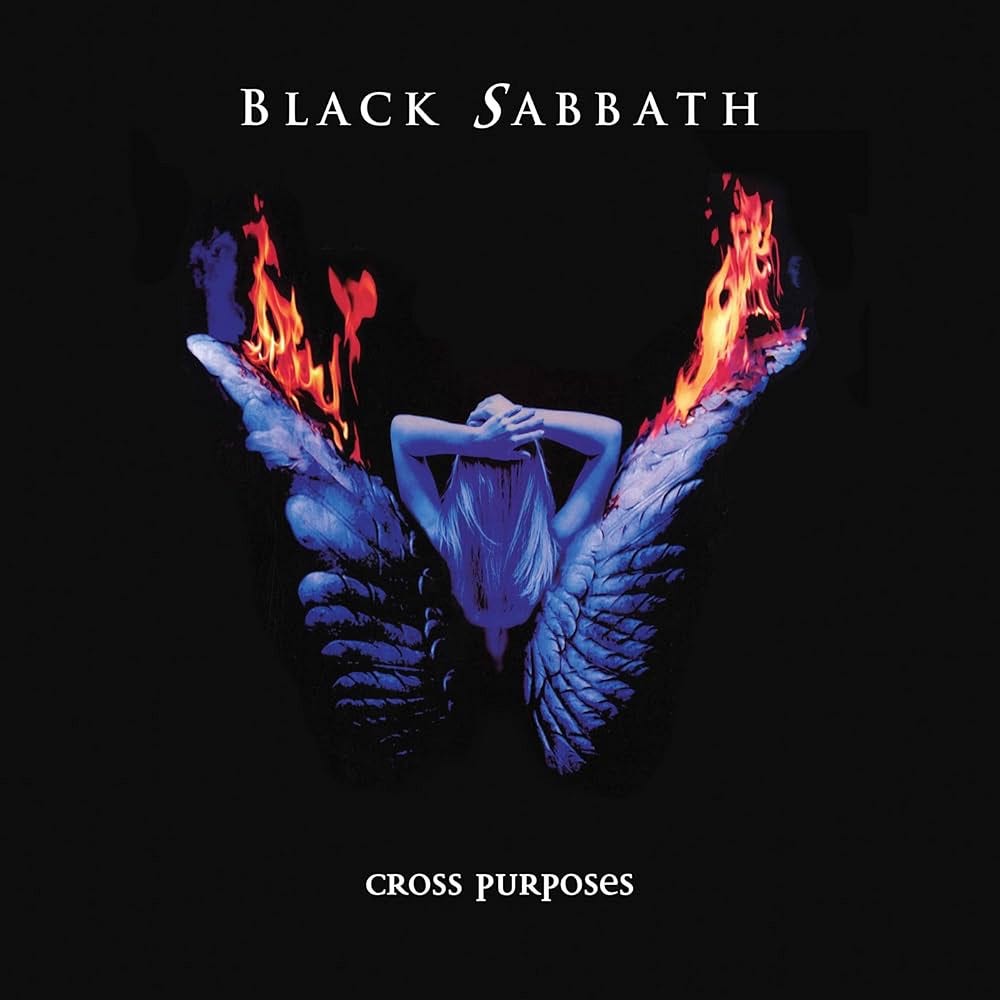
Black Sabbath’s Cross Purposes, released on January 31, 1994, via I.R.S. Records, stands as the band’s 17th studio album and a notable entry in their turbulent post-Ozzy era. It marked a brief but significant reunion between guitarist Tony Iommi (the sole constant member) and bassist Geezer Butler, while bringing back vocalist Tony Martin for his fourth stint with the group. The album captured Sabbath navigating lineup instability, contractual obligations, and the challenge of evolving their signature heavy sound in the grunge-dominated early 1990s.
By the early 1990s, Black Sabbath had endured repeated personnel shifts. After the successful but short-lived Dehumanizer (1992) with Ronnie James Dio on vocals and Vinny Appice on drums, tensions led to Dio’s departure. Plans for an original lineup reunion with Ozzy Osbourne, Butler, and Bill Ward faltered. Iommi and Butler decided to press forward with new material rather than wait indefinitely.
Tony Martin, who had fronted the band on The Eternal Idol (1987), Headless Cross (1989), and Tyr (1990), was brought back in early 1993. Martin had been working on solo material when the call came. Longtime keyboardist Geoff Nicholls also returned, providing atmospheric layers that had become a staple of the Martin-era sound.
For drums, the band initially considered Cozy Powell (who had played on previous Martin albums), but Bobby Rondinelli (formerly of Rainbow) ultimately filled the role. Rondinelli brought a solid, powerful style that complemented the material. This configuration — Iommi, Butler, Martin, Rondinelli, and Nicholls — recorded the album in 1993 at Monnow Valley Studios in Rockfield, Monmouthshire, Wales. Leif Mases handled production, engineering, and mixing, with additional engineering by Darren Galer and Dave Somers. The album was later mastered by Tony Cousins at Metropolis Mastering in London.
The songwriting process saw Iommi and Butler collaborating closely again, a dynamic that injected fresh energy into the material after Butler’s absence on some prior Martin-era releases. All tracks were credited to the core trio of Iommi, Butler, and Martin. Martin contributed lyrics that often explored dark, thematic territory — ranging from personal struggles and societal issues to more metaphorical or historical references.
One standout element was the involvement of Eddie Van Halen, who reportedly stopped by and helped with ideas on at least one track (“Evil Eye”) during the sessions. Iommi and Martin later reflected on the writing and rehearsal tapes, noting how Butler’s return anchored the riffs with his distinctive bass tone.
Recording took place in a relatively straightforward studio environment at Monnow Valley. The sessions produced a collection of 10 tracks blending classic Sabbath doom and heft with more up-tempo, “power metal” influenced moments.
The album’s sound was described by listeners and reviewers as a strong continuation of the Martin era’s more epic, melodic heavy metal approach, elevated by Butler’s presence. His bass lines provided a foundational groove that many felt had been missing, making Cross Purposes feel like one of the most cohesive Martin-era efforts.
Production emphasized Iommi’s riff-driven guitar work, with layers of Nicholls’ keyboards adding depth without overpowering the core trio’s chemistry. Rondinelli’s drumming delivered precision and power, handling both the slower doom passages and faster sections effectively.
Cross Purposes was released to mixed but generally respectful reviews. Some critics noted it as a solid, if not revolutionary, Sabbath record that balanced the band’s classic DNA with 1990s production values. Listeners appreciated the return of Butler and the continued evolution under Martin’s powerful, versatile vocals. Commercially, it performed modestly, reflecting the challenges heavy metal faced amid the rise of alternative rock.
The band supported the album with a tour in 1994. For some South American dates toward the end of the run, Bill Ward briefly returned on drums, creating a near-original lineup moment with Martin, Iommi, Butler, and Ward (three-quarters of the classic four). However, this configuration did not last. Butler departed again after the tour to pursue other projects, and Rondinelli was eventually replaced as the band shifted toward what became the Forbidden album in 1995 (featuring a return to the Tyr line-up).
In retrospect, Cross Purposes is often viewed as a highlight of the Tony Martin era, thanks largely to the Iommi/Butler chemistry. It has gained renewed appreciation in recent years, especially with the 2024 Anno Domini 1989 — 1995 box set, which included a remaster of the album alongside other Martin-era releases.
Cross Purposes illustrates Black Sabbath’s resilience during a fragmented period. While not as successful as the Ozzy or Dio eras, it demonstrated Iommi’s unwavering riff mastery and the band’s ability to adapt without losing their heavy essence. The brief Butler reunion added authenticity, and Martin’s contributions helped sustain Sabbath’s output when reunion rumors swirled but didn’t immediately materialize.
For die-hard fans, the album remains a bridge between the band’s legendary past and its evolving identity — proof that even amid “cross purposes” in lineup and direction, the core Sabbath sound could still deliver iron riffs and atmospheric darkness.
Until next time…
메타데이터
- post_id
- 2b709e8a35d3
- slug
- black-sabbath-cross-purposes-1994-a-short-history-by-aerik-von-2b709e8a35d3
- url
- https://medium.com/@aerikvon/black-sabbath-cross-purposes-1994-a-short-history-by-aerik-von-2b709e8a35d3
- canonical_url
- https://medium.com/@aerikvon/black-sabbath-cross-purposes-1994-a-short-history-by-aerik-von-2b709e8a35d3
- author_url
- https://medium.com/@aerikvon
- status
- ok
- fetched_at
- 2026-06-17 08:20:12