When The Face Card Declines: Dangers of Facial Recognition Technologies
If you have any connection to the outside world, you’ve likely heard some variation of the phrase “as technology gets more and more…
When The Face Card Declines: Dangers of Facial Recognition Technologies
If you have any connection to the outside world, you’ve likely heard some variation of the phrase “as technology gets more and more advanced…” more times than you can count. We live in a world where we are consistently hearing about new gadgets, companies, startups, and apps. It’s true, technology is advancing at an incredible rate and we are fortunate in many ways to witness it. However, the conversations around the “technological revolution” of the 21st century tend to frame it as an inevitable solution to the world’s most daunting problems. We rarely discuss the ways in which the rapid development of various technologies, especially facial recognition technology, work to rapidly intensify the agonizing biases and systemic issues that have existed for eons.
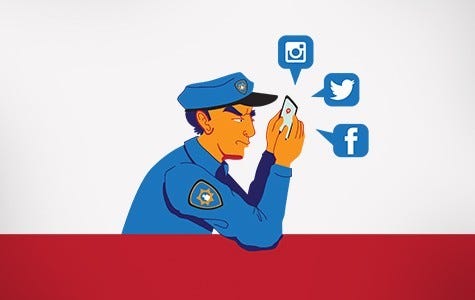
In a post 9–11 world, we have witnessed the transformation of the surveillance state, data collection, and sentiments around privacy. Facial recognition technology and biometric identifiers, especially, have been at the forefront of government efforts to strengthen national security and combat various forms of crime, terrorism, and violence. But what happens when this technology fails the very people they told us they wanted to protect?
You might be wondering how facial recognition could possibly harm innocent people. It’s meant to catch criminals and terrorists, right? Or to unlock an iPhone? Up until recently, I never really thought about how these technologies could possibly be harmful. Sure, I always thought it was slightly creepy, but rarely paid attention to the societal aftermath of faulty facial recognition.
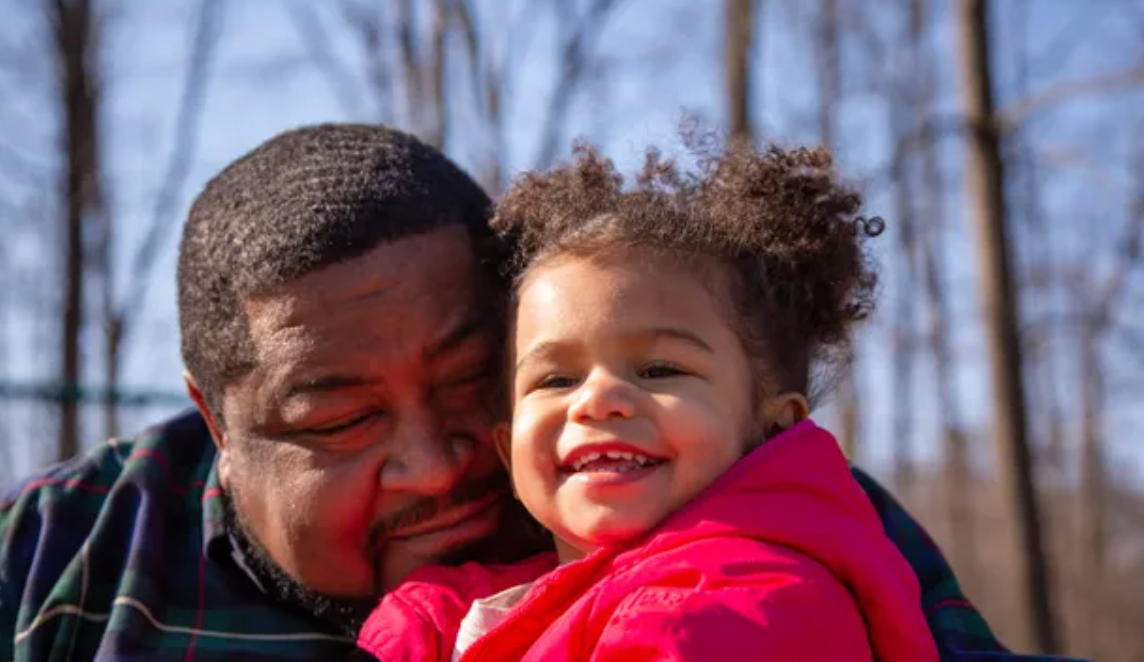
Robert Williams with his daughter Rosie. Photo provided by ACLU of Michigan.
This is Robert Williams of Farmington Hills, Michigan. In January 2020, Williams was the victim of a false arrest due to a faulty facial recognition algorithm. He was handcuffed on his front lawn in front of his wife and two daughters. After 30 hours in Detroit Detention Center and $1,000 in bond, the case collapsed once the detectives realized the mistake. The system had incorrectly matched an old driver’s license photo of Williams with the blurry surveillance image (Detroit Free Press).
How does a mistake like this even happen? It’s crucial to remember that nothing, especially technology, exists in a vacuum. Technology is not built on its own, but by people who have been influenced by various hegemonic and interpersonal domains. The people who are building these technologies are often under the influence of the “privilege hazard”, as coined by Catherine D’Ignazio and Lauren Klein in their book, *Data Feminism: “*When data teams are primarily composed of people from dominant groups, those perspectives come to exert outsized influence on the decisions being made — to the exclusion of other identities and perspectives. This is not usually intentional; it comes from the ignorance of being on top” (D’Ignazio & Klein). Joy Buolamwini, a Ghanaian-American graduate student at the Massachusetts Institute of Technology, discovered that the dataset that was used to test and train many facial recognition algorithms contained 78% male faces and 84% white faces. According to the New York Times, Asian and African-American people are up to 100 times more likely to be misidentified than white people. The majority of data and computer scientists who are behind these technologies and data sets are in positions of power and are likely blind to the biases and tools of oppression that are being coded into technologies that are eventually used by law enforcement and powerful government agencies to alter people’s lives.
Individual privacy is another topic that we are well antiquated with and is equally relevant to the conversation of facial recognition. Protecting your privacy might concern you, or it might not. Truthfully, I can’t really blame you if you don’t think you take as many steps to protect yourself as you should; most people have become desensitized to all the talk about privacy and surveillance and it feels inevitable. The past few decades have rendered us almost powerless against big tech’s data collection and post-9/11 surveillance laws to the point where a lot of us just click “OK” on all the terms, conditions, and cookies we see. The name ‘Zuckerberg’ has been repeated so much, it doesn’t even sound like a real word anymore. According to a study by Pew Research Center, around 80% of U.S. adults feel as though they have very little to no control over the data collected by companies and the government. It’s easy to feel fatigued by information overload and privacy threats: I definitely do.
However, the misuse of facial recognition technologies on a governmental level can and will impact every single one of us. According to The Washington Post, the FBI and the Department of Defense were heavily involved in developing facial technology that could be used for mass surveillance, without the awareness or consent of Americans. This was done through the Janus program, which was spearheaded by the IARPA (Intelligence Advanced Research Projects Agency). The goal of this project was to create a technology that could identify millions of subjects, identify faces from obstructed angles, and target people from a distance of half a mile. This was made available to the Pentagon’s CTTSO (Combating Terrorism Technical Support Office), which bridges the gap between the military and civilian police forces. And if you remember Robert Williams’ story from before, I don’t need to point out what happens when biased technologies are in the hands of carceral authoritative forces.
This all feels pretty dystopian, doesn’t it? The thought of going to the mall or meeting a friend, and potentially being identified by a camera, is a bit haunting and makes me feel as though I’m in a Tom Cruise movie. However, this is a reality that we must grapple with.
That being said, it’s possible that this may not even startle you all that much. After all, the implementation could help us catch the “bad guys” and quell terrorism in various forms. The uneasiness and qualms surrounding these technologies have a lot to do with the history of surveillance in this country, especially as it relates to marginalized groups and their fights for justice. For much of American history, the government has created various intelligence agencies to crack down on liberation efforts. COINTELPRO, for example, was an FBI surveillant initiative to track and expose “Black Nationalists” during the civil rights era. In the early twentieth century, the government monitored Japanese plantation labor organizers across the United States, which resulted in the internment of over 127,000 Japanese Americans on the basis of mass anti-Asian hysteria. Post 9–11, anti-terrorism initiatives were propelled by islamophobia and xenophobia, to the point where police would go undercover, and then infiltrate and surveil mosques and Muslim communities in general. Biased mass surveillance has wounded many communities and created an exigent rift between the people and the state.
The intersection of mass surveillance and activism is not a thing of the past and is very much in action today. For years, racial justice advocates have been trying to draw attention to the inequities in the police system and how certain technologies will inevitably harm people of color over their white counterparts. In 2015, the Baltimore Police Department utilized facial recognition software to identify those who were involved in protests against the murder of Freddie Gray. Following the death of George Floyd in May 2020, the U.S. Department of Homeland Security utilized predator drones to circle the protests and monitor individuals in at least 15 cities (Brookings). Many police officers use “after-the-fact” systems, meaning that protestors are often identified and arrested after an event is over, and their identification is then matched against mugshot databases. Racial justice movements have made it incredibly clear to us that the criminal justice system is permeated with racial bias, and these technologies are only placing more and more people in that sphere of danger. In addition, it only works to limit the freedom of the very people who are begging and fighting for equitable treatment and life.
It’s easy to choose convenience and ignore the risks of the very technologies that have made our lives better in a lot of ways. But as civilians, we have a duty to be cognizant of the ways in which artificial intelligence has the potential to place ourselves and others in harm’s way. Currently, there are very few laws to control the state’s misuse of facial recognition and privacy. Though we may not have the power to single-handedly take down tech giants and write algorithms that save the world, it’s crucial to contact our representatives and make privacy and fairness a priority: stories like Robert Williams’ must never be the norm. Dystopian technologies should be left to young adult films and George Orwell’s novels, not our everyday lives.
메타데이터
- post_id
- 2b74b8fd972c
- slug
- when-the-face-card-declines-dangers-of-facial-recognition-technologies-2b74b8fd972c
- url
- https://medium.com/si-410-ethics-and-information-technology/when-the-face-card-declines-dangers-of-facial-recognition-technologies-2b74b8fd972c
- canonical_url
- https://medium.com/si-410-ethics-and-information-technology/when-the-face-card-declines-dangers-of-facial-recognition-technologies-2b74b8fd972c
- author_url
- https://medium.com/@kotagiri_44568
- status
- ok
- fetched_at
- 2026-07-22 09:47:57