How to Build a Hybrid Team Without Breaking Budget or Culture
Learn how to build a hybrid team by combining local leadership with remote execution.
How to Build a Hybrid Team Without Breaking Your Budget or Culture
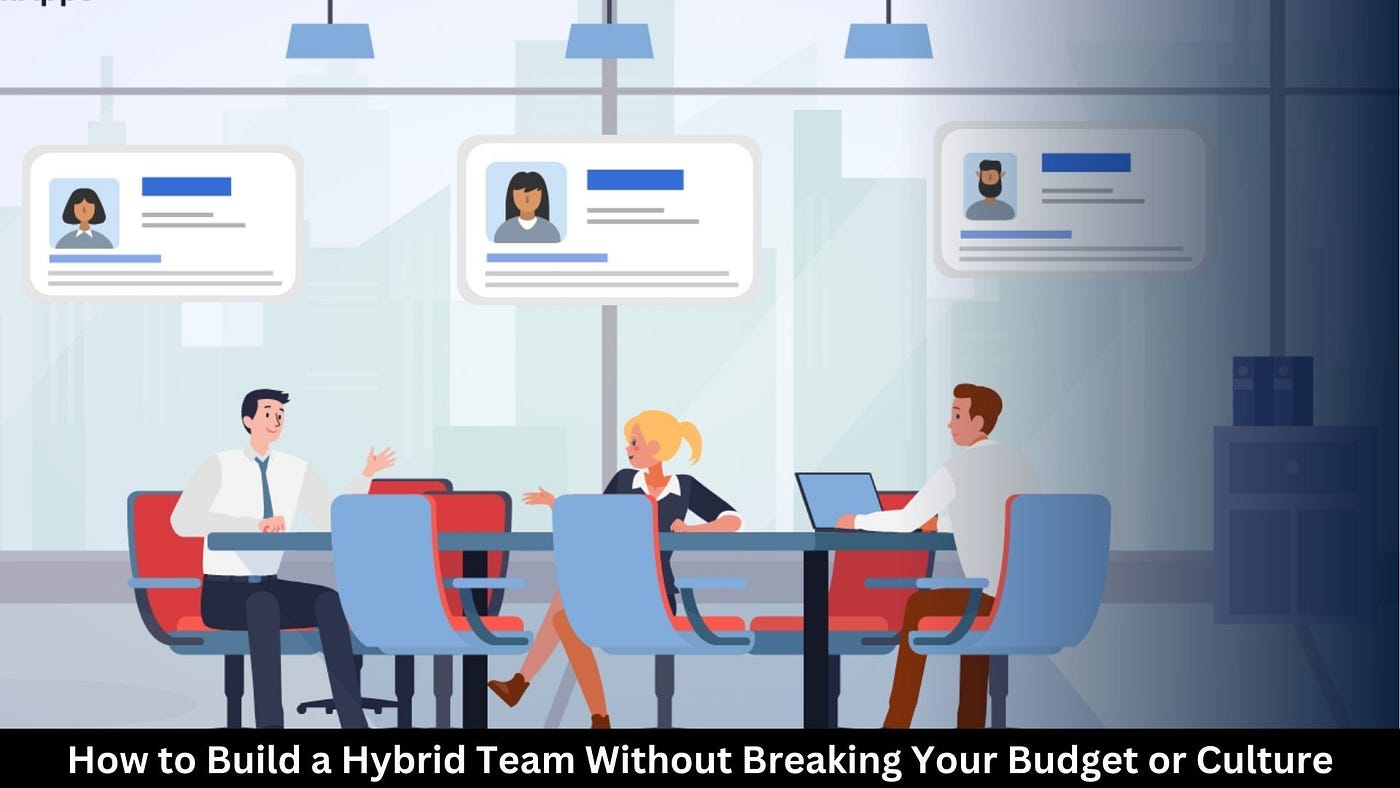
Building a hybrid team is no longer just a trend. For many businesses, it has become the smartest way to balance costs, talent, and culture. Yet, the challenge lies in doing it without draining the budget or losing the workplace values that keep people connected. A hybrid work model can deliver the best of both worlds, but it only works with the right planning.
Let’s walk through how businesses can build a hybrid team that is affordable, aligned, and supportive of company culture.
Combine local leadership with remote execution
The biggest mistake companies make is trying to run everything remotely without a strong local base. While remote execution can save costs, leadership still needs to be grounded locally. Having in-house managers or leads provides accountability and keeps decision-making closer to the company’s core values.
On the other hand, remote execution can be distributed to skilled professionals across regions, including options to hire dedicated developers in India. This mix cuts costs while giving you access to wider expertise. It also reduces dependency on high-cost local hires for every role. The key is balance: local leadership for oversight, remote execution for efficiency.
Now that structure is clear, the next step is making sure you hire people who actually fit this hybrid setup.
Hiring for alignment
Hybrid team building strategies go beyond just finding skills on paper. In this setup, cultural fit and communication style carry equal weight. The wrong hire can disrupt both collaboration and workplace morale. This is why hiring for alignment is critical.
Start by outlining your non-negotiables — values that define your culture in a hybrid workplace. For example, if quick response times or proactive reporting matter, highlight those from the start. Candidates who match these traits will adjust faster and help maintain culture even when working remotely.
This hiring focus not only protects the culture in a hybrid workplace but also reduces turnover, which directly supports a budget-friendly hybrid team. Once people are aligned, the next step is keeping them connected through the right tools.
Managing tools and communication effectively
Even the best hybrid work model falls apart without clear communication. With employees spread across offices and remote setups, the choice of tools becomes as important as the people you hire. The limitations of hiring local developers also come into play here, since relying only on on-site presence can restrict collaboration and slow decision-making.
A good mix includes project management tools for task clarity, video conferencing for face-to-face discussions, and instant messaging for quick updates. But tools alone are not enough. Leadership should set simple rules around usage, such as response windows, meeting frequency, and reporting formats, to avoid confusion and over-communication.
When used well, these tools protect both time and costs, while making employees feel equally included. This is where the benefits in a hybrid workplace become visible: stronger collaboration, smoother workflows, and less wasted effort.
With structure, hiring, and communication sorted, let’s bring the points together.
The benefits of a balanced hybrid workplace
A carefully built hybrid team offers more than cost savings. It gives companies access to global skills, reduces hiring risks, and creates resilience in operations. Budget-friendly hybrid teams mean you’re not overspending on office overheads or local-only hiring, while still maintaining a culture that employees value.
Most importantly, this model avoids the burnout or disconnection that can come with fully remote setups. When leadership, hiring, and tools are aligned, culture in a hybrid workplace stays intact while budgets stay under control.
Conclusion
The goal isn’t just to build a hybrid team, but to build one that lasts. Combining local leadership with remote execution, hiring for cultural alignment, and using tools the right way are the three foundations of hybrid team building strategies. When done well, the hybrid work model supports both cost control and long-term growth.
If your company is exploring this shift, start with clarity on culture and budget, then scale carefully. The right mix will give you the real benefits in a hybrid workplace without unnecessary trade-offs.
메타데이터
- post_id
- 2b75536f2c16
- slug
- how-to-build-a-hybrid-team-without-breaking-budget-or-culture-2b75536f2c16
- url
- https://medium.com/@peerbits/how-to-build-a-hybrid-team-without-breaking-budget-or-culture-2b75536f2c16
- canonical_url
- https://medium.com/@peerbits/how-to-build-a-hybrid-team-without-breaking-budget-or-culture-2b75536f2c16
- author_url
- https://medium.com/@peerbits
- status
- ok
- fetched_at
- 2026-06-24 23:31:39