Atlantic Bluefin Tuna
A quarter ton of lightning-fast bone and flesh that can be found from the frigid waters of Newfoundland to the glimmering Gulf of Mexio…
Atlantic Bluefin Tuna
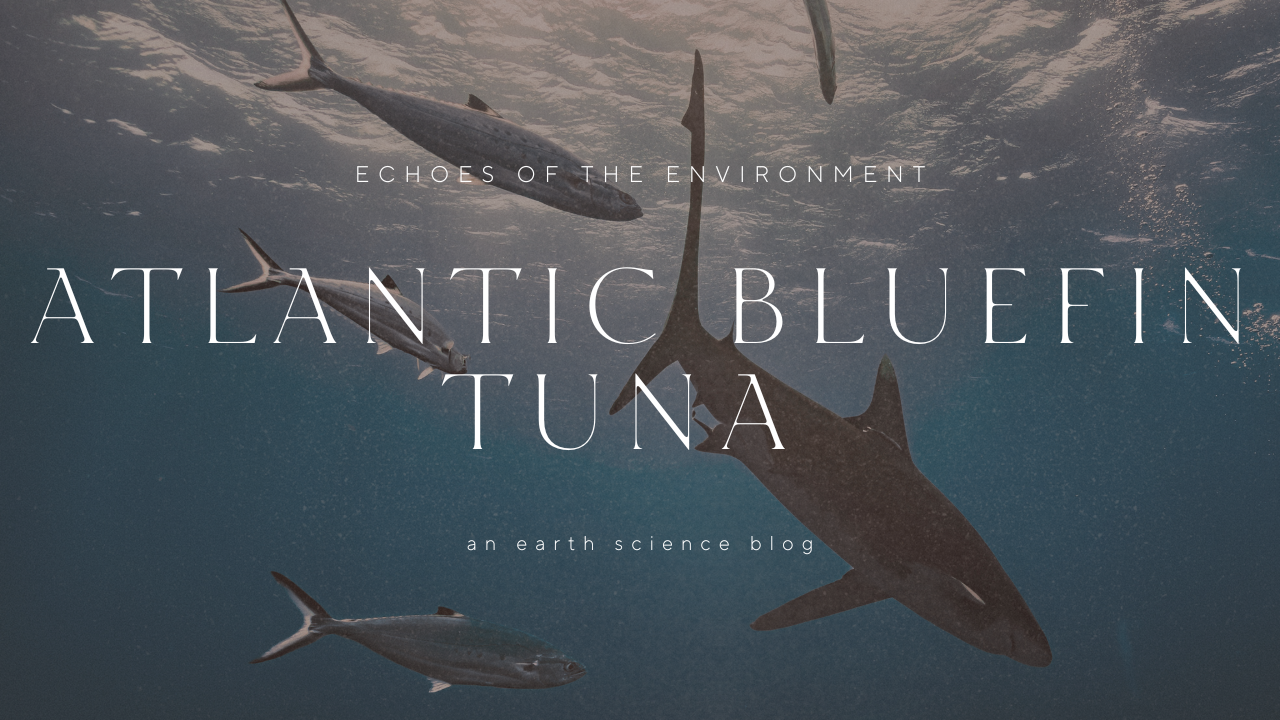
A quarter ton of lightning-fast bone and flesh that can be found from the frigid waters of Newfoundland to the glimmering Gulf of Mexio. Breaching through the surface of the ocean in one blink and diving to depths greater than 3,000 feet (915 m) in the next. Atlantic Bluefin Tuna are the ultimate explorers of the north Atlantic Ocean. Large, beautiful, and highly migratory. While they cross the ocean, they also constantly cross paths with humanity. Between TikTok highlights, sushi trends, news reports of mercury concentrations, and reality television shows revolving around their capture, this is a species that’s constantly at the cross section of human interaction. With how prevalent the Atlantic Bluefin Tuna is in humanity, our species needs to do a better job at understanding and protecting their species.
The Atlantic Bluefin Tuna was originally described by botanist, zoologist, and taxonomist, Carl Linnaeus, in 1758 in the 10th edition of Systema Naturae where he assigned the fish the scientific name Scomber thynnus. Published by Johann Friedrich Gmelin, Linnaeus’ book identified over 10,000 species: roughly 6,000 plants and 4,236 animalia species. In 1896, the Atlantic Bluefin Tuna was reidentified in David Starr Jordan and Barton Warren Evermann’s The Fishes of North and Middle America: A Descriptive Catalogue of the Species of Fish-like Invertebrates found in the Waters of North America, North of the Isthmus of Panama, pt. 1 published by the Bulletin of the United States National Museum. Due to the position of the fish’s gill rakers, height of dorsal fins, and the spacing between fins, Jordan and Evermann reclassified the tuna as Thunnus thynnus. Though, officially, the scientific name changed, Linnaeus’ scientific name is still accepted as an alternative name.
The Atlantic Bluefin Tuna is the largest of all tuna species. Beginning as microscopic larvae — weighing a few hundredths of a gram at a few millimeters long — some individuals can bloom to lengths of 13 feet (4 m) and weigh nearly 2,000 pounds (907 kg). Variations in diets, appetites, and swimming patterns allow for a wide variety of adult sizes, with the average Atlantic Bluefin Tuna being 6.5 feet in length (2 m) and 550 pounds (250 kg). Researchers from the University of Bari collected 504 Atlantic Bluefin Tuna specimens between 1998 and 2005. They determined that non-mature males and females are identical with no physical, size or marking, differences. Once the fish reach spawning age, the data showed that the females displayed a higher weight-at-length average while both sexes became more slender with age. In other words, both males and females initially grow girth-wise before extending both lengthwise and height-wise as they hit sexual maturity. Cross sections of adults appear nearly circular. At maturity, females are slightly larger than males but, superficially, they appear very similar.
The Atlantic Bluefin Tuna is a vessel built for speed. Their torpedo-shaped bodies — a pointed head that gradually expands to max out near mid-body — allow the fish to cut through the water with minimal drag. Additionally, the Atlantic Bluefin Tuna’s eyes are inset, flush to the sides of their bodies, and the dorsal and pectoral fins are retractable to further streamline their build. As their other fins compress, the Atlantic Bluefin Tuna use their crescent-shaped caudal (also known as tail) fin to move. Behind their dorsal fin, but ahead of their caudal, are small and tough “finlets” that scientists theorize help the fish to reduce water turbulence. These speed adaptations allow the Atlantic Bluefin Tuna to reach speeds of 43 miles per hour (69.2 kmph).
In addition to speed, this tuna showcases an impressive display of camouflaged coloration. Separated by the highly sensitive lateral line, the top half of the fish showcases a shiny deep blue hue while the bottom is adorned in silvery white. If a predator — such as sharks or marine mammals — were to view the tuna from the top, the dark azure blends into the depths of the ocean. Similarly, if viewed from the bottom-up, the alabaster hue mimics light refracting from the water’s surface. Just slightly paler than the rest of their body, vertical stripes run across their sides. This pattern, along with short pectoral fins and reddish-brown second dorsal fins, are characteristics that separate this tuna from others within the Thunnus genus.
Species of bluefin tuna exist worldwide. However, they’re separated by aquatic barriers and, through the generations, diverged into three unique bluefin species: the Atlantic, Pacific, and Southern. The Atlantic Bluefin Tuna is a pelagic wanderer, operating their whole lives in the open ocean. Migrating over 6,000 miles per year, they spawn from mid-April to June in the Gulf of Mexico before following temperate waters north — along the western Atlantic Ocean — towards Newfoundland. Some tracked specimens have traversed across the Atlantic Ocean and landed in European waters as a part of their migration journey. Oceanic temperatures appear to be the dominant variable that drives their yearly migration. While able to withstand temperatures ranging from 40 to 85 degrees Fahrenheit, the Atlantic Bluefin tune prefers temperate waters. GPS tracked individuals have also shown that, in addition to areas of mild temperature, areas of high oceanic circulation also display a higher presence of this tuna species. Not only does “pelagic” mean a wide area of habitat, but it also means a habitat of high depth as well. Atlantic bluefin tuna frequently dive anywhere from 500 to 1,000 meters below the water’s surface, but are also capable of breaching the ocean’s surface in a tactic that’s believed to stun prey. Ocean circulation helps to regulate temperatures and allows the Atlantic bluefin to achieve this range of depths.
These pelagic predators are strictly saltwater fish and travel in large schools. Much like sharks, the Atlantic bluefin tuna must keep swimming to breathe — ram ventilation — so, between the large shoals and movement requirements, these tuna cover an average of 40 miles per day according to Elizabeth Gibbs from the University of Rhode Island. Though they do travel together, the schools of Atlantic bluefin tuna are becoming fewer in numbers. According to James T. Dell and Alistair J. Hobday from the University of Tasmania, Atlantic bluefin tuna used to form schools in the thousands of individuals but are now seen in schools maxing out at some-500 individuals. Not only are groups decreasing in size, Dell and Hobday estimate that the average juvenile bluefin tuna size has decreased 60% since the 1960s. This decrease in group size and individual size is largely due to overfishing. Fishermen have taken advantage of the large shoals and harvest many individuals at unsustainable levels. They, generally, target larger individuals which has left only genetically smaller Atlantic Bluefin Tuna in the gene pool. This can either encourage smaller sized tuna through genetics or encourage the fish to begin spawning at an earlier age, which stunts overall growth.
Because Atlantic Bluefin Tuna are an open ocean species , it’s difficult to get exact counts. After reaching a low point in 2010, the Atlantic bluefin tuna was removed from the endangered species list in 2021. Though they remain sensitive. Of an estimated 1.6 million adult bluefin tuna; only about 145,000 of these individuals are reproducing adults. This is because the Atlantic bluefin tuna is the slowest growing of all tuna species. With an average lifespan of twenty years, they don’t reach sexual maturity until they’re between five and eight years old. There still much debate over how many eggs a female lays per clutch — with estimates ranging from 800,000 to 35 million — but it’s believed that the amount greatly varies depending on the size of the female. Eggs typically hatch within 48 hours of being fertilized, so this leaves just a small predation window. However, due to the larval size of hatchlings, combined with their slow growth-rate, it’s estimated that only about two out of every 30 million fertilized eggs live to see adulthood. Though they’re not currently considered at-risk, this low survival rate — in addition to their growth rate — leaves the Atlantic bluefin tuna at a high risk for extinction from overfishing and changing climates.
A unique biological feature of the Atlantic bluefin tuna is that they are a warm-blooded species. Bluefins have a specialized blood vessel system called a countercurrent exchanger. This structure allows the tuna to maintain internal bodily temperatures that are higher than the surrounding waters. The countercurrent exchanger uses one mechanism to supply oxygen-rich blood to extremities and a second, separate, mechanism to return oxygen-depleted blood to the heart. Warm blood being sent away from the heart cools as it travels. Even more interesting, these mechanisms exist side-by-side. So, the warm, oxygen-rich blood warms the cooler, oxygen-depleted blood. This allows the blood, no matter where in the circulation it is, to maintain a temperature that’s higher than the surrounding oceanic waters. This feature allows the bluefin to move quicker than cold-blooded counterparts. However, this structure also causes the tuna to have a higher metabolic rate than their cold-blooded counterparts, so they require higher intake levels.
The Atlantic bluefin tuna is an apex predator that helps keep numerous fish populations in check. The combination of being warm blooded, travelling great distances, and traveling in large numbers means they require a large nutrient intake in order to sustain themselves. Their natural predators include sharks and large marine mammals, but human fishing is their greatest threat. Atlantic bluefin are considered high-grade in the Japanese sushi market and sell for an average of $40 per pound but it’s not uncommon for the market price to inflate the cost to nearly $200 per pound. Fishing rules surrounding the Atlantic bluefin tuna are being reevaluated as new research develops but, currently, the only true restriction with fishing for these species is that individuals must be larger than 27 inches in length. For commercial fishing operations, the minimum length to keep is 73 inches. Due to high demand and, relatively, loose regulations, Atlantic Bluefins are no longer observed in large number off the coast of Brazil nor the Black Sea.
A recent growth rate simulation, published by Can Zhou to the Canadian Journal of Fisheries & Aquatic Sciences, studied the projected growth rates of the Atlantic Bluefin Tuna and how the species will do if current climate trends continue. The climate variables included in the simulation included increasing oceanic temperatures, prey availability, and the quality of available prey. Tuna data for the simulation was provided from previous tagging and satellite tracking efforts mainly through the National Ocean and Atmospheric Administration, NOAA, and the International Commission for the Convention of Atlantic Tunas, ICCAT. According to the simulation, if oceanic temperatures continue their upward trend, the bluefin larvae will struggle to fully develop. Atlantic Bluefin Tuna travel to the warmer waters in the Gulf of Mexico to lay their eggs but, if water temperatures are too high, eggs may hatch before they fully develop or they may fail to develop at all. Zhou’s simulation also showed that shifting oceanic climates will decrease available prey for the tuna to hunt and this diet shift will result in smaller individuals laying few eggs. All of these factors would mean reduced future populations of the Atlantic Bluefin Tuna. While sexual variation and ratios couldn’t be calculated from the simulation, the data predicts that male bluefins would have a higher growth rate than females suggesting the sexes are already displaying differing responses to shifting conditions.
The ICCAT organization also recently funded an Atlantic Bluefin Tuna tagging and tracking study in Nordic waters. The Atlantic Bluefin Tuna was a rarity near Nordic coastlines for nearly a century but, around 2017, was found in numbers in the Norwegian and North Seas. A research group was deployed to tag the tunas with satellited trackers in order to map their movements. The efforts showed that the individuals who entered Nordic waters followed varying routes while in the area. Some left rather quickly and did not re-enter the vicinity. One male specimen left and re-entered the area on a regular basis. One female stayed and spawned in the Mediterranean Sea. Finally, in an act very peculiar to the researchers, one tagged female stayed exclusively in the open waters of the eastern Atlantic Ocean and appeared to skip spawning entirely even though she was within a spawning age and was near waters that could have harbored tuna eggs. Atlantic Bluefin Tuna must spawn in waters above 68° F (20° C) in order to have viable offspring and they typically spawn at night. The researchers studied the waters during the time the tuna were present and found seven days where the nightly water temperatures exceeded the necessary temperatures. It was during this time that the one female spawned and the other was in open waters. As the species weren’t familiar with the area, it’s believed one female prioritize feeding in the colder waters, over spawning, while the other followed currents into the warmer sea in order to spawn. Only two tracked fish returned the following year, suggesting a migration pattern. However, more research will need to be done to determine if this does indicate the return of the bluefin in Nordic waters or if this was a display of unusual behavior driven by a need to find food or leave unfit waters.
Marcus Wolf, out of the University of Maine, introduced a new study — slated to begin in 2024 — being headed by their professor of marine sciences, Ph.D. Walter Golet. Golet and colleagues plan to research the catch-and-release operations off of the New England coastline and study the mortality rate of release Atlantic Bluefin Tuna that exceed a length of 73 inches — the minimum length for keeping in commercial fisheries. The Atlantic Bluefin is a large species and, if caught with a rod-and-reel technique, can take hours of back and forth fighting to reel in. Following this battle, it’s possible for the fish to reach a lethal point of physical and physiological stress. So, though fishermen believe they’re catching and releasing, the bluefin may be perishing soon after being “released.” Golet proposed this study after hearing of a growing number of reports of sharks attacking Atlantic Bluefin Tuna, near surface waters, close to fishing vessels. In some reports, the fishermen had admitted to recently releasing a caught tuna and, in other cases, the tuna were still on the fishing line when attacked. The law is that recreational fishermen must release any tuna larger than 73 inches, as this size is for commercial licenses only. If a recreational fisherman catches and releases ten commercially-sized Atlantic Bluefin Tuna, they’ve reached their quota and must stop fishing. However, an increase in interest in these fish, has led to many recreational fishermen exceeding this quota. Potentially, many of these larger specimens perish after such endeavors and — even though the people believe they’re releasing the individuals so it’s “okay” to exceed the limit — they may be killing many of the tuna they encounter. Golet is hoping this data will help to more accurately determine the Atlantic Bluefin Tuna population and set more accurate counts for fishery managers and tuna-catching operations and licenses.
The Atlantic Bluefin Tuna is a large, fast, and highly predatory species that roams the open ocean. From algae and plankton in their larval stage, squid and crustaceans as juveniles, to a variety of baitfish as adults; the bluefin keep all kinds of marine species in check. They’re highly migratory fish that follow food and temperate water cycles and, while their domain is the western Atlantic Ocean, new studies are finding them across the globe in Nordic waters as well. It’s still being studies why they’re travelling to such places and if this is a new migration pattern that may be emerging or if it’s out of desperation that they made this drastic change. Humans and human impact are the biggest threat to this species. From overfishing to altering oceanic temperatures, the Atlantic Bluefin Tuna is being seen in fewer numbers and is projected to keep decreasing. Not only are human decreasing the counts of fish, by selecting only large individuals, we’re genetically selecting to have smaller bluefins in the future. Studies are underway to help further understand what kind of impacts humans are having on this species. While they’re reappearing in Nordic seas, they’re disappearing from the coasts of Brazil. Simulations project a downward trajectory for the Atlantic Bluefin Tuna, so we need people, like Walter Golet, to study the true impact we’re having on this apex predator. The Atlantic Bluefin Tuna is an important part of the oceanic food web and stricter fishing laws must be enforced if we want this pelagic wanderer to be patrolling our oceans for generations to come.
References
Aarestrup, K., et al. (2022). First Tagging Data on Large Atlantic Bluefin Tuna Returning to Nordic Waters Suggest Repeated Behavior and Skipped Spawning. Scientific Reports, 12(1), 1–11. Retrieved from https://doi-org.ezproxy.lib.uwstout.edu/10.1038/s41598-022-15819-x
Bello, A. et. Al. (2009, February 16). Age and Growth of Atlantic Bluefin Tuna, Thunnus thynnus (Osteichthyes: Thunnidae), in the Mediterranean Sea. Journal of Applied Ichthyology, Vol 25, Issue 1, p. 38–45. Retrieved from https://onlinelibrary.wiley.com/doi/full/10.1111/j.1439-0426.2009.01191.x
Dell. J.T., & Hobday, A.J., (2008, April 3). School-Based Indicators of Tuna Population Status. ICES Journal of Marine Science, Volume 65, Issue 4, p. 612–622. Retrieved from https://academic.oup.com/icesjms/article/65/4/612/637047
Evermann, B.W., & Jordan, D.S. (1896). The Fishes of North and Middle America: A Descriptive Catalogue of the Species of Fish-like Vertebrates found in the Waters of North American, North of the Isthmus of Panama. Part I. Bulletin of the United States National Museum. I-ix, 1–1240. Washington: Government Printing Office. Online publication: https://repository.si.edu/handle/10088/30388
Fishing Booker. (2023, March 8). Bluefin Tuna Migration Explained. Retrieved from https://fishingbooker.com/blog/bluefin-tuna-migration-explained/
Food and Agriculture Organization of the United Nations. Cultured Aquatic Species Information Programme: Thunnus thynnus (Linnaeus, 1758). Retrieved from https://www.fao.org/fishery/en/culturedspecies/thunnus_thynnus/en
Gibbs, E. Tuna. University of Rhode Island, Rhode Island Sea Grant. Retrieved from https://nsgl.gso.uri.edu/riu/riug99001/tuna.html#:~:text=Tagged%20bluefin%20tuna%20have%20been,(65%20km)%20per%20day.
Integrated Taxonomic Information System. (2023, May 10). Thunnus thynnus. Retrieved from https://www.itis.gov/servlet/SingleRpt/SingleRpt?search_topic=TSN&search_value=172421#null
National Oceanic and Atmospheric Administration. (2022, December 27). Western Atlantic Bluefin Tuna. Retrieved from https://www.fisheries.noaa.gov/species/western-atlantic-bluefin-tuna
Oceana. (2023). Atlantic Bluefin Tuna. Retrieved from https://oceana.org/marine-life/atlantic-bluefin- tuna/
The Pew Charitable Trusts. (2013, October 8). The Story of Atlantic Bluefin Tuna. Retrieved from https://www.pewtrusts.org/en/research-and-analysis/fact-sheets/2013/10/08/the-story-of-atlantic-bluefin-tuna
Wolf, M. (2023, January 9). Golet to Quantify Post-Release Mortality of Giant Atlantic Bluefin Tuna in New England. The University of Maine. Retrieved from https://umaine.edu/news/blog/2023/01/09/golet-to-quantify-post-release-mortality-of-giant-atlantic-bluefin-tuna-in-new-england/
World Wildlife Fund. (2023). Bluefin Tina. Retrieved from https://www.worldwildlife.org/species/bluefin-tuna
Zhou, C. (2022). Somatic Growth of Atlantic Bluefin Tuna (Thunnus thynnus) Under Global Climate Variability: Evidence from over 60 years of daily Increments with a Simulation Study. Canadian Journal of Fisheries & Aquatic Sciences. Vol 79, Issue 2, p642–651. Retrieved from https://doi-org.ezproxy.lib.uwstout.edu/10.1139/cjfas-2021-0097
메타데이터
- post_id
- 2b85d582effb
- slug
- atlantic-bluefin-tuna-2b85d582effb
- url
- https://medium.com/@echoes_ofthe_environment/atlantic-bluefin-tuna-2b85d582effb
- canonical_url
- https://medium.com/@echoes_ofthe_environment/atlantic-bluefin-tuna-2b85d582effb
- author_url
- https://medium.com/@echoes_ofthe_environment
- status
- ok
- fetched_at
- 2026-07-15 08:12:24
