Avoiding the “unexpected item in the bagging area” user experience on earth
The term “digital transformation” has become a byword for disregarding how the customer behaves in the real world and fails. Why? No basic…
Avoiding the “unexpected item in the bagging area” user experience on earth
The term “digital transformation” has become a byword for disregarding how the customer behaves in the real world and fails. Why? No basic user-based research.
Keywords: user research, mental model, heuristics, design
Take a look at people using the automated checkout machines at your local retailer. I notice many people failing to complete the simple task of checking out and paying for their shopping unassisted. Transaction abandonment is [not just an online concept](http://The mystery of the "Unexpected item in bagging area" experience explained).
The reason is a lack of user research to understand how people think and act when shopping, and how they navigate their way through the experience to get it done. It’s the user experience concept of a mental model, if you want to get fancy, or the application of a [system matching the real-world](http://"Unexpected item in the bagging area". Web cart abandonment on earth. Why?) heuristic they teach you about in college.
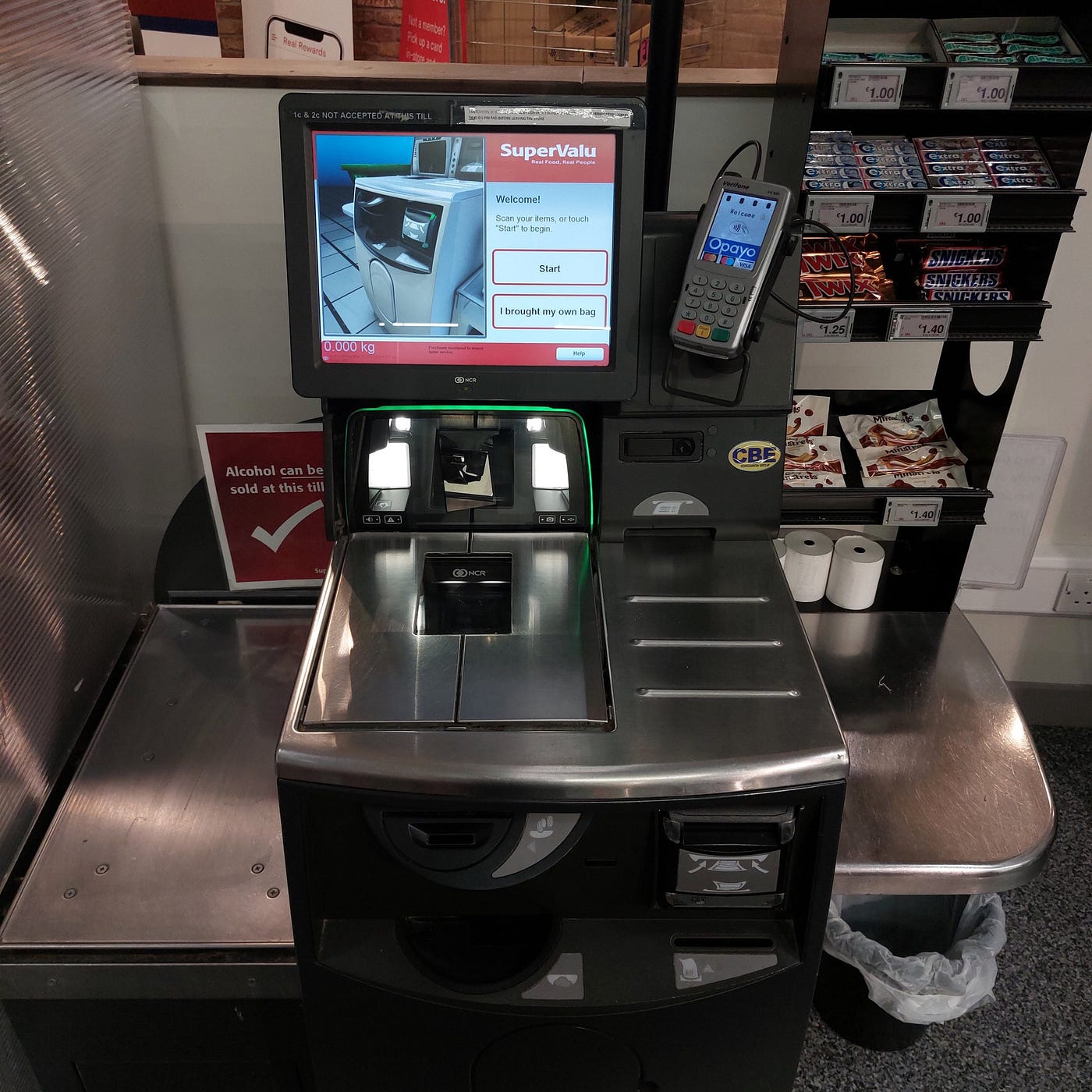
SuperValu? Not by user experience standards. Guess which one is the “bagging” area?
The result is that mysterious and useful “Unexpected item in the bagging area” audio message ringing out throughout the aisles, the all-year-round soundtrack to local shopping.
The dominant mental model of customers here is to move the shopping items from left to right, from their basket to the scanner, and then to bagging, and then to payment. Yet, in my local supermarket, the machines are configured to expect the opposite direction (thus the unpaid-for items get put in the final bagging area first, triggering the heavenly voice from above with the cryptic message).
So, we have an expensive digital implementation that delivers a dismal customer experience, resulting in associated delays and costs, as human assistance is required to complete basic tasks, and customers vow “never again”. This is basic stuff to fix.
Spending a few minutes watching how people shop and talking with them afterwards, or asking them to talk through their experience, would have been the way to avoid this design failure, ludicrous message, and the need for expensive, continuous human assistance in the first place.
At a minimum, getting management approval for a set of big stickers and arrows with the words “Bagging Area” would greatly reduce support costs.
It’s not rocket science, it’s common sense. Dr Jane Goodall pioneered basic user-centered research techniques decades ago with chimpanzees. It seems decision-makers still have much to learn.
Update (August 2025)
Finally.

Ultan Ó Broin is a user experience sustainability design professional from Ireland.
메타데이터
- post_id
- 2b90bc7e30bc
- slug
- avoiding-the-unexpected-item-in-the-bagging-area-user-experience-on-earth-2b90bc7e30bc
- url
- https://uxplanet.org/avoiding-the-unexpected-item-in-the-bagging-area-user-experience-on-earth-2b90bc7e30bc
- canonical_url
- https://uxplanet.org/avoiding-the-unexpected-item-in-the-bagging-area-user-experience-on-earth-2b90bc7e30bc
- author_url
- https://medium.com/@mashupux
- status
- ok
- fetched_at
- 2026-06-25 07:00:49