The Vengeful Gods of Statistics: How to Finally Understand Correlation vs. Causation
You’ve seen the headlines:

The Vengeful Gods of Statistics: How to Finally Understand Correlation vs. Causation
You’ve seen the headlines:
- “Drinking Red Wine Makes You Live Longer!”
- “Study Finds That Ice Cream Sales Cause Drowning Deaths!”
- “People Who Use TikTok Are More Likely to Be Depressed!”
They’re catchy, they go viral, and unfortunately, they are almost always committing one of the most fundamental — and costly — errors in reasoning. They are conflating correlation with causation.
This isn’t just a nerdy statistical pedantry. Mistaking correlation for causation leads to wasted money, flawed business strategies, and public policies that don’t work. It’s the intellectual trap that fuels fad diets and bad investments.
But once you understand the difference, you’ll see the world with new, more critical eyes. Consider this your vaccination against statistical nonsense.
Part 1: The “What” — Defining Our Terms
Let’s start by clearly defining these two concepts.
Correlation: The Dance Partners
Correlation is a statistical measure that describes the size and direction of a relationship between two or more variables. In simple terms, it means that when one variable changes, the other one tends to change in a predictable way.
We often measure it with a “correlation coefficient,” which ranges from -1 to +1.
- Positive Correlation (+1 to 0): Both variables move in the same direction.
- Example: Hours studied and exam scores. As studying goes up, scores tend to go up.
- Negative Correlation (0 to -1): The variables move in opposite directions.
- Example: Time spent playing video games and exam scores. As gaming goes up, scores tend to go down.
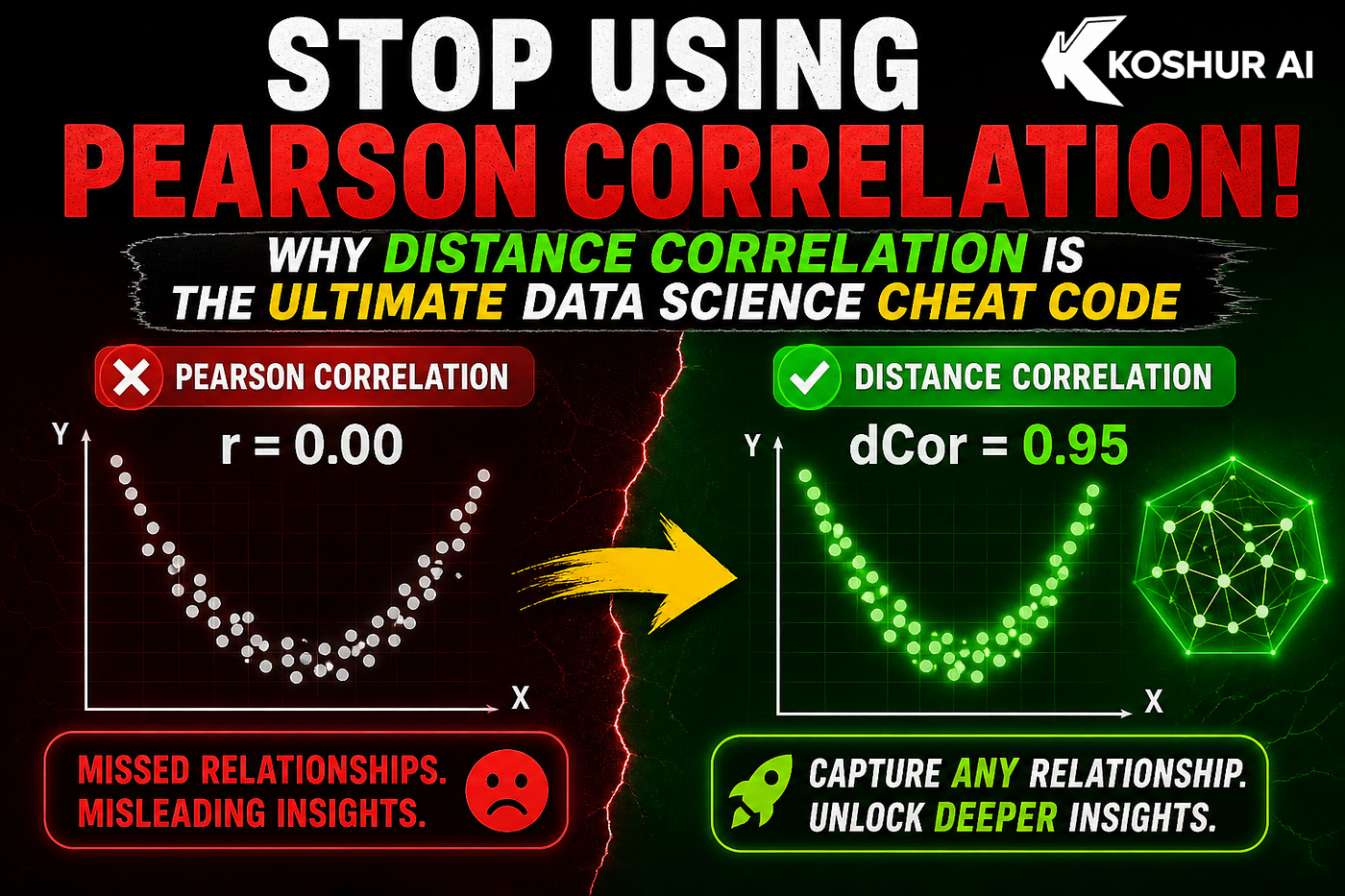
- Zero Correlation (around 0): There is no predictable relationship between the variables.
- Example: The number of socks you own and your intelligence.
Correlation is about observing a pattern. It’s like noticing two people on a dance floor moving in sync. You don’t know if one is leading the other, if they are both following the same music, or if it’s just a coincidence.
Causation: The Domino Effect
Causation (or causality) is the principle that one event (the cause) directly brings about another event (the effect). It’s the golden standard of understanding. It means that if you manipulate the first variable, you can reliably expect a change in the second.
- Example: Smoking cigarettes causes lung cancer. Not just correlated — causes. Decades of rigorous biological research have established the direct mechanism.
If correlation is watching the dancers, causation is proving that when you push one dancer (the cause), they bump into the second dancer, making them stumble (the effect).
Part 2: The Golden Rule — The Heart of the Matter
Here is the single most important takeaway from this article. Burn it into your memory:
Correlation does not imply causation.
Just because two things are related does not mean that one caused the other.
This is the logical cliff that so many headlines and bad arguments drive right off. They see two things happening together and jump to a conclusion. Our brains are wired for pattern recognition, so this feels natural. But in logic and science, it’s a dead end.
Part 3: The “Why Not?” — The Hidden Third Factors
So, if A and B are correlated, but A didn’t cause B, what’s going on? There are several possible explanations, but the most common and insidious one is the Confounding Variable (or lurking variable).
A confounding variable is a third, unobserved factor that influences both the variables you’re looking at, creating the illusion of a direct causal link between them.
Let’s revisit our earlier absurd examples to see confounding variables in action.
The Ice Cream & Drowning Example
- Observation: Ice cream sales and drowning deaths are strongly positively correlated. They both go up in the summer.
- False Causation: “Eating ice cream causes drowning!”
- The Real Cause (The Confounding Variable): Hot Weather.
- Hot weather causes more people to buy ice cream.
- Hot weather also causes more people to go swimming, which increases the absolute number of drowning incidents.
The two variables (ice cream and drowning) are dancing together, but the hidden DJ — the hot weather — is the one controlling the music for both.
The Red Wine & Longevity Example
- Observation: People who drink moderate amounts of red wine have lower rates of heart disease.
- Assumed Causation: “The antioxidants in red wine cause better health!”
- The Real Cause (The Confounding Variable): Socioeconomic Status & Lifestyle.
- Moderate red wine drinkers often have higher disposable incomes, which correlates with better access to healthcare, healthier food, and less stressful jobs.
- They are also more likely to exercise regularly and not smoke.
The red wine might just be a fellow traveler on the path to good health, not the path itself.
Part 4: How Do We Actually Prove Causation?
If correlation isn’t enough, how do scientists and researchers ever prove that A causes B? It requires deliberate, rigorous investigation.
The gold standard is the Randomized Controlled Trial (RCT).
Here’s how it works:
- Random Assignment: You take a large group of people and randomly split them into two groups: a treatment group and a control group. Randomization is key because it (in theory) evenly distributes all possible confounding variables (age, diet, genetics, etc.) across both groups.
- Intervention: You give the treatment group the thing you’re testing (e.g., a new drug, a specific exercise). The control group gets a placebo or no intervention.
- Control: You keep all other conditions identical for both groups.
- Measurement: You measure the outcome. If the treatment group shows a statistically significant improvement over the control group, you can be much more confident that the treatment caused the improvement.
Why does this work?
Because the only systematic difference between the two groups was the intervention. You’ve eliminated the confounding variables.
In fields where RCTs are unethical or impossible (e.g., studying the long-term effects of smoking), researchers use a mountain of evidence from different angles — longitudinal studies, biological mechanisms (how smoking damages lung cells), dose-response relationships (more smoking leads to higher cancer risk) — to build an irrefutable case for causation.
A Simple Framework for Your Mental Toolkit
The next time you see a headline claiming a link between two things, ask these questions:
- Is this just a correlation? Look for the language. “Linked to,” “associated with,” and “tied to” are red flags for correlation.
- What’s a possible confounding variable? Brainstorm a third factor that could be influencing both. (Hint: time, money, age, and general health are common culprits).
- Could the direction of causality be reversed? Maybe B is causing A! For example, a study might find that depression is correlated with low levels of a certain brain chemical. Does the chemical cause depression, or does depression cause the chemical levels to drop?
- Could it just be coincidence? With vast amounts of data, you can find correlations between the most ridiculous things (e.g., the divorce rate in Maine correlates with per capita consumption of margarine). These are spurious correlations and are pure coincidence.
Conclusion: Embrace Healthy Skepticism
Understanding the difference between correlation and causation is a superpower. It’s the foundation of critical thinking in a data-saturated world. It will make you a smarter consumer of news, a more savvy business professional, and a more informed citizen.
So, the next time your friend tells you that their kale-and-crystal diet cured their cold, remember: they probably just got better with time. The correlation was there, but the causation was likely elsewhere.
Don’t just watch the dancers. Always ask who’s controlling the music.
메타데이터
- post_id
- 2ba818c1cfb0
- slug
- the-vengeful-gods-of-statistics-how-to-finally-understand-correlation-vs-causation-2ba818c1cfb0
- url
- https://medium.com/@koshurai/the-vengeful-gods-of-statistics-how-to-finally-understand-correlation-vs-causation-2ba818c1cfb0
- canonical_url
- https://medium.com/@koshurai/the-vengeful-gods-of-statistics-how-to-finally-understand-correlation-vs-causation-2ba818c1cfb0
- author_url
- https://medium.com/@koshurai
- status
- ok
- fetched_at
- 2026-06-09 15:37:30