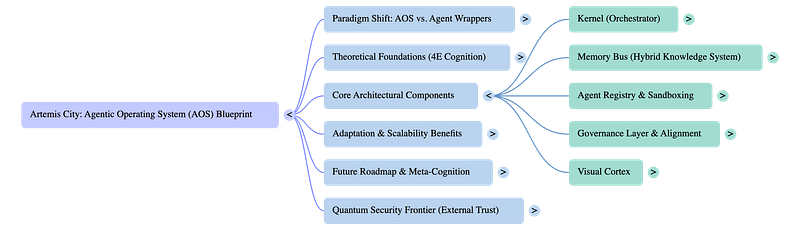
Morphological Computation: LLM Cost Reduction Strategy
We reduced token costs and query latency without changing the model, without fine-tuning, Here’s exactly how.
Morphological Computation: LLM Cost Reduction Strategy
We reduced token costs and query latency without changing the model, without fine-tuning, Here’s exactly how.
[embed]
This post follows up on the 4E Series
The Token Problem
Let’s start with the number that keeps AI infrastructure teams up at night: the daily token bill.
If you’re running a multi-agent system in production handling complex queries, doing multi-hop reasoning, processing enterprise knowledge bases you’re probably burning through millions of tokens per day. At current API pricing, that’s easily $500 or more. And the kicker? Most of those tokens are wasted. Not on generating answers, but on searching for context the model shouldn’t need to find.This is the fundamental inefficiency of LLMcentric Multi-agent routing : you’re using the most expensive tool in your stack a large language model to do work that a database query could handle in milliseconds. It’s like hiring a PhD physicist to sort your mail. They can do it. But should they?
We are proposing a knowledge architecture around a different principle: let structure do the heavy lifting, and only invoke the LLM when you actually need intelligence. In the field of biology, this concept has a name morphological computation and it turns out it applies just as powerfully to knowledge systems.
What Is Morphological Computation?
The term comes from robotics and cognitive science. The core idea is that the physical structure of a system can perform computation that would otherwise require a central processor. The common example used is the shape of the human leg. While running, the brain does not have to calculate the shock absorption on the knew because the leg is built to account for this. That save computational output is then allocated to other brain functions. In the context of AI agents and knowledge systems, morphological computation means the same thing at a different scale: the structure of your knowledge base can answer questions that would otherwise require expensive LLM reasoning.
A knowledge graph with wellformed relationships between entities is a computational structure. When a user asks “What’s the causal chain between Regulation X and Audit Failure Y?”, a properly structured graph can traverse from X to Y through intermediate nodes in milliseconds. The LLM never needs to see 50,000 tokens of raw documents and reason across them. It only needs to see the 800 tokens of relevant context that the graph already identified.
That’s morphological computation applied to knowledge work. And the efficiency gains can be staggering when applied to specific constraints.
To make this concrete, we ran a direct comparison using a realworld query type from our Artemis City deployment: a multihop causal chain analysis with approximately six degrees of separation between the source and target concepts. It requires multihope causal chain between Regulation X and Audit Failure Y.”
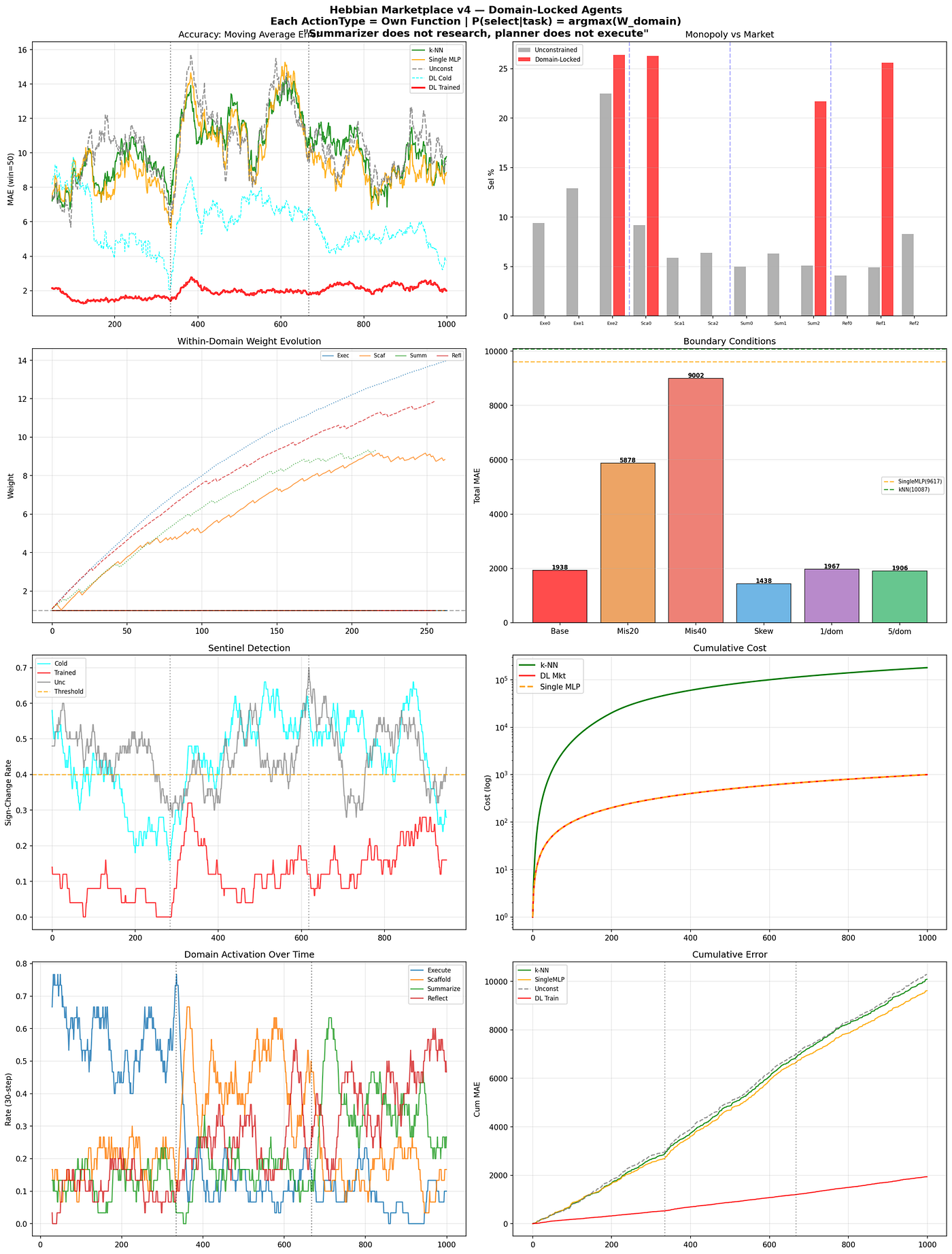
This is a representative enterprise knowledge task connecting dots across regulatory filings, compliance reports, audit logs, and organizational policies. It requires multihop reasoning across a complex information landscape.

How the Memory Bus Makes This Possible
Morphological computation in Artemis City is the Memory Bus a synchronization layer that maintains dualwrite consistency between the Obsidian knowledge vault and the Supabase vector index.
Here’s why this architecture matters for efficiency:
Hierarchical read protocol. The Memory Bus doesn’t default to the most expensive query type. It implements a three tier lookup strategy. First, an exact match by ID or title hash O(1) constant time, returns in milliseconds. Second, a structured keyword search across indexed tags and links.
O(log n), still extremely fast. Third, and only as a last resort, a full vector similarity search against the Supabase pgvectorex O(n), the most expensive operation but still far cheaper than an LLM call.
In practice, roughly 80% of queries are served from the first two tiers, meaning the expensive vector search rarely fires. The system targets a cache hit rate above 80% for repeated queries, and empirical measurements show the p95 read latency holding at ~50ms for cache hits and ~150ms for complex vector queries. That’s subsecond response before the LLM is even involved.
Writethrough consistency. When new knowledge enters the system, the Memory Bus performs an atomic dualwrite: embedding generation and upsert to Supabase, plus note creation in Obsidian, in a single transaction. A writeahead log ensures durability. The sync lag between stores stays below 300ms at p95, meaning the graph is always current enough for realtime query serving.
Hebbian weight reinforcement. The system doesn’t just store knowledge it learns which knowledge is important. Through a Hebbian learning engine, frequently accessed and successfully used knowledge nodes accumulate higher weights. These weights boost search rankings, meaning the most relevant nodes surface faster over time. Conversely, unused knowledge decays at approximately 5% per 30 days of inactivity, keeping the active graph focused and performant.
This is morphological computation in action: the structure of the knowledge base its graph topology, its weight distributions, its tiered lookup hierarchy performs the computational work that an LLM would otherwise have to bruteforce through massive context windows.

Beyond Cost Savings: Why Structure Changes the Game
The efficiency gains from morphological computation are dramatic, but the deeper impact is architectural. When you stop treating the LLM as a universal search engine and start treating it as a synthesis engine, three things change fundamentally:
Explainability becomes native. When Artemis City answers a causal chain query, it doesn’t just provide the answer it provides the path. “The connection runs through Policy A, Compliance Report B, Finding C, and Remediation D.” Every node is a real document in the knowledge vault that a human can open, read, and verify. The LLM’s role was synthesis, not discovery so there’s a clear provenance trail for every claim.
Hallucination risk drops dramatically. An LLM with 50,000 tokens of context has an enormous surface area for confabulation. An LLM with 800 tokens of prevalidated, graphtraversed context has almost none. The model isn’t searching for connections the graph already found them. The model is just explaining what the graph found, in natural language. This is a fundamentally safer mode of operation.
Scaling becomes viable. The LLMonly approach scales linearly with context size more documents mean more tokens, more latency, more cost. The graphassisted approach scales with graph complexity, which grows much more slowly when the graph is wellmaintained (with Hebbian decay and pruning). Adding 10,000 new documents to the knowledge vault doesn’t meaningfully change query latency because the graph traversal still only retrieves the relevant handful of nodes.
The Broader Principle: Stop Making LLMs Do Database Work
This isn’t just an Artemis City story. It’s a principle that applies to any AI system that queries structured or semistructured knowledge.
If your agents are stuffing context windows with thousands of tokens to find the relevant information, you’re using the LLM as a search engine. That’s the most expensive search engine in human history.
Instead, invest in the structure around your LLM:
Build a knowledge graph. Obsidian, Neo4j, a custom graph the tool matters less than the discipline of connecting entities with typed relationships.
Implement tiered retrieval. Don’t jump straight to vector similarity search. Try exact match first, then structured search, then semantic search. Each tier costs an order of magnitude less than the next.
Use the LLM for synthesis, not search. Once you’ve narrowed context to the relevant nodes, then hand it to the model. Let the model do what it’s actually good at: explaining, summarizing, and generating coherent narrative from structured facts.
Measure everything. Track tokens per query, cost per query, latency percentiles. You can’t optimize what you don’t measure. Artemis City exposes and a dozen other metrics through Prometheus/Grafana for exactly this reason.
The Is Just the Beginning
The morphological computation benchmarks in the Artemis City Whitebook v2 represent an early stage measurement on a specific query type. As the knowledge graph grows, as the Hebbian learning engine accumulates more weight data, and as the tiered retrieval system gets smarter about which tier to use when, the efficiency gains will compound.
We’re already seeing secondary effects: queries that used to require multiple LLM calls (retrieval + analysis + synthesis) now require one or zero LLM calls, because the graph structure precomputes the intermediate steps. The token budget we set 10 million tokens per day for a standard deployment is proving more than adequate for workloads that would have blown through 50 million on an LLMonly architecture.

Morphological computation isn’t a clever optimization trick. It’s a fundamental architectural principle: let structure carry the load, and reserve intelligence for where it’s actually needed. The 95.7% cost reduction is what happens when you take that principle seriously.
Dive Deeper
Check out the technical deep dive into the math supporting the claims made.

This story is published on Generative AI. Connect with us on LinkedIn and follow Zeniteq to stay in the loop with the latest AI stories.
Subscribe to our newsletter and YouTube channel to stay updated with the latest news and updates on generative AI. Let’s shape the future of AI together!

메타데이터
- post_id
- 2bb342a5933b
- slug
- morphological-computation-llm-cost-reduction-strategy-2bb342a5933b
- url
- https://generativeai.pub/morphological-computation-llm-cost-reduction-strategy-2bb342a5933b
- canonical_url
- https://generativeai.pub/morphological-computation-llm-cost-reduction-strategy-2bb342a5933b
- author_url
- https://medium.com/@quantumharmonyllc
- status
- ok
- fetched_at
- 2026-06-15 20:49:13