AI in Business Analysis: Elevating Requirement Management End-to-End
AI is reshaping requirement management by reducing manual effort, sharpening analysis, and improving stakeholder collaboration. From…
AI in Business Analysis: Elevating Requirement Management End-to-End
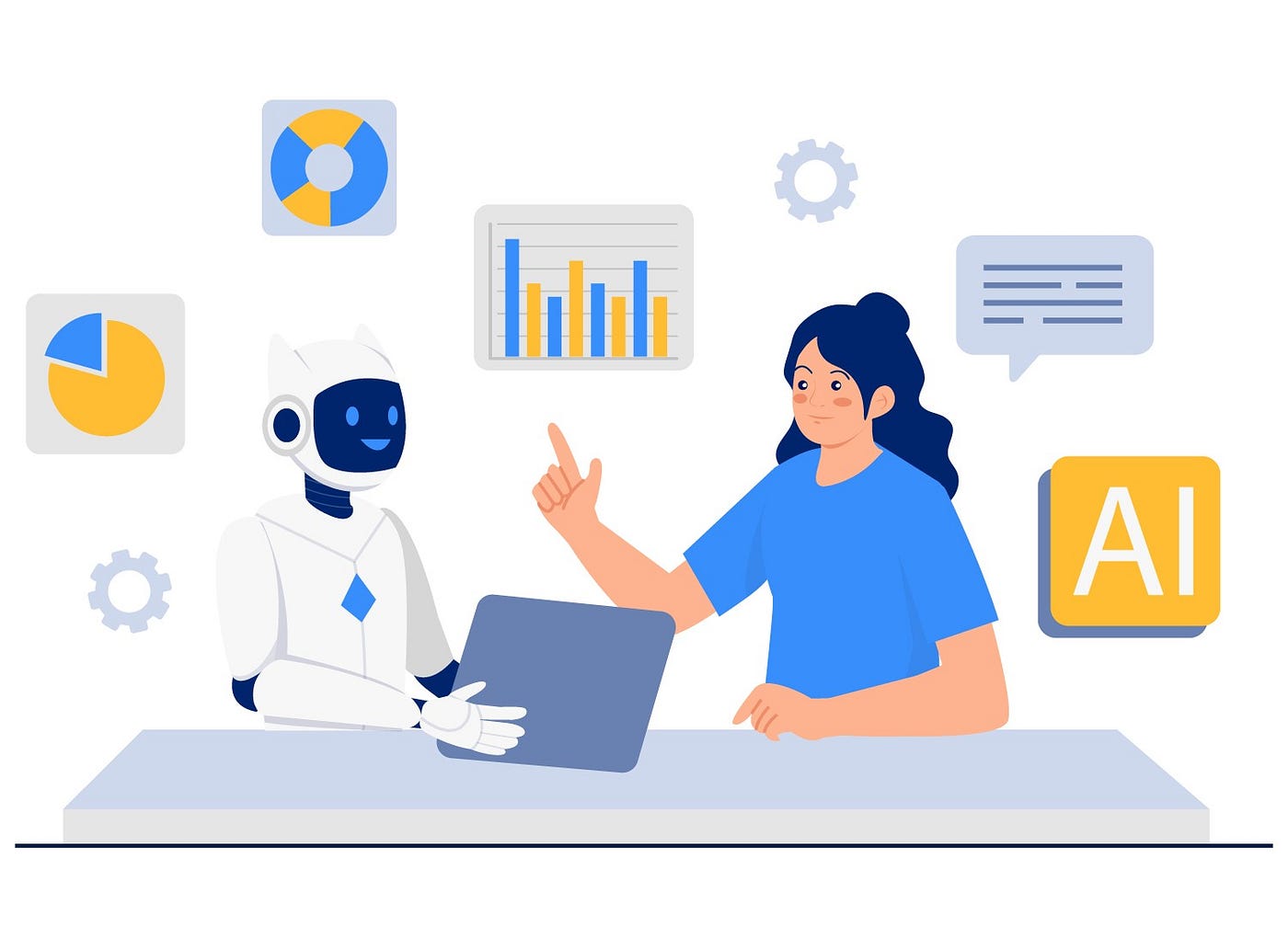
AI is reshaping requirement management by reducing manual effort, sharpening analysis, and improving stakeholder collaboration. From elicitation to validation and change control, AI augments core activities so analysts can focus on strategy and value.
1. Elicitation & Stakeholder Collaboration
- Meeting capture & synthesis: Tools like Microsoft Copilot, Otter.ai, and Zoom AI Companion transcribe workshops, extract key points, decisions, and risks, and generate action items automatically.
- Conversational gathering: Virtual assistants (e.g., Copilot in Teams, Watson Assistant) can run structured prompts to collect initial needs, clarify assumptions, and surface contradictions.
- Sentiment & voice-of-customer: MonkeyLearn, Power BI with text analytics, or Tableau extensions analyze feedback, surveys, and social data to reveal pain points and priorities.
Outcome: Faster discovery, fewer missed requirements, and evidence-backed stakeholder insights.
2. Analysis, Modeling & Impact Assessment
- Process and journey modeling: Miro AI, Lucidchart with AI suggestions, and Visio add auto-layouts, gap prompts, and consistency checks in flows, journeys, and context diagrams.
- Data-driven validation: Power BI, Tableau, and Qlik apply forecasting and anomaly detection to test assumptions (e.g., projected volumes, SLA impacts, cost curves).
- Scenario simulation: With Azure Machine Learning or Google Cloud AI, analysts can simulate “what-if” changes, feature additions, policy adjustments, or channel shifts to estimate impact on KPIs.
Outcome: Clearer models, defensible trade-offs, and quantified impacts.
3. Documentation & Specification Quality
- Clarity & consistency: Microsoft Copilot, Notion AI, and Grammarly Business help standardize language, remove ambiguity, and apply templates for user stories, use cases, and NFRs.
- Smart classification: MonkeyLearn or Azure Cognitive Services auto-tag requirements by domain, priority, risk, and component, making repositories navigable.
- Traceability hooks: In Jira, Azure DevOps, Confluence, or Jama Connect, AI assists linking requirements to epics, test cases, and design artifacts, reducing orphan items.
Outcome: Cleaner specs, better discoverability, and stronger traceability.
4. Validation, Verification & Test Alignment
- AI-generated test ideas: Tools like Testim, Functionize, and Tricentis propose test scenarios from requirements, derive boundary conditions, and update tests as requirements evolve.
- Requirement-to-test coverage: AI helps map each requirement to test cases and alerts on gaps; Azure DevOps and Jama Connect can visualize coverage and risk hotspots.
- Defect triage: Copilot for GitHub and ServiceNow intelligent routing categorize issues, suggest likely root causes, and prioritize fixes aligned to high-risk requirements.
Outcome: Stronger coverage, faster feedback loops, and fewer late surprises.
5. Change Control, Governance & Risk
- Impact analysis on change: AI scans dependencies to show affected features, teams, and tests when a requirement changes; Polarion, ReqView, and Jama Connect support automated impact maps.
- Compliance checks: AI can flag gaps against internal standards (security, accessibility, data residency) and external regulations, raising early warnings in specs and designs.
- Priority optimization: Multi-factor models blend value, cost, risk, and effort to recommend sequencing, useful for roadmaps and release planning.
Outcome: Transparent change decisions, controlled risk, and value-led prioritization.
6. Communication & Stakeholder Readouts
- Executive summaries: Microsoft Copilot converts detailed specs into concise readouts tailored for leadership, product, or engineering audiences.
- Visual explainers: With PowerPoint + Copilot or Canva with AI, analysts craft diagrams and slides that translate complex requirements into digestible visuals.
Outcome: Faster alignment, clearer decisions, and reduced churn.
Practical Toolstack Examples
- Discovery & notes: Copilot in Teams, Otter.ai, Zoom AI Companion
- Modeling & collaboration: Miro AI, Lucidchart, Visio
- Analytics & validation: Power BI, Tableau, Qlik; Azure ML, Google Cloud AI
- Repo & traceability: Jira + Confluence, Azure DevOps, Jama Connect, Polarion, ReqView
- Testing & quality: Testim, Functionize, Tricentis, Selenium (AI-enhanced)
- Comms & reporting: Copilot for Word/PowerPoint, Canva, Notion AI
Best Practices for AI-Enabled Requirement Management
- Start with structured templates (user stories, use cases, NFRs) and let AI enhance (not replace) your discipline.
- Keep human oversight — review AI outputs for ambiguity, feasibility, and stakeholder context.
- Maintain a single source of truth (e.g., Jira/DevOps/Jama) with AI-driven traceability and change logs.
- Protect sensitive data — apply data governance, access controls, and redaction for workshops and transcripts.
- Measure outcomes — track cycle time, defects found late, test coverage, and stakeholder satisfaction to prove value.
- Upskill the team — provide training on prompt design, model limitations, and ethical use.
The Bottom Line
AI doesn’t replace business analysts; it amplifies them. By automating heavy lifting and surfacing insights, AI helps teams capture the right requirements, analyze impacts, validate early, and govern change with confidence. The result is faster delivery, higher quality, and clearer alignment across stakeholders.
메타데이터
- post_id
- 2bbef976b481
- slug
- ai-in-business-analysis-elevating-requirement-management-end-to-end-2bbef976b481
- url
- https://medium.com/axonect-blog/ai-in-business-analysis-elevating-requirement-management-end-to-end-2bbef976b481
- canonical_url
- https://medium.com/axonect-blog/ai-in-business-analysis-elevating-requirement-management-end-to-end-2bbef976b481
- author_url
- https://medium.com/@erandi.galappaththi
- status
- ok
- fetched_at
- 2026-06-23 03:48:11