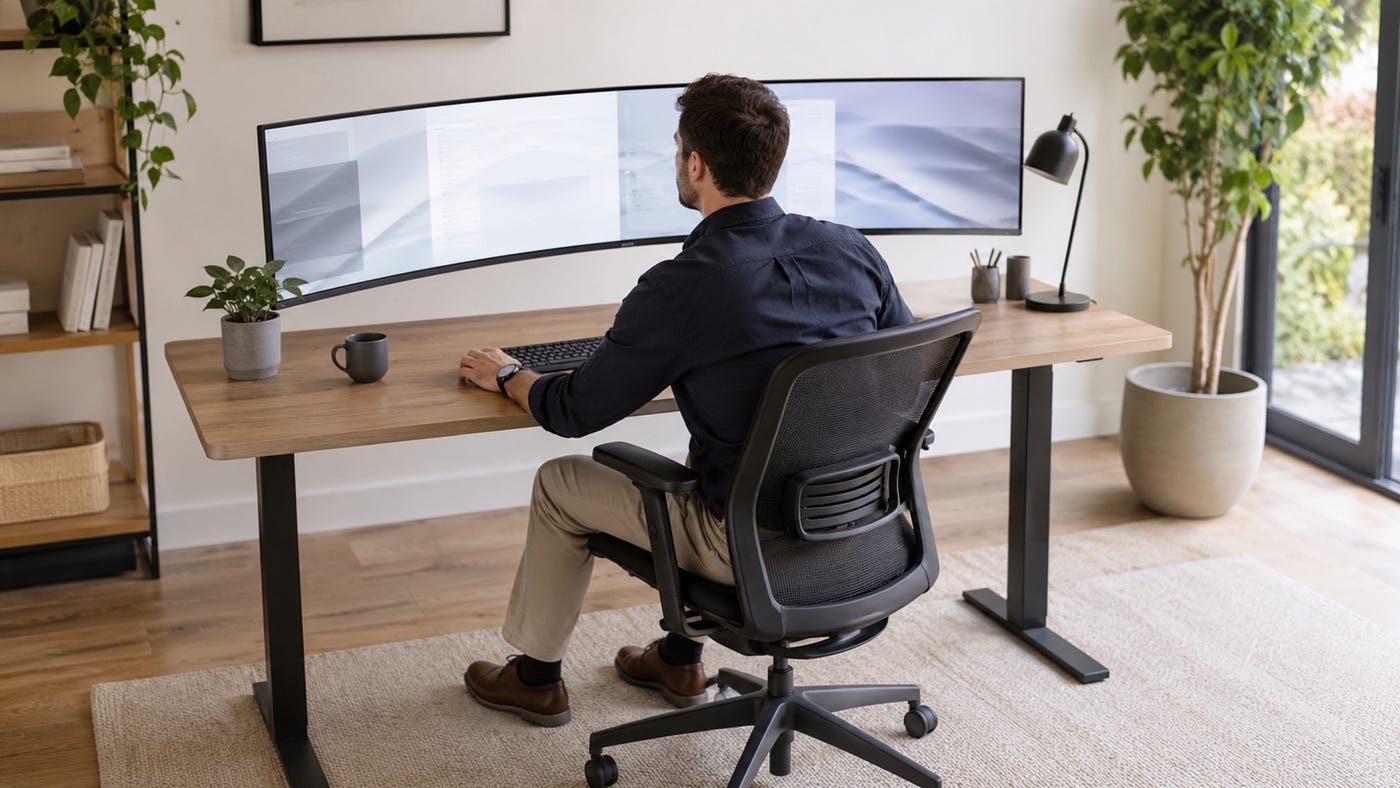
Why a New Desk Deserves a Real Chair
The desk arrived flat-packed. You built it, cleared the corner, ran the cable tidy, positioned the monitor at the right height, and then…
Why a New Desk Deserves a Real Chair
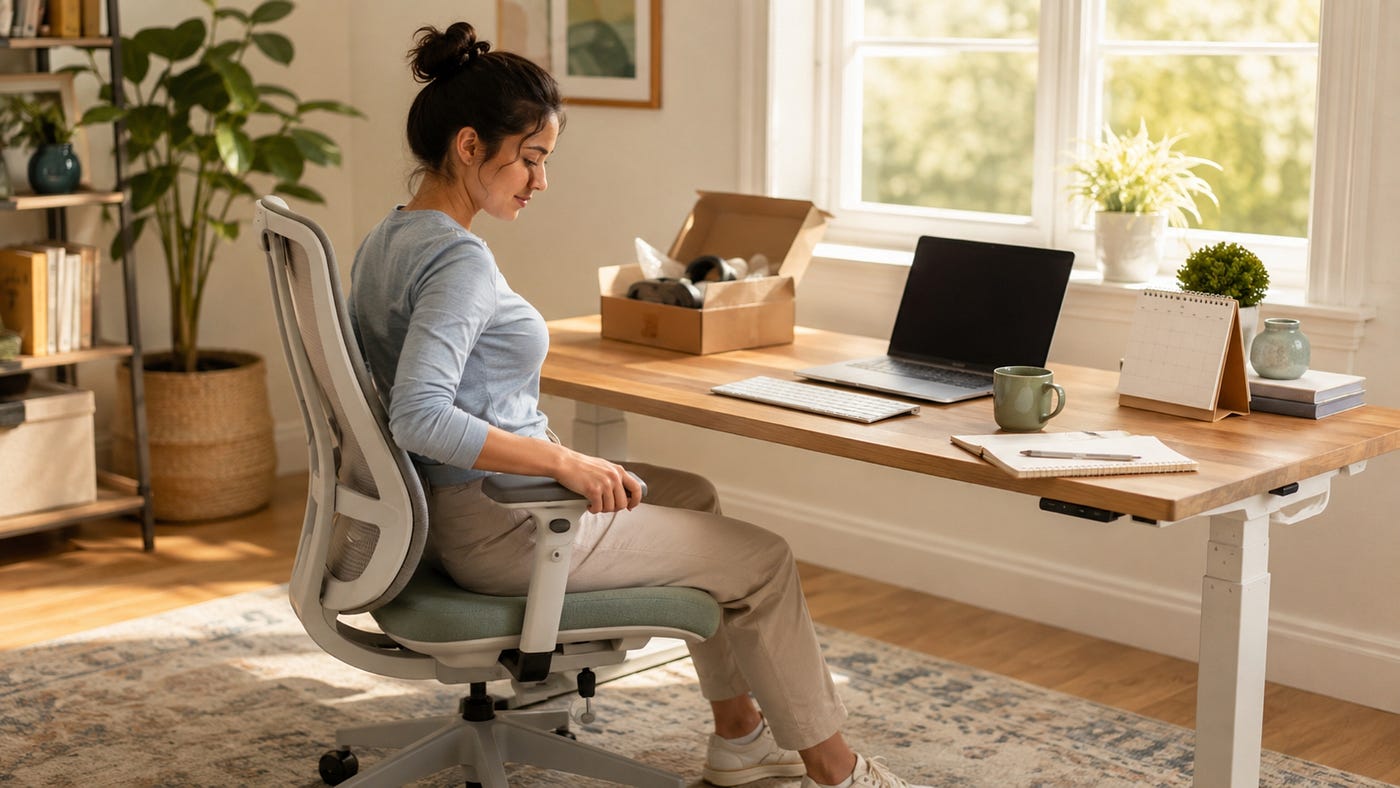
The desk arrived flat-packed. You built it, cleared the corner, ran the cable tidy, positioned the monitor at the right height, and then sat down on the chair from the dining table because it was there. The desk is new and considered, the chair is an afterthought, and that mismatch is the single most common flaw in a fresh home workspace.
A new desk deserves an ergonomic chair beside it because the desk and the chair are one system, and a good desk paired with a poor seat performs like a poor setup, not a good one. Occupational health guidance updated through 2026 keeps making the point that seat height, back support, and desk height have to work together, since the desk sets where your hands go and the chair sets where your body sits, and getting one right while ignoring the other leaves you no better off. The desk was the visible purchase. The chair is the one your spine actually feels.
Understanding why the desk and chair are a pair is what stops a considered desk from being undone by the seat in front of it.
Why the desk and chair are one system
The direct reason a new desk needs a real chair is that they function together, not separately. The desk fixes the height of your keyboard and screen, and the chair fixes the height and support of your body relative to that, so the correct posture only exists when both are set for each other. A perfect desk with a wrong-height chair puts your arms and eyes out of position just as surely as a wrong desk would.
In my testing, people who invested in a good desk and kept a random chair often sat worse than they expected, because the chair could not put their body where the desk assumed it would be. The desk was correct in isolation and useless in practice, since the seat undercut it. A poor WFH chair can actively work against you rather than merely failing to help, as why your WFH chair might be hurting more than helping explains.
So the desk and chair are one system, which is why fixing the desk alone leaves the posture problem unsolved.
Why a good desk and a bad chair cancel out
The frustrating part of a mismatched setup is that the good desk cannot rescue the bad chair. A desk at the right height only helps if your body sits at the height and support the desk assumes, and a poor chair puts your body somewhere else, so the two work against each other and the benefit of the desk is lost.
I have seen people spend real money on a sit-stand desk and then perch on a kitchen chair, ending up with a setup no better than the cheap one they replaced, because the chair set their body wrong and the desk could not compensate. The desk raised and lowered beautifully to a body that was itself badly supported. This is the cancelling-out effect, where a strong link and a weak one produce a weak system, and it is why the chair cannot be the afterthought. How the right seat depends on your body is set out in how to choose the right ergonomic chair for your body type in Australia.
So a good desk and a bad chair cancel out, because a system is only as good as its weakest part and the chair is often that part.
Why the chair is the part your body feels
There is a reason the chair deserves the greater share of attention, which is that it is the part in constant contact with your body. The desk holds your equipment, but the chair holds you, bearing your weight and shaping your spine for every hour you sit. You feel the chair continuously and the desk only through your hands, so the chair has more say over how the day feels.
In my testing, the component people regretted skimping on was always the chair, never the desk, because the chair was what ached at the end of the day. A cheap desk that holds a monitor at the right height does its job invisibly, while a cheap chair reports itself through your back every afternoon. This is why the budget should favour the chair when it comes down to a choice, since it is the part that carries you. The seats built to support the back through long days are covered in the best office chairs for back support.
So the chair is the part your body feels, which is why it deserves at least as much thought as the desk it sits under.
Why buying them together makes sense
Setting up a new workspace is the natural moment to buy the chair, because you are already thinking about the space and can match the two pieces from the start. Choosing the chair alongside the desk lets you set their heights to each other and avoid the trap of a considered desk paired with a leftover seat, which is what happens when the chair is deferred to later.
I have found that people who bought desk and chair together ended up with a setup that worked as one, while those who bought the desk first and meant to sort the chair later usually never did, and the stopgap became permanent. The moment of setting up is when the whole system is in view, so it is the moment to complete it rather than leave a gap that inertia will fill with the dining chair. Where to find a proper seat is shown by ergonomic office chairs in Australia.
So buying them together makes sense, because the setup moment is when both pieces are in view and can be matched to each other.
How a matched setup compares to a mismatched one
The table sets out why pairing a new desk with a real chair beats leaving the seat as an afterthought.

The pattern is that the desk being right is not enough on its own, because the chair decides where your body actually sits, and only a matched pair delivers the setup the desk was meant to create.
When It Matters Less
The pairing matters less if you barely use the desk, an occasional spot for light tasks rather than a daily workstation, because short sitting forgives a mismatched chair. It also matters less if you already own a good chair and are only adding a desk, since the harder half of the system is already in place.
And if your desk is a standing desk you use mostly standing, the chair carries less of the load because you are off it much of the time. The people for whom the pairing matters most are those building a daily home workstation around a new desk while planning to sort the chair later, since that is where a considered desk most often ends up undone by a leftover seat. For lighter use the principle holds with less riding on it.
Common Mistakes
The first mistake is treating the chair as an afterthought to the desk. The desk and chair are one system, so a considered desk paired with a leftover seat performs like a poor setup, not a good one. The chair deserves the same thought the desk received.
The second is assuming a good desk fixes the setup on its own. A desk at the right height only helps if the chair puts your body where the desk assumes, so a good desk and a bad chair cancel out and leave you no better off than before.
The third is putting the budget into the desk and skimping on the chair. The chair is the part in constant contact with your body, so it is what aches at the end of the day. When it comes down to a choice, the seat deserves the money more than the desk does.
The fourth is deferring the chair to buy later. The setup moment is when the whole system is in view, and a chair put off is usually a chair never bought, with the dining seat filling the gap by inertia. Buying the pair together avoids the leftover-chair trap.
Conclusion
A new desk deserves a real chair because the two are one system, and a good desk paired with a poor seat performs like a poor setup rather than a good one. The desk fixes where your hands and eyes go, but the chair fixes where your body sits, so a considered desk with a leftover chair puts you out of position just as a bad desk would, and the benefit you paid for is cancelled by the seat in front of it.
Complete the system when you build it. Choose the chair alongside the desk, set their heights to each other, and put the budget into the part your body actually feels all day, which is the seat. The desk was the visible purchase and the chair is the one your spine reports on every afternoon, so a fresh workspace is finished not when the desk is built but when a chair worth sitting in is pulled up to it.
Frequently Asked Questions
Why does a new desk need a proper chair?
Because the desk and chair work as one system. The desk fixes the height of your keyboard and screen, and the chair fixes where your body sits relative to that, so the correct posture only exists when both are set for each other. A good desk with a poor chair leaves you out of position.
Can a good desk make up for a cheap chair?
No, because the two cancel out. A desk at the right height only helps if the chair puts your body at the height and support the desk assumes, and a poor chair puts you somewhere else. The good desk ends up serving a badly supported body, so the benefit is lost.
Should I spend more on the desk or the chair?
Usually the chair, because it is the part in constant contact with your body and the part that aches at the end of the day. A cheap desk holding a monitor at the right height does its job invisibly, while a cheap chair reports itself through your back every afternoon.
Is it worth buying the desk and chair at the same time?
Yes, because the setup moment is when both pieces are in view and can be matched to each other. Buying the desk first and deferring the chair usually means the chair never arrives and the dining seat fills the gap, leaving a considered desk undone by a leftover chair.
Why do I still ache at a nice new desk?
Most often because the chair, not the desk, is the problem. If the desk is set correctly but you perch on a random seat, your body sits at the wrong height and support, and the ache comes from the chair while the desk gets the credit for being new. The seat is what your body feels.
Does the chair matter if my desk is a standing desk?
Less, if you stand for most of the day, because you are off the chair much of the time. But if you sit for meaningful stretches, the chair still sets your body’s position when you are down, so a standing desk used partly seated still benefits from a proper seat rather than a stopgap.
메타데이터
- post_id
- 2bd7e7f84055
- slug
- why-a-new-desk-deserves-a-real-chair-2bd7e7f84055
- url
- https://medium.com/@sophielane.corpo/why-a-new-desk-deserves-a-real-chair-2bd7e7f84055
- canonical_url
- https://medium.com/@sophielane.corpo/why-a-new-desk-deserves-a-real-chair-2bd7e7f84055
- author_url
- https://medium.com/@sophielane.corpo
- status
- ok
- fetched_at
- 2026-08-21 19:20:34