The Amalfi Sunrise I Was Too Tired to See
The most beautiful vacation in the world runs on the exhaustion of people you’ll never notice.
The Amalfi Sunrise I Was Too Tired to See
The most beautiful vacation in the world runs on the exhaustion of people you’ll never notice.

The sky over the sea turns a bruised purple long before the sun clears the mountains.
I know that color better than I’d like to. I’ve watched it arrive from the same terrace more mornings than I can count, and every time, it’s stunning. Every time, I’m too tired to really look at it.
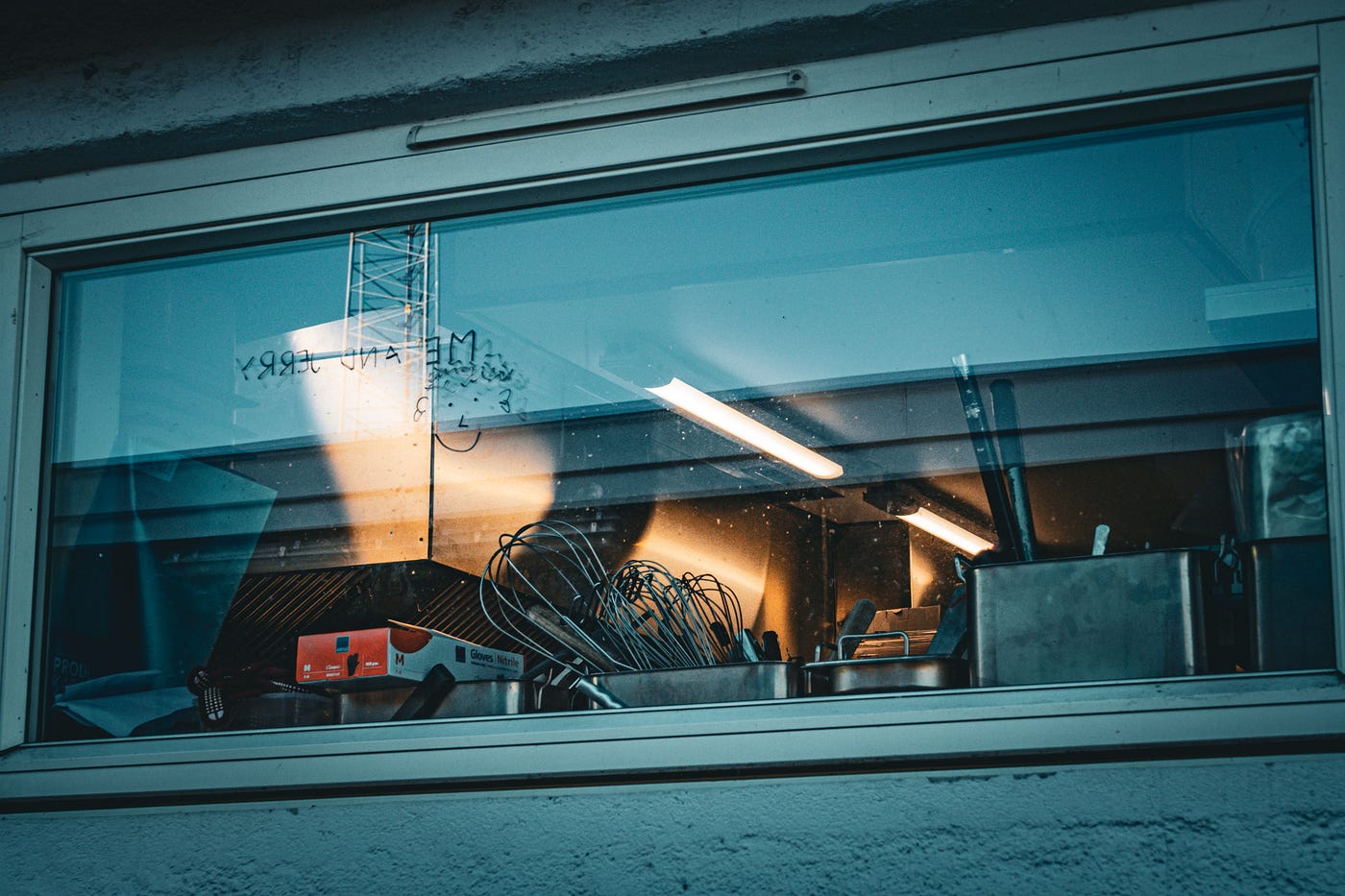
Below the villa, the water is still. Above it, in the master suites, the guests are asleep, warm under linen, their last glass of Barolo doing its slow work. And down in the second kitchen, the day has already started without them.
Here is the thing luxury never tells you. A perfect morning is not found. It is built, in the dark, by people who will make sure you never see them build it.
4:30 in the Dark
My alarm goes off at half past four. The air comes in cool through the shutters, salt and wild rosemary, the smell of a place that hasn’t woken up yet.
The first walk of the day is the perimeter. I check the gates, confirm the exterior lights have shut off the way they should, listen for anything out of place. These cliffside houses are breathtaking precisely because they cling to nothing — which means every single thing that enters this property has been carried down hundreds of stone steps by somebody’s back and shoulders.
You don’t think about that when you see the photos. The infinity pool. The bougainvillea. The lemons.
You don’t think about the steps.
The Ones Who Come Down the Steps
By five, the local crew begins to arrive.
They leave their scooters up on the road and make the steep descent on foot, in near silence, the way you move when you’ve done something a thousand times and your body no longer needs the light. Groundskeepers. Security. The head housekeeper. Two young maids who can’t be much past twenty.
We gather in the back kitchen over espresso in cups too small to warm your hands, and we go through the day. I speak some Italian. It’s not enough. When the talk speeds up into the local dialect, I lose the thread entirely, and I lean on the estate manager — a local man who translates not just the words but the meaning underneath them.
He’s the one who calls the marina for the boat to Capri before the booking offices open. He’s the one who knows whose cousin owns what, who’s owed a favor, who to greet and how. Without him I’d be running a house I only half understand.
I’ve spent years being the person who makes things happen. In Amalfi, I learned I was only ever borrowing someone else’s belonging.
They know these cliffs. I just arrived with a schedule.
The Market and the Dock
By six, the chef and I are in a battered Fiat, climbing.
We skip the markets the tourists find. We drive up into the higher villages where the growers sell straight from their own hands — crates of knobby, fist-sized lemons, basil so fragrant it fills the car, cherry tomatoes that taste like they’ve been holding the sun all summer. The roads are narrow and they fall away into nothing at the edges, and if you think about it too hard you stop breathing. So you don’t think about it. You just go.
Then the marina. There’s a fisherman who saves his best for us, and we stand on the concrete dock while his small wooden boat comes in. The chef picks a sea bass and a bucket of red prawns still twitching with life.
You cannot buy this in a supermarket. You can only earn it — years of showing up, small courtesies, a handshake that means something. The freshness on that dock isn’t a product. It’s a relationship.
The most expensive thing on the plate that night wasn’t the fish. It was the trust it took to be handed the best one.
While the prawns drip seawater at our feet, the chef and I quietly solve the day’s real puzzle: how to make a traditional seafood pasta with no gluten, no dairy, and no compromise on the soul of the dish. I cross-check it against my files. Nothing that could harm my employer will cross our threshold. That much I can promise.
The Machinery of “Effortless”
While we’re on the dock, the house is being erased.
That’s the honest word for it. The housekeeping team is sweeping away every trace of effort — skimming the saltwater pool, arranging the heavy cushions, clearing the terraces of fallen bougainvillea, folding towels into shapes so precise they look untouched by human hands.
I check where the sun will fall and turn the big canvas umbrellas to meet it. I stock the coolers with the right sparkling water, sliced lemons, chilled towels scented with eucalyptus. Every gesture removes a small friction the guest will never know existed.
Then the breakfast table, set in the exact spot that catches the best morning light. Polished silver. Starched linen. Local ceramics. Warm sfogliatelle, fresh ricotta, sliced fruit. Coffee strong enough to announce itself before you see it.
At 8:30, my employer wakes to all of this as if it simply grew overnight, like the flowers.
That’s the job. The finest luxury we sell is not the marble or the pool. It’s the absence of any evidence that someone worked.
The labor doesn’t disappear. It’s just made invisible. And invisible is not the same as gone — it only means the cost got moved onto someone whose name the guest will never learn.
The Morning I Don’t Get to Have
Once the guests sit down to eat, my body finally slows and my screen lights up.
I retreat to a small desk tucked into the library, or the staff quarters when the library’s in use. From there I confirm the dinner reservation, read the weather radar for the afternoon boat, and route emails to businesses waking up in London and Singapore. My morning of stone steps and fish markets folds neatly into a morning of spreadsheets, and neither one belongs to me.
The view from that desk is one of the great views on earth. I mostly see it in my peripheral vision.
My eyes are somewhere else — on an empty glass across the terrace, a towel slightly askew, a shift in my employer’s face that might mean the day is about to change shape. You learn to read a mood the way the local crew reads these cliffs. Instinctively. Constantly. Whether you want to or not.
There is a specific loneliness in it that I’ve stopped trying to explain to people. You are standing inside more beauty than most people see in a lifetime, and you are not permitted to be in it. You are the reason it feels effortless. You are the one part of it that isn’t allowed to rest.
What We Choose Not to See
When my employer leans back with that first espresso, relaxed and utterly unaware of what five in the morning looked like, I know we’ve done it right.
And I feel two things at once, the way I always do.
Pride — real, quiet pride — in an operation run so cleanly that its own effort vanished. And something heavier underneath it, for the young maids and the groundskeepers and the estate manager who climbed down those steps before dawn so that a stranger could wake to a world without friction.
We call it hospitality. Some mornings it feels closer to a kind of gentle disappearing act, performed by a whole community, so that one person doesn’t have to notice the machinery of their own comfort.
I don’t think the answer is guilt. The crew are proud of their craft, and they should be. The fisherman is proud of his fish. The chef would rather cut off a hand than serve a lesser prawn. There is dignity in this work, deep and unmistakable.
But dignity and invisibility are a hard pair to hold together. The people who make the world feel effortless are almost always the ones allowed to feel it the least.
So I’ve started doing one small thing. I look at them now. I learn the names. I say good morning in bad Italian and mean it. It changes nothing about the steps or the hours or the pre-dawn cold.
It just means someone saw.
The sunrise over the Amalfi coast really is one of the most beautiful things I know. I’ve been too tired to watch it for years.
But I’ve learned to watch the people who make it possible instead — the ones moving quietly through the half-dark while the guests still sleep. And somehow, that has become the more beautiful thing.
Not the view.
The ones who carried it down the steps.
A Question to Carry With You
The next time something feels effortless — a meal, a room, a perfect morning that seemed to arrange itself — can you sit for a moment with the question of who woke in the dark to make it so, and whether you ever let yourself see them?
Tags: Travel, Amalfi Coast, Italy, Labor, Hospitality, Life In Motion, Reflections, Service
메타데이터
- post_id
- 2bf930d02b7b
- slug
- the-amalfi-sunrise-i-was-too-tired-to-see-2bf930d02b7b
- url
- https://medium.com/@thetravellingassistant/the-amalfi-sunrise-i-was-too-tired-to-see-2bf930d02b7b
- canonical_url
- https://medium.com/@thetravellingassistant/the-amalfi-sunrise-i-was-too-tired-to-see-2bf930d02b7b
- author_url
- https://medium.com/@thetravellingassistant
- status
- ok
- fetched_at
- 2026-09-04 18:26:42