What the ‘SpudCell’ Breakthrough Means for the Future of Biotechnology?
By building cells from scratch rather than modifying existing organisms, scientists are opening a new chapter in biotechnology and our…
Image Credit: ChatGPT
SPUDCELL BREAKTHROUGH
What the ‘SpudCell’ Breakthrough Means for the Future of Biotechnology?
By building cells from scratch rather than modifying existing organisms, scientists are opening a new chapter in biotechnology and our understanding of life’s origins
For more than four decades, biotechnology has transformed medicine by teaching scientists how to reprogram living cells. One of the most celebrated examples is the production of human insulin. By inserting the human insulin gene into Escherichia coli bacteria, researchers created an efficient and reliable way to manufacture insulin, dramatically improving the lives of millions of people living with diabetes.
This achievement demonstrated that biology could be engineered with the same precision that engineers apply to machines. Now, synthetic biology is approaching an even more ambitious milestone. Rather than modifying existing organisms, scientists are attempting to build living systems entirely from nonliving components.
If successful, this approach could fundamentally redefine biotechnology, allowing researchers to design organisms specifically tailored to solve some of humanity’s greatest challenges, from developing targeted cancer therapies to capturing atmospheric carbon dioxide and manufacturing sustainable chemicals.
A recent breakthrough by synthetic biologist Kate Adamala and her team at the University of Minnesota represents one of the clearest demonstrations yet that this future may no longer belong solely to science fiction.
Building a Cell from Scratch
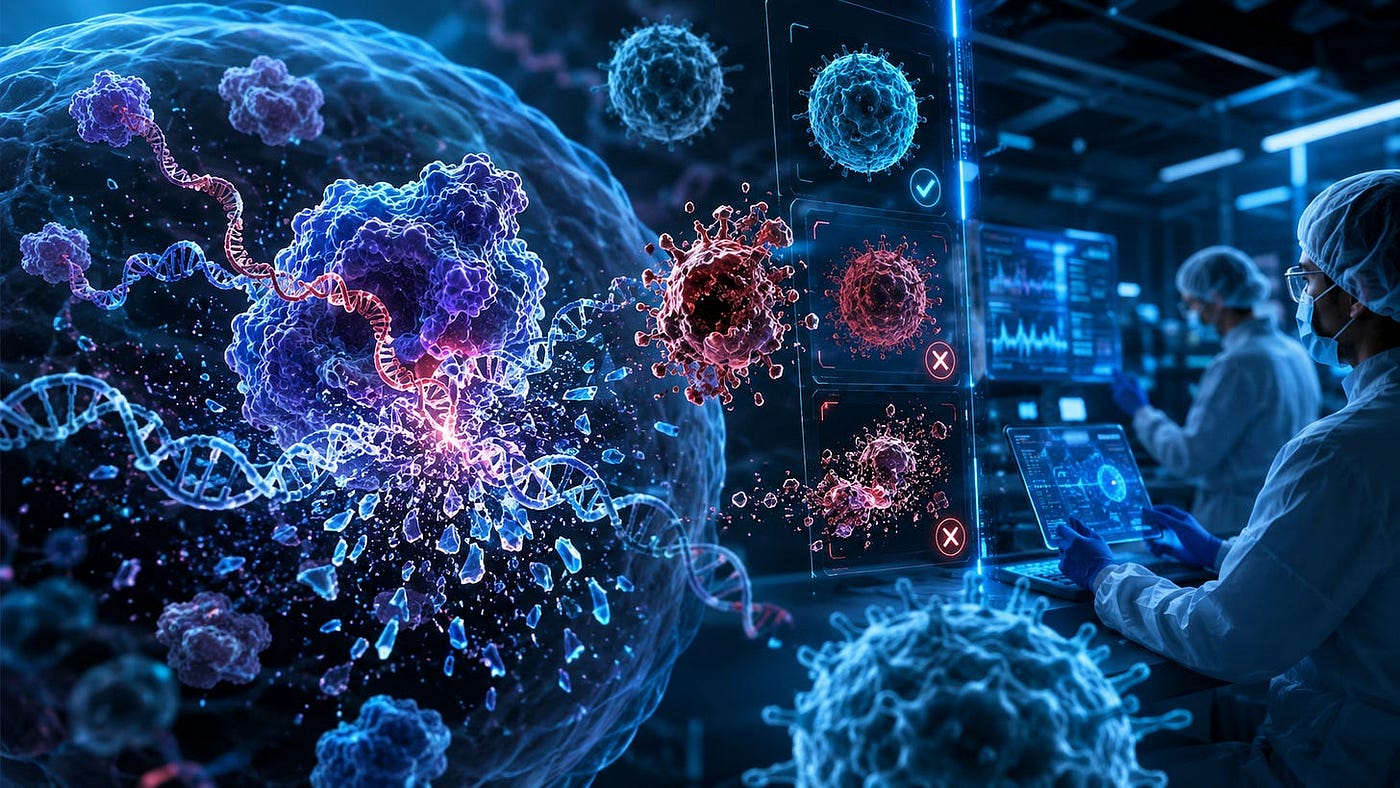
Adamala’s laboratory has created what they call “SpudCell” — a synthetic cell assembled piece by piece using nonliving chemical components instead of modifying an existing living organism. Although remarkably simple compared to naturally occurring cells, SpudCell performs several of life’s defining characteristics.
It can feed, grow, and reproduce itself for approximately five generations before the system breaks down. The prototype consists of roughly 150 to 200 molecular components, making it dramatically less complex than even the simplest bacterial cells, which contain millions of interacting molecules.
Rather than resembling a plant or animal cell, SpudCell most closely mirrors the architecture of a primitive bacterium. This distinction is important. The achievement is not that scientists have recreated a modern biological cell in all its complexity. Instead, they have demonstrated that many of life’s essential functions can emerge from a carefully designed collection of chemical building blocks.
The work has been released publicly by Adamala’s team, although the research has not yet undergone peer review, meaning its findings should be interpreted cautiously until independently validated.
Why Synthetic Cells Matter
The significance of SpudCell extends far beyond creating an artificial organism. Scientists have long struggled with an important limitation: natural cells evolved for survival, not for industrial or medical applications. They possess countless biological pathways that can interfere with engineered functions.
Synthetic cells offer an entirely different philosophy. Instead of adapting nature’s existing toolkit, researchers can potentially build only the components necessary for a specific task. Imagine microscopic biological factories engineered exclusively to produce pharmaceuticals with exceptional efficiency.
Or programmable cells designed to recognize cancer tissue, deliver therapeutic molecules directly to tumors, and then self-destruct after completing their mission. Environmental applications could prove equally transformative. Scientists envision engineered cells capable of absorbing carbon dioxide more efficiently than existing organisms, breaking down toxic pollutants, producing biodegradable materials, or manufacturing industrial chemicals without relying on fossil fuels.
In each case, biology becomes less about discovering what evolution has already created and more about designing living systems with clearly defined engineering objectives.
Understanding the Origins of Life
Beyond commercial applications, synthetic cells provide an extraordinary scientific opportunity. One of biology’s oldest unanswered questions asks how life first emerged from nonliving chemistry approximately four billion years ago. Because modern cells are extraordinarily complex, reconstructing the earliest stages of life has remained difficult.
By assembling increasingly sophisticated synthetic cells from simple molecules, researchers can experimentally investigate which components are truly essential for life and which evolved later. Rather than merely theorizing about life’s origins, scientists can begin testing competing hypotheses inside the laboratory. This ability transforms one of science’s greatest mysteries into an experimental discipline.
Open Science Could Accelerate Innovation
An equally notable aspect of Adamala’s project is her commitment to openness. The team intends to make the core SpudCell platform freely available for academic researchers and nonprofit organizations while charging licensing fees only for commercial applications.
This model reflects the growing recognition that foundational technologies often advance fastest when researchers worldwide can build upon one another’s work. Open platforms have previously accelerated progress in fields ranging from genomics to artificial intelligence.
Synthetic biology may benefit from a similarly collaborative ecosystem, where universities, public laboratories, and startups collectively improve increasingly capable synthetic organisms. If successful, such openness could shorten development timelines while encouraging transparency around safety and ethical considerations.
The Challenges Ahead
Despite the excitement, considerable hurdles remain. SpudCell survives only briefly and reproduces for a limited number of generations. It lacks the extraordinary complexity, adaptability, and resilience found in natural cells that have evolved over billions of years. Scientists must also address significant ethical, regulatory, and biosafety questions before synthetic cells become widely deployed.
- How should artificially designed organisms be regulated?
- How can researchers ensure they cannot survive outside controlled environments?
- What safeguards should govern commercial applications?
Answering these questions will require collaboration among scientists, policymakers, regulators, and the public long before synthetic cells enter widespread use.
Engineering Biology’s Next Chapter
The creation of SpudCell does not represent the birth of fully artificial life. Instead, it marks the beginning of a new engineering discipline where living systems themselves become programmable technologies. Just as the semiconductor revolution transformed electronics by allowing engineers to design circuits from fundamental components, synthetic biology may eventually enable researchers to design living organisms from molecular building blocks.
That future remains years, perhaps decades, away. Yet every transformative technology begins with a fragile prototype. SpudCell may ultimately be remembered less for what it currently does than for what it demonstrates: that constructing life-like systems from scratch is becoming scientifically possible. If synthetic biology continues on its present trajectory, the next generation of biological innovation may no longer depend solely on modifying nature, but on designing entirely new forms of it.
Originally published at https://www.linkedin.com.
메타데이터
- post_id
- 2c129d343ffb
- slug
- what-the-spudcell-breakthrough-means-for-the-future-of-biotechnology-2c129d343ffb
- url
- https://medium.com/technicity/what-the-spudcell-breakthrough-means-for-the-future-of-biotechnology-2c129d343ffb
- canonical_url
- https://medium.com/technicity/what-the-spudcell-breakthrough-means-for-the-future-of-biotechnology-2c129d343ffb
- author_url
- https://medium.com/@khanfk
- status
- ok
- fetched_at
- 2026-07-17 23:26:04