Best Multi-Day Himalayan Treks: Route Comparison & Planning Guide
The Himalayas contain some of the most iconic trekking routes on Earth. From glacier valleys and alpine meadows to sacred pilgrimage trails…
Best Multi-Day Himalayan Treks: Route Comparison & Planning Guide
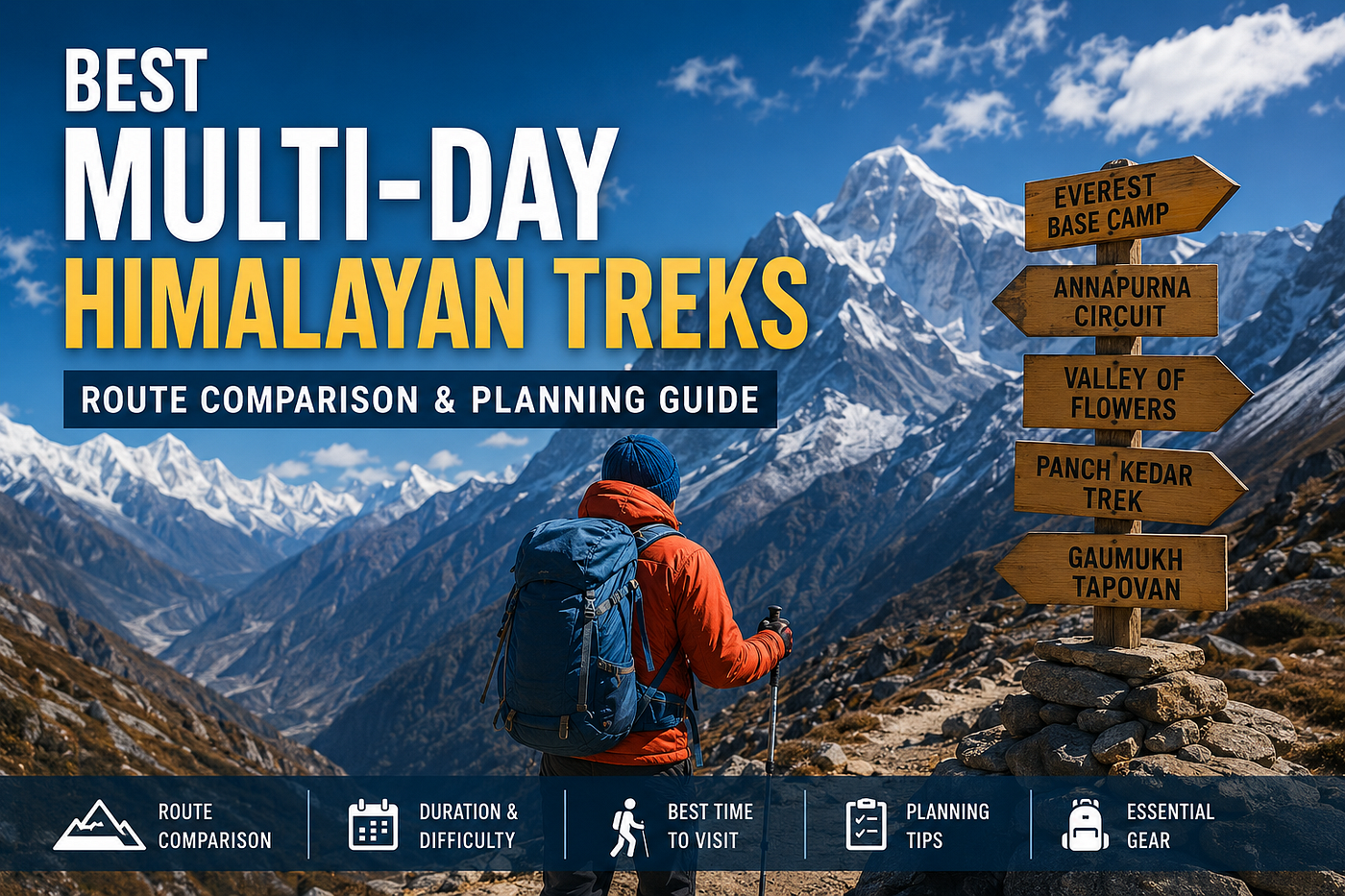
The Himalayas contain some of the most iconic trekking routes on Earth. From glacier valleys and alpine meadows to sacred pilgrimage trails and high-altitude mountain passes, multi-day Himalayan treks offer experiences that combine endurance, culture, spirituality, and adventure in extraordinary ways.
However, choosing the right trek is not easy. Some treks are beginner-friendly meadow trails, while others demand advanced fitness, acclimatization, and mental resilience. Factors like altitude, route difficulty, weather conditions, trekking duration, terrain variation, and logistical complexity all influence the overall experience.
This guide compares the best multi-day Himalayan treks while helping trekkers understand which route best matches their goals, fitness level, and adventure expectations. The article also explores why the **panch kedar trek** stands out as one of the most spiritually immersive and culturally rich Himalayan expeditions in India.
Why Multi-Day Himalayan Treks Are Unique
Unlike short weekend hikes, multi-day Himalayan expeditions require continuous physical effort over extended periods. Trekkers encounter changing weather systems, altitude fluctuations, isolated villages, glacier-fed rivers, steep ascents, and remote mountain terrain.
The appeal of Himalayan trekking extends beyond scenic beauty. These routes offer:
- Deep cultural immersion
- High-altitude adventure
- Mental endurance challenges
- Spiritual exploration
- Wildlife and biodiversity
- Traditional Himalayan village life
- Raw wilderness experiences
Every trek delivers a completely different environment and emotional experience.
Factors to Consider Before Choosing a Himalayan Trek
1. Difficulty Level
Not every trek is suitable for beginners. Certain routes involve:
- Steep ascents
- High-altitude passes
- Long trekking days
- Rocky terrain
- Snow crossings
Understanding the physical demands beforehand prevents serious trekking difficulties later.
2. Trek Duration
Multi-day Himalayan treks generally range from 4 to 18 days.
Short treks:
- Easier logistics
- Lower fatigue
- Beginner-friendly
Long expeditions:
- Greater immersion
- Higher endurance demands
- More acclimatization requirements
3. Maximum Altitude
Altitude is one of the most important factors in Himalayan trekking.
Routes above 12,000 ft require proper acclimatization because oxygen levels decline significantly. Symptoms like headaches, dizziness, nausea, and fatigue become increasingly common at higher elevations.
4. Terrain Variety
Different Himalayan treks feature completely different landscapes:
- Alpine meadows
- Dense forests
- Cold desert terrain
- Glacier valleys
- River crossings
- Rocky ridgelines
- Snowfields
Choosing the right environment depends on personal trekking preferences.
Best Multi-Day Himalayan Treks
1. Everest Base Camp Trek (Nepal)
Duration
12–14 Days
Difficulty
Difficult
Maximum Altitude
Approx. 18,200 ft
Best For
High-altitude adventure and iconic Himalayan scenery
The Everest Base Camp Trek remains one of the world’s most famous trekking routes. The trail passes through Sherpa villages, suspension bridges, Buddhist monasteries, and glacier landscapes before reaching the base of Mount Everest.
This trek is physically demanding primarily because of altitude exposure rather than technical climbing difficulty.
Key Highlights
- Namche Bazaar
- Tengboche Monastery
- Khumbu Glacier
- Everest views
- Sherpa culture
2. Annapurna Circuit Trek (Nepal)
Duration
14–18 Days
Difficulty
Moderate to Difficult
Best For
Landscape diversity
The Annapurna Circuit offers one of the most varied trekking experiences in the Himalayas. Trekkers move through forests, river valleys, dry mountain deserts, and snow-covered high passes.
The route’s biggest strength is environmental variation. Every few days, the scenery changes dramatically.
Key Highlights
- Thorong La Pass
- Tibetan-influenced villages
- Deep Himalayan valleys
- Diverse ecosystems
3. Markha Valley Trek (Ladakh)
Duration
6–8 Days
Difficulty
Moderate
Best For
Cold desert Himalayan trekking
Markha Valley offers a distinctly different Himalayan environment compared to Uttarakhand or Nepal. Instead of green forests and meadows, trekkers experience barren mountains, Buddhist monasteries, canyon landscapes, and remote Ladakhi villages.
Key Highlights
- Kang Yatse views
- River crossings
- Buddhist culture
- Dry mountain terrain
This trek works exceptionally well for photographers and trekkers wanting a unique Himalayan atmosphere.
4. Rupin Pass Trek (Himachal Pradesh)
Duration
7–8 Days
Difficulty
Moderate to Difficult
Best For
Adventure and terrain variety
Rupin Pass is considered one of India’s most dynamic trekking routes because the terrain changes continuously throughout the journey.
Trekkers experience:
- Hanging villages
- Snow bridges
- Waterfalls
- Forest sections
- Rocky mountain trails
- High-altitude pass crossings
The trek requires strong endurance because of steep climbs and long trekking hours.
5. Valley of Flowers Trek (Uttarakhand)
Duration
4–6 Days
Difficulty
Easy to Moderate
Best For
Beginners and nature lovers
The Valley of Flowers Trek is one of the most beginner-friendly Himalayan expeditions. During monsoon season, the valley transforms into an enormous alpine flower field filled with rare Himalayan flora.
Key Highlights
- UNESCO World Heritage Site
- Hemkund Sahib
- Monsoon landscapes
- Wildflower meadows
This trek is ideal for families and first-time Himalayan trekkers.
6. Gaumukh Tapovan Trek (Uttarakhand)
Duration
7–8 Days
Difficulty
Moderate to Difficult
Best For
Glacier trekking and spiritual landscapes
Gaumukh Tapovan combines glacier exploration with spiritual significance. The trek approaches the source of the River Ganga and eventually reaches the high-altitude meadows of Tapovan.
Key Highlights
- Gangotri Glacier
- Shivling Peak views
- High-altitude camping
- Rocky moraine terrain
The route is visually dramatic and physically rewarding.
Why the Panch Kedar Trek Stands Out
Among all Indian Himalayan trekking routes, the panch kedar trek offers one of the most culturally and spiritually immersive experiences.
Unlike conventional trekking routes focused purely on landscapes, this expedition combines:
- Sacred pilgrimage
- Remote Himalayan trekking
- Ancient temple architecture
- Garhwali mountain culture
- Long-distance endurance trekking
The route connects five sacred Shiva temples:
- Kedarnath
- Tungnath
- Rudranath
- Madhyamaheshwar
- Kalpeshwar
Each temple sits in a completely different Himalayan environment, making the journey highly diverse both spiritually and visually.
Panch Kedar Trek Overview
Duration
10–14 Days
Difficulty
Moderate to Difficult
Best For
Spiritual trekking and cultural immersion
The Panch Kedar route passes through:
- Dense forests
- Alpine meadows
- Himalayan villages
- High ridgelines
- Remote valleys
Unlike commercial trekking routes, the Panch Kedar circuit feels deeply connected to local mountain traditions and spiritual history.
Panch Kedar Trek Difficulty Analysis
The Panch Kedar route becomes challenging because of:
- Consecutive trekking days
- Long ascents
- Remote terrain
- Altitude exposure
- Weather unpredictability
Rudranath, in particular, is considered one of the toughest sections because of its isolation and long trekking distance.
However, trekkers seeking authentic Himalayan immersion often consider this challenge part of the experience itself.
Best Time for Multi-Day Himalayan Treks
Summer Season (May–June)
Best for:
- Meadow treks
- Clear weather
- Stable trekking conditions
Monsoon Season (July–August)
Best for:
- Valley of Flowers
- Green Himalayan landscapes
However, landslides and slippery terrain increase risk levels.
Post-Monsoon Season (September–October)
Widely considered the best trekking season because of:
- Excellent mountain visibility
- Cleaner skies
- Stable weather
- Comfortable temperatures
The panch kedar trek is especially beautiful during this period.
Winter Season (December–February)
Best for:
- Snow treks
- Short winter expeditions
Several high-altitude routes become inaccessible because of snowfall.
Guided Trek vs Solo Trek
Guided Trek Advantages
- Better safety
- Route assistance
- Local expertise
- Easier logistics
- Medical support
Solo Trek Advantages
- Flexible itinerary
- Lower costs
- Independent exploration
For long and remote Himalayan routes like the Panch Kedar circuit, guided trekking is generally safer for first-time visitors.
Essential Preparation for Himalayan Treks
Physical Training
Training should begin at least 6–8 weeks before departure.
Focus Areas
- Cardiovascular endurance
- Leg strength
- Stair climbing
- Backpack walking
- Breathing efficiency
Gear Essentials
Clothing
- Thermal layers
- Waterproof jacket
- Trek pants
- Gloves
- Woolen cap
Equipment
- Trekking shoes
- Backpack
- Trekking poles
- Headlamp
- Sleeping bag
Medical Essentials
- First aid kit
- ORS packets
- Altitude medication
- Personal medicines
Budget Planning for Himalayan Treks
Cost varies depending on:
- Trek duration
- Accommodation quality
- Transportation
- Guide requirement
- Equipment rental
Average Cost Range
Trek TypeApproximate CostBudget Trek₹15,000–₹25,000Standard Trek₹30,000–₹50,000Premium Trek₹60,000+
International treks like Everest Base Camp are significantly more expensive than Indian Himalayan expeditions.
Final Thoughts
The Himalayas offer trekking experiences for every type of traveler — from beginners seeking scenic meadow walks to experienced adventurers pursuing high-altitude endurance expeditions.
Some routes focus on landscapes, others on adventure, and some on cultural immersion. The panch kedar trek stands apart because it combines all three. Its blend of sacred pilgrimage, Himalayan wilderness, remote village culture, and physical challenge creates one of India’s most meaningful multi-day trekking journeys.
Choosing the right trek ultimately depends on your fitness level, trekking goals, preferred terrain, and willingness to embrace the unpredictability of mountain environments.
With proper preparation, realistic expectations, and respect for Himalayan conditions, a multi-day Himalayan trek can become one of the most rewarding experiences of your life.
메타데이터
- post_id
- 2c1b528115e8
- slug
- best-multi-day-himalayan-treks-route-comparison-planning-guide-2c1b528115e8
- url
- https://medium.com/@rambleruk07/best-multi-day-himalayan-treks-route-comparison-planning-guide-2c1b528115e8
- canonical_url
- https://medium.com/@rambleruk07/best-multi-day-himalayan-treks-route-comparison-planning-guide-2c1b528115e8
- author_url
- https://medium.com/@rambleruk07
- status
- ok
- fetched_at
- 2026-07-25 22:19:32




