Why Third-Party Food Delivery Apps Are Essential for Restaurant Success
This blog article was first published on Prome Digital Growth
Why Third-Party Food Delivery Apps Are Essential for Restaurant Success
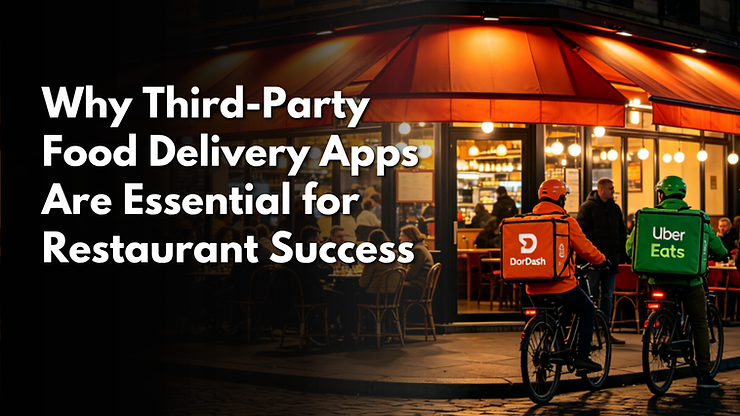
Why Third-Party Food Delivery Apps Are Essential for Restaurant Success
This blog article was first published on Prome Digital Growth
As a restaurant owner, have you ever thought about how customers discover your restaurant today?
Some people may walk past your storefront. Others search on Google Maps for nearby food. Some discover restaurants through TikTok or Instagram videos from food influencers. But a growing number of customers are discovering restaurants by simply scrolling through delivery apps.
The online food delivery industry is growing rapidly. The U.S. is now the second-largest food delivery market in the world, representing around 31% of the global market. In 2025, the country has generated around $432 billion in online food delivery revenue.
This shift means delivery apps are no longer just for delivery — they are now a major marketing and discovery channel for restaurants.
The question is simple: When customers are scrolling through delivery apps, will they find your restaurant, or your competitor’s?
In this blog, we’ll explore why third-party food delivery apps are essential for restaurant success, the key benefits they offer, the challenges restaurant owners should understand, and how to choose the right delivery platforms for sustainable long-term growth. Let’s dive in!
What Are Third-Party Food Delivery Apps?
Third-party food delivery apps are online marketplaces that connect restaurants with customers who want delivery or pickup services. These platforms allow consumers to browse restaurants, place orders, make payments, and track deliveries through a single app.
Instead of restaurants building their own delivery system from scratch, these marketplace platforms provide the technology, driver network, payment systems, and customer-facing interface needed to facilitate online ordering.
Currently, the online food ordering and delivery market is largely dominated by three major platforms: DoorDash, Uber Eats, and Grubhub.
Read more: Top 10 Third-Party Online Food Delivery Apps for Restaurants in the United States
6 Benefits of Third-Party Food Delivery Apps for Restaurants
Third-party delivery platforms offer much more than delivery logistics. When managed properly, they can help restaurants increase exposure, generate new revenue streams, improve operational efficiency, and strengthen brand awareness.
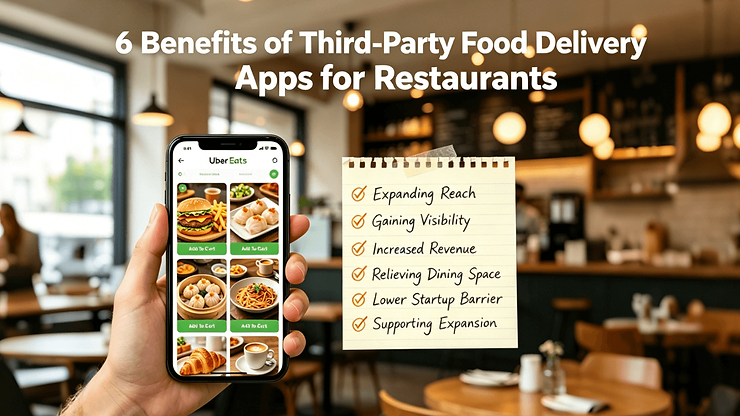
6 Benefits of Third-Party Food Delivery Apps for Restaurants
1. Expanding Reach Beyond Physical Walls
A restaurant’s growth is no longer limited to the people who can physically walk through the front door. Third-party food delivery apps allow restaurants to serve customers across a much larger area, helping brands connect with people who may never have visited the location in person.
- Access to new customer segments: Delivery apps attract busy professionals, families, and younger generations who prioritize convenience.
- Geographic expansion: Restaurants can reach neighborhoods and areas they don’t serve directly.
- Increased brand visibility: Being listed alongside competitors helps restaurants stay top of mind.
2. Gaining Visibility Where Customers Already Browse
One of the biggest challenges restaurants face is online visibility.
Many restaurants compete aggressively for placement in Google local 3-pack, especially in dense urban areas. Even restaurants with excellent food and service may struggle to appear at the top of search results consistently.
Third-party delivery apps provide another visibility channel.
Customers browsing delivery apps are already searching with high purchase intent. They are actively looking for food options nearby and are often ready to place an order immediately.
3. Increased Revenue Opportunities
Many restaurants discover that delivery orders help fill gaps during slower hours. Lunch deliveries to offices, late-night orders, and weekend family meals can significantly increase total sales volume without requiring additional dining space.
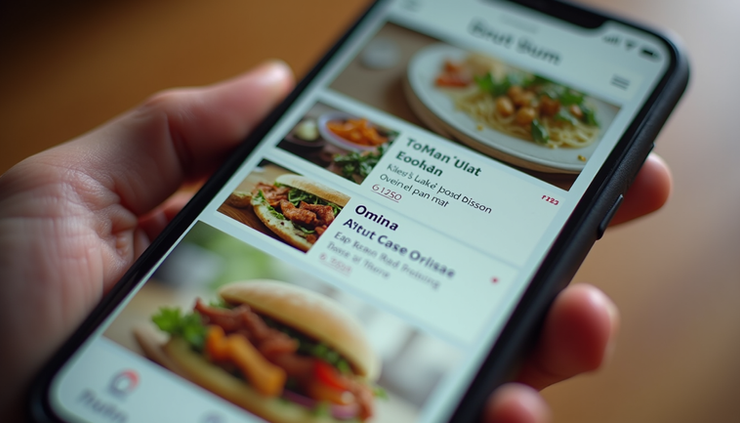
Delivery platforms also encourage impulse purchases. Customers browsing through food apps may place orders they were not originally planning to make simply because appealing menu items appear in front of them.
Restaurants can further increase ticket sizes through:
- combo meal promotions
- drink and dessert add-ons
- family meal packages
- limited-time app-exclusive offers
When managed properly, delivery can become a major contributor to overall restaurant revenue rather than just a secondary service.
4. Relieving Pressure on Limited Dining Space
Not every restaurant has the ability to expand its physical seating area. Smaller restaurants, urban eateries, cafés, and fast-casual locations often struggle with limited dine-in capacity, especially during peak meal periods.
Delivery apps help restaurants grow sales without needing larger dining rooms. Even when tables are full, the kitchen can continue producing delivery orders and generating additional revenue.
5. Lower Barrier to Entry Compared to Building Independent Delivery Systems
Building an in-house delivery system can be expensive and complicated. Restaurants may need to hire drivers, manage scheduling, purchase insurance, and handle vehicle-related costs.
Third-party delivery platforms eliminate many of these operational barriers by providing ready-made logistics infrastructure.
Instead of investing heavily upfront, restaurants can quickly launch delivery services using the platform’s existing driver network and technology system.
6. Supporting Future Restaurant Expansion
Delivery data can provide valuable insights for restaurants planning future growth. By analyzing where orders come from, restaurants can identify neighborhoods with strong demand before investing in additional locations.
Some brands even use delivery apps to test entirely new markets without opening full dine-in restaurants.
3 Common Concerns About Third-Party Delivery Apps
Despite the clear advantages of third-party delivery platforms, many restaurant owners remain cautious. These concerns are not unfounded; they reflect real operational and financial pressures that come with integrating delivery into an already demanding business. Understanding these challenges in detail is important for making informed decisions and building a sustainable delivery strategy.
Commission Fees and Profit Margins
One of the most frequently raised concerns is the impact of commission fees charged by third-party delivery apps. While these platforms provide access to a larger customer base and increased order volume, the cost of that exposure can feel significant, especially for small and independent restaurants operating on tight margins. Uber Eats has just announced that its commission fees for restaurants have increased from 15% to 20% on March. Many restaurant owners worry that these fees eat too deeply into their profits, making each order less financially rewarding than dine-in or direct pickup sales. This concern is particularly relevant when pricing strategies are not adjusted to account for platform costs, which can create the perception that delivery orders are less profitable or even unsustainable.
Operational Stress During Peak Hours
For many restaurants, peak hours already push kitchen capacity, staff coordination, and service speed to their limits. Adding a steady stream of delivery orders into that environment can intensify pressure across the entire operation.
This can impact:
- Kitchen speed
- Staff coordination
- Order accuracy
- Customer experience
When not managed properly, this overlap can lead to slower kitchen turnaround times, increased chances of order mix-ups, and added stress on frontline staff who are trying to balance multiple service channels at once.
Food Quality During Delivery
Not every menu item is naturally suited for delivery, and some dishes that perform well in a dine-in setting may lose their texture, temperature, or presentation when transported.
Restaurants often perform best when they evaluate menu items specifically for delivery performance.
Certain foods naturally maintain quality better during transport, while others may require packaging adjustments or menu modifications.
Restaurants That Adapt Digitally Are Better Positioned for Long-Term Growth
The restaurant industry continues evolving alongside changing technology and consumer expectations. Third-party food delivery apps have become a major part of how customers discover restaurants, compare dining options, and place orders.
For many restaurants, delivery apps are no longer simply an additional convenience feature. They are a meaningful marketing and revenue channel that can improve visibility, expand customer reach, support growth, and strengthen digital presence.
Restaurants that embrace delivery platforms strategically often gain advantages in customer acquisition and accessibility, especially in competitive local markets where online visibility matters more than ever.
At Prome Digital Growth, we help restaurants strengthen their digital presence, improve online visibility, and compete more effectively in modern restaurant markets. If your restaurant is evaluating how to setup and optimize your listing on delivery apps, contact us today to build a stronger restaurant marketing strategy.
메타데이터
- post_id
- 2c2d3a1d89bd
- slug
- why-third-party-food-delivery-apps-are-essential-for-restaurant-success-2c2d3a1d89bd
- url
- https://medium.com/@promedigitalgrowth/why-third-party-food-delivery-apps-are-essential-for-restaurant-success-2c2d3a1d89bd
- canonical_url
- https://medium.com/@promedigitalgrowth/why-third-party-food-delivery-apps-are-essential-for-restaurant-success-2c2d3a1d89bd
- author_url
- https://medium.com/@promedigitalgrowth
- status
- ok
- fetched_at
- 2026-06-09 15:37:30