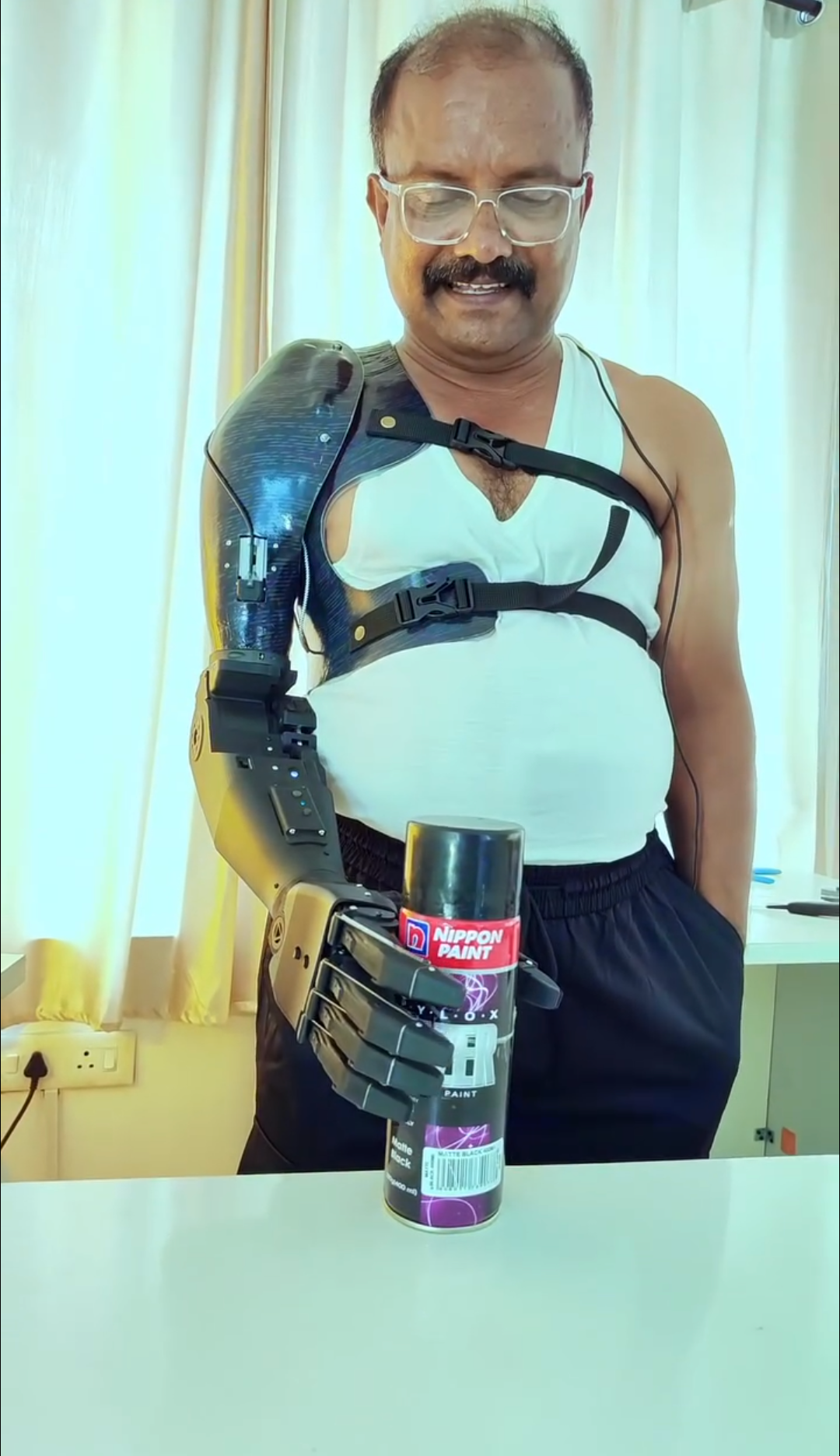
How Long Does It Take to Adapt to a Prosthetic Arm?
Adapting to a prosthetic arm is not just a physical process — it’s emotional, neurological, and deeply personal. One of the first questions…
How Long Does It Take to Adapt to a Prosthetic Arm?
Adapting to a prosthetic arm is not just a physical process — it’s emotional, neurological, and deeply personal. One of the first questions new users ask is:
“How long will it take before this feels natural?”
The honest answer? It depends — but with the right support, technology, and mindset, adaptation can happen faster than most people expect.
In this blog, we break down the timeline, the stages of adaptation, and how Bendita Bionics supports users through this journey.
🧠 Understanding the Adaptation Process
Using a prosthetic arm — especially a myoelectric or multi-articulated one — requires your brain to learn new patterns.
You’re essentially training your nervous system to
- Send muscle signals differently
- Control grip strength intentionally
- Trust the device during daily task
- Build confidence in movement
This is called neuromuscular adaptation.
⏳ Typical Adaptation Timeline
While every individual is different, here’s a realistic general timeline:
🗓️ Week 1–2: Familiarisation Phase
- Learning how to wear and remove the prosthesis
- Understanding charging, cleaning, and basic care
- Practicing simple open-close movements
- Initial muscle signal training
At this stage, movements may feel slow or awkward — and that’s completely normal.
🗓️ Week 3–6: Functional Control Phase
- Improved grip control
- Learning multiple grip patterns (if multi-articulated)
- Performing daily tasks like holding a cup, using a phone, or typing
- Increased wearing time
Users begin building confidence here.
🗓️ Month 2–3: Integration Phase
- Movements become smoother
- Less conscious effort needed
- Performing more complex tasks
- Emotional acceptance improves significantly
By this stage, many users describe the prosthetic as feeling like “part of me.”
🗓️ 3–6 Months: Mastery Phase
- Advanced coordination
- Faster reaction time
- Greater endurance
- Natural integration into work and social life
This is when the prosthetic arm truly becomes an extension of the body.
🧩 Factors That Influence Adaptation Speed
Not everyone adapts at the same rate. Here’s what makes a difference:
1️⃣ Level of Amputation
Higher limb differences may require more training.
2️⃣ Type of Prosthetic
Body-powered devices are mechanically simpler. Myoelectric, multi-grip arms require signal training but offer greater function.
3️⃣ Quality of Fitting
A well-fitted socket dramatically reduces discomfort and speeds up learning.
4️⃣ Consistency of Use
Daily practice accelerates adaptation.
5️⃣ Emotional Readiness
Mental acceptance plays a huge role in confidence and integration.
🚀 How Bendita Bionics Supports Faster Adaptation
At Bendita Bionics, adaptation isn’t left to chance. It’s built into our approach.
🔹 Lightweight Design
Heavier arms cause fatigue and slow learning. Our lightweight systems reduce strain, making longer wear easier.
🔹 Multi-Articulated Control Made Simple
We focus on intuitive grip transitions so users don’t feel overwhelmed by complexity.
🔹 Personalized Training Support
Through clinic partnerships and guided onboarding, users receive structured adaptation training.
🔹 Real-World Testing
We design for daily Indian environments — work, commuting, household tasks — not just lab conditions.
💡 Tips to Adapt Faster
Here are proven ways users can speed up adaptation:
- Wear the prosthesis daily, even at home
- Start with simple tasks and gradually increase complexity
- Practice muscle signal control exercise
- Set small daily goals
- Stay patient — progress compounds over time
Consistency beats intensity.
❤️ The Emotional Side of Adaptation
Beyond mechanics, adaptation includes:
- Rebuilding confidence
- Handling social attention
- Accepting body image change
- Redefining independence
Support from family, peers, and clinicians makes a massive difference.
At Bendita Bionics, we believe adaptation is not just about control — it’s about restoring dignity and independence.
🎯 So, How Long Does It Really Take?
Most users:
- Feel comfortable within 4–8 weeks\
- Gain strong functional independence by 3 months
- Achieve advanced confidence by 6 months
But remember — this is not a race. It’s a journey.
🌟 Final Thoughts
Adapting to a prosthetic arm is a powerful transformation. With the right technology and support system, what feels unfamiliar today can become second nature tomorrow.
If you’re considering a bionic arm or want to learn how Bendita Bionics can support your journey, we’re here to guide you every step of the way.
메타데이터
- post_id
- 2c34dccd656e
- slug
- how-long-does-it-take-to-adapt-to-a-prosthetic-arm-2c34dccd656e
- url
- https://medium.com/@ashikansarym123/how-long-does-it-take-to-adapt-to-a-prosthetic-arm-2c34dccd656e
- canonical_url
- https://medium.com/@ashikansarym123/how-long-does-it-take-to-adapt-to-a-prosthetic-arm-2c34dccd656e
- author_url
- https://medium.com/@ashikansarym123
- status
- ok
- fetched_at
- 2026-07-16 22:25:42